
 +86 15355323399
 En
En  中文简体
中文简体 日本語
日本語 Français
 Español
 Deutsch
 Türk
Türk عربى
عربى italiano
 русский
Natural Jute Yarn: Sustainable Performance for Craft, Packaging, and Industrial Applications
Natural jute yarn is a versatile plant-based textile material designed for manufacturers, craft brands, packaging suppliers, retailers, decorators, and professional handmade-product producers. Made from natural jute fibers, it combines an organic visual character with practical strength, flexible processing options, and broad application potential. Its recognizable texture gives finished products a rustic, vintage, and handmade appearance, while its available yarn structures allow buyers to select the appropriate balance of softness, stability, thickness, and tensile performance.
Unlike ordinary decorative string that is limited to simple wrapping, natural jute yarn can be developed for knitting, crochet, floral presentation, gift packaging, home décor, educational craft programs, and selected light industrial uses. It is available in flat single yarn, double-ply twisted yarn, and three-ply or multi-ply reinforced structures. Buyers can also request customized dyeing, blended materials, surface treatment, winding formats, labels, packaging, and private-brand solutions.
This combination of natural appearance, structural flexibility, customization, and industrial supply capability makes natural jute yarn a useful material for businesses seeking differentiated products. It can support a small retail craft collection, a cross-border DIY kit, a seasonal gift packaging program, or a large-volume manufacturing order.
What Is Natural Jute Yarn?
Natural jute yarn is produced by processing and twisting fibers derived from the jute plant. Jute is known for its visible natural fiber texture, warm color range, and ability to form practical cords, threads, and yarn structures. Depending on the manufacturing method and final specification, the material may appear relatively flat and flexible or more compact, twisted, and load-bearing.
The natural surface is one of the product’s most important characteristics. It creates a tactile finish that synthetic smooth yarns often cannot reproduce. The slightly irregular fiber appearance is particularly valuable in products designed to communicate handmade quality, natural living, traditional craftsmanship, or sustainable design.
Although natural jute yarn is commonly associated with beige or brown tones, it can be fully dyed in a broad range of colors. Natural beige, coffee brown, and deep green are popular base tones, while other colors can be developed according to customer requirements. Pantone references or physical samples may be used for color matching during product development.
The yarn can also be modified through structure selection and optional blending. A single flat yarn may be suitable for lightweight crochet work, while a multi-ply yarn can provide greater stability for bags, bundled decorations, or heavier gift packaging. This range enables buyers to avoid using one unsuitable yarn for every application.
Why Natural Jute Yarn Is Valuable for Modern Product Development
Consumers increasingly respond to products that communicate authenticity, natural materials, and responsible design. Natural jute yarn addresses these preferences through both visual and physical characteristics. It has a plant-based identity, a distinctive surface, and a flexible format that can be used in functional or decorative products.
For manufacturers, the material offers a practical way to create product variety without changing the basic concept of a collection. The same yarn family can be supplied in different colors, thicknesses, ply structures, winding formats, and packaging presentations. This supports multiple sales channels, from loose industrial rolls to small hanging-tag retail packs.
For packaging companies, jute yarn adds texture and a premium handmade impression to gift boxes, floral bouquets, seasonal products, and boutique merchandise. For craft brands, it can become the central material in crochet kits, DIY accessories, and home décor projects. For wholesalers, the choice of standard and customized configurations can simplify sourcing for different customer segments.
The material is also suitable for businesses that want to tell a clear product story. A natural fiber appearance can complement recycled paper, kraft board, wood, dried flowers, paper raffia, and other materials associated with eco-conscious presentation. When used appropriately, natural jute yarn helps create coordinated packaging and craft collections rather than isolated single products.
Principal Product Advantages
Natural Appearance and Tactile Character
One of the main advantages of natural jute yarn is its visible fiber texture. The surface is not completely uniform or artificially smooth, which gives it a warm and authentic appearance. This makes it particularly effective for rustic packaging, vintage crochet products, handmade decorations, and natural-style retail displays.
The tactile quality is important as well. Customers can see and feel the difference between a plant-fiber yarn and a conventional plastic cord. This sensory quality can strengthen the perceived value of a handmade product, especially when the yarn remains visible in the finished design.
Multiple Strength Levels
Natural jute yarn is not limited to one strength category. The structure can be selected according to the intended use. Flat single yarn is lightweight and flexible. Double-ply yarn provides more stable performance for general craft applications. Three-ply and multi-ply yarns offer greater structural support for larger or heavier products.
This structure-based approach is a significant advantage over low-specification decorative string. Instead of accepting one fixed performance level, buyers can choose a yarn that better matches the product’s requirements. This can help reduce unnecessary material use in lightweight applications while providing more support when the finished item needs higher stability.
Broad Color Development Capability
The yarn can be supplied in natural colors or dyed into a wide range of shades. Color customization supports brand identity, seasonal collections, coordinated gift packaging, and regional retail preferences. Customers may request a specific Pantone reference, submit a physical color sample, or begin with a standard base tone.
Color development can also be combined with segmented winding. For example, a single retail unit may contain two-color, three-color, four-color, or multi-color sections. This is useful for DIY kits, children’s craft products, blind-box accessories, and coordinated gift sets.
Flexible Surface and Material Options
Natural jute yarn can be supplied with adjustable softness, thickness, twist level, and surface treatment. Depending on the product concept, buyers may request a softer yarn for comfortable hand knitting, a tighter structure for packaging, or a more compact format for industrial winding.
Additional blend options can create differentiated effects. Polyester blending can improve durability and abrasion resistance for mass-market DIY products. Metallic thread in gold or silver can introduce a subtle shimmer for festive packaging and luxury crafts. Feather yarn blending can add softness and visual fullness to premium handmade items and high-end gift packaging.
These options allow product developers to build collections with different price points and visual identities while maintaining a common natural-fiber design language.
Suitable for Retail and Industrial Supply
Some yarn products are designed only for individual hobby users, while others are packed exclusively for factories. Natural jute yarn can serve both groups. Small retail quantities can be supplied in 50-gram or 100-gram OPP bags, with white card hanging tags for shelf presentation. Larger industrial quantities can be wound on cones, supplied in bundles, and packed for sea freight or full-container loading.
This dual-channel capability is useful for companies that sell through multiple routes. A craft brand may purchase bulk yarn for internal production and smaller branded packs for direct-to-consumer sales. A distributor may source factory-size rolls while also requesting retail-ready packaging for independent stores.
Comparing Yarn Structures for Different Applications
Selecting the correct structure is essential for achieving the desired balance between appearance, handling, and finished-product performance. The following table provides a practical comparison of the main available structures.
| Yarn structure | Main characteristics | Recommended applications | Typical buyer priorities |
|---|---|---|---|
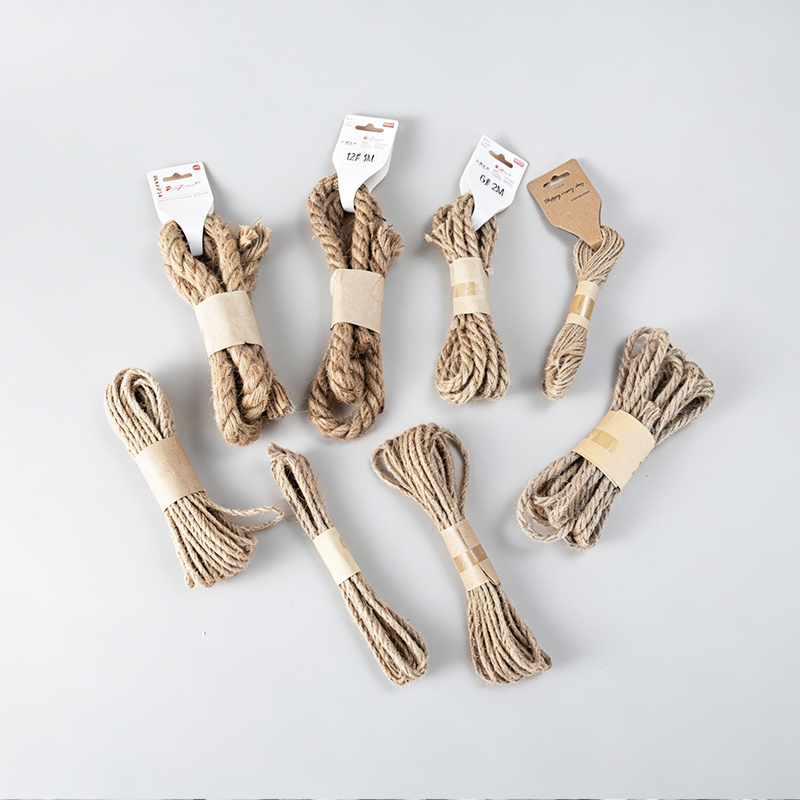
| Flat single yarn | Lightweight, flexible, relatively flat, easy to handle | Hollow crochet bags, lightweight sun hats, fine gift wrapping ribbons | Soft handling, low weight, decorative appearance |
| Double-ply twisted yarn | Improved tensile strength, stable texture, less likely to unravel | Coasters, hats, DIY kits, standard gift wrapping cords | General-purpose performance and easy processing |
| Three-ply yarn | Denser twist, stronger structure, better load support | Tote bags, large gift boxes, heavier decorative items | Strength, shape retention, production stability |
| Multi-ply reinforced yarn | High structural stability and load-bearing capacity | Heavy-duty bundling and decorative installations | Industrial handling and reinforced performance |
Flat single yarn is often selected when the visual effect and flexibility are more important than high tensile strength. Its shape can create a ribbon-like appearance, making it appropriate for fine wrapping details and lightweight crochet structures. It is also relatively easy to manipulate during handcrafting.
Double-ply twisted yarn is the general-purpose option. The two strands work together to improve stability and reduce the tendency of the yarn to separate during use. This makes it a practical choice for craft kits, standard gift packaging, coasters, hats, and other products that require a balance between appearance and durability.
Three-ply and multi-ply structures are designed for products that require more support. The denser twisting improves structural stability and can help the finished item hold its form. These types are suitable for tote bags, large gift boxes, substantial decorative installations, and selected bundling applications.
Buyers should evaluate the final use, production method, expected handling, and desired appearance before selecting a structure. Sampling is recommended when a product will be manufactured at scale or when the yarn must pass through machinery.
Natural Jute Yarn
Manufacturing Process and Quality Control
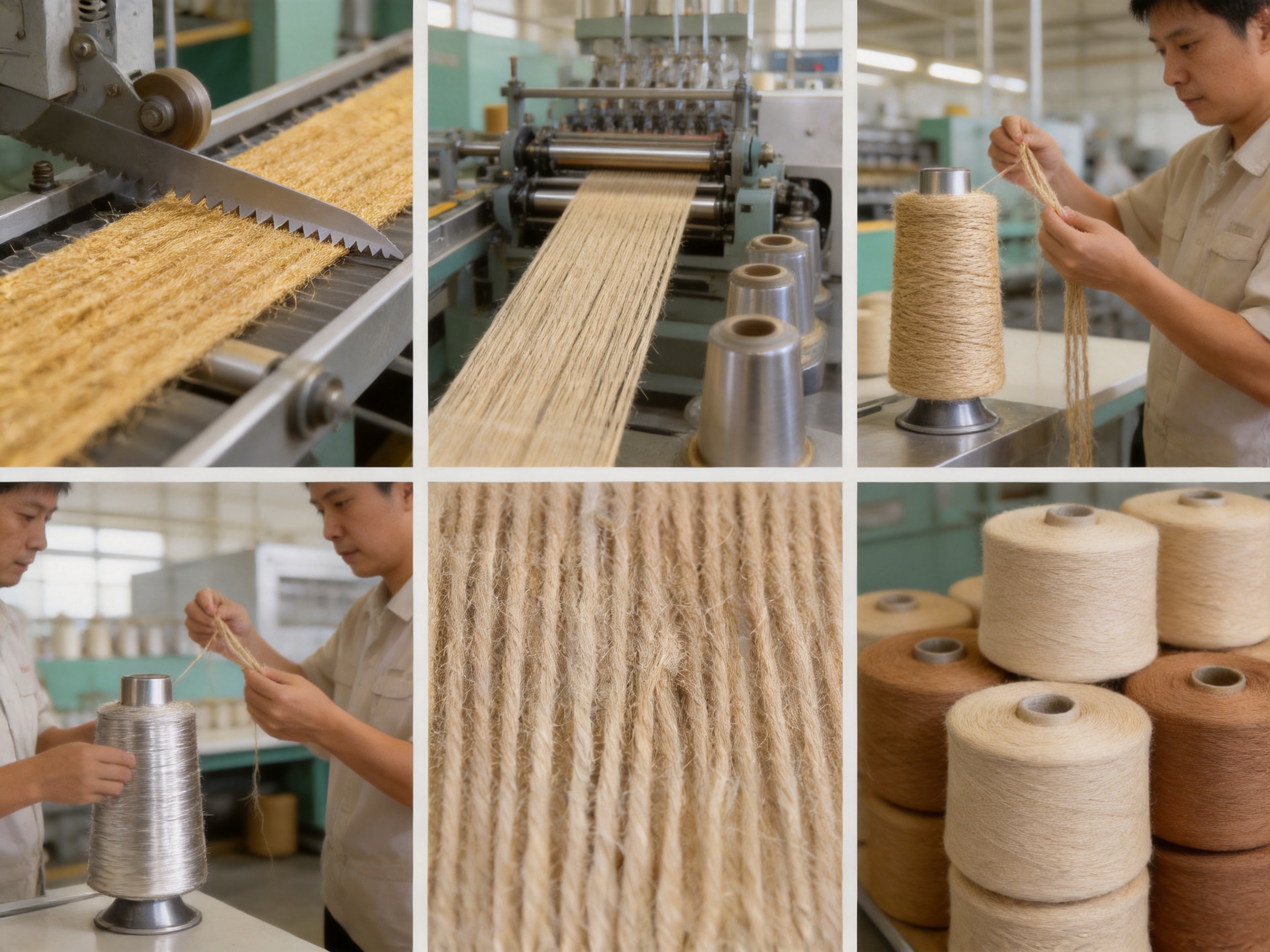
Consistent yarn quality depends on more than the selection of natural fiber. It requires controlled processing, stable machinery, repeatable operating procedures, and inspection at multiple stages. The manufacturer behind this product operates an integrated production system covering raw material processing, mass production, quality testing, winding, packaging, and shipment preparation.
Raw Material Preparation
The manufacturing process begins with the preparation and inspection of jute fiber. Raw materials must be assessed for cleanliness, fiber condition, color consistency, and suitability for the requested yarn structure. Proper preparation helps reduce irregularities during slitting, twisting, winding, and subsequent handling.
Natural fibers naturally possess variations. A professional production system therefore focuses not on eliminating all natural character, but on controlling unacceptable defects and maintaining a consistent overall appearance. This balance is especially important for customers who want authentic texture without excessive breakage, loose fibers, or unstable winding.
Slitting and Size Control
Slitting equipment helps convert prepared material into strips or sections with a controlled width. Width has a direct influence on yarn appearance, thickness, flexibility, and downstream processing. Accurate slitting supports repeatable production and helps the manufacturer meet customer specifications.
For packaging and craft applications, size consistency can influence how smoothly the yarn feeds through a crochet hook, knitting tool, packaging operation, or winding machine. Controlled slitting is therefore an important part of both appearance management and production efficiency.
Twisting and Ply Formation
Twisting determines how individual strands interact and directly affects the yarn’s stability, softness, density, and tensile behavior. The production system supports flat single yarn, double-ply yarn, and three-ply or multi-ply reinforced structures.
Twist level can be customized according to the intended application. A softer twist may be preferred for handcrafting and products that require flexible movement. A medium twist can provide general-purpose stability. A tighter twist may be selected when stronger structure, compactness, or improved handling is required.
Controlled twisting also helps reduce uneven unraveling. While natural fiber products retain a characteristic organic appearance, the yarn should still be sufficiently stable for the production conditions in which it will be used. This is particularly important for low-speed knitting machines, factory crochet operations, and repetitive gift packaging work.
Blending and Special Effects
When a customer requests a blended yarn, the selected materials are combined according to a specified ratio. Polyester can be introduced to improve wear resistance and durability. Metallic thread can be added for a restrained reflective effect. Feather yarn can provide softness and fullness.
Blending ratios can be adjusted during sample development. This allows customers to evaluate the balance between the natural jute character and the performance or appearance of the added material. A higher proportion of a secondary fiber may improve a particular property, while a lower proportion may preserve more of the original natural texture.
Dyeing and Color Matching
Color customization is supported through a full-color dyeing system. Buyers may provide a Pantone code or a physical sample for development. Before mass production, samples can be reviewed to confirm the desired color, surface appearance, and compatibility with the selected yarn structure.
Color matching is especially important for gift packaging brands, retail craft collections, and corporate seasonal programs. A controlled dyeing process helps maintain closer consistency between production batches. Customers should nevertheless recognize that natural fibers may show slight visual differences compared with highly uniform synthetic materials.
Winding and Compression Packaging
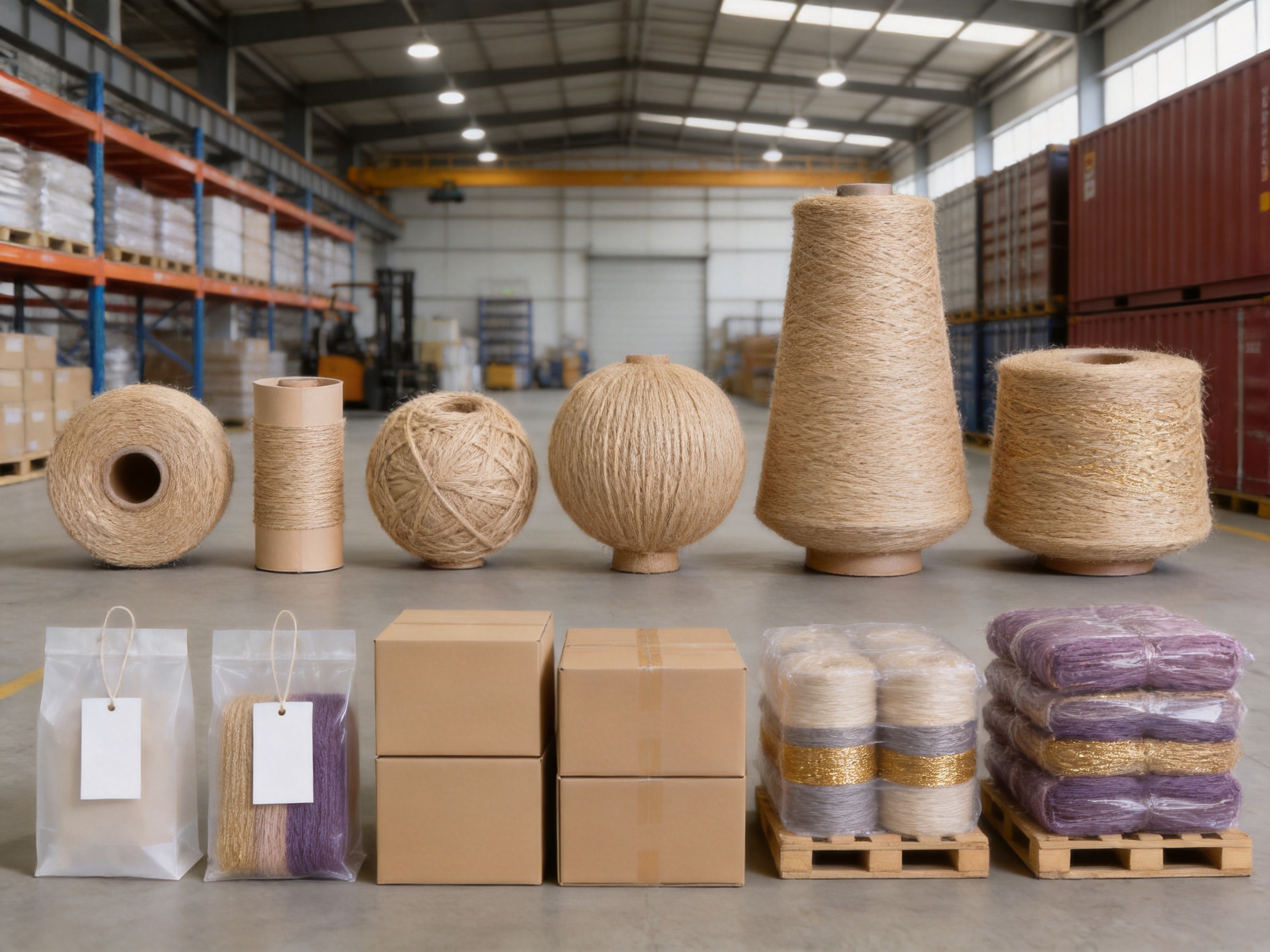
After twisting and any required finishing treatment, the yarn is wound into the selected format. Winding affects storage, transportation, yarn feeding, retail display, and ease of use. The manufacturer supports six standard winding structures, each intended for different procurement or production needs.
Winding equipment and standardized procedures help create compact, stable packages that are easier to count, handle, label, and load. Compression packaging can also improve shipping efficiency by reducing unnecessary volume while maintaining product integrity.
Inspection and Finished-Goods Preparation
Quality testing and final inspection are integrated into the production process. Inspection may focus on yarn structure, winding stability, color, weight, packaging condition, and visible defects. Finished goods are then packed according to retail or industrial export requirements.
The company’s integrated manufacturing chain allows production, inspection, and packing to be coordinated within one organization. This can simplify communication for buyers and reduce the risk of inconsistent specifications between separate processing and packaging suppliers.
Six Standard Winding Formats
Egg Roll Winding
Egg roll winding creates a compact and tightly wound package that is not easily loosened during handling. It is convenient for beginners, small crochet projects, sample distribution, and retail craft products. The compact shape can also make inventory counting and shelf placement easier.
Small Tube Winding
Small tube winding uses a stable paper tube core. The core supports smooth yarn feeding and can be useful for factory production lines, workshops, and repeated handcraft operations. It is suitable when the user wants the yarn to remain organized while being drawn from the center or outer surface of the package.
Rugby Ball Winding
Rugby ball winding provides an ergonomic shape that is comfortable to hold. It is particularly suitable for tote bags, larger crochet products, and craft users who prefer a portable package that can be handled without a separate yarn bowl or holder.
Balloon or Umbrella Ball Winding
Balloon winding, also called umbrella ball winding, provides an attractive retail display shape. Its appearance can increase visual interest on a shelf, in a gift set, or in an online product photograph. It is often selected for gift packaging, decorative craft collections, and consumer-facing retail presentations.
Hollow Large Cone Winding
Hollow large cone winding is intended for industrial bulk packaging. It provides a substantial yarn quantity in a form that can be used for mass production and export procurement. The cone structure can support efficient feeding in suitable production environments and helps reduce the number of individual packages required.
Bundled Packaging Format
Bundled packaging supplies the material in a bulk bundle. This format is suitable for construction-style decorative use, spatial decoration, large installations, and high-volume procurement where retail presentation is not necessary.
All six formats can be customized in terms of weight, packaging, labeling, and sampling development. Buyers should choose according to end-user convenience, production equipment, shipping method, and expected order volume.
Applications Across Craft and Commercial Industries
Hand Knitting and Crochet Manufacturing
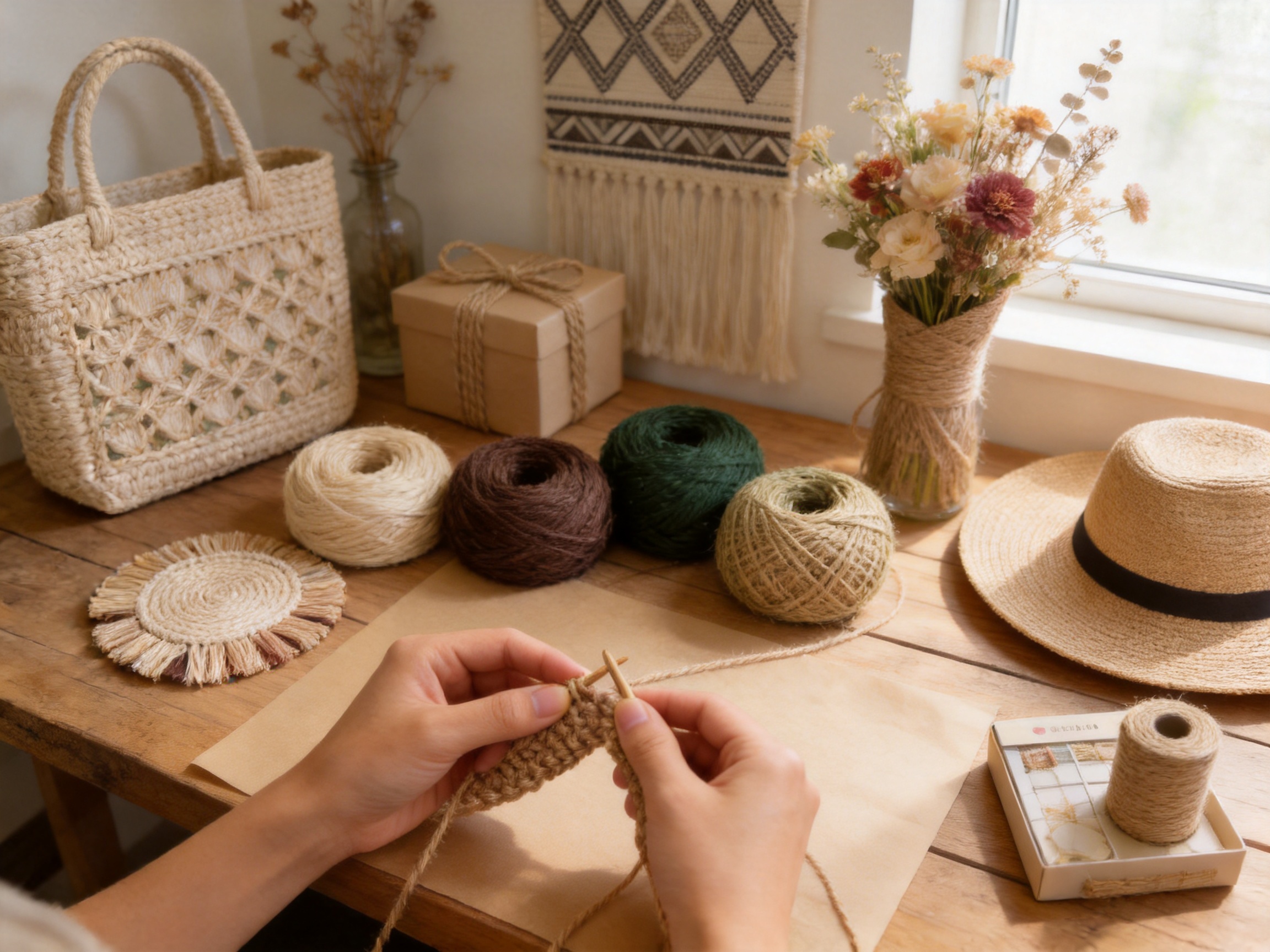
Natural jute yarn is suitable for hand knitting factories and professional crochet producers making bags, hats, table accessories, home décor, and seasonal items. Its natural texture adds visual depth to woven and crocheted surfaces, while the available ply structures allow manufacturers to match yarn strength to the product design.
Single yarn can be useful for openwork patterns, lightweight bags, and sun hats. Double-ply yarn is appropriate for standard crochet products that need a stable but manageable structure. Three-ply or multi-ply yarn can support tote bags and larger items where shape retention and load-bearing ability are important.
DIY Craft Kits
DIY kit brands can use natural jute yarn as a core material for beginner, intermediate, and advanced projects. It can be packed in multiple colors or segmented winding formats, allowing a single kit to include the material needed for coordinated designs.
The product is suitable for cross-border e-commerce, independent craft stores, educational workshops, and seasonal activity boxes. Private-label tags, logo printing, SKU labeling, and customized packaging can help a DIY brand present the yarn as part of a complete product experience rather than as an unbranded raw material.
Gift and Floral Packaging
Gift packaging companies use natural jute yarn to tie boxes, secure wrapping paper, decorate product handles, and add a handmade accent to premium presentations. Floral designers can use it for bouquet wrapping, dried-flower arrangements, wedding decorations, and seasonal displays.
The material works particularly well with kraft paper, corrugated board, paper raffia, dried flowers, wood elements, and natural-fiber accessories. Its texture can soften the appearance of commercial packaging and create a more artisanal presentation.
Home Décor
Natural jute yarn can be integrated into coasters, table mats, wall decorations, hanging ornaments, plant accessories, storage details, and other home décor products. The natural color range is compatible with rustic, farmhouse, Scandinavian, vintage, and botanical design styles.
For interior decoration projects, larger bundled formats or reinforced yarns may be more efficient than small retail balls. For consumer craft products, egg rolls, rugby ball winding, or balloon winding may provide a more convenient user experience.
Seasonal and Holiday Products
Seasonal products benefit from the ability to combine natural base tones with dyed colors and metallic accents. Christmas gift wrapping, autumn decorations, wedding favors, spring floral designs, and festival packaging can all use customized yarn colors and blended effects.
Gold or silver metallic thread blends can create a subtle festive shimmer without replacing the underlying natural appearance. Multi-color winding can also support limited-edition collections and coordinated holiday kits.
Retail Craft Materials
Retail craft-material suppliers can offer natural jute yarn in small, clearly labeled packs for supermarkets, craft chains, independent shops, and online marketplaces. White card hanging tags can provide basic product identification and support shelf display. OPP bags can protect the yarn while keeping the color and texture visible to customers.
Retail suppliers may also request different package weights, color assortments, barcode or SKU information, and private-label designs. The ability to adjust retail packaging is important when serving multiple markets with different merchandising standards.
Educational and Workshop Programs
Natural jute yarn is suitable for schools, community workshops, handmade training programs, and creative education. Its visible structure helps learners understand basic fiber handling, winding, knotting, weaving, and crochet techniques.
For educational use, softer structures and manageable package sizes may be preferred. For large group programs, multi-color segmented winding can simplify distribution and reduce preparation time for instructors.
Packaging and Export Solutions
Packaging protects the yarn from moisture, compression damage, contamination, and handling during transportation. It also provides an opportunity to communicate product information and brand identity.
Retail Packaging
Retail packaging may include 50-gram or 100-gram OPP bags, white card hanging tags, color boxes, and outer cartons. This configuration is suitable for e-commerce orders and retail distribution. The package can be designed to show the yarn’s color and natural texture while providing space for product specifications, usage instructions, branding, and SKU information.
Color box packaging can create a more premium presentation for gift sets and DIY kits. Moisture-resistant outer cartons help protect retail units during storage and shipment.
Industrial Export Packaging
Industrial export packaging may include PE moisture-proof film, reinforced corrugated cartons, palletized loading, and full-container-load support. These measures are intended for larger orders and longer-distance transportation by sea freight.
Custom shipping marks can be printed on cartons to support warehouse receiving and container management. Logo printing, carton identification, and customized export packaging can also be arranged according to the buyer’s logistics procedures.
Packaging decisions should consider order quantity, destination climate, storage period, unloading method, and whether the product will be resold in the original package or repacked locally.
OEM and ODM Customization Capabilities
Customization is available across the product specification, appearance, packaging, and brand presentation. This is valuable for importers and product developers that need a material tailored to a specific collection or sales channel.
Yarn thickness and weight can be adjusted according to the final product. Buyers may specify GSM, grams per roll, package weight, or another agreed measurement. Twist level can be developed as soft, medium, or tight, depending on the required handling and structural performance.
Full-color dyeing is available for standard colors, seasonal shades, and brand-specific requirements. Blended material ratios can be modified to create different levels of durability, softness, shine, or visual volume.
Packaging design can include OPP bags, color boxes, card tags, segmented winding, industrial cones, bundles, cartons, and palletized export units. Private-label branding can be applied through logo printing, hang tags, package artwork, carton markings, and SKU labeling.
Small-batch prototyping is supported before mass production. This gives customers an opportunity to assess the yarn in an actual product, confirm color and texture, test winding performance, and review the packaging presentation. Standard production generally requires 7 to 15 days, while complex customization and large-volume orders may require additional time.
Manufacturing Strengths of the Supplier
The supplier has more than ten years of industry experience and developed from a craft-materials business unit established in 2010 into an integrated manufacturer. The company was founded in 2014 and operates from a modern production base in Dongyang, Zhejiang Province, China.
The factory covers approximately 20,000 square meters and employs more than 200 professional workers. Its production capabilities include raw material processing, slitting, twisting, winding, compression packaging, quality testing, finished-goods packing, and shipment preparation.
This integrated structure provides several advantages for buyers. First, production specifications can be communicated directly to the teams responsible for processing and packaging. Second, the company can coordinate large orders across multiple stages without depending entirely on unrelated subcontractors. Third, quality-control procedures can be standardized from raw material preparation through final shipment.
The company reports an annual production capacity of more than 200 million pieces and serves customers in China as well as Europe, North America, South America, Asia, and other regions. Its products are used in gift packaging, textile knitting, home decoration, and global retail supply chains.
The supplier also provides OEM and ODM services for exclusive brand customization, custom size development, and long-term bulk order supply. Its stated manufacturing priorities include batch consistency, on-time delivery, sustainable supply-chain development, and long-term customer cooperation.
How This Product Competes with Conventional Alternatives
Natural jute yarn competes with cotton cords, synthetic ropes, smooth plastic strings, paper-based yarns, and other decorative fibers. Each material has its own performance profile, but jute yarn offers a distinctive combination of natural texture, flexible structure, color customization, and packaging adaptability.
Compared with smooth synthetic cord, jute yarn generally provides a more organic and handcrafted appearance. This can be an advantage for brands whose customers value rustic design, visible texture, or plant-based materials. It can also reduce the need for additional decorative treatment because the yarn itself contributes visual interest.
Compared with a very delicate single-strand string, double-ply and multi-ply jute yarns offer improved stability for craft and light industrial applications. Customers can select the structure based on the required level of support rather than treating all yarn as interchangeable.
Compared with standardized commodity products, customized jute yarn can be developed in specific colors, weights, winding styles, blend ratios, and retail formats. This makes it easier for brands to build differentiated collections and avoid direct price comparison based only on a generic product description.
Compared with materials that are available only in consumer-size packages, this product can be supplied in both retail and industrial configurations. A manufacturer, distributor, or e-commerce brand can therefore source from one product system while serving different customer groups.
Responsible material claims should always be supported by accurate documentation and appropriate product communication. Natural jute yarn’s plant-based origin and natural appearance can support sustainability-oriented positioning, but buyers should still consider dyeing, blending, packaging, transport, and end-of-life factors when making environmental claims.
Selection Guide for Buyers
Before placing an order, buyers should define the intended application and the conditions under which the yarn will be used. The following questions can help establish a suitable specification.
What is the finished product? A crochet bag, gift-wrapping cord, coaster, floral tie, decorative installation, or DIY kit may require a different structure and package format.
How much tensile strength is needed? Lightweight decorative use may require flat single yarn, while tote bags and heavier packaging may call for three-ply or multi-ply yarn.
Will the yarn be processed by hand or machine? Handcraft users may prioritize softness and easy handling. Low-speed knitting machines and factory operations generally benefit from more stable double-ply or multi-ply structures.
What color system will be used? Buyers should provide a Pantone reference or physical sample when exact color development is important. A sample approval process can help reduce misunderstandings.
What package weight is appropriate? Retail packs may use 50 grams or 100 grams, while industrial buyers may prefer cones, bundles, or large rolls.
Will the product need private labeling? If so, packaging artwork, tag dimensions, logo files, SKU data, carton markings, and shipping requirements should be prepared early.
What are the storage and shipping conditions? Moisture protection, carton strength, palletization, and container loading should be discussed according to the destination and transportation method.
Has the yarn been tested in the final product? A small prototype can reveal whether the yarn feeds smoothly, holds the desired shape, matches the color of other components, and meets the expected visual standard.
Recommended Quality and Sampling Checks
Sampling is an important step for professional procurement. A sample should be reviewed not only by appearance but also by how it performs in the intended production process.
Check the yarn’s thickness and weight against the agreed specification. Minor differences may affect crochet gauge, package coverage, knot size, and finished-product dimensions.
Evaluate the twist level and surface stability. The yarn should remain sufficiently coherent during handling while retaining the desired natural texture. Excessive looseness may create processing problems, while excessive tightness may reduce flexibility.
Test the yarn on the intended tool or machine. For hand knitting, assess whether the material is comfortable to manipulate and whether it catches easily on the hook or needle. For low-speed machinery, check feeding stability, tension behavior, and the frequency of breaks.
Review the color under the lighting conditions used for product inspection. Natural and dyed fibers may appear different under warm retail lighting, daylight, and photographic lighting.
Inspect winding density and package stability. A package that is too loose may collapse during transport, while one that is too tight may make yarn removal difficult. The correct winding format should match the user’s workflow.
Finally, evaluate the retail or export package. Confirm that tags, labels, logos, carton marks, moisture protection, and outer-carton strength meet the requirements of the destination market.
Maintenance, Storage, and Handling
Natural jute yarn should be stored in a clean, dry, and well-ventilated environment. Moisture can affect natural fibers and may contribute to odor, surface changes, or reduced storage stability. Moisture-proof film and suitable cartons are recommended for export transportation and longer storage periods.
Packages should be protected from direct rain, standing water, and excessive humidity. Warehouses should avoid placing cartons directly on damp floors. Pallets or raised storage platforms can improve air circulation and reduce exposure to floor moisture.
During production, operators should avoid pulling the yarn sharply from an unstable package. The correct feeding direction depends on the winding format. A suitable holder or dispensing system can reduce tangling and maintain a more consistent working tension.
For retail presentation, packages should be kept away from excessive compression, dust, and prolonged direct sunlight. Proper storage helps preserve color, shape, and surface appearance until the product reaches the end user.
Business Value for Different Buyer Types
For Importers and Distributors
Importers can benefit from the broad specification range and the ability to combine standard and customized products in a sourcing program. Retail packs, industrial cones, and bundles can be developed for different downstream customers.
For DIY and Craft Brands
DIY brands can use color matching, segmented winding, branded tags, and custom boxes to create complete kits. The yarn’s natural appearance can support a strong product identity, while multiple ply choices allow the brand to develop projects at different skill levels.
For Gift Packaging Companies
Packaging companies can select lightweight flat yarn for fine wrapping details or stronger twisted yarn for tying boxes and securing larger arrangements. Seasonal colors and metallic blends can support promotional campaigns and premium gift collections.
For Floral Designers
Floral businesses can use natural jute yarn for bouquets, dried flowers, wedding décor, and retail flower wrapping. The material complements organic arrangements and can be supplied in colors that coordinate with seasonal flowers and brand packaging.
For Manufacturers
Manufacturers can request industrial winding formats, larger package weights, stable ply structures, and export cartons. The integrated production system can support repeat orders and specification control for ongoing product lines.
Frequently Asked Questions
Is natural jute yarn prone to breaking or fraying?
Performance depends on the yarn structure, thickness, twist level, and application. Double-ply and multi-ply yarns provide more stable tensile performance than a lightweight single yarn and are widely used in craft and light industrial applications. Buyers should select the structure according to the expected tension and conduct application testing before mass production.
Can natural jute yarn be used on knitting machines?
Yes. It can be used on low-speed knitting machines, with double-ply or multi-ply structures generally recommended for better stability. Machine compatibility depends on the equipment, feeding speed, needle or hook size, yarn tension, and finished-product design.
Can the yarn be dyed to a custom color?
Yes. Full-color dyeing is available based on Pantone codes or customer-provided physical samples. A sample approval process is recommended when color consistency is important for a branded or multi-component product.
What is the minimum order quantity?
The MOQ varies according to yarn structure, color, blend ratio, winding format, and packaging type. Small sample orders are supported before mass production, allowing buyers to evaluate the material and confirm specifications.
Can the yarn be used for cross-border e-commerce packaging?
Yes. Retail packaging can be developed for Amazon, Shopify, independent online stores, and other e-commerce channels. Available options include hang tags, color boxes, OPP bags, SKU labeling, logo printing, and customized outer cartons.
What is the typical production lead time?
Standard production generally requires 7 to 15 days. Complex customization, special blends, large orders, custom packaging, or color development may require additional time. The confirmed lead time should be agreed after the product specification and packaging requirements are finalized.
Which yarn structure is best for crochet bags?
The best structure depends on the bag size, design, and required load capacity. Flat single yarn may be suitable for lightweight openwork bags, while double-ply yarn is a practical general-purpose option. Three-ply or multi-ply yarn is more appropriate for larger tote bags and designs requiring greater structural stability.
Which winding format is best for retail sales?
Egg roll, rugby ball, and balloon or umbrella ball winding are commonly suitable for retail presentation. The final choice depends on shelf appearance, package size, user convenience, and the visual identity of the product collection.
Which winding format is best for industrial production?
Small tube winding, hollow large cone winding, and bundled packaging are generally more appropriate for factory or bulk applications. The correct choice depends on the feeding system, production speed, package quantity, and handling method.
Can blended yarn ratios be customized?
Yes. Polyester, metallic thread, and feather yarn blends can be developed according to the customer’s target performance and appearance. Sample development is recommended to confirm the balance between natural jute texture and the properties of the additional fiber.
Conclusion
Natural jute yarn provides a practical combination of plant-based character, tactile texture, flexible structure, customizable color, and broad commercial application. It can be used for crochet products, knitting, gift wrapping, floral design, home décor, DIY kits, retail craft materials, and selected light industrial purposes.
Its principal advantage over generic decorative string is the availability of multiple strength levels and manufacturing configurations. Flat single yarn, double-ply yarn, and reinforced multi-ply structures allow buyers to match the product to the intended use. Six winding formats further extend its suitability from small retail packs to industrial export cones and bulk bundles.
The supplier’s integrated manufacturing capabilities strengthen the product offering. Raw material processing, slitting, twisting, blending, dyeing, winding, quality testing, compression packaging, and export preparation can be coordinated within one production system. A modern production base, professional workforce, large annual capacity, OEM and ODM support, and international supply experience provide a foundation for long-term procurement.
For buyers seeking a natural-looking yarn with flexible customization and dependable manufacturing support, the most effective purchasing approach is to begin with a clear application specification, request samples, confirm the yarn structure and color, test the material in the final product, and then finalize packaging and bulk-order requirements.
References
1. Product specification and application information for Natural Jute Yarn, supplied by the manufacturer.
2. Internal manufacturing information covering slitting, twisting, winding, compression packaging, quality testing, and export preparation.
3. Fiber and textile-material evaluation principles for natural plant-based yarns.
4. General guidance on retail packaging, moisture protection, palletized loading, and industrial export carton preparation.
5. Craft-product development practices for crochet, hand knitting, DIY kits, floral wrapping, and home decoration.
Product: Natural Jute Yarn
 +86 15355323399
 kevin@raffia-paper.com
 No. 151 Guanshan North Road, Dongyang City, Zhejiang Province, China

Copyright © Zhejiang Raffia Paper Products Co., Ltd. All Rights Reserved.

Paper Raffia Yarn & Gift Packaging Factory