
 +86 15355323399
 En
En  中文简体
中文简体 日本語
日本語 Français
 Español
 Deutsch
 Türk
Türk عربى
عربى italiano
 русский
Eco-Friendly Raffia Nonwoven Fabric Accessories for Gift Packaging and Floral Design
Raffia nonwoven fabric accessories are increasingly used by packaging designers, florists, craft makers, retailers, and gift manufacturers that need lightweight, flexible, and attractive materials for presentation and protection. Combining the soft hand feel of fabric with the practical performance of polypropylene nonwoven material, these accessories offer a versatile solution for gift box lining, packaging separation, floral decoration, and coordinated product presentation.
The product discussed in this article is made from eco-friendly PP polypropylene nonwoven fabric and manufactured through a hot-melt bonding process. It is designed to provide a clean, consistent, and flexible alternative to less durable decorative fillers, ordinary paper separators, and conventional textile materials. Its soft texture, breathable structure, tear resistance, dustproof performance, moisture resistance, and non-toxic composition make it suitable for both commercial packaging and creative handmade applications.
As packaging has developed from a purely protective function into an important part of brand presentation and customer experience, material selection has become more demanding. Buyers increasingly expect packaging components to be attractive, safe, customizable, and efficient in high-volume production. Raffia nonwoven fabric accessories respond to these requirements by combining decorative appeal with dependable physical performance.
Produced by Zhejiang Raffia Paper Products Co., Ltd., the material is supported by an integrated manufacturing system that includes raw material preparation, nonwoven fabric processing, product conversion, quality testing, packaging, and shipment. The company’s experience in raffia paper, paper yarn, fancy yarn, gift packaging materials, and decorative accessories enables it to develop coordinated material solutions for customers with different packaging concepts and order requirements.
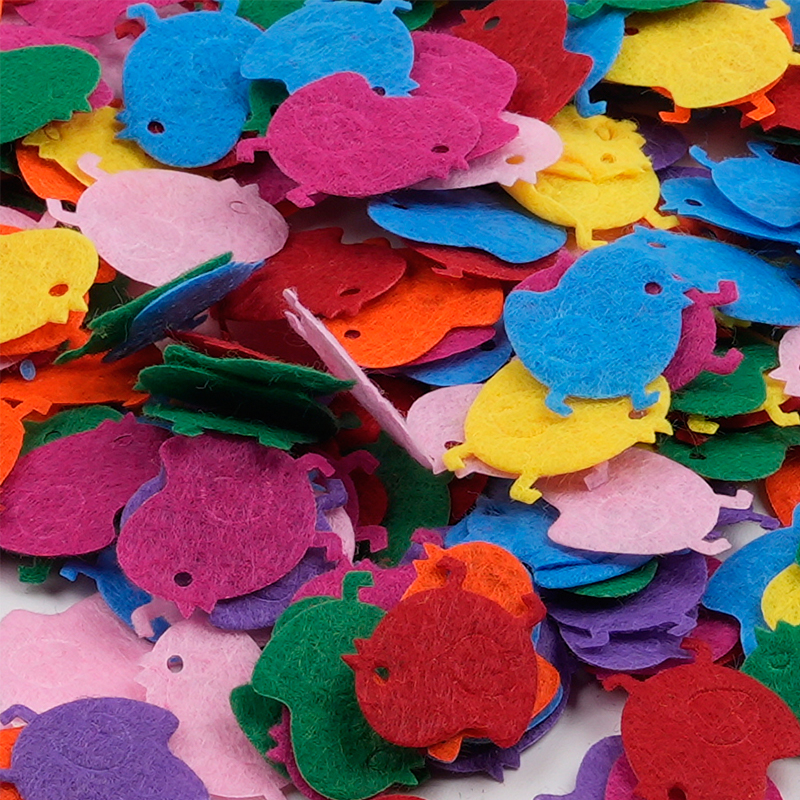
Raffia NonWoven Fabric Accessories
What Are Raffia Nonwoven Fabric Accessories?
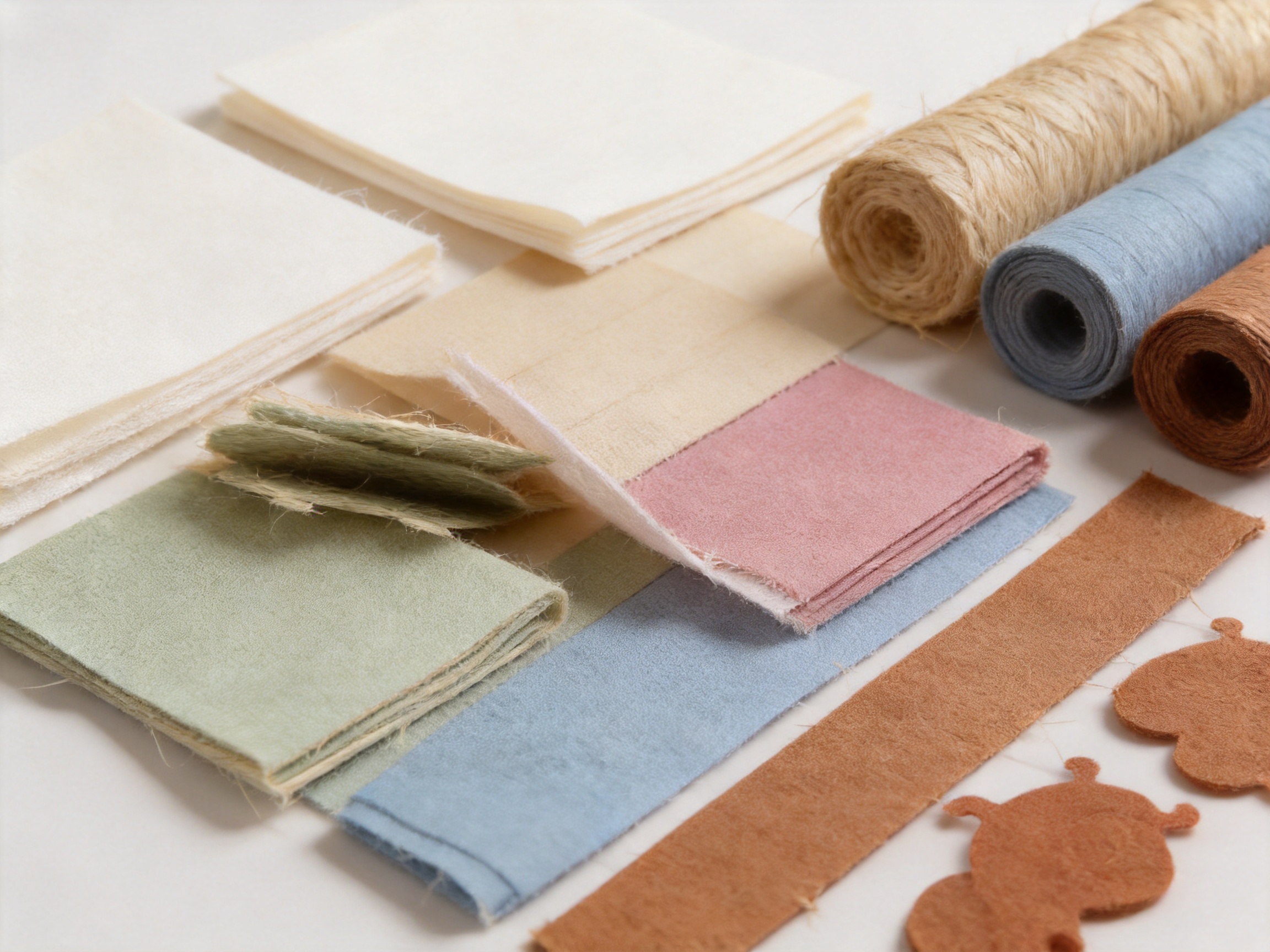
Raffia nonwoven fabric accessories are decorative and functional packaging components made from PP polypropylene fibers bonded into a fabric-like sheet. Unlike woven cloth, which is formed by interlacing yarns, nonwoven fabric is produced by arranging fibers and bonding them together. In this product, the bonding process uses heat and pressure to create a stable material with a soft surface and flexible structure.
The result is a lightweight accessory material that can be cut, folded, layered, shredded, shaped, or arranged according to the intended application. It can be used as an inner lining for gift boxes, a separator between products, a decorative layer around flowers, or a matching component alongside raffia yarn, paper shreds, ribbons, and other packaging materials.
The fabric is available in multiple solid colors, while custom colors can be developed according to customer requirements. This makes it practical for seasonal packaging, corporate gift programs, wedding arrangements, retail collections, festival promotions, and private-label packaging projects.
Its visual simplicity is one of its main advantages. Solid-color nonwoven fabric can create a clean and orderly appearance without competing with the main product. At the same time, its soft texture introduces a handmade and premium feeling that is difficult to achieve with ordinary plastic films or stiff paper sheets.
Depending on the packaging design, the material may be used alone or combined with other items from a broader decorative packaging range. For example, a gift box may use nonwoven fabric as an inner lining, paper raffia as a loose filler, twisted yarn as a tie, and decorative accessories as a finishing detail. The ability to coordinate different materials helps packaging manufacturers create consistent collections and complete visual themes.
Material Composition and Manufacturing Principle
The principal material is PP polypropylene fabric. Polypropylene is widely used in packaging and industrial applications because it is lightweight, chemically stable, flexible, and suitable for conversion into different forms. When processed into nonwoven fabric, polypropylene fibers can create a surface that is soft enough for decorative use while retaining useful strength for handling and separation.
The product is made through a hot-melt bonding process. In this process, selected fibers or fabric components are arranged and bonded through controlled heat. The bonding system creates a unified sheet without requiring traditional weaving or the use of excessive liquid adhesives. Correct control of temperature, pressure, bonding speed, and material tension is essential for achieving consistent thickness, surface quality, and flexibility.
A well-controlled hot-melt process offers several production benefits. It can support continuous manufacturing, stable dimensions, clean edges, and repeatable physical performance. It also allows the production team to adjust the fabric according to the required softness, density, color, and application. These advantages are particularly important for customers that need large quantities with consistent appearance from one batch to another.
The nonwoven structure also contributes to breathability. Air can pass through the fiber network more easily than through a fully sealed film. This characteristic is helpful in floral decoration and gift packaging, where the material should provide visual coverage and cushioning without creating an overly closed or heavy interior environment.
Because the fibers are bonded rather than woven, the material can be produced efficiently in a variety of widths, weights, and formats. It can then be converted into accessories suitable for specific packaging designs. Custom development may include color matching, size adjustment, cutting specifications, packing methods, and coordinated production with other raffia products.
Key Product Advantages
Soft and Pleasant Hand Feel
One of the clearest differences between raffia nonwoven fabric accessories and many conventional packaging separators is the softness of the surface. The material is comfortable to touch and can line a gift box without creating a harsh or abrasive impression. This makes it appropriate for cosmetics, clothing accessories, handmade products, jewelry boxes, promotional gifts, and premium retail packaging.
A soft lining can also reduce the visual and tactile contrast between the package and the product. Instead of placing an item inside a rigid cardboard compartment or a thin plastic bag, a designer can use a flexible fabric-like layer that creates a more carefully finished presentation.
Lightweight Construction
Packaging materials must provide useful performance without adding unnecessary weight. The lightweight construction of PP nonwoven fabric helps reduce the burden on finished packages, especially when large numbers of gift boxes or floral arrangements must be transported. Lower material weight may also help improve handling efficiency during filling, assembly, warehousing, and shipment.
Although light, the material is not intended to be fragile. Its bonded fiber structure gives it sufficient integrity for normal lining, wrapping, separating, and decorative operations. It can be folded and positioned quickly by hand or integrated into packaging workflows where accessories must be placed repeatedly and consistently.
Breathable Structure
Breathability is valuable in applications involving flowers, natural craft materials, and products that should not be enclosed by an impermeable layer. The nonwoven structure permits airflow while still helping organize the interior of a package or arrangement.
For floral decoration, breathable fabric can serve as a visual and structural component around stems, baskets, boxes, or gift sets. It can create a layered appearance without making an arrangement look excessively dense. For packaging, it can provide separation and decoration while maintaining a softer and more open interior.
Tear Resistance and Flexibility
Decorative materials are frequently pulled, folded, cut, pressed, or repositioned during assembly. A material with low tear resistance may fail during these operations and create waste. Raffia nonwoven fabric accessories are designed to be tear-resistant and flexible, allowing them to withstand ordinary handling during packaging and decoration.
Flexibility is also important for irregular shapes. The material can follow the internal contours of a gift box, wrap around a floral container, or be layered into a creative arrangement. It does not require the rigid forming equipment associated with many molded packaging inserts.
Dustproof and Moisture-Resistant Performance
The material provides dustproof and moisture-resistant characteristics that support cleaner storage and presentation. In packaging environments, dust can reduce the visual quality of decorative materials and finished boxes. A material with a cleaner, more stable surface is easier to manage during storage and assembly.
Moisture resistance is especially useful when the product is used in humid conditions or near floral materials. It does not mean that the fabric is waterproof or designed for prolonged immersion. Instead, it provides practical resistance to ordinary moisture exposure and helps preserve the accessory’s usability during normal packaging and decorative work.
Non-Toxic and Odorless Composition
Safety and user comfort are essential when packaging materials come into contact with gifts, household products, cosmetics, craft items, or retail merchandise. The product is described as non-toxic and odorless, helping avoid the strong chemical smell that may be present in some low-quality decorative materials.
An odorless material is particularly important for gift packaging because unpleasant smells can affect the customer’s first impression. It is also useful for indoor floral displays, event decoration, craft workshops, and home projects where people handle the material for extended periods.
Multiple Solid Colors and Custom Color Options
Color is a major part of packaging design. The product is available in multiple solid colors, providing a practical foundation for seasonal collections, coordinated retail packaging, wedding themes, holiday gift sets, and corporate color systems.
Custom colors are available for customers that need closer coordination with a visual identity or product range. Color customization can help match printed boxes, paper raffia yarn, ribbons, labels, flowers, and other decorative elements. For large orders, a controlled color development process can support better batch consistency and improve the appearance of complete packaging programs.
Advantages Compared with Common Alternative Materials
Raffia nonwoven fabric accessories are not intended to replace every packaging material in every situation. However, they offer a balanced combination of softness, flexibility, appearance, and durability that can be difficult to achieve with a single conventional material.
Compared with Ordinary Paper Separators
Paper separators are economical and widely available, but they may crease permanently, tear when repeatedly repositioned, and lose their appearance when exposed to moisture. Some papers also feel stiff or rough when used as a gift box lining.
PP nonwoven fabric provides greater flexibility and a more textile-like hand feel. It can be folded and arranged without appearing as sharply creased as some paper materials. Its moisture-resistant and tear-resistant characteristics also support more reliable handling in packaging operations.
Paper remains valuable when a natural fiber appearance or high printability is required. However, nonwoven fabric is often a better option when the design calls for softness, resilience, and a clean solid-color finish.
Compared with Plastic Film
Plastic film can provide a smooth and moisture-resistant surface, but it may look overly glossy, feel less comfortable, and create an airtight visual effect. It can also produce unwanted noise when handled and may not provide the warm, decorative feeling desired for premium gift presentation.
Nonwoven fabric offers a softer, more breathable, and more tactile alternative. Its matte or fabric-like appearance can make a package feel more handmade and carefully prepared. This is particularly valuable for gift boxes, floral arrangements, and craft products where emotional presentation is important.
Compared with Woven Textile
Woven textile may provide a premium appearance, but it usually requires yarn preparation and weaving operations that can increase production complexity and cost. Woven materials may also fray at cut edges unless they are finished or treated.
Nonwoven fabric can be produced efficiently through bonding and converted into lightweight accessories with flexible cutting and packing options. It provides a textile-inspired appearance without requiring a complete woven construction. For disposable, seasonal, or high-volume packaging applications, this can offer a more practical balance between appearance and production efficiency.
Compared with Loose Paper Shreds
Paper shreds are effective as fillers and can create volume inside a box. However, they may move excessively during transportation, produce dust or small fragments, and require additional handling during packing. They are also not always appropriate when a smooth inner lining or structured separator is needed.
Raffia nonwoven fabric accessories can complement paper shreds while providing a more stable surface. They can line the bottom or sides of a box, separate products, or create a neat background against which loose filler can be placed. Using both materials together can deliver volume, cushioning, texture, and visual richness.
| Material | Primary Strength | Common Limitation | Where Nonwoven Fabric Offers an Advantage |
|---|---|---|---|
| Ordinary paper separator | Low cost and easy availability | Can crease, tear, or weaken when damp | Better softness, flexibility, and moisture resistance |
| Plastic film | Smooth surface and moisture barrier | Less breathable and sometimes overly glossy | More textile-like, comfortable, and decorative appearance |
| Woven textile | Premium fabric appearance | More complex production and possible edge fraying | Efficient bonded structure and lightweight construction |
| Loose paper shreds | Creates volume and casual texture | May shift, scatter, or create fragments | Stable lining and clean product separation |
| PP nonwoven fabric accessories | Softness, flexibility, breathability, and tear resistance | Not intended as a heavy structural insert | Balanced solution for decorative and protective packaging |
Applications in Gift Packaging
Gift Box Lining
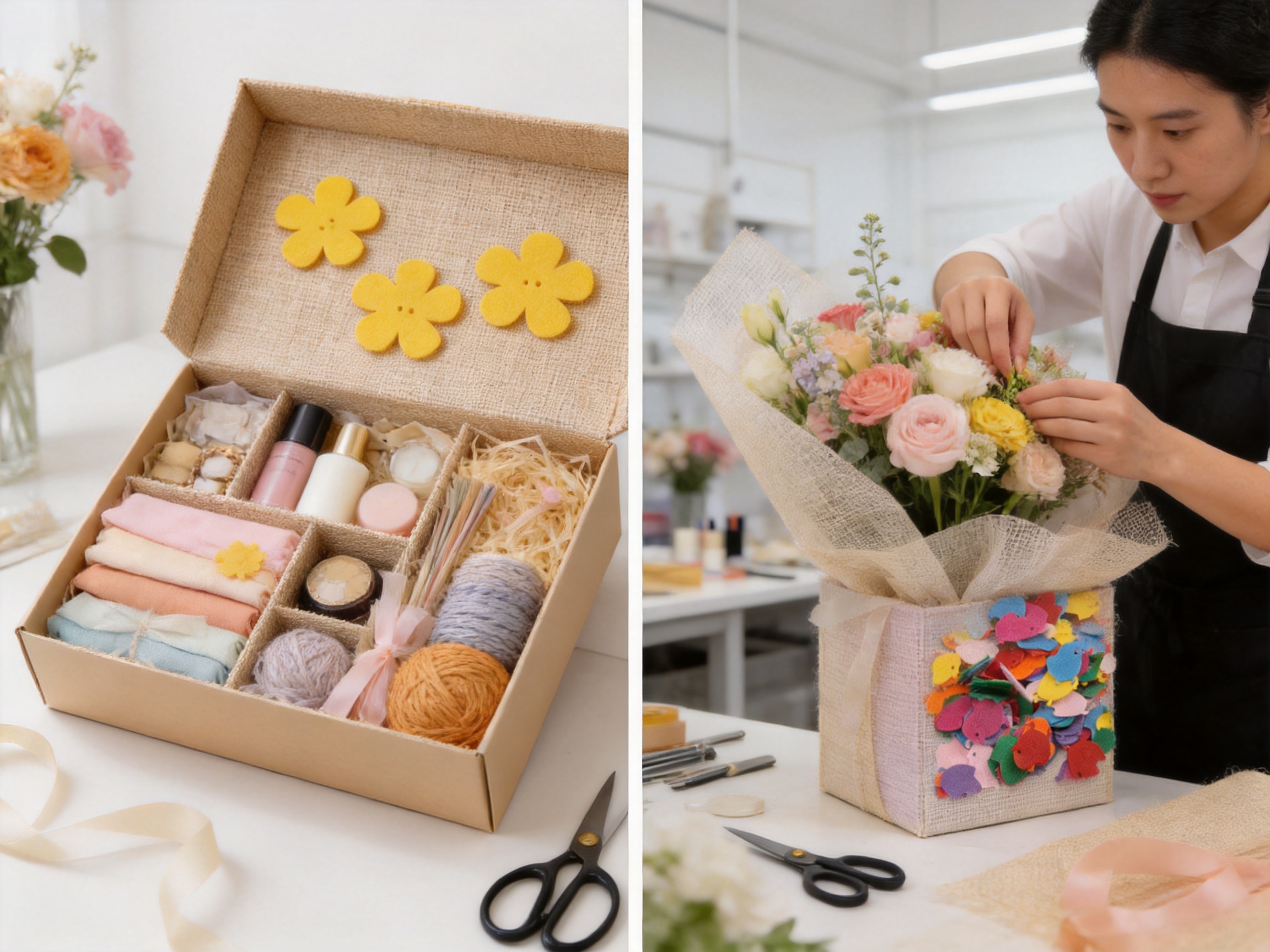
Gift box lining is one of the most direct applications for the product. A layer of nonwoven fabric can cover the bottom or interior walls of a box, creating a soft visual foundation for the contents. It can be folded into corners, layered below products, or cut into custom shapes according to the box structure.
The material is suitable for gift boxes containing cosmetics, candles, accessories, handicrafts, stationery, confectionery packaging, and promotional merchandise. The choice of color can be matched with the outer box, the product label, or a seasonal campaign.
For premium presentation, the fabric can be combined with a paper card, ribbon, decorative yarn, or molded insert. Its flexible surface can help soften the transition between rigid packaging components and the product itself.
Packaging Separation
When multiple products are placed in one package, separation is important for both protection and appearance. Nonwoven fabric can be positioned between items to reduce direct contact and create visual order. It can also be folded around individual products or used as a divider between product layers.
Its tear resistance supports repeated handling during assembly. This is useful for gift sets that contain several shapes or materials, such as bottles, boxes, accessories, and small decorative products. The fabric can help reduce rubbing between items while adding a coordinated color element to the interior.
Retail and Promotional Gift Sets
Retailers and promotional suppliers often need packaging materials that can be adapted to different campaigns. Solid-color nonwoven fabric makes it possible to build a consistent base for various product combinations without redesigning the entire internal package.
For example, the same box format can be used for different seasonal products while the lining color changes to reflect spring, summer, a festival, or a corporate event. Custom colors can also support brand-related packaging programs without requiring complex printing on the accessory itself.
Handmade and DIY Packaging
The fabric is convenient for handmade packaging because it can be handled with common craft tools. It may be cut with scissors, folded by hand, wrapped around a product, or layered with other decorative materials. Crafters can use it to prepare wedding favors, birthday gifts, handmade soaps, floral boxes, and small retail packages.
Its soft texture also supports creative experimentation. Makers can form ruffles, rolls, folds, pockets, and layered surfaces. Combined with paper raffia yarn or fancy yarn, it can create a coordinated handmade appearance while remaining lightweight and easy to store.
Applications in Floral Decoration
Floral decoration requires materials that are visually attractive, easy to shape, and compatible with natural forms. Raffia nonwoven fabric accessories can be used around bouquets, flower boxes, baskets, vases, and gift arrangements.
The breathable structure helps maintain a less enclosed appearance than plastic wrapping. The fabric can be folded around a bouquet, placed under flowers, or used as a contrasting layer inside a box arrangement. Its solid colors make it possible to emphasize the tones of flowers without creating visual clutter.
Florists may use the material for everyday arrangements, seasonal displays, wedding decoration, hotel decoration, retail counters, and event gifts. The flexibility of the fabric allows it to follow curved shapes and irregular arrangements. It can be secured with ribbon, raffia cord, paper yarn, adhesive points, or other florist accessories.
For flower gift boxes, nonwoven fabric may serve both a decorative and separating function. It can help prevent direct contact between stems, containers, and the box interior, while also producing a more finished appearance when the lid is opened.
The material is also appropriate for combination designs. A florist can use one color as the base layer, another color as an accent, and paper raffia or fancy yarn as a tie. This creates a multi-texture arrangement without requiring heavy or complicated components.
Manufacturing Strengths and Production Capabilities
The quality of a decorative accessory depends not only on the selected material but also on the consistency of the manufacturing process. Zhejiang Raffia Paper Products Co., Ltd. was founded in 2014 and originated from a craft materials business unit established in 2010. This background provides more than ten years of experience in decorative materials and packaging-related production.
The company developed from a trading enterprise into an integrated manufacturer specializing in crinkle raffia paper shreds, fancy paper yarns, raffia accessories, and related gift packaging materials. Its product knowledge covers the interaction between paper, yarn, nonwoven fabric, fillers, decorative components, and packaging formats.
The factory is located in Dongyang, Zhejiang Province, and covers a modern production base of approximately 20,000 square meters. More than 200 professional employees support manufacturing, quality control, product development, packaging, administration, and order coordination.
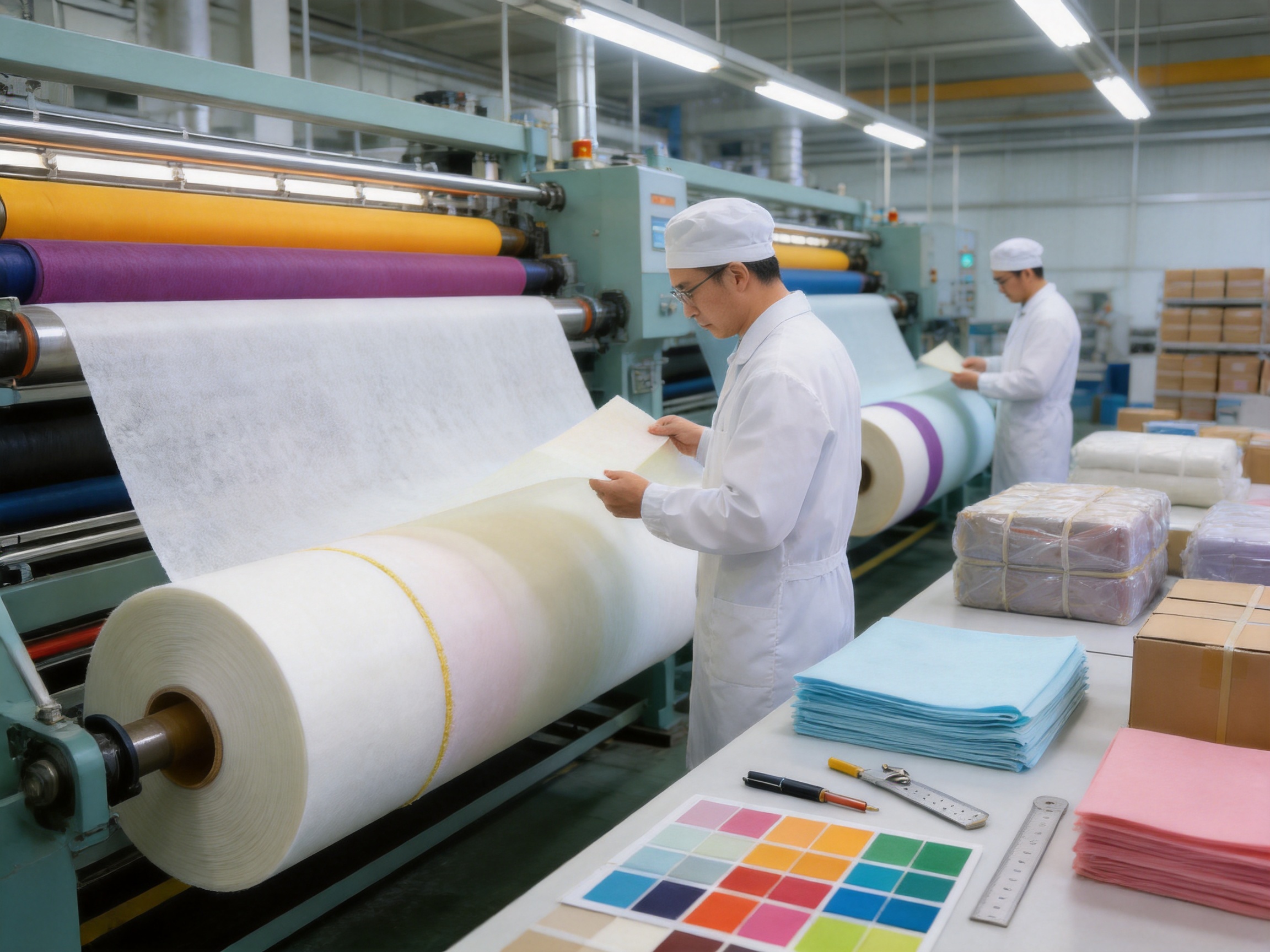
An integrated manufacturing chain links raw material processing, mass production, quality testing, finished-goods packaging, and shipment. This structure can help reduce communication gaps between different production stages. It also allows the company to respond more efficiently when customers require customized dimensions, colors, packaging formats, or coordinated product combinations.
Raw Material Preparation
Stable finished-product quality begins with suitable raw materials. PP nonwoven fabric must be selected and prepared according to the required softness, strength, color, thickness, and intended application. Material preparation may include incoming inspection, color verification, roll assessment, and production planning.
Careful material preparation helps reduce variations that could affect the final appearance. It also supports more consistent operation during cutting, bonding, folding, and packaging.
Hot-Melt Bonding Control
The hot-melt bonding process is central to the product’s performance. Temperature must be controlled so that the fibers bond effectively without becoming excessively hard or damaged. Pressure and processing speed must also be matched to the fabric structure.
Correct process control helps maintain flexibility, tear resistance, and surface uniformity. If bonding is insufficient, the material may separate or lose integrity. If bonding is excessive, the fabric may become too stiff. A standardized and replicable process is therefore important for producing accessories that perform consistently across different orders.
Slitting, Cutting, and Conversion
The company has experience with slitting, twisting, winding, and compression packaging equipment used across its broader product range. These capabilities support the conversion of raw materials into practical formats for packaging and shipment.
For nonwoven fabric accessories, conversion may involve cutting to required widths, preparing rolls or sheets, separating individual pieces, or arranging the material for efficient packing. Flexible conversion capabilities allow customers to specify sizes suited to their box dimensions, floral arrangements, production lines, or retail display systems.
Quality Testing and Batch Consistency
Quality control is necessary for decorative products because even small differences in color, thickness, softness, or edge condition can affect the appearance of finished packaging. The company uses standardized production procedures and a strict, replicable quality control system to support consistent batch quality.
Quality checks may focus on material appearance, color consistency, dimensions, surface condition, flexibility, bonding integrity, and packaging condition. The exact inspection plan can be adjusted according to product specifications and customer requirements.
Consistent inspection is especially valuable for customers that place repeat orders. A packaging program may continue for several months or years, and stable material quality helps the customer maintain a uniform appearance across different production batches.
Compression Packaging and Shipment Preparation
Nonwoven fabric accessories are lightweight and can often be packed efficiently. Compression packaging can help reduce storage and transportation volume when appropriate. Finished-goods packaging is planned to protect the material from dust, moisture, crushing, and handling damage during shipment.
Efficient packing benefits international customers because the product may travel through several stages before reaching the final production site. Well-prepared packaging supports easier receiving, counting, warehousing, and internal distribution.
Customization and OEM/ODM Services
Packaging projects often require more than a standard catalog product. Customers may need a specific color, width, length, thickness, shape, roll format, sheet format, or packing quantity. Zhejiang Raffia Paper Products Co., Ltd. provides flexible OEM and ODM services to support these needs.
Custom color development is useful when nonwoven fabric must coordinate with printed cartons, ribbons, paper raffia, floral tones, or a company’s visual system. Custom sizes can improve material utilization and reduce cutting work at the customer’s facility.
Exclusive brand customization may include packaging design, product labeling, carton markings, and coordinated product sets. A customer may also request a long-term bulk order supply arrangement to support stable production planning and reduce the risk of material shortages.
ODM cooperation can be valuable when a buyer has a packaging concept but does not yet have a finalized accessory specification. The manufacturer can help evaluate suitable materials, dimensions, colors, and combinations with other raffia products. This collaborative approach may shorten development time and result in a more practical final design.
Before mass production, customers should confirm technical details such as material composition, color standard, dimensions, tolerance, packing method, order quantity, and inspection requirements. Sample approval can help ensure that the final product matches the intended use.
Sustainability and Responsible Material Selection
Packaging sustainability involves more than selecting a material described as eco-friendly. It also includes reducing unnecessary weight, minimizing production waste, improving material efficiency, extending product usability, and selecting packaging formats that support transportation and storage efficiency.
Raffia nonwoven fabric accessories contribute to responsible packaging design through their lightweight structure and flexible application. A single material can serve as a lining, separator, or decorative element, reducing the need for multiple unrelated components in some packaging designs.
The product is described as non-toxic, odorless, and eco-friendly. These qualities support safer handling in workshops, packaging rooms, retail environments, and homes. The company also emphasizes sustainable green supply chains and continued improvement of production technology and equipment.
Customers should assess sustainability according to the complete application. They should consider the required service life, the amount of material used, the packaging system, local waste-management practices, and whether the accessory can be reused or repurposed. In some cases, the material may be reused for craft work, storage, floral decoration, or secondary gift packaging.
Responsible sourcing also requires stable quality. Products that tear easily or arrive damaged may create higher waste even if their initial material composition appears favorable. Reliable manufacturing, accurate sizing, and suitable packing can therefore contribute to better material efficiency.
How to Select the Right Specification
The correct specification depends on the intended application. For gift box lining, buyers should consider the internal dimensions of the box, the weight of the product, the desired amount of folding, and the visual effect required after the lid is opened.
For packaging separation, the material should be selected according to product shape and contact conditions. A flexible sheet may be suitable for layered products, while pre-cut pieces may be more efficient for repeated assembly operations.
For floral decoration, color, breathability, flexibility, and compatibility with moisture should be considered. The material should be arranged so that it supports the flowers without placing excessive pressure on delicate stems or petals.
For large-volume production, buyers should evaluate roll or sheet format, packaging quantity, carton size, delivery schedule, and quality inspection procedures. A specification that is easy to process on the customer’s production line can improve efficiency and reduce labor cost.
Samples are recommended before mass production. A sample can be evaluated for touch, color, flexibility, tear resistance, appearance after folding, compatibility with adhesives or ties, and performance under actual packaging conditions.
Quality, Storage, and Handling Recommendations
Raffia nonwoven fabric accessories should be stored in a clean, dry location away from excessive moisture, dust, direct sunlight, and sharp objects. Although the product has moisture-resistant and dustproof properties, proper storage helps preserve its original appearance and performance.
Packages should not be stacked in a way that creates excessive compression or permanent deformation. If the material is supplied in rolls, the rolls should be supported appropriately to prevent crushing. If supplied as folded or cut pieces, the items should be kept flat or arranged according to the packing instructions.
During handling, clean gloves may be used when the material is intended for premium gift packaging or light-colored applications. Work surfaces should be free from oil, dust, loose fibers, and sharp edges that could mark or tear the fabric.
Before use, packaging teams should confirm the color, dimensions, quantity, and overall condition of the received goods. Early inspection allows any questions to be addressed before the material enters a large production run.
Why an Integrated Manufacturer Matters
Buying from an integrated manufacturer can simplify sourcing for customers that require several related product categories. Zhejiang Raffia Paper Products Co., Ltd. produces paper raffia yarn, crinkle raffia paper shreds, fancy yarns, gift packaging materials, raffia tape, and decorative accessories. This product range allows buyers to coordinate materials through one experienced supply partner.
An integrated supplier may also provide more consistent communication between product development, production, quality control, and shipment. When a customer wants to combine nonwoven fabric with paper yarn or decorative filler, the supplier can evaluate the complete set instead of treating each item as an unrelated purchase.
The company reports an annual production capacity of more than 200 million pieces and serves customers throughout China and international markets in Europe, North America, South America, Asia, and other regions. Its products and services have been used by global retail, lifestyle, fashion, beauty, and creative brands, demonstrating experience with demanding supply-chain requirements.
Large capacity is useful when a customer needs regular replenishment or a major seasonal order. However, capacity must be combined with process control, clear specifications, and reliable delivery planning. The company emphasizes on-time delivery, stable batch quality, long-term bulk supply, and flexible OEM and ODM support.
Frequently Asked Questions
What is the main material of the product?
The main material is PP polypropylene nonwoven fabric. The fibers are bonded through a hot-melt process to create a soft, lightweight, flexible, and tear-resistant fabric-like accessory.
Is the material suitable for gift box lining?
Yes. It is designed for gift box lining, packaging separation, and related decorative applications. Its soft surface and flexible structure make it suitable for placing beneath or around products inside a gift box.
Can the fabric be used for floral decoration?
Yes. The material is suitable for floral decoration, including bouquet wrapping, flower box lining, basket decoration, and layered floral presentation. Its breathable structure and flexible construction are useful for these applications.
Are custom colors available?
Multiple solid colors are available, and custom colors can be developed according to customer requirements. Buyers should provide a color reference and confirm sample approval before mass production.
Is the product waterproof?
The product is moisture-resistant, but it should not be regarded as a fully waterproof material or as a substitute for a sealed barrier film. It is intended to withstand ordinary moisture exposure in packaging and decorative applications.
Does the material have a strong smell?
The product is described as non-toxic and odorless. This makes it suitable for gift packaging, floral decoration, craft work, and indoor handling where unwanted odors may affect the user experience.
Can it be combined with other raffia products?
Yes. It can be combined with paper raffia yarn, crinkle raffia paper shreds, fancy yarns, raffia tape, ribbons, and other decorative accessories. Combining textures and colors can create a more complete packaging design.
What customization services are available?
Customization may include color, dimensions, product format, packaging method, labeling, exclusive brand presentation, and long-term bulk supply arrangements. OEM and ODM services are available for customers with specific project requirements.
How should buyers confirm the correct specification?
Buyers should define the intended use, dimensions, color, softness, thickness, packing format, order quantity, and delivery schedule. Requesting samples before mass production is recommended so that the material can be tested in the actual packaging or floral application.
Where is the product manufactured?
The product is manufactured by Zhejiang Raffia Paper Products Co., Ltd. at its production base in Dongyang, Zhejiang Province, China.
Conclusion
Raffia nonwoven fabric accessories provide a practical balance between decoration and function. Made from PP polypropylene nonwoven fabric and produced through hot-melt bonding, the material offers softness, breathability, light weight, tear resistance, flexibility, dustproof performance, moisture resistance, and an odorless, non-toxic composition.
These characteristics make it suitable for gift box lining, packaging separation, floral decoration, handmade packaging, retail gift sets, and coordinated decorative collections. Compared with ordinary paper, plastic film, woven textile, and loose filler materials, it offers a distinctive combination of fabric-like touch, flexible handling, visual simplicity, and reliable performance.
The product is supported by Zhejiang Raffia Paper Products Co., Ltd.’s manufacturing experience in raffia paper, paper yarn, fancy yarn, packaging materials, and decorative accessories. With a modern 20,000-square-meter production base, more than 200 employees, integrated production procedures, quality control systems, OEM and ODM capabilities, and international supply experience, the company can support both standard purchasing and customized packaging development.
For buyers seeking a soft, adaptable, and visually refined material for gift and floral presentation, raffia nonwoven fabric accessories offer a versatile option. When selected according to the application and produced to clear specifications, they can improve packaging appearance, simplify assembly, support product separation, and create a more memorable customer experience.
References
1. Product information supplied for Raffia Nonwoven Fabric Accessories, including material, color, texture, features, applications, and safety characteristics.
2. Company information supplied for Zhejiang Raffia Paper Products Co., Ltd., including manufacturing history, production base, employee resources, product categories, capacity, and international market coverage.
3. General technical principles of polypropylene nonwoven fabric and hot-melt bonding processes used in packaging and decorative material production.
4. General packaging design principles concerning gift box lining, product separation, floral presentation, material flexibility, and decorative coordination.
5. General considerations for responsible packaging material selection, including lightweight construction, production consistency, storage efficiency, and material-use optimization.
Product: Raffia NonWoven Fabric Accessories

 +86 15355323399
 kevin@raffia-paper.com
 No. 151 Guanshan North Road, Dongyang City, Zhejiang Province, China

Copyright © Zhejiang Raffia Paper Products Co., Ltd. All Rights Reserved.

Paper Raffia Yarn & Gift Packaging Factory