
 +86 15355323399
 En
 中文简体
 日本語
 Français
 Español
 Deutsch
 Türk
 عربى
 italiano
 русский
Natural Jute Filling Shreds for Sustainable Gift Packaging and Commercial Applications
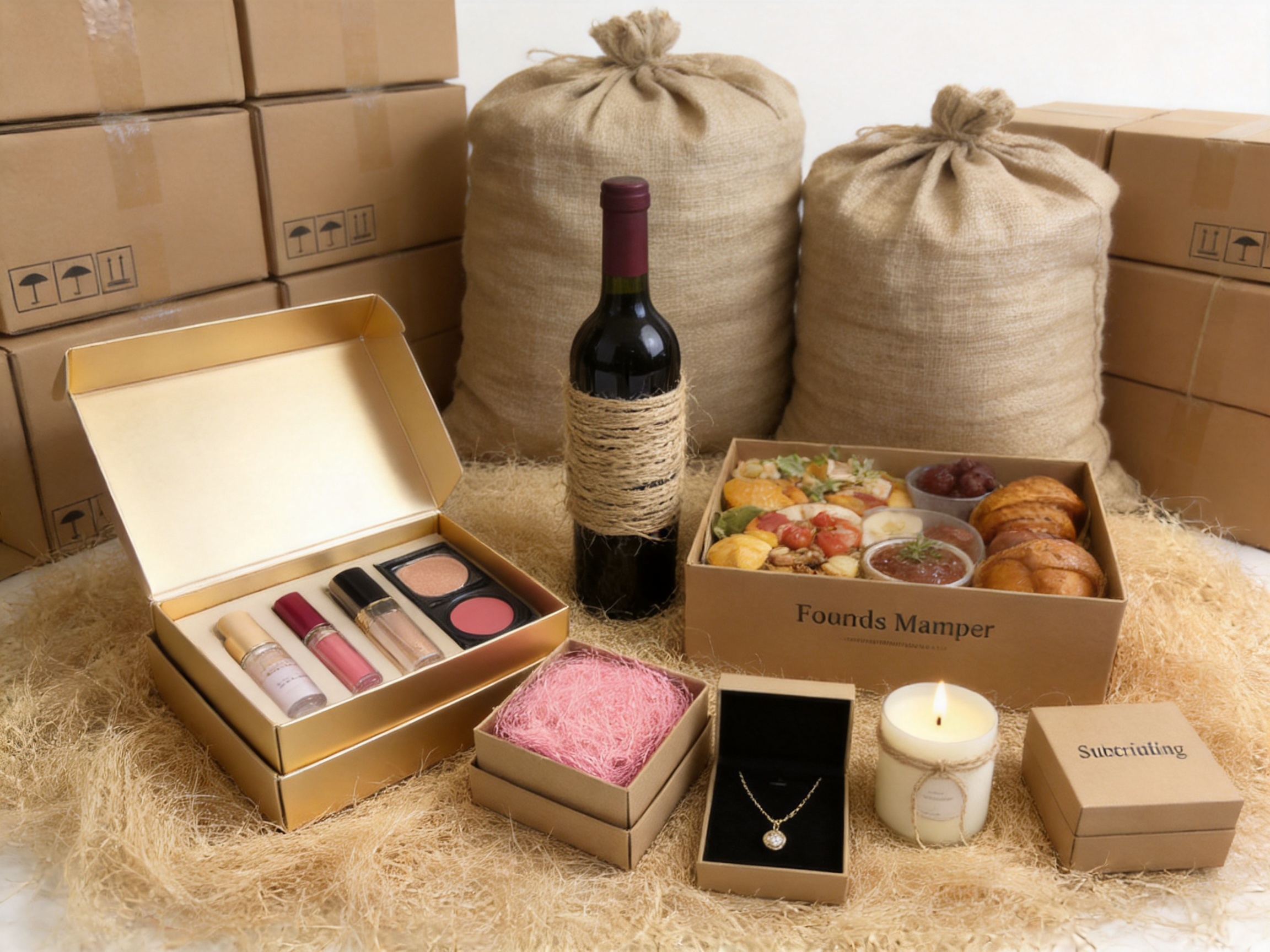
Natural filling materials have become increasingly important in the modern packaging industry. Gift boxes, retail presentation packs, subscription boxes, promotional packages and luxury product collections are no longer judged only by their ability to hold and protect products. Customers also evaluate the visual impression, tactile quality and environmental responsibility of the packaging itself. For this reason, manufacturers and brand owners are actively searching for decorative packaging fillers that can combine an attractive appearance, practical cushioning, reliable supply and sustainable material characteristics.
Naturals Sisal Filling Shreds are designed to meet these requirements. According to the product specification, the material is manufactured from natural jute fiber and processed through physical opening, combing and precision cutting. This creates a loose, textured and flexible filling material that can be placed inside gift boxes, baskets, cartons and presentation packages. The shreds add volume, help stabilize products and produce a natural handcrafted appearance without relying on plastic-based decorative fillers.
The product is suitable for commercial buyers that need more than a small quantity of craft material. Gift box manufacturers, packaging distributors, wholesalers, importers, retailers, promotional product suppliers and brand owners can use the shreds as a standard packaging component or develop a customized filling solution according to their packaging design, color requirements and order volume.
Unlike many low-grade fillers that are produced primarily for visual volume, natural jute shreds provide a combination of decorative texture and functional support. Their lightweight structure can help reduce product movement inside a package, while their natural surface complements organic products, artisan goods, premium gifts and environmentally focused product lines.
What Are Naturals Sisal Filling Shreds?
Naturals Sisal Filling Shreds are loose decorative fibers intended for use as packaging filler. The product name refers to its natural-fiber filling application, while the provided technical specification identifies natural jute fiber as the principal material. During production, the raw fiber is opened, combed and cut into controlled lengths and widths. This process creates soft, irregular-looking shreds while maintaining a consistent commercial specification.
The material is not bleached. Its natural color and original fiber character are retained, giving the finished product an authentic appearance. Customers may also request eco-friendly dyed colors, including custom colors matched to a Pantone reference. This makes the filler suitable for both rustic packaging concepts and more structured brand-color collections.
The standard fiber width is listed as 1–2 mm, with customization available for projects requiring a different visual effect or packing density. Cutting length, fluffiness and mixed-material ratios can also be adjusted according to the intended application. For example, a gift box manufacturer may request a denser and more resilient filler for heavier products, while a cosmetics company may prefer finer, softer and more delicate shreds.
Natural jute filling shreds can be supplied alone or combined with other decorative materials. Common combinations include jute with paper shreds, jute with glitter shreds and multi-color jute mixtures. These combinations allow packaging designers to create seasonal, festive, luxury, natural or promotional effects without developing an entirely new packaging structure.
Why Decorative Filling Matters in Modern Packaging
Packaging filler performs several functions at the same time. Its first role is to occupy unused space inside a box or basket. Empty space allows products to move during handling and transportation, increasing the possibility of scratches, dents, breakage or poor presentation when the package is opened. A suitable filler surrounds the product and helps keep it positioned within the package.
The second role is visual. When a customer opens a gift box, the filler is often one of the first details they see. It creates depth, texture and a sense of completeness. A well-selected filler can make a product appear more carefully presented and can support the visual identity of the package.
The third role is emotional and communicative. Natural fibers can suggest handmade quality, environmental awareness, authenticity and craftsmanship. This is particularly useful for organic food, handmade soap, candles, cosmetics, wine, flowers, artisanal products and boutique retail collections.
The fourth role is commercial. Packaging companies need a filler that can be purchased consistently, packed efficiently and customized when necessary. A material may look attractive in a sample but become difficult to manage if the color changes between batches, the cutting length is inconsistent or the supplier cannot meet production schedules. For this reason, processing control and manufacturing capacity are as important as appearance.
Naturals Sisal Filling Shreds are developed around these combined requirements. They are decorative enough for premium presentation, practical enough for everyday commercial packaging and adaptable enough for OEM and ODM projects.
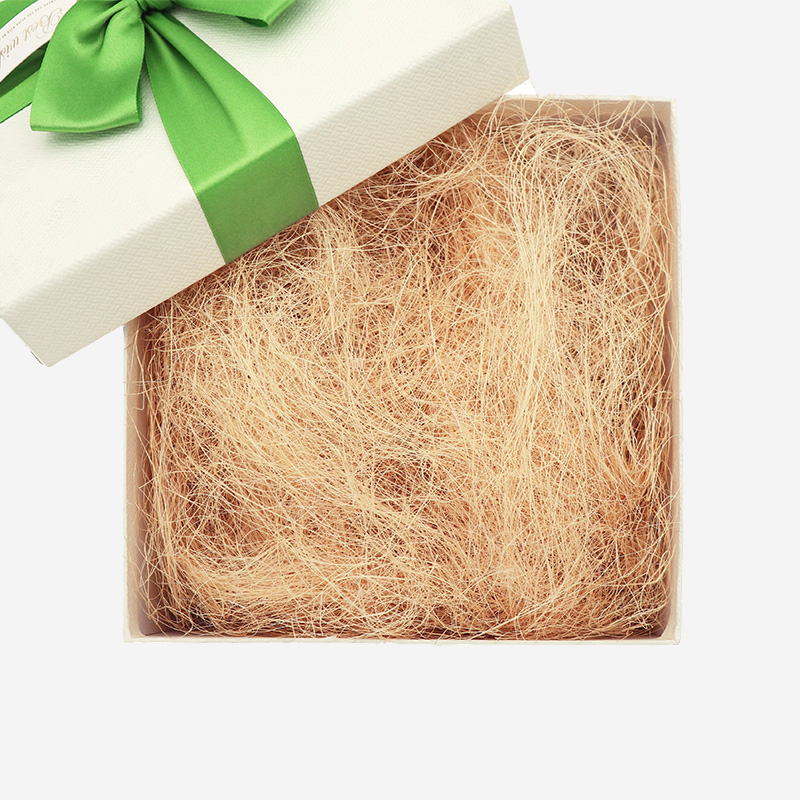
Naturals Sisal Filling Shreds
Key Material Advantages
Natural Plant-Fiber Composition
The product is made from natural jute fiber, a renewable plant-based material. Jute has a recognizable fibrous texture and a warm natural appearance that is difficult to reproduce with ordinary plastic film or synthetic foam. This gives the filling a more authentic visual identity and makes it suitable for packaging concepts centered on nature, craft and sustainability.
Natural fiber also provides a tactile experience. When customers open a package, the texture of the filler contributes to the overall impression of the product. The material feels more organic than smooth plastic pellets or thin synthetic film. This difference can be especially valuable for brands selling handmade, organic, premium or environmentally responsible products.
Unbleached Natural Appearance
The standard product is not chemically bleached. Physical opening, combing and precision cutting are used to prepare the fiber while preserving its original character. Avoiding bleaching helps maintain a natural visual effect and supports packaging programs that prefer fewer processing treatments.
The unbleached appearance can be used directly for kraft-style packaging, natural gift baskets, wooden boxes and organic product presentations. It can also act as a base material for dyed or mixed-color products when a more customized appearance is required.
Biodegradable Characteristics
Natural jute is a plant fiber that can biodegrade under suitable disposal conditions. This characteristic makes it attractive to buyers seeking alternatives to plastic-based decorative fillers. It does not mean that every finished package will automatically have the same environmental performance, because inks, coatings, tapes, labels and other components also affect recyclability and disposal. However, replacing a synthetic decorative filler with a natural fiber can be a meaningful improvement in a packaging system designed with environmental considerations.
For procurement teams, the biodegradable nature of the material can support internal sustainability goals, environmental product positioning and customer requests for plant-based packaging components. Buyers should still confirm the requirements of their destination market, packaging system and intended disposal method before making specific environmental claims.
Lightweight Cushioning and Product Stabilization
The loose and flexible structure of the shreds allows them to fill gaps around products. When placed correctly, the fibers help limit movement and provide a layer of soft separation between the product and the package. They are particularly suitable for products that need presentation support rather than heavy-duty impact protection.
Filling shreds should not be considered a replacement for engineered protective packaging in every application. Fragile glass, heavy machinery parts and products exposed to severe impact may require inserts, molded pulp, foam or other dedicated protection. However, for gift boxes, retail packs and presentation-oriented packaging, natural jute shreds provide a useful balance between cushioning, appearance and ease of handling.
Flexible Visual Styling
The natural color creates a warm and understated appearance, but the product can also be supplied in eco-friendly dyed colors. Pantone color matching is available for branded projects, seasonal collections and coordinated packaging programs. Buyers can request a single color, several colors or a controlled ratio of multiple shades.
Color flexibility is important for businesses that use the same basic filler across different product lines. A natural brown shade may be appropriate for organic food, while soft pastel colors may suit cosmetics, baby gifts or spring collections. Deeper colors can be used for wine, holiday, luxury or corporate gift packaging.
Comparison with Conventional Packaging Fillers
Packaging buyers often compare natural jute shreds with paper shreds, plastic film, foam pellets, wood wool and synthetic decorative fibers. Each material has its own advantages, but natural jute offers a distinctive combination of texture, appearance and customization.
| Evaluation Factor | Natural Jute Filling Shreds | Paper Shreds | Plastic Decorative Fillers | Foam-Based Fillers |
| Primary Material | Natural jute plant fiber | Processed paper | Plastic film or synthetic polymer | Expanded synthetic material |
| Visual Character | Natural, fibrous and handcrafted | Clean, lightweight and colorful | Bright, smooth or glossy | Functional but less natural |
| Biodegradable Potential | Yes, under suitable conditions | Usually biodegradable or recyclable depending on treatment | Generally limited | Generally limited |
| Texture | Warm, irregular and tactile | Curled or shredded paper texture | Smooth, glossy or film-like | Lightweight and granular |
| Brand Customization | Color, width, length and mixing options | Color, cut and paper type options | Color and film style options | Limited decorative flexibility |
| Typical Brand Image | Natural, artisan and sustainable | Practical, colorful and versatile | Festive or decorative | Protective and industrial |
Compared with ordinary paper shreds, natural jute provides a more fibrous and rustic texture. Paper shreds may be preferred when a very clean, uniform or highly colorful appearance is required, but jute offers a stronger connection to natural materials and handmade products.
Compared with plastic fillers, jute reduces reliance on petroleum-based decorative materials and provides a more authentic tactile experience. Plastic fillers can offer bright colors and a consistent shape, but they may not support the environmental image that many contemporary brands want to communicate.
Compared with foam-based fillers, jute is more decorative and better suited to gift presentation. Foam products may provide more specialized impact protection, but they generally do not deliver the same natural appearance or biodegradable plant-fiber positioning.
The most effective material depends on the product and packaging objective. In many cases, natural jute can also be combined with other fillers to create a hybrid solution. A paper-and-jute mixture may provide more color variation, while a jute-and-glitter mixture can add a festive effect without making the entire package appear synthetic.
Manufacturing Process and Quality Control
Raw-Fiber Selection
Consistent finished quality begins with raw-material selection. Fibers are selected according to their length, texture, cleanliness, color and suitability for opening and cutting. Material selection affects the final softness, visual uniformity, fluffiness and packing behavior of the shreds.
For commercial buyers, raw-fiber control is essential because natural materials can vary. A professional manufacturing system must identify and manage differences before the material enters mass production. This helps reduce unwanted changes in color, fiber thickness and finished appearance between production batches.
Physical Opening
Physical opening loosens the compacted fibers and prepares them for further processing. The objective is to separate the material without unnecessarily damaging the natural fiber structure. Proper opening helps produce a filler that expands effectively when removed from its packaging and provides an attractive loose appearance inside the gift box.
Controlled opening also supports more stable packing density. If fibers remain too tightly bound, the filler may not expand evenly. If they are over-processed, the material may lose its natural texture or become excessively short. The production team therefore needs to balance openness, resilience and visual consistency.
Combing and Fiber Alignment
Combing removes excessive tangles and helps distribute the fibers more evenly. It does not make every shred completely identical, because the natural irregularity is part of the product's visual appeal. Instead, it creates a more manageable and consistent structure for cutting and packaging.
Combing also helps improve the practical performance of the material. Better-separated fibers can spread around products more easily, fill empty spaces and create a more uniform presentation. For packaging manufacturers, this can make filling operations faster and reduce the need for excessive manual adjustment.
Precision Cutting
Precision cutting controls the width and length of the finished shreds. The standard fiber width is 1–2 mm, and custom dimensions can be developed for specific projects. Cutting control is important because very short fibers may not provide enough visual volume, while excessively long fibers may be difficult to manage in smaller boxes.
Different products require different shred structures. A jewelry box may need fine and delicate filling. A wine gift box may require longer and more resilient fibers to support a heavier bottle presentation. A seasonal hamper may use a mixed length to achieve greater volume and visual movement. Custom cutting gives buyers the ability to match the filler to the package format.
Color Processing
The material may be supplied in its natural shade or processed into eco-friendly dyed colors. Color production requires control of shade, coverage and batch consistency. For large packaging programs, the color must remain sufficiently stable from sampling to mass production.
Customers requesting Pantone matching should approve a sample before mass production. Natural fibers can display color differently from smooth paper or plastic because the fiber surface contains texture and variation. A professional sampling process allows the buyer to evaluate the actual finished material under the intended lighting and packaging conditions.
Inspection and Batch Control
Finished products are inspected before shipment. Quality control includes checking the general appearance, fiber dimensions, color, packaging condition and compliance with customer specifications. The purpose is not to eliminate every natural variation, but to ensure that the material remains within an agreed commercial standard.
Standardized inspection is especially important for distributors and wholesalers that supply the same product to multiple customers. Stable quality simplifies inventory planning, reduces complaints and makes it easier for customers to reorder the same specification.
Advanced Manufacturing Strengths
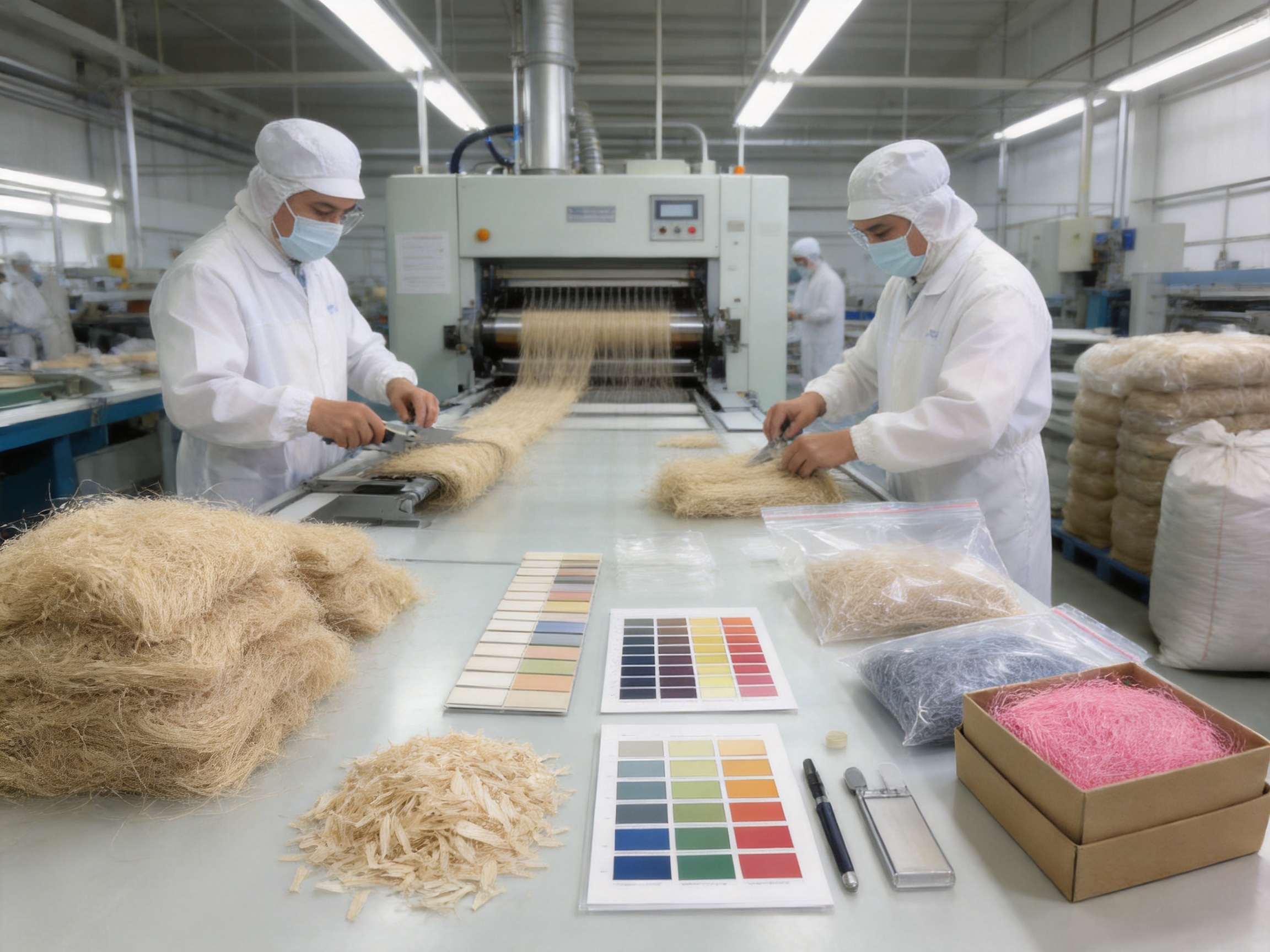
The supplier operates an integrated production system supported by a modern production base in Dongyang, Zhejiang Province. The facility covers approximately 20,000 square meters and employs more than 200 professional workers. This scale provides a stronger foundation for commercial supply than a small workshop that relies on manual processing alone.
The company's manufacturing background developed from a craft-materials business unit established in 2010 and a company founded in 2014. Over more than ten years of industry experience, the business has expanded from trading activities into integrated manufacturing. Its production capabilities include raw-material processing, slitting, twisting, winding, compression packaging, quality testing and finished-goods shipment.
Although Naturals Sisal Filling Shreds are processed through opening, combing and cutting rather than paper-yarn twisting, the broader equipment and production experience are valuable to packaging buyers. The company understands the requirements of decorative materials, fiber handling, custom packaging and export logistics. This allows buyers to source related materials from one experienced manufacturing partner rather than coordinating several small suppliers.
The stated annual production capacity exceeds 200 million pieces across its product range. This capacity is important for customers managing retail programs, seasonal campaigns and long-term wholesale supply. Larger capacity can improve production scheduling and help reduce the risk of supply interruption during peak periods such as Christmas, Valentine's Day, wedding season and major promotional campaigns.
Integrated manufacturing also helps improve communication between product development, production, inspection and packaging teams. When a customer requests a custom width, color, mixed-filler ratio or private-label package, the project can be reviewed through a coordinated process rather than being passed between unrelated companies.
Production Equipment and Process Development
The company continues to upgrade its core technologies and production equipment for slitting, twisting, winding and compression packaging. These capabilities are directly relevant to the wider decorative-material product range and support a culture of process standardization. Equipment investment also allows the business to develop repeatable manufacturing methods rather than depending entirely on individual operator skill.
For natural filling shreds, repeatability is especially useful in controlling fiber width, cutting length, fluffiness and packing density. Customers can establish a reference sample and use it as a basis for future orders. This is more efficient than redefining the appearance of every shipment.
Compression Packaging Capability
Natural jute shreds are lightweight but can occupy significant volume when loose. Vacuum compression packaging reduces shipping volume and makes storage more efficient. This is a practical advantage for international buyers because freight charges are often affected by dimensional volume as well as net weight.
Compression packaging also protects the material from dust and helps keep the product organized during transportation. Once the package is opened, the fibers can be loosened and distributed inside the final package. Buyers should conduct their own unpacking and expansion tests to determine the appropriate quantity per box and the best storage period before use.
Export and Supply-Chain Experience
The company serves customers in China and exports to Europe, North America, South America, Asia and other regions. International supply experience is valuable because packaging buyers often require export documentation, coordinated carton packing, private labeling, stable lead times and communication across different time zones and business practices.
The company has supplied materials used by well-known international brands and retail organizations, including Costco, IKEA, LOKLIK, Disney, Lancôme, Chanel, Dior and Primark. Such experience indicates familiarity with demanding purchasing environments, although each customer project remains subject to its own specifications, approvals and compliance requirements.
OEM and ODM Customization Options
Customization is one of the strongest advantages of purchasing natural jute shreds from an integrated manufacturer. Standard products are suitable for many applications, but commercial buyers often need a specification that matches a particular package, retail program or brand identity.
Material and Color Customization
Customers may choose natural jute fiber, natural color or eco-friendly dyed colors. Pantone color matching can be used as a reference for brand-exclusive shades, seasonal collections and multi-color product lines. Buyers can also request different color ratios, such as a dominant base color with a smaller quantity of contrast fibers.
Color selection should consider the complete packaging system. Kraft paper, printed cartons, ribbons, labels and product colors all influence the final appearance. Sampling the filler inside the actual box is recommended because the same shade may appear different against white, black, kraft or metallic packaging.
Fiber Structure Customization
Fiber width, cutting length and fluffiness can be adjusted according to the product. Finer shreds may suit small boxes and delicate products. Longer fibers may create a fuller appearance in baskets and larger gift packages. Different fluffiness levels can influence how much material is required to fill a specific package volume.
Buyers should provide package dimensions, product weight, product shape and desired visual effect when requesting a custom structure. This information allows the production team to recommend a suitable filling density and specification.
Mixed-Filler Solutions
Natural jute can be combined with paper shreds, glitter shreds or multiple colors of jute. Mixed solutions are useful when a package needs both natural texture and a decorative accent. A jute-and-paper mixture can create a layered appearance, while a jute-and-glitter combination may be suitable for festive gift boxes and holiday collections.
Custom material ratios should be agreed during sampling. A higher proportion of jute creates a stronger natural impression, while a higher proportion of paper or glitter can increase color contrast and visual brightness. The final mixture should also be checked for separation during transport and filling.
Packaging and Private Label Options
Available packaging options include vacuum-compressed bags, transparent OPP bags, bulk woven bags, custom-weight packaging, private-label packaging and custom cartons. Retail OPP bags are appropriate for ready-to-sell products, sample distribution and e-commerce orders. Bulk woven bags are more suitable for factories, wholesalers and industrial users that will repackage the filler themselves.
Private-label packaging allows distributors and retailers to sell the filler under their own brand identity. Custom cartons can be designed for export handling, warehouse stacking and retail presentation. Packaging requirements should include the desired net weight, bag dimensions, label information, carton quantity and shipping marks.
Commercial Applications
Gift Boxes and Gift Baskets
Natural jute shreds are widely suited to premium gift boxes and gift baskets. They provide a soft base layer, reduce empty space and help create a fuller appearance. They can be used for birthdays, anniversaries, weddings, corporate gifts and seasonal collections.
Wine and Spirits Packaging
Wine and spirits packages often require both product stabilization and visual enhancement. Jute shreds can surround bottles inside cartons, wooden boxes or hamper baskets. Because bottles are relatively heavy, the filler should be combined with an appropriate structural insert when impact protection is important.
Food and Gourmet Hampers
Gourmet foods, chocolate, confectionery, tea, coffee and specialty products can be presented in natural-fiber filler. The material supports an artisan and premium image that complements kraft cartons, wooden boxes and woven baskets. For direct food contact applications, buyers should confirm the intended use and any applicable regulatory or hygiene requirements. The filler is generally used as secondary packaging rather than as a direct food-contact material.
Cosmetics and Skincare Sets
Cosmetic and skincare gift sets benefit from attractive presentation. Natural jute can be used around bottles, jars, tubes and accessories to create a layered opening experience. Dyed colors can coordinate with a product collection, while natural jute may support clean beauty, botanical and organic positioning.
Jewelry and Watch Packaging
For jewelry and watches, fine and controlled shreds may be preferred. The material can fill space around presentation boxes or provide a decorative base inside a larger gift package. Delicate products should remain inside their own protective trays or pouches, with the jute serving as surrounding presentation filler.
Soap, Candle and Handmade Products
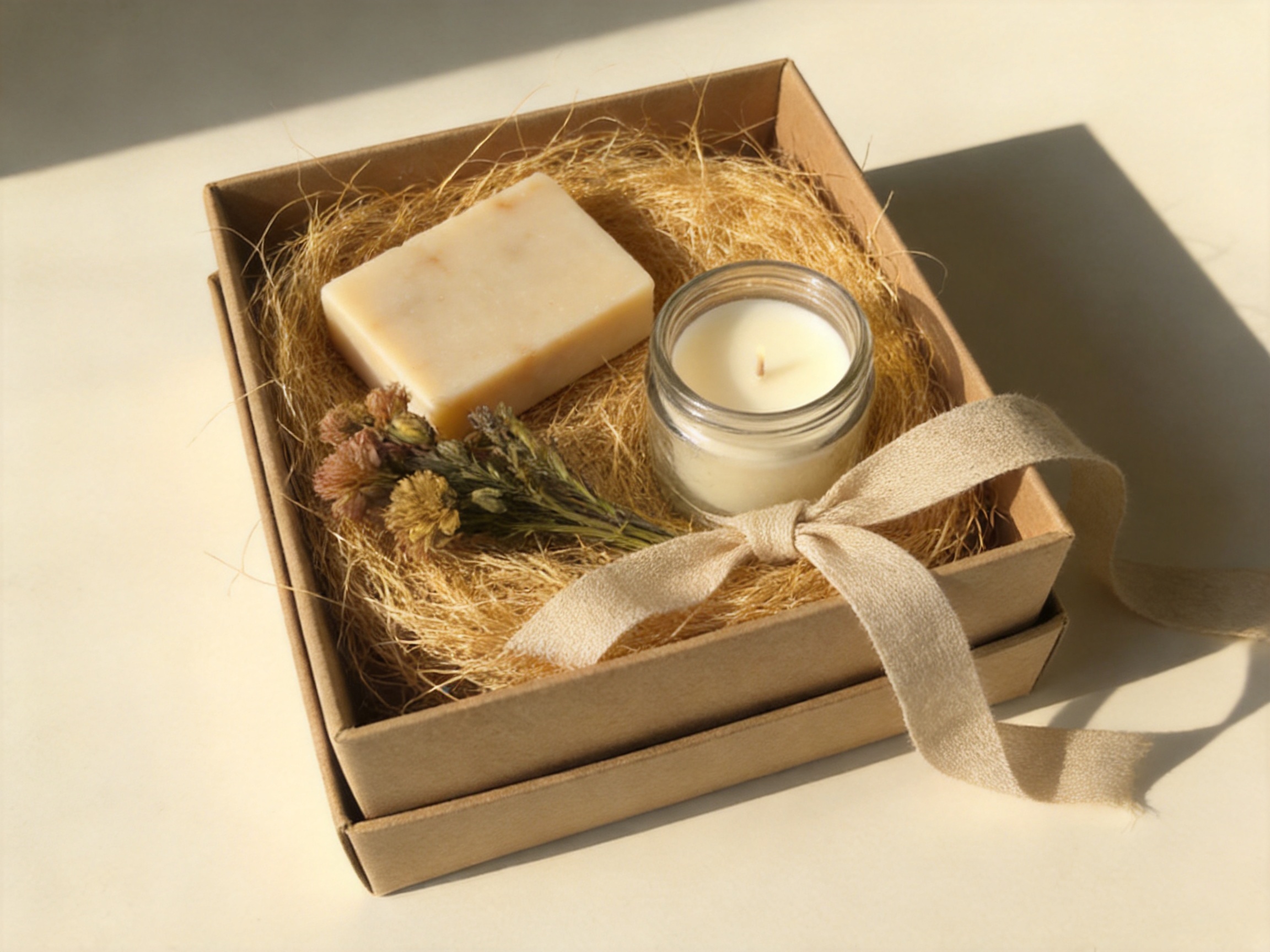
Handmade soap, candles, ceramics, small artwork and craft products often rely on packaging to communicate their artisanal value. Natural jute fibers reinforce this image and can be combined with recycled cartons, paper labels and natural ribbons for a coordinated presentation.
Flowers and Floral Products
Flower bouquet packaging and dried-flower gift sets can use jute shreds to add volume and texture. The material works particularly well with rustic, botanical and countryside-inspired designs. Storage should be dry and clean to preserve the fiber appearance.
Subscription and E-Commerce Packaging
Subscription boxes and e-commerce gift packages require materials that are easy to pack and visually appealing when opened by the customer. Natural jute can improve the unboxing experience while helping secure products inside the carton. Vacuum-compressed bulk supply can also help subscription-box companies manage warehouse space.
Packaging, Storage and Logistics Considerations
Natural jute filling shreds should be stored in a dry, clean and well-ventilated environment. Although the product is suitable for commercial packaging, natural fibers can be affected by moisture, contamination and unsuitable storage conditions. Buyers should keep unopened packages away from water, condensation and direct exposure to dirty floors or outdoor weather.
Vacuum-compressed bags are suitable for export and bulk shipments. They reduce shipping volume and help protect the contents from dust during transportation. After opening, the material should be loosened before use so that the fibers regain their intended volume.
Transparent OPP bags are appropriate for retail-ready products and sample distribution. They allow the customer to see the color and texture of the filler before purchase. Bulk woven bags are practical for high-volume factories and wholesalers that prioritize efficient storage over retail display.
Logistics planning should consider the difference between compressed shipping volume and expanded usage volume. A buyer may receive a compact package that expands considerably after opening. It is therefore useful to establish a standard expansion test and calculate the amount required for each box size.
For overseas orders, buyers should confirm the packing list, carton dimensions, gross and net weight, labeling requirements, delivery terms and any destination-market documentation. The supplier can discuss REACH availability upon request and can review other standards when required by the project.
Who Should Purchase This Product?
Naturals Sisal Filling Shreds are designed primarily for commercial and industrial buyers. The product is suitable for companies that need repeatable supply, customization and professional packaging support rather than a small craft quantity purchased occasionally.
- Gift box manufacturers
- Packaging material manufacturers
- Packaging distributors
- Wholesale packaging suppliers
- Retail packaging companies
- Brand owners
- Promotional product suppliers
- Wine and spirits packaging companies
- Cosmetic packaging manufacturers
- Jewelry packaging suppliers
- Floral packaging companies
- E-commerce packaging suppliers
- Importers and wholesalers
- OEM packaging companies
- Subscription-box operators
For these buyers, the main value is not only the filler itself. The larger benefit comes from access to a stable manufacturing system, custom product development, multiple packaging formats and coordinated support from sampling to mass production.
How the Product Helps Solve Common Buyer Challenges
Many companies want to replace plastic decorative fillers but are concerned about appearance, supply stability and product performance. Natural jute provides a practical alternative for applications where a natural visual identity is important.
Some packaging companies need to make a basic gift box look more premium without redesigning the entire structure. Adding an attractive fiber filler can create more depth and improve the opening experience at relatively low packaging complexity.
Other buyers struggle with transportation costs because loose fillers occupy substantial space. Vacuum compression can reduce shipping volume and improve warehouse efficiency, particularly for international wholesale orders.
Brand owners may also need exclusive colors or mixed materials to distinguish their packaging from competitors. Pantone color matching, private-label bags and custom fiber structures allow the same base material to support different market positions.
Finally, distributors need confidence that repeat orders will resemble the original sample. Standardized opening, combing, cutting, inspection and packaging processes help create a more reliable supply program.
Recommended Purchasing Process
A successful commercial project should begin with a clear product brief. The buyer should provide the intended application, package dimensions, product weight, desired color, preferred texture, estimated annual quantity and target market.
The next step is sample development. The sample should be evaluated inside the actual gift box or basket rather than on a loose sample card alone. This allows the buyer to assess expansion, color interaction, filling quantity, product stability and the final appearance after the package is closed and reopened.
After the sample is approved, the buyer should confirm technical details such as fiber width, cutting length, color reference, mixed-material ratio, packaging format, net weight per bag and carton quantity. Any acceptable natural variation should also be discussed before mass production.
For large or long-term programs, a retained reference sample is recommended. The reference can be used to compare future production batches and clarify the agreed quality standard. Production schedules should be confirmed in advance for seasonal or promotional orders.
Before shipment, the buyer may request inspection documents, packaging photographs, carton information and other export details. These steps reduce communication problems and help ensure that the finished goods arrive ready for warehouse storage or direct distribution.
Frequently Asked Questions
1. What are Naturals Sisal Filling Shreds made from?
The product is made from natural jute plant fiber according to the supplied product specification. The fibers are physically opened, combed and precision-cut without bleaching.
2. Is the product biodegradable?
Natural jute is a renewable plant fiber and can biodegrade under suitable disposal conditions. The environmental performance of the complete package also depends on other components such as coatings, adhesives, labels and outer packaging.
3. Is the material bleached?
No. The standard product is not bleached. It retains a natural fiber appearance. Eco-friendly dyed colors are available for customers requiring a customized appearance.
4. What is the standard fiber width?
The listed standard fiber width is 1–2 mm. Custom widths can be discussed for projects that require a different texture, filling density or visual effect.
5. Can the color be customized?
Yes. Natural color, custom dyed colors, Pantone-matched colors, brand-exclusive colors, seasonal shades and multi-color combinations are available subject to sample approval and production requirements.
6. Can the filler be mixed with other materials?
Yes. Natural jute can be mixed with paper shreds, glitter shreds or different jute colors. Custom material ratios can be developed for specific packaging designs.
7. Is the product suitable for fragile goods?
It can help stabilize and cushion many gift and retail products, but it is not a universal replacement for engineered protective packaging. Fragile or heavy products may require inserts, trays or additional impact protection.
8. What packaging formats are available?
Available options include vacuum-compressed bags, transparent OPP bags, bulk woven bags, custom-weight packaging, private-label packaging and custom cartons.
9. Can private labeling be provided?
Yes. Private-label bags, custom cartons and branded packaging solutions are supported for qualifying projects.
10. Can large-volume orders be supplied?
Yes. The integrated production and packaging system is designed to support wholesale orders, export shipments and long-term supply programs. Lead time depends on order quantity, customization and production scheduling.
11. Is there a minimum order quantity?
The MOQ is to be confirmed according to the required specification, color, packaging format and order volume. Custom colors and private-label packaging may require different minimum quantities from standard products.
12. Is REACH compliance available?
REACH documentation is available upon request according to the supplied specification. Buyers should identify all destination-market requirements before placing an order.
13. How should the material be stored?
It should be stored in a dry, clean and ventilated location, protected from water, condensation, dust and unsuitable handling conditions.
14. Can the product be used for retail sale?
Yes. Transparent OPP bags and custom retail packaging are available for retail-ready products, sample distribution and e-commerce sales.
15. Who manufactures and supplies the product?
The product is supplied by Zhejiang Raffia Paper Products Co., Ltd., an integrated manufacturer of raffia paper materials, decorative packaging products, fancy yarns and related craft materials based in Dongyang, Zhejiang Province, China.
Technical Specification Summary
| Item | Specification |
| Product Name | Natural Jute Filling Shreds |
| Material | Natural Jute Fiber |
| Fiber Width | 1–2 mm, customizable |
| Color | Natural or custom Pantone colors |
| Processing | Physical opening, combing and precision cutting |
| Surface Treatment | Natural or eco-friendly dyed |
| Bleaching | No bleaching |
| Biodegradability | Yes, under suitable disposal conditions |
| Packaging Options | Vacuum bag, OPP bag or bulk woven bag |
| OEM and ODM | Supported |
| Custom Mixing | Paper shreds, glitter shreds or multi-color jute |
| Compliance | REACH available upon request; other standards as required |
| MOQ | To be confirmed |
| Lead Time | According to order quantity and customization |
Conclusion
Naturals Sisal Filling Shreds provide a practical and attractive solution for companies seeking natural packaging filler. Made from natural jute fiber and processed through physical opening, combing and precision cutting, the material combines an authentic appearance with lightweight cushioning and flexible presentation options.
Its main advantages over conventional synthetic fillers include a natural plant-fiber composition, unbleached appearance, biodegradable potential, tactile texture, custom color capability and compatibility with mixed-filler designs. Compared with ordinary paper shreds, it offers a more fibrous and rustic character. Compared with plastic fillers, it supports a stronger natural and environmentally conscious packaging message.
The product is especially valuable when supplied by an experienced manufacturer with integrated production, quality control, compression packaging and OEM and ODM capabilities. Zhejiang Raffia Paper Products Co., Ltd. provides a substantial manufacturing base, experienced production teams, customized specifications, multiple packaging choices and international supply-chain support.
For gift box manufacturers, packaging distributors, wholesalers, retailers and brand owners, natural jute shreds can improve product presentation without adding unnecessary structural complexity. With appropriate sampling, specification control and storage practices, they can become a reliable component in gift packaging, gourmet hampers, wine presentation, cosmetics, handmade products, floral packaging and e-commerce fulfillment.
As the packaging industry continues to move toward materials that combine aesthetics, function and environmental responsibility, natural jute filling shreds offer a flexible solution for both standard wholesale supply and specialized packaging development.
References
1. Product specification and technical information supplied for Naturals Sisal Filling Shreds.
2. Manufacturing and company information supplied by Zhejiang Raffia Paper Products Co., Ltd.
3. General principles of natural-fiber processing, including opening, combing, cutting and fiber handling.
4. General packaging-industry practices concerning gift-box filling, product stabilization, retail presentation and compressed logistics.
5. General environmental packaging principles concerning renewable plant fibers, biodegradability and complete-package disposal considerations.
6. General quality-management practices for customized packaging materials, including sampling, reference approval, batch inspection and export packaging control.
Product: Naturals Sisal Filling Shreds

 +86 15355323399
 kevin@raffia-paper.com
 No. 151 Guanshan North Road, Dongyang City, Zhejiang Province, China

Copyright © Zhejiang Raffia Paper Products Co., Ltd. All Rights Reserved.

Paper Raffia Yarn & Gift Packaging Factory