
 +86 15355323399
 En
En  中文简体
中文简体 日本語
日本語 Français
 Español
 Deutsch
 Türk
Türk عربى
عربى italiano
 русский
Raffia Nonwoven Fabric Accessories for Sustainable Gift Packaging and Floral Decoration
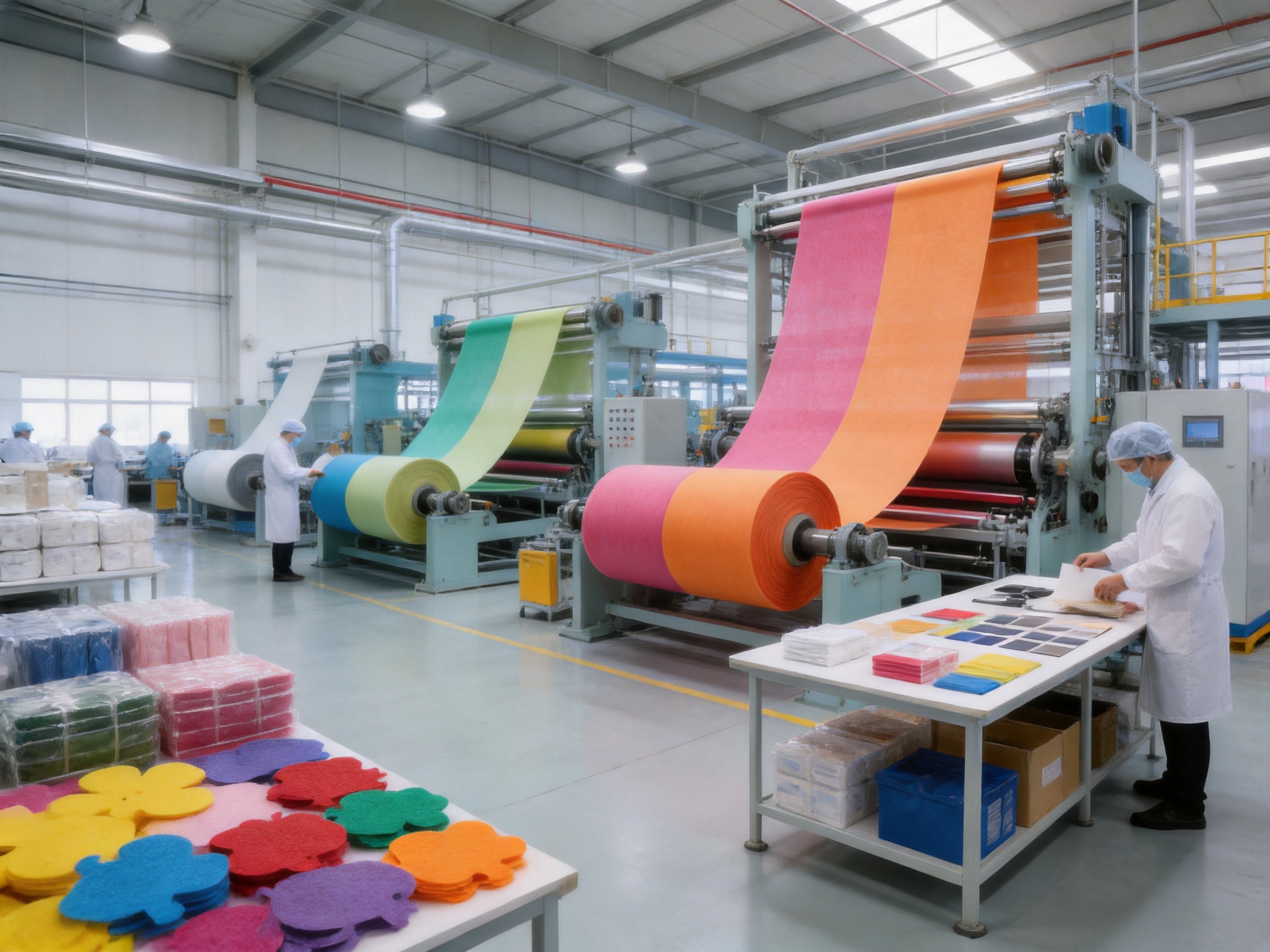
Raffia nonwoven fabric accessories are versatile packaging and decorative materials designed for applications that require softness, flexibility, visual appeal, and dependable handling performance. Made from polypropylene nonwoven fabric and manufactured through a hot-melt bonding process, this material provides a practical alternative to conventional paper fillers, textile scraps, plastic films, and less consistent decorative fabrics. It is suitable for gift box lining, packaging separation, floral decoration, craft projects, retail presentation, and a wide range of handmade applications.
As consumers and businesses increasingly pay attention to packaging quality, product safety, sustainability, and visual presentation, the demand for reliable decorative accessories continues to grow. Packaging is no longer used only to protect an item during transportation. It also communicates brand values, supports product positioning, improves the unboxing experience, and helps create an emotional connection with the recipient. A suitable lining or decorative filler can make a gift appear more complete, protect delicate contents from contact and movement, and provide a refined finishing touch.
Raffia nonwoven fabric accessories respond to these needs with a balanced combination of functional performance and decorative flexibility. The material is soft and lightweight, yet tear-resistant and flexible. It is breathable, dustproof, moisture-resistant, non-toxic, and odorless. Multiple solid colors can be supplied, while custom colors are available for projects that require precise coordination with a brand identity, seasonal theme, event concept, or product collection.
The product is manufactured by Zhejiang Raffia Paper Products Co., Ltd., an established Chinese manufacturer specializing in raffia paper, paper raffia yarn, fancy yarns, DIY cords, gift packaging materials, and related customized products. With an integrated production system, standardized operating procedures, professional employees, quality testing capabilities, and OEM and ODM experience, the company is positioned to support both small creative projects and large-scale packaging supply programs.
Understanding Raffia Nonwoven Fabric Accessories
Raffia nonwoven fabric accessories are made from PP polypropylene fabric. Unlike woven textiles, which are produced by interlacing yarns, nonwoven fabric is created by bonding fibers or material webs together. In this product, the bonding is achieved through a hot-melt process. Heat is used to activate the bonding material, allowing the fabric structure to form without relying on traditional weaving or complicated sewing operations.
This construction gives the material a smooth and flexible format that is easy to cut, fold, layer, arrange, or combine with other packaging elements. It can be used as a lining inside gift boxes, as a separator between products, as a decorative base for flowers, or as a supporting material in craft and presentation work. Its lightweight structure helps reduce unnecessary bulk while still adding color and texture to a package.
The term “raffia” is often associated with natural plant fibers and traditional weaving materials. However, in the packaging and craft industry, raffia-related products can include a variety of paper, synthetic, nonwoven, and decorative materials that provide a similar visual or functional role. Raffia nonwoven fabric accessories are particularly useful when a project requires more flexibility, softer handling, consistent color, and improved resistance to tearing than some natural or loosely formed materials can offer.
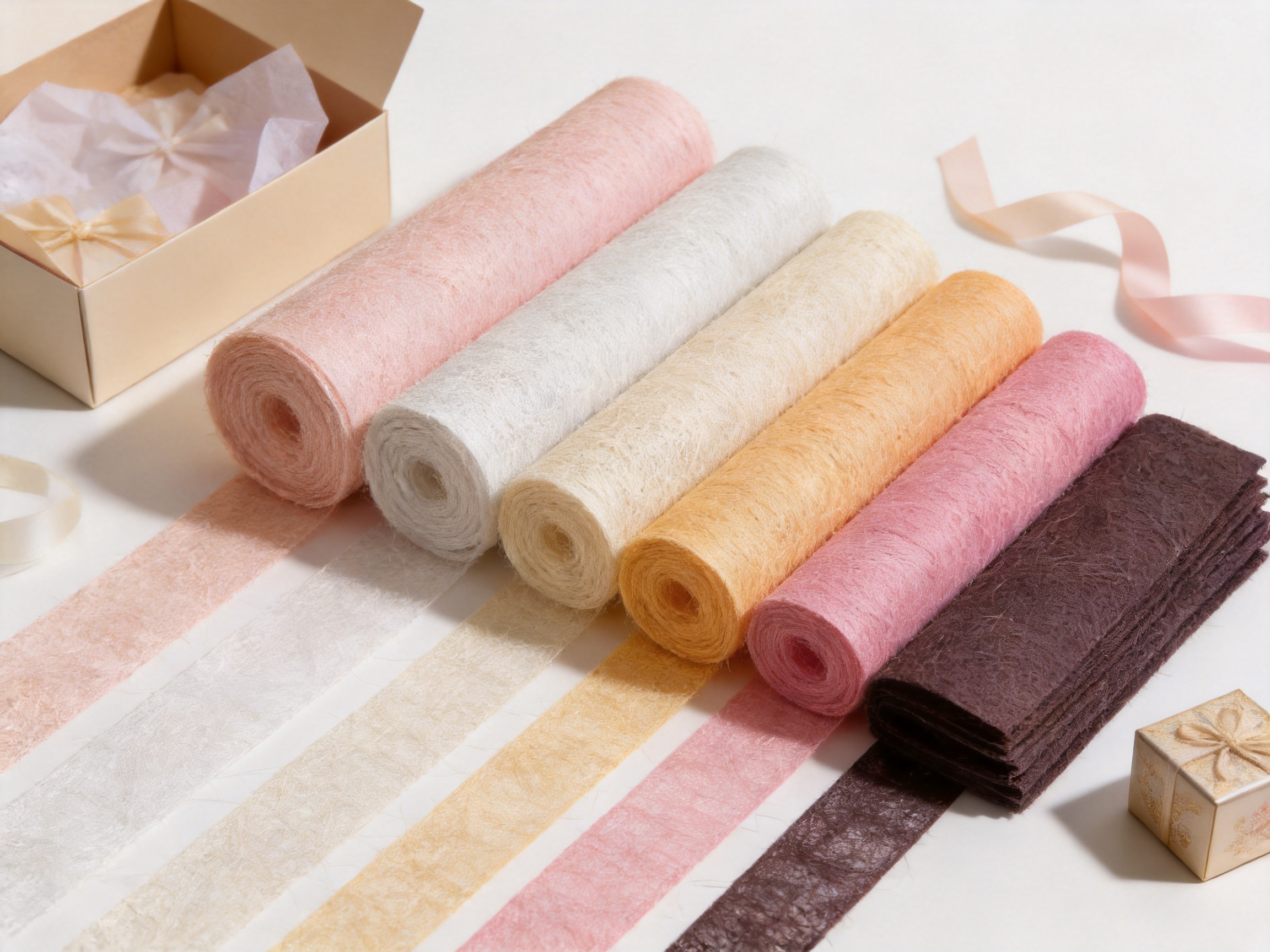
The product is available in multiple solid colors, which makes it adaptable to many visual styles. Neutral colors can support luxury and minimalist packaging. Bright colors can be used for children’s products, celebration gifts, and seasonal displays. Pastel shades are suitable for weddings, baby products, beauty packaging, and spring-themed arrangements. Dark or metallic-look color systems can help create a premium appearance for fashion, cosmetics, wine, and corporate gifts.
Key Product Advantages
Softness for Better Presentation
One of the most important advantages of raffia nonwoven fabric accessories is their soft hand feel. Packaging materials come into direct contact with product surfaces, especially in gift boxes, presentation cases, and floral arrangements. A hard, rough, or abrasive filler may scratch delicate surfaces, create an unpleasant customer experience, or reduce the perceived quality of the package.
The soft structure of this nonwoven fabric helps create a gentler contact layer. It can be placed beneath products, around items, or between separate pieces to provide a visually attractive and comfortable packaging environment. Its softness is also valuable in handmade work, where the material may be folded or shaped repeatedly by hand.
For luxury packaging, softness supports a more refined tactile impression. Consumers often judge packaging quality through both sight and touch. A flexible, smooth-feeling liner can make a box feel more carefully designed, while a rigid or poorly finished filler may make the package look inexpensive. This product helps packaging designers achieve a more coordinated sensory experience.
Lightweight Structure
Weight is a practical consideration for packaging manufacturers, retailers, logistics companies, and consumers. Heavy decorative materials can increase shipping costs and may require stronger boxes or additional structural support. Raffia nonwoven fabric accessories are lightweight, allowing businesses to add decorative volume and color without significantly increasing the weight of the finished package.
The lightweight structure is also convenient during production. Workers can cut and position the material quickly. It can be packed in efficient rolls, sheets, or other suitable forms depending on the customer’s requirements. For craft users, the material is easy to transport, store, and handle during workshops, retail preparation, and seasonal display installation.
Tear Resistance and Flexibility
Decorative packaging materials must often withstand cutting, folding, pulling, packing, unpacking, and repositioning. Materials that tear too easily may create waste, slow production, and lead to inconsistent presentation. Raffia nonwoven fabric accessories are designed to provide useful tear resistance while retaining flexibility.
This combination is valuable because stiffness alone does not guarantee performance. A material may be strong but difficult to fold or arrange. Conversely, a very soft material may be easy to handle but unable to stay in position. The balanced structure of PP nonwoven fabric allows users to shape and position it without making it unnecessarily rigid.
For gift box lining, the fabric can be trimmed to fit different interior dimensions. For floral decoration, it can be gathered, wrapped, layered, or formed around a container. For packaging separation, it can be placed between products to help organize the interior and reduce direct contact. These functions demonstrate why flexibility and tear resistance are more useful together than as separate properties.
Dustproof and Moisture-Resistant Performance
Dust and moisture can affect the appearance and condition of packaging materials and the products they surround. A dusty liner may make a gift appear poorly prepared, while moisture exposure can cause unpleasant odors, staining, deformation, or reduced usability. The dustproof and moisture-resistant properties of this nonwoven fabric provide an additional layer of practical protection in normal packaging and decorative environments.
Moisture resistance does not mean that the material should be treated as a waterproof barrier for prolonged immersion or severe outdoor exposure. Instead, it means the fabric is better suited to everyday handling and storage conditions than many absorbent paper fillers or untreated natural fibers. This makes it useful for indoor retail, gift preparation, floral presentation, and general packaging operations where occasional humidity or minor contact with moisture may occur.
The dustproof surface also supports cleaner presentation. When used inside a gift box or display package, the material can help maintain a tidy appearance. This is especially important for products such as cosmetics, accessories, handmade gifts, small electronics, stationery, and decorative goods, where the visual condition of the package contributes directly to perceived value.
Non-Toxic and Odorless Characteristics
Product safety is a significant consideration for packaging materials. Packaging may be handled by employees, retailers, consumers, children, or craft users. An odorless material is more comfortable in enclosed packaging, retail displays, and indoor workspaces. The non-toxic and odorless characteristics of this PP nonwoven fabric make it suitable for a broad range of general packaging and decorative applications.
These characteristics are particularly relevant when packaging is opened close to the face or when the material is used in gift presentation. Strong chemical odors can negatively affect the unboxing experience and may create concerns for customers. By providing a cleaner and more neutral material experience, odorless fabric supports a more professional finished product.
Businesses should always confirm application-specific compliance requirements, testing standards, and documentation when the material is intended for highly regulated products or direct food-contact packaging. Nevertheless, for general gift packaging, floral decoration, craft presentation, and packaging separation, the material’s non-toxic and odorless profile offers a useful safety advantage.
Advantages Compared with Common Alternative Materials
Raffia nonwoven fabric accessories compete with several types of packaging and decorative materials, including shredded paper, tissue paper, woven fabric, plastic films, natural raffia, foam inserts, and loose textile fibers. Each alternative has its own characteristics, but the nonwoven structure offers a practical balance that can be advantageous for many projects.
| Material Type | Typical Strength | Common Limitation | Potential Advantage of Raffia Nonwoven Fabric |
|---|---|---|---|
| Shredded paper | Lightweight and visually familiar | May create dust, lose shape, or absorb moisture | Offers a softer, more stable, and moisture-resistant decorative layer |
| Tissue paper | Soft and available in many colors | Can tear easily and may wrinkle during handling | Provides improved tear resistance and repeated handling flexibility |
| Woven fabric | Durable and textile-like | May be heavier, more expensive, or harder to cut efficiently | Delivers a lightweight and flexible alternative for high-volume packaging |
| Plastic film | Moisture resistance and strong visual effects | Can feel less soft and less suitable for certain decorative uses | Creates a softer hand feel and more fabric-like presentation |
| Natural raffia | Natural appearance and traditional appeal | May vary in color, texture, length, and consistency | Provides more consistent color and standardized production quality |
| Foam inserts | Strong cushioning and structural support | Bulkier and less visually decorative | Supports decorative lining and separation with less bulk |
Compared with shredded paper, the nonwoven fabric is less likely to scatter into small loose pieces during handling. This can help maintain a cleaner workspace and a more organized interior presentation. Paper remains useful for customers seeking a fully paper-based solution, but PP nonwoven fabric can be preferable when softness, tear resistance, moisture resistance, and repeated handling are priorities.
Compared with tissue paper, the nonwoven material offers stronger resistance to tearing and deformation. Tissue paper can be excellent for wrapping and layering, but it may require careful handling. Nonwoven fabric is more forgiving during packing, especially when workers need to position, adjust, or fold the material several times before the package is closed.
Compared with woven fabric, nonwoven fabric can provide a more economical and production-friendly option for disposable or semi-disposable packaging. It does not require conventional textile weaving and can be produced through a streamlined bonding process. This may support consistent supply, efficient cutting, and flexible customization for different packaging programs.
Compared with natural raffia, the PP material provides greater consistency in color, thickness, softness, and format. Natural fibers can offer an attractive organic appearance, but they may contain variations that are undesirable for mass production or coordinated brand packaging. Synthetic nonwoven fabric can be a better choice when uniformity and repeatability are essential.
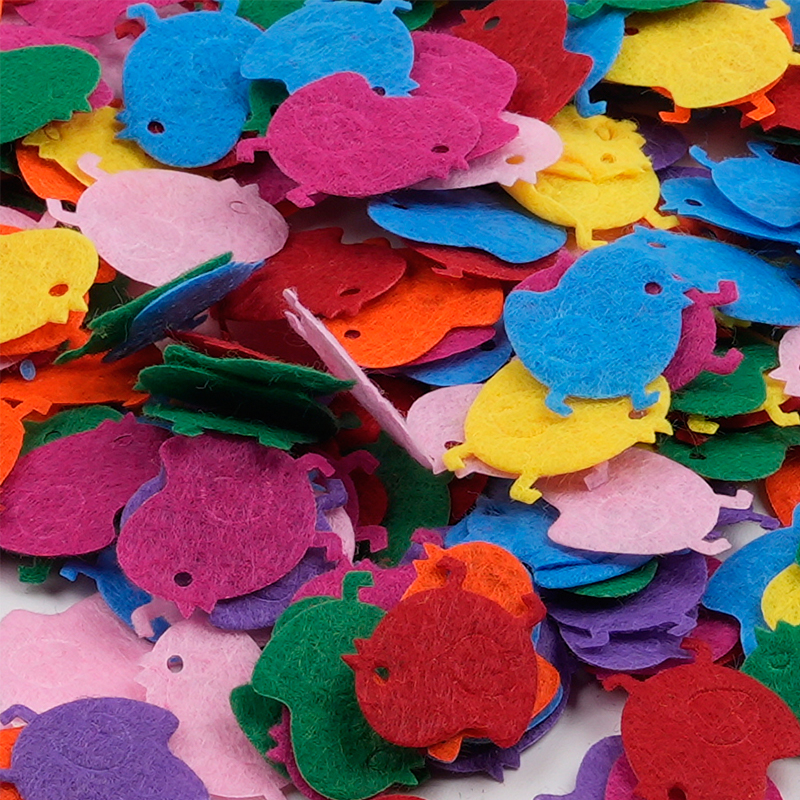
Raffia NonWoven Fabric Accessories
Applications in Gift Box Packaging
Gift Box Lining
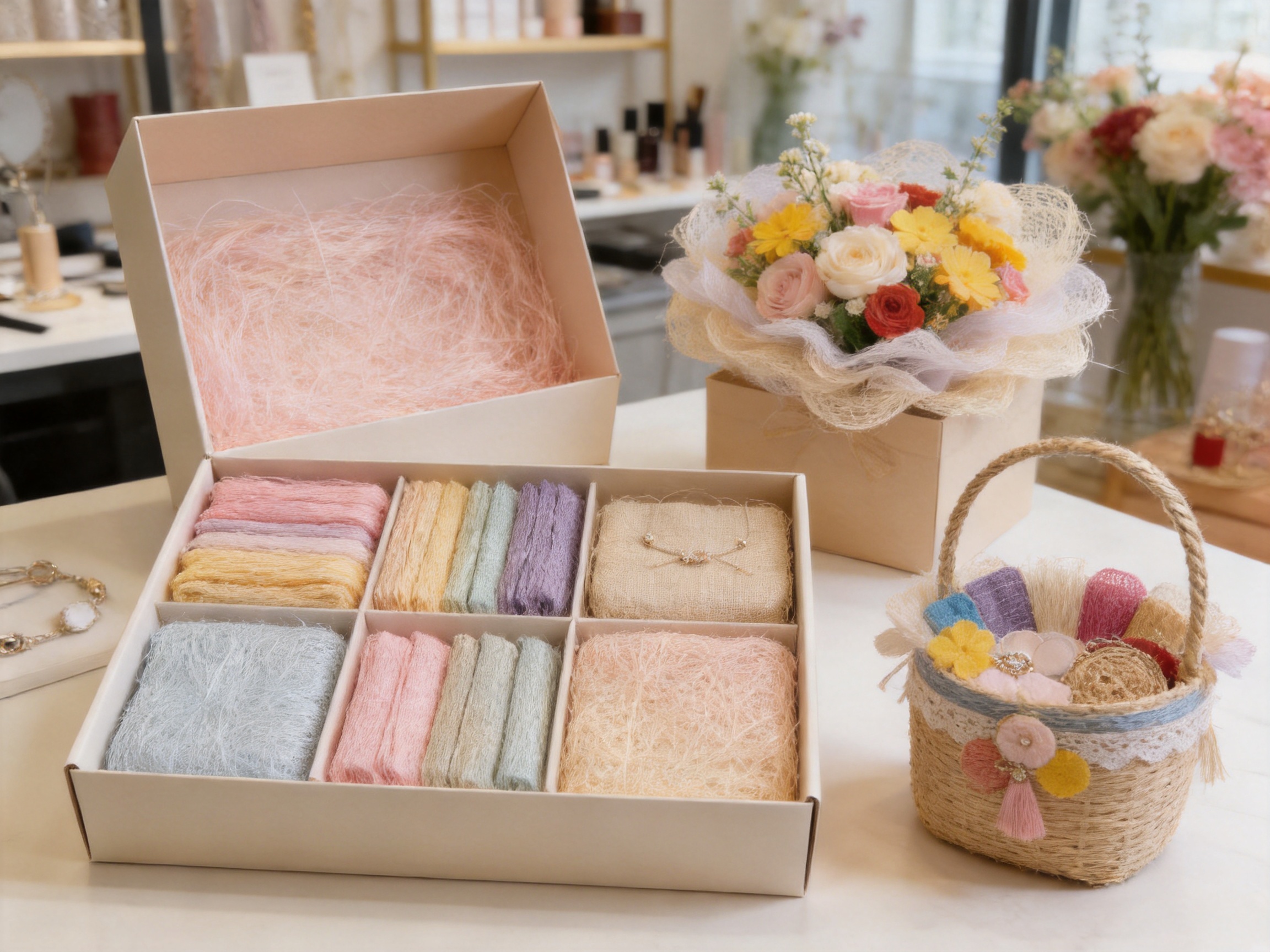
Gift box lining is one of the most direct applications for raffia nonwoven fabric accessories. A liner can cover the interior base of a box, create a soft background for the product, and fill visual gaps around the item. It can also help unify the appearance of the packaging by introducing a carefully selected color or texture.
For jewelry, accessories, beauty products, candles, stationery, and handmade goods, the liner can make the package appear more complete and intentional. A product placed directly inside an empty box may shift during transportation or appear under-presented. A nonwoven liner can provide a decorative foundation while helping the item remain visually centered.
The material can be cut to match the box dimensions or arranged with folded edges for a fuller appearance. It may be used alone or combined with ribbons, paper cards, tissue paper, raffia yarn, stickers, and printed inserts. Since the material is flexible, packaging designers can develop simple and elaborate arrangements without requiring complex tooling.
Packaging Separation
When several products are packed together, separation is important for both protection and presentation. Raffia nonwoven fabric can be placed between items to reduce direct contact, divide product groups, and create a more orderly interior. This is useful for gift sets, promotional kits, subscription boxes, retail bundles, and multi-piece craft packages.
Separation material should be easy to cut, position, and remove. If it is too rigid, it may occupy unnecessary space. If it is too weak, it may collapse during packing. The flexible and tear-resistant nature of this product helps provide a practical middle ground. It can be shaped according to the product arrangement while remaining lightweight.
For businesses packing different product sizes, custom cutting or size development may improve efficiency. A manufacturer with OEM and ODM capabilities can work with customers to develop formats that fit specific packaging dimensions. This reduces the need for excessive manual adjustment and supports more consistent production across large orders.
Luxury and Corporate Gifts
Corporate gifts and luxury products require packaging that reflects quality and attention to detail. Color selection, texture, neatness, and material consistency all influence how recipients perceive the package. Raffia nonwoven fabric accessories can be coordinated with corporate colors, event themes, product launches, holiday campaigns, or premium collections.
For example, a company may select a deep, understated color for executive gifts, a bright color for a promotional event, or a soft neutral shade for a natural lifestyle collection. Custom colors can help maintain visual consistency across boxes, wrapping paper, ribbons, and printed materials.
The material’s odorless characteristic is also helpful for premium packaging. A strong smell can conflict with the impression of quality, especially when the gift contains perfume, cosmetics, food-related accessories, or textile products. A neutral-smelling liner allows the contents and the branded packaging to define the customer experience.
Applications in Floral Decoration
Floral decoration requires materials that are easy to shape, visually attractive, and suitable for contact with containers, stems, wrapping layers, and display surfaces. Raffia nonwoven fabric accessories can be used as a decorative base beneath bouquets, around flower boxes, inside gift baskets, or as part of a layered presentation.
The fabric’s softness allows it to sit comfortably around flowers and decorative items without creating a harsh visual transition. Its flexibility makes it suitable for gathering, folding, wrapping, and layering. A florist or craft designer can combine multiple colors to create contrast, coordinate with flower tones, or support a particular seasonal theme.
For retail flower shops, consistent material quality is important. Inconsistent thickness or uneven color can make finished arrangements look different from one another. Standardized production and multiple solid-color options help florists create repeatable designs across large quantities of bouquets or gift arrangements.
The fabric can also be used in artificial flower displays, wedding decorations, event centerpieces, holiday arrangements, and handmade floral crafts. Because it is lightweight, it adds decorative volume without placing excessive pressure on containers or support structures.
Although the material is suitable for general floral decoration, users should select the appropriate form and handling method for fresh flowers, wet floral foam, or direct contact with water. The moisture-resistant property supports ordinary decorative conditions, but the product should not automatically be considered a substitute for specialized waterproof liners or horticultural materials.
Applications in Creative Crafts and Retail Presentation
Craft makers can use raffia nonwoven fabric accessories in cards, gift baskets, handmade boxes, seasonal ornaments, decorative panels, party favors, and small display projects. The material can be cut with common craft tools and arranged with adhesives, ribbons, cords, tags, or other decorative components.
Its solid colors make it useful for color-blocking, layered textures, and themed collections. A designer can combine a neutral base with a brighter accent, use several tones in a gradient arrangement, or select one color to support a clean minimalist design. The fabric can also be folded into simple decorative forms or used as a background for labels and product cards.
Retailers can use the material in product displays and merchandising. It may be placed inside baskets, trays, showcase boxes, or seasonal display containers. Because it is lightweight and easy to reposition, retail staff can refresh displays without requiring specialized equipment.
For online sellers and small businesses, presentation materials can strengthen the customer experience after delivery. A handmade product wrapped with a carefully selected nonwoven accessory may appear more professional and memorable. This can be especially beneficial for independent brands that want to establish a recognizable packaging style without investing in highly complicated structural packaging.
Manufacturing Process and Technical Strengths
Material Selection
The manufacturing process begins with the selection and preparation of PP polypropylene fabric materials. Material selection influences softness, flexibility, color appearance, tear resistance, and overall handling performance. A professional manufacturer must maintain consistent material specifications so that products supplied in different batches remain as similar as possible.
For customers with specific requirements, material selection may be coordinated with the intended use. Gift box lining may prioritize softness and appearance. Packaging separation may require a balance of flexibility and tear resistance. Floral decoration may focus on color, easy shaping, and lightweight performance. Understanding the end application helps the manufacturer recommend a suitable specification.
Hot-Melt Bonding
The product is produced through a hot-melt bonding process. This method uses heat to activate bonding materials and form a stable nonwoven structure. Compared with traditional weaving, hot-melt bonding can support an efficient manufacturing route for fabric accessories that require consistent width, surface appearance, and flexibility.
Process control is essential during hot-melt bonding. Temperature, pressure, line speed, material feeding, and cooling conditions may all affect the final result. If the bonding conditions are not stable, the fabric may become too stiff, too weak, uneven, or inconsistent in appearance. A standardized production system helps reduce these risks.
Properly controlled bonding supports the product’s combination of softness and tear resistance. It also allows the manufacturer to produce a material that can be handled during cutting, folding, packing, and decoration without unnecessary breakage or separation.
Color and Surface Consistency
Color is a central part of decorative packaging. A slight variation may be acceptable in some craft applications, but large commercial packaging programs generally require a stable color appearance. Manufacturers must control color matching, raw material preparation, production conditions, and batch inspection to provide dependable results.
Multiple solid colors give customers a practical starting range for different applications. Custom colors can be developed for businesses that need a closer match to brand guidelines or product themes. Custom color development may require reference samples, target specifications, trial production, approval procedures, and controlled batch records.
Surface consistency is equally important. A clean, even, and well-formed surface helps the material look more professional in gift boxes and retail displays. Consistent surface quality also makes automated or semi-automated cutting and packing easier to manage.
Cutting, Formatting, and Packaging
After the nonwoven fabric is produced, it can be processed into customer-specified forms. Depending on the order, this may include rolls, sheets, strips, folded sections, or other formats. The appropriate format depends on the customer’s equipment, packaging design, storage conditions, and final application.
Accurate cutting helps reduce material waste and improves assembly efficiency. For large packaging operations, pre-sized pieces can save labor because workers do not need to trim every piece manually. For craft suppliers, rolls or sheets may offer greater flexibility for different project sizes.
Packaging is another important part of manufacturing. Finished goods must be protected from dust, moisture, deformation, and handling damage during storage and transportation. Compression packaging can help improve shipping efficiency when appropriate, while careful packing supports easier warehouse organization and inventory control.
Integrated Production Capabilities
Zhejiang Raffia Paper Products Co., Ltd. has developed from a craft materials business unit established in 2010 into an integrated manufacturer founded as a company in 2014. Its development reflects a transition from trading and product sourcing toward direct manufacturing, process management, quality control, and customized production.
The company operates a modern production base in Dongyang, Zhejiang Province, covering approximately 20,000 square meters. More than 200 professional employees support production, quality management, order coordination, packaging, and shipment operations. This scale allows the company to manage multiple product categories while maintaining an organized manufacturing structure.
Its production capabilities cover raw material processing, mass production, quality testing, finished-goods packaging, and shipment. Such integration reduces dependence on disconnected external suppliers and makes it easier to coordinate specifications throughout the production cycle. When a customer requests a special color, size, format, or packaging method, an integrated system can improve communication between development, production, inspection, and delivery teams.
The company also has equipment and technical experience related to slitting, twisting, winding, and compression packaging. These capabilities are especially relevant to its broader product portfolio, which includes crinkle raffia paper shreds and fancy paper yarns. The experience gained from these processes supports a stronger understanding of decorative packaging materials, material handling, dimensional consistency, and bulk order management.
An annual production capacity of more than 200 million pieces provides support for large-volume supply programs. Capacity alone does not guarantee quality, but sufficient production resources can help a manufacturer respond to seasonal demand, repeat orders, retail programs, and international distribution requirements. A stable capacity structure also helps reduce the risk of extended lead times during busy periods.
Quality Control and Batch Consistency
Quality control for raffia nonwoven fabric accessories should cover both appearance and performance. Visual inspection may include color, surface uniformity, cleanliness, edge condition, and format accuracy. Performance-related checks may include flexibility, tear resistance, moisture-related behavior, odor, and general structural integrity.
A strict and replicable quality control system is valuable because packaging customers often reorder the same product. If the appearance or handling properties change significantly between batches, the customer may face difficulties maintaining a consistent brand presentation. Standardized procedures help establish repeatable manufacturing conditions and provide a basis for ongoing improvement.
Quality control should be applied at multiple stages rather than only at the end of production. Incoming materials can be checked before use. Production parameters can be monitored during bonding and processing. Finished products can be inspected before packaging and shipment. This layered approach helps identify potential problems earlier and reduces the chance that large quantities of nonconforming material reach the customer.
For international customers, clear communication of specifications is essential. A purchase order may need to state material composition, color reference, width, length, thickness, packaging format, quantity tolerance, labeling requirements, and inspection expectations. The manufacturer’s experience with global supply chains can help customers establish a more complete order specification.
OEM and ODM Customization Services
Packaging projects often require more than an off-the-shelf material. A brand may need a specific color, size, density, folding method, roll width, or packing format. OEM and ODM services allow customers to adapt the product to their own commercial needs.
OEM services may include production under an exclusive brand, customized labels, customer-specified packing methods, and agreed product formats. ODM services may involve developing a new size, adjusting the material structure, creating a color solution, or improving the way the fabric is supplied for a particular packaging line.
Custom development generally begins with a clear description of the application. Customers should explain the type of box, product dimensions, desired appearance, handling method, target quantity, storage conditions, and expected delivery schedule. Samples can then be reviewed for softness, color, flexibility, tear resistance, and suitability for the intended design.
Customization is most effective when it is supported by a structured approval process. A typical process may include requirement confirmation, sample development, customer evaluation, specification approval, pilot production, quality inspection, and mass production. This helps ensure that the final product matches the agreed expectations and reduces misunderstandings.
Long-term bulk supply is another advantage for customers with regular demand. Repeated orders benefit from established specifications and production records. Once the product has been approved, future orders can follow the same quality and packing requirements, supporting greater consistency and easier procurement management.
Application Guidance for Buyers
Selecting the Appropriate Color
Color selection should consider the product, target customer, occasion, and surrounding packaging components. A color that looks attractive in isolation may not coordinate with a printed box or product label. Buyers should review fabric samples under the lighting conditions used in stores, studios, warehouses, and photography environments.
Neutral colors offer broad compatibility and are suitable for year-round packaging. Seasonal colors can support holidays, weddings, festivals, and promotional events. Brand colors may require custom matching and should be reviewed against an approved physical reference rather than relying only on digital images.
Determining the Required Format
The best format depends on how the material will be used. Pre-cut sheets are convenient for standardized gift boxes. Rolls may be more suitable for businesses that need to cut different lengths. Strips can be useful for wrapping, layering, or decorative accents. Buyers should consider available cutting equipment, labor costs, storage space, and the number of package sizes used in production.
It is also important to determine whether the material will be used as a full interior liner, a small decorative accent, or a separator. A full liner may require a larger format and carefully finished edges. A separator may need a particular thickness or fold. An accent piece may prioritize color and shaping flexibility over coverage.
Evaluating Packaging Efficiency
Before placing a large order, customers should conduct a practical packaging test. The material should be placed inside the intended box or container, combined with the actual product, closed, transported, and opened. This test can reveal whether the fabric shifts, wrinkles excessively, creates pressure, or requires additional fixing.
Testing can also help calculate consumption per package. A decorative arrangement may look attractive during design but use more material than expected during mass production. Establishing a standard amount per box helps estimate purchasing quantities, control waste, and maintain consistent appearance across finished units.
Sustainability Considerations
The product is positioned as an eco-friendly packaging and decorative material, with a focus on non-toxic and odorless PP nonwoven fabric. Sustainable packaging decisions should consider the entire product life cycle, including material sourcing, manufacturing efficiency, transport weight, service life, reuse potential, disposal, and local recycling conditions.
Its lightweight structure can support more efficient transportation compared with heavier decorative materials. Its tear resistance may also reduce waste caused by damage during packing. In some applications, the material may be reused for storage, craft projects, floral decoration, or future gift wrapping, depending on its condition after use.
At the same time, PP is a synthetic polymer, so responsible end-of-life management is important. Customers should follow local waste and recycling regulations and communicate appropriate disposal guidance when relevant. Buyers seeking a specific environmental certification, recycled content, or recycling program should discuss these requirements with the manufacturer before ordering.
The manufacturer’s broader commitment to sustainable green supply chains reflects the growing importance of environmental responsibility in packaging production. Sustainable manufacturing is not limited to material selection. It also includes reducing production waste, improving process efficiency, using packaging space effectively, maintaining durable equipment, and managing quality to avoid unnecessary rework.
Why Manufacturer Experience Matters
Decorative packaging materials may appear simple, but reliable commercial supply requires technical and organizational experience. A manufacturer must understand how materials respond to heat, bonding, cutting, winding, compression, storage, and transportation. It must also coordinate color management, production scheduling, quality inspection, packaging, and export documentation.
More than ten years of industry experience gives the supplier a foundation for understanding the practical needs of gift packaging companies, craft wholesalers, floral businesses, retailers, and international distributors. Experience can help identify potential issues before mass production, recommend more suitable formats, and improve communication during custom development.
The company’s history in raffia paper shreds and fancy paper yarns also provides complementary knowledge. These product categories require control of texture, color, winding, slitting, twisting, packaging, and decorative appearance. Experience across related categories can help support customers that want to purchase several coordinated packaging materials from one source.
Serving customers in China and exporting to Europe, North America, South America, Asia, and other regions has also exposed the manufacturer to different purchasing expectations and packaging requirements. International customers often need clear documentation, stable lead times, protective export packing, and responsive communication. A supplier familiar with global retail supply chains is better prepared to address these operational needs.
Suitable Industries and Customer Groups
Raffia nonwoven fabric accessories are suitable for manufacturers and distributors in several industries. Gift packaging companies can use them as box liners, fillers, or separators. Florists and event designers can use them for bouquets, flower boxes, centerpieces, and decorative arrangements. Craft suppliers can offer them to hobbyists, workshops, schools, and handmade businesses.
Cosmetics and personal care brands may use the material in gift sets and promotional packaging. Fashion and accessory companies can use color-coordinated liners for handbags, jewelry, scarves, and small leather goods. Home decoration businesses can incorporate the material into seasonal displays, baskets, decorative trays, and product presentation kits.
Retailers and e-commerce companies can use the product to improve unboxing presentation. Subscription box businesses may select a standard color for recurring deliveries or use seasonal colors to distinguish limited editions. Corporate gift providers can request custom colors and branded packing arrangements for conferences, campaigns, employee gifts, and client events.
The material is also appropriate for packaging wholesalers and importers that require a stable range of solid colors and repeatable specifications. By purchasing from an integrated manufacturer, wholesalers can develop a dependable product line and support their own downstream customers with regular supply.
Practical Benefits for Production Teams
Production teams need materials that are easy to handle and do not create unnecessary delays. Raffia nonwoven fabric accessories can be folded, cut, arranged, and layered with relatively simple methods. This allows workers to use the material in manual packing lines, semi-automated operations, and small-batch craft production.
The soft but tear-resistant structure helps reduce damage during installation. Workers can adjust the material inside a box without immediately causing holes or large tears. Its lightweight nature also reduces fatigue when employees prepare many packages during peak seasons.
Consistent supply and standard packaging can simplify inventory control. When each roll or sheet follows an agreed specification, staff can estimate usage more accurately and reorder before stock becomes critically low. For large customers, scheduled bulk orders can support better production planning and reduce the risk of packaging interruptions.
The product can also help simplify design changes. Since it is available in several colors and can be customized, a business may update its packaging appearance without redesigning the entire box structure. A new fabric color or arrangement can create a different seasonal or promotional look while preserving the basic packaging format.
Recommended Purchasing and Cooperation Process
A successful purchasing process begins with a clear product brief. The buyer should provide the intended application, product dimensions, desired color, material preference, required format, estimated order quantity, packaging method, destination market, and expected delivery date. Photographs, drawings, physical samples, or packaging prototypes can make the requirements easier to understand.
The manufacturer can then review the request and recommend a suitable specification. If a standard product meets the need, sampling may focus on color and format confirmation. If customization is required, the development stage may involve sample preparation and adjustment before approval.
After sample approval, the buyer and manufacturer should confirm the final specification in writing. This should include acceptable tolerances, packing details, labeling, inspection arrangements, and shipping terms. Clear documentation is particularly important for repeat orders and international trade.
During production, the manufacturer’s quality team can monitor the material and finished goods according to the approved requirements. Once production is complete, the products are packed for shipment. The customer should inspect the goods promptly after receipt and retain approved samples or specification records for future reference.
Frequently Asked Questions
What is raffia nonwoven fabric made from?
It is made from PP polypropylene nonwoven fabric. The material is formed through a hot-melt bonding process rather than traditional textile weaving. This construction provides a lightweight, flexible, and tear-resistant decorative fabric suitable for packaging and craft applications.
Is the material soft enough for gift box lining?
Yes. Softness is one of its primary characteristics. It is designed to provide a gentle decorative layer inside gift boxes while adding color and texture. Buyers should still test the product with their specific items, especially when packaging surfaces are highly sensitive or easily scratched.
Can it be used for packaging separation?
Yes. It can be placed between products or used to divide sections inside a gift box, basket, or presentation package. Its lightweight and flexible structure allows it to fit different arrangements without adding excessive bulk.
Is the material waterproof?
The material is moisture-resistant, but it should not automatically be treated as a fully waterproof barrier. It is suitable for ordinary packaging and decorative conditions involving humidity or minor moisture exposure. Applications involving direct water contact or prolonged wet conditions should be reviewed with the manufacturer.
Does it have a strong odor?
The product is described as odorless. This makes it suitable for enclosed gift packaging and indoor decorative applications where a neutral material smell is preferred. Customers with special odor or compliance requirements should request samples and documentation before mass production.
Are custom colors available?
Yes. Multiple solid colors are available, and custom colors can be developed for customers that need brand matching, seasonal coordination, event themes, or special product collections. A physical color reference is recommended for accurate evaluation.
Can the product be customized in size or format?
OEM and ODM services are available. Depending on the project, customization may include size, width, length, cutting format, folding method, color, labeling, and packaging. The final options should be confirmed according to the application and order quantity.
Is it suitable for direct food contact?
The product is intended for gift packaging, floral decoration, packaging separation, and related decorative uses. Direct food-contact applications require specific regulatory evaluation and documentation. Buyers should not assume suitability for direct food contact without confirming the applicable standards and test results.
How can buyers test the product before ordering in bulk?
Buyers should request samples and test them in the actual packaging environment. Useful checks include color appearance, softness, cutting performance, folding behavior, tear resistance, odor, moisture exposure, product contact, transport movement, and final presentation after opening.
What types of businesses can purchase this product?
Suitable customers include gift packaging manufacturers, florists, event designers, craft suppliers, e-commerce sellers, cosmetics brands, fashion companies, retailers, corporate gift providers, importers, wholesalers, and distributors. The product can support both small creative projects and larger commercial packaging programs.
What makes an integrated manufacturer valuable?
An integrated manufacturer can coordinate material preparation, production, quality testing, finished-goods packaging, and shipment within one organized system. This may improve specification control, communication, production scheduling, and repeat-order consistency compared with a supply chain involving many disconnected subcontractors.
Conclusion
Raffia nonwoven fabric accessories provide a practical and attractive solution for gift box lining, packaging separation, floral decoration, craft projects, and retail presentation. Made from PP polypropylene fabric through a hot-melt bonding process, the material combines softness, light weight, flexibility, tear resistance, dustproof performance, moisture resistance, and a non-toxic, odorless profile.
Compared with many conventional fillers and decorative materials, it offers a balanced performance profile. It is more stable and tear-resistant than delicate tissue paper, softer and less bulky than some structural inserts, and more consistent in color and format than many natural fiber alternatives. Multiple solid colors and custom color development further expand its design potential.
The manufacturing strength behind the product is equally important. Zhejiang Raffia Paper Products Co., Ltd. operates an integrated production base with more than ten years of industry experience, a 20,000-square-meter facility, more than 200 professional employees, standardized production procedures, quality control systems, and large-scale annual capacity. Its OEM and ODM services support customers that require customized colors, sizes, formats, packaging, and long-term bulk supply.
For businesses seeking a dependable decorative packaging material, the product offers a useful combination of appearance, handling convenience, and manufacturing support. When selected according to the application and tested in the intended packaging environment, raffia nonwoven fabric accessories can help make gift presentation cleaner, safer, more consistent, and more visually memorable.
References
1. Product specification materials for raffia nonwoven fabric accessories, PP polypropylene fabric, hot-melt bonding, and packaging applications.
2. General manufacturing principles for polypropylene nonwoven fabrics and thermal bonding processes.
3. Packaging design considerations for gift box lining, product separation, retail presentation, and unboxing experience.
4. General guidance on material selection, batch consistency, color matching, and quality control in decorative packaging production.
5. Company-provided manufacturing information regarding integrated production, OEM and ODM services, quality systems, production capacity, and international supply.
Product: Raffia NonWoven Fabric Accessories

 +86 15355323399
 kevin@raffia-paper.com
 No. 151 Guanshan North Road, Dongyang City, Zhejiang Province, China

Copyright © Zhejiang Raffia Paper Products Co., Ltd. All Rights Reserved.

Paper Raffia Yarn & Gift Packaging Factory