
 +86 15355323399
 En
En  中文简体
中文简体 日本語
日本語 Français
 Español
 Deutsch
 Türk
Türk عربى
عربى italiano
 русский
Natural Jute Filling Shreds for Sustainable Gift Packaging and Commercial Supply
Naturals Sisal Filling Shreds are decorative packaging fillers designed for companies that need attractive presentation, lightweight cushioning, reliable batch quality, and a more environmentally responsible alternative to plastic or conventional decorative materials. According to the supplied product specification, the material is natural jute fiber processed through physical opening, combing, and precision cutting. Although the commercial product name includes “Sisal,” the documented material specification identifies the product as natural jute filling shreds. This distinction is important for buyers who require accurate material declarations, packaging compliance, and consistent product communication.
These natural fiber shreds are suitable for gift boxes, wine packaging, cosmetics, gourmet foods, jewelry, candles, handmade products, seasonal collections, corporate gifts, and e-commerce presentation. Their loose and resilient structure helps fill empty space inside a package, reduce product movement, and create a textured visual effect. At the same time, the natural plant-fiber appearance supports the growing demand for rustic, premium, handmade, and sustainable packaging aesthetics.
For commercial buyers, the value of this product goes beyond its appearance. A successful packaging filler must be consistent in fiber width, cutting length, color, fluffiness, cleanliness, packing density, and supply capability. It must also be available in packaging formats that support efficient storage and international transportation. The manufacturing system behind these filling shreds is therefore as important as the material itself.
The supplier behind this product operates an integrated production base in Dongyang, Zhejiang Province, China. The company has more than ten years of industry experience, a modern production area of approximately 20,000 square meters, more than 200 professional employees, and an annual production capacity exceeding 200 million pieces across its product categories. Its manufacturing chain covers raw-material processing, production, quality testing, compression packaging, and shipment preparation. This integrated structure provides a practical foundation for wholesale supply, OEM development, private-label packaging, and long-term international cooperation.
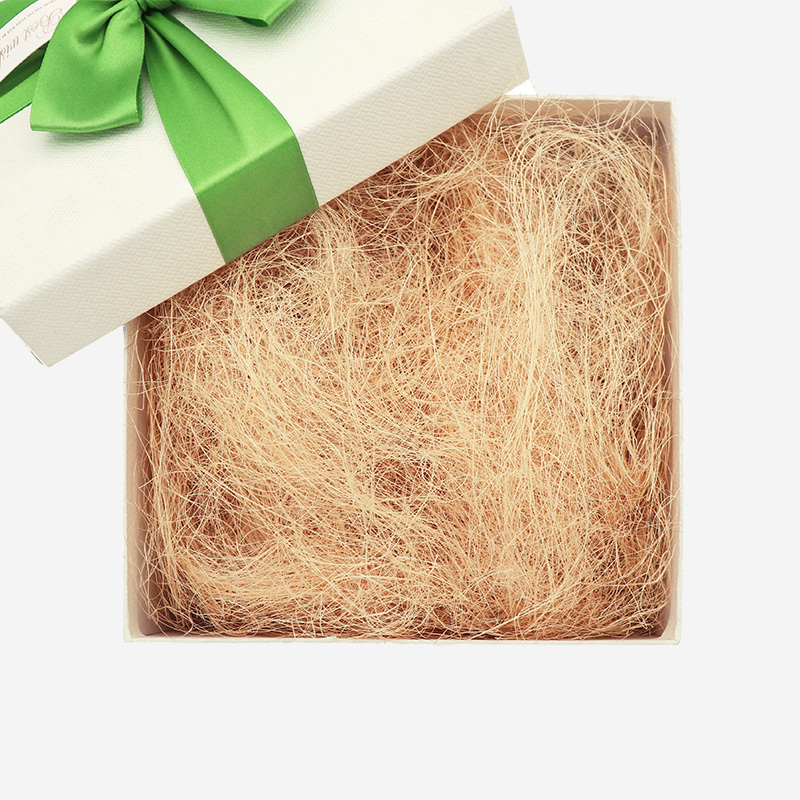
Naturals Sisal Filling Shreds
1. What Are Natural Jute Filling Shreds?
Natural jute filling shreds are loose decorative strips or fibers produced from selected jute plant material. The fibers are opened, combed, and cut into controlled lengths so that they can be placed inside boxes, baskets, cartons, bags, and gift packaging. The finished material has a naturally irregular but controlled appearance, combining tactile texture with useful filling performance.
Unlike flat paper sheets, these shreds occupy space in three dimensions. When placed around a product, they create a soft visual layer that helps prevent excessive movement. The material can be arranged loosely for a casual handmade effect or packed more densely for a fuller luxury presentation. This flexibility allows one material to serve different packaging styles without requiring complicated conversion equipment.
The product is manufactured without bleaching. As a result, the natural color and surface character of the fiber remain visible. This characteristic is especially useful for brands that want packaging to communicate organic origin, artisanal quality, responsible sourcing, or connection with natural materials.
Natural jute filling shreds are not intended to replace protective engineering materials in every application. They are primarily decorative fillers with light cushioning and stabilizing functions. For fragile, heavy, sharp, or highly sensitive products, buyers should evaluate the complete packaging system, including the box structure, inserts, wrapping, and shipping conditions. Within an appropriate packaging design, however, the shreds can provide both practical support and a strong visual improvement.
Material identity and purchasing accuracy
Buyers should review the technical declaration carefully because the product title and material terminology can sometimes differ in international markets. The supplied product information describes the material as natural jute fiber, while the commercial title refers to Naturals Sisal Filling Shreds. For purchase orders, labels, customs documents, sustainability statements, and customer-facing descriptions, the agreed material name should be confirmed in writing before mass production.
This careful approach helps avoid confusion between jute, sisal, raffia, paper, and synthetic decorative fillers. Each material has different fiber characteristics, appearance, processing behavior, and disposal considerations. Clear documentation is particularly important for retailers, importers, and brands that publish environmental claims or require product traceability.
2. Main Advantages Over Conventional Packaging Fillers
Natural jute filling shreds compete with several categories of packaging materials, including plastic crinkle fillers, synthetic raffia, standard paper shreds, wood wool, tissue paper, and loose textile fibers. Each alternative has specific uses, but natural jute offers a balanced combination of visual character, lightweight cushioning, customization, and renewable material appeal.
Natural appearance instead of artificial presentation
Many synthetic fillers have a uniform, glossy, or highly manufactured appearance. This may be suitable for colorful promotional packaging, but it can look less authentic when used with handmade goods, organic products, natural cosmetics, or premium food collections. Natural jute shreds have a visible plant-fiber texture that gives packaging a warmer and more tactile impression.
The material works particularly well with kraft cartons, uncoated paper, wood, glass, ceramic, linen, cotton, and other natural-looking packaging components. It can help a product appear more carefully curated without requiring elaborate structural inserts or expensive decorative components.
Renewable and biodegradable plant fiber
Natural jute is a renewable plant fiber. Under appropriate disposal conditions, it can biodegrade naturally. This makes it relevant to packaging programs that are attempting to reduce dependence on plastic fillers or communicate a more responsible material strategy.
Biodegradability should always be presented accurately. The behavior of a finished package depends on dyes, coatings, labels, adhesives, contamination, and local waste-management conditions. The supplied specifications identify the jute filling shreds as biodegradable and free from bleaching, but buyers should request additional documentation when a project requires specific compostability, chemical, food-contact, or regional environmental certifications.
Lightweight cushioning and product stabilization
The open fiber structure creates volume without adding substantial weight. When distributed around a product, the shreds can reduce empty space and help stabilize the contents. They are useful for preventing small products from sliding inside a gift box and for creating a fuller appearance when the package is opened.
Compared with solid inserts, loose natural shreds are flexible and can adapt to products with different shapes. A single filler format can therefore be used for bottles, jars, boxes, accessories, small tools, craft products, and decorative items. This adaptability can simplify inventory planning for packaging companies serving multiple customers.
More flexible than rigid inserts
Rigid foam or molded inserts provide strong positioning but require product-specific tooling and storage. Natural jute filling shreds do not need a dedicated mold for every product shape. They can be adjusted manually or by filling equipment, allowing packaging teams to change product assortments more easily.
This advantage is valuable for seasonal collections, subscription boxes, promotional campaigns, limited editions, and businesses that package many product sizes. The filler can be used in different box dimensions simply by changing the amount added or combining it with paper, tissue, or other decorative materials.
Improved premium and handcrafted perception
Packaging influences how consumers evaluate a product before they use it. A natural fiber filler can increase the perceived care and quality of the unboxing experience. The irregular texture suggests a handcrafted or carefully assembled presentation, while the soft volume gives the package a more generous appearance.
For luxury and boutique brands, the product can be combined with branded tissue, printed cards, ribbons, paper raffia, woven cords, and custom-colored shreds. For environmentally positioned brands, the natural color can be paired with kraft packaging and minimal printing. This makes the same base material useful for both understated and decorative packaging concepts.
Lower shipping volume through compression
Loose filler materials can occupy considerable storage and shipping space. The available vacuum-compression packaging format reduces the volume of the product during transportation and warehousing. This can improve container utilization, reduce the number of cartons required, and lower the logistical burden of international shipments.
After opening, the shreds can recover volume as they are loosened and distributed. Buyers should conduct practical expansion tests because recovery depends on fiber condition, compression duration, package weight, humidity, and handling. Even so, compression is a meaningful advantage for wholesalers and importers that purchase in bulk.
3. Technical Characteristics and Available Specifications
The standard product is made from natural jute fiber. The listed fiber width is 1–2 millimeters, with customization available. This range provides a visible fiber texture while remaining suitable for decorative filling applications. Fiber width, cutting length, and fluffiness can be adjusted for specific packaging styles.
| Item | Specification |
| Product name | Natural Jute Filling Shreds |
| Commercial product name | Naturals Sisal Filling Shreds |
| Material | Natural jute fiber |
| Fiber width | 1–2 mm, customizable |
| Color | Natural color or custom Pantone colors |
| Processing | Physical opening, combing, and precision cutting |
| Surface treatment | Natural or eco-friendly dyed |
| Bleaching | No bleaching process |
| Biodegradability | Yes, under suitable disposal conditions |
| Packaging formats | Vacuum bag, transparent OPP bag, or bulk woven bag |
| Custom mixing | Paper shreds, glitter shreds, or mixed jute colors |
| OEM and ODM | Supported |
| Compliance support | REACH documentation available upon request; other standards as required |
| Minimum order quantity | To be confirmed according to the project |
| Lead time | According to order quantity and customization requirements |
Fiber width and cutting length
Fiber width affects the visual density, tactile feel, and filling behavior of the product. Narrower fibers can create a finer and more delicate appearance, while wider fibers produce a stronger rustic effect. Cutting length affects how easily the material spreads, how much volume it creates, and how well it remains inside a package.
For small cosmetics, jewelry boxes, and delicate retail presentation, buyers may prefer a finer and more controlled format. For wine hampers, large gift boxes, baskets, and craft packaging, a longer or more voluminous cut may create a better visual effect. Samples should be evaluated inside the actual package rather than judged only as loose material.
Natural and dyed color options
The natural color preserves the original character of the jute fiber and is often selected for eco-themed, rustic, organic, and minimalist packaging. Dyed colors allow brands to match corporate identity, holiday themes, product collections, or retail campaigns.
Pantone color matching is available for customized projects. Color matching should be assessed under agreed lighting conditions because plant fibers have a textured surface that can influence visual perception. Buyers should also confirm acceptable color tolerance, colorfastness requirements, and whether mixed lots are permitted.
Mixed-filler solutions
Natural jute can be mixed with paper shreds, glitter shreds, or multiple jute colors. Mixed solutions allow packaging designers to create contrast, seasonal effects, or a more distinctive brand identity. For example, natural jute can be combined with muted paper tones for an artisan presentation or with a controlled amount of decorative glitter shreds for holiday packaging.
Mixed-filler specifications should identify the approximate material ratio, color ratio, fiber width, and packaging weight. Consistent blending is important when the product is sold as a finished retail item or distributed across multiple production facilities.
4. Advanced Manufacturing Process
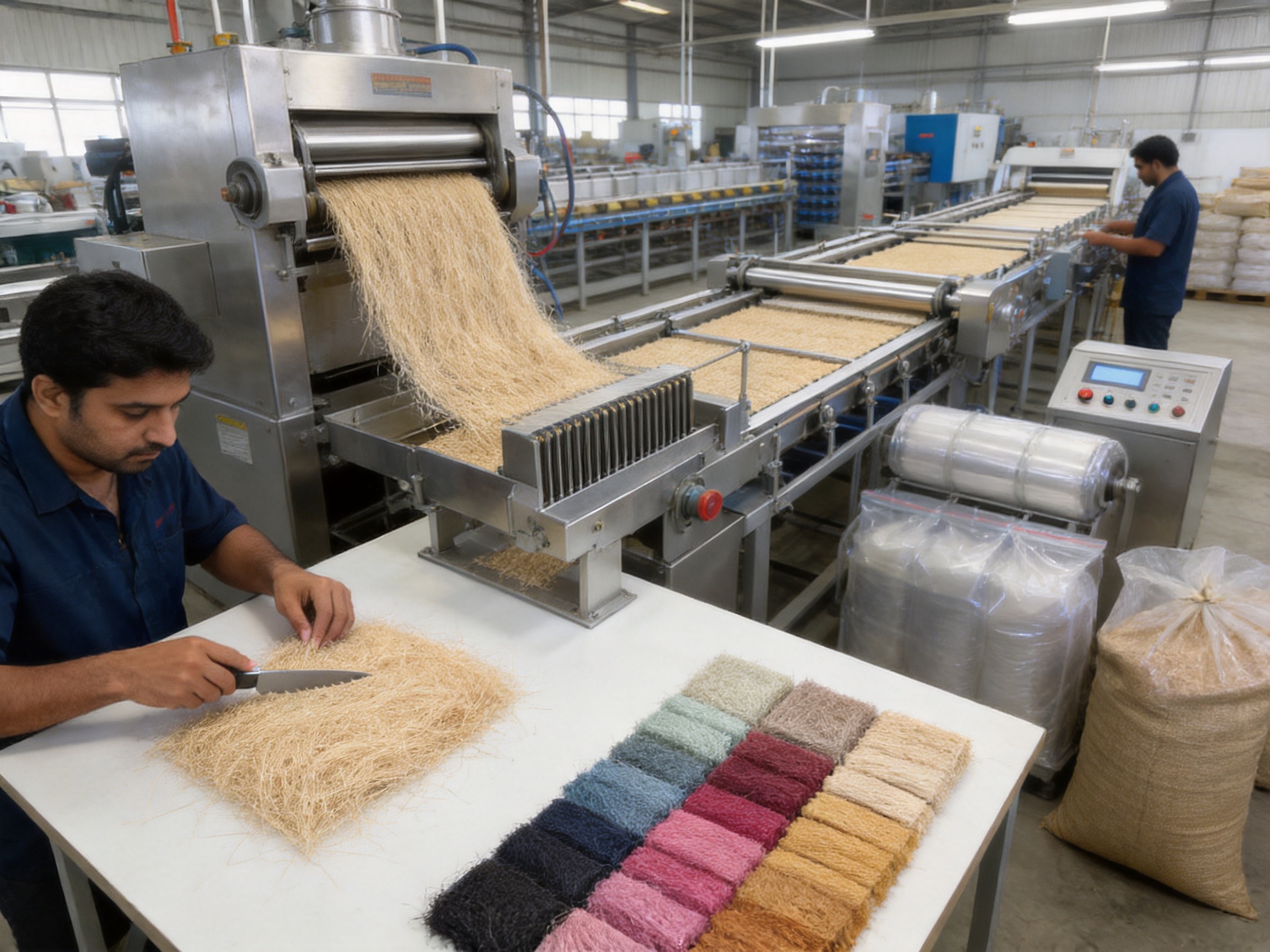
The performance and appearance of natural filling shreds depend heavily on how the raw fiber is prepared and converted. An integrated manufacturing process gives the supplier greater control over material selection, processing conditions, cutting accuracy, packing density, inspection, and shipment preparation.
Raw-material selection
Production begins with the selection of natural jute fiber appropriate for decorative filling. The material must provide a suitable combination of texture, strength, cleanliness, color, and processability. Inconsistent raw material can lead to excessive dust, uneven fiber width, unstable color, or irregular cutting performance.
A professional manufacturing system evaluates incoming materials before they enter production. Selection criteria may include fiber appearance, moisture condition, foreign-material control, and suitability for the customer’s intended application. This first stage is important because later processing cannot fully correct poor raw-material consistency.
Physical opening
Physical opening separates and loosens compressed or bundled fiber. This operation increases the material’s volume and prepares it for controlled combing. Mechanical opening is used instead of bleaching or aggressive chemical modification, allowing the natural surface character to remain visible.
The opening stage must be controlled carefully. Insufficient opening can produce dense, tangled material that is difficult to distribute. Excessive mechanical action can shorten fibers, create unnecessary dust, or weaken the natural texture. The objective is to create a loose and usable fiber structure while maintaining an attractive appearance.
Combing and fiber alignment
Combing helps separate tangled fibers and improve consistency. It can reduce clumps, distribute the material more evenly, and prepare the fiber for precision cutting. The degree of combing influences the final fluffiness and how the product behaves when placed in a box.
For commercial customers, controlled combing is important because inconsistent clumps can create uneven packaging results. A box may appear full in one area and empty in another if the filler is not properly opened and combed. Standardized processing supports more predictable filling performance across batches.
Precision cutting
Precision cutting converts the prepared fiber into shreds with a controlled length and width. Accurate cutting helps maintain a consistent visual style and supports more reliable packing density. It also makes the product easier for packaging workers or filling equipment to handle.
Cutting equipment must be adjusted according to the material’s characteristics and the required specification. Production controls can include blade condition, cutting speed, feed consistency, and sampling inspection. Regular equipment maintenance is essential because worn cutting components may produce excessive variation, frayed ends, or inconsistent lengths.
Optional color processing
For color-customized orders, the natural fiber can be processed into eco-friendly dyed colors according to the approved sample. The production team must control the dyeing or coloring process so that the final appearance remains stable and the fiber retains acceptable softness, fluffiness, and handling performance.
Color approval should take place before mass production. Customers may request laboratory dips, physical samples, or packaging prototypes. Where color consistency is especially important, the buyer and manufacturer should agree on a reference standard, acceptable tolerance, inspection lighting, and batch approval procedure.
Blending and customized formulation
When the customer requests mixed jute colors or combinations with paper and glitter shreds, the materials are prepared according to a defined formulation. A documented ratio helps reduce variation between production batches. The blending process should provide a balanced distribution rather than leaving one material concentrated in a single area of the package.
Custom formulation is useful for brands that want a proprietary packaging appearance. A unique combination of natural fiber, brand color, and complementary decorative material can become part of the customer’s visual identity and may be supplied under private-label packaging.
Compression and packaging
After inspection, the finished shreds can be packed in vacuum-compressed bags for export and bulk distribution. Compression reduces volume and helps protect the material from dust and moisture during transport. Retail-ready transparent OPP bags are available for finished product sales, samples, and e-commerce orders. Heavy-duty woven bags are suitable for factories, wholesalers, and large-volume buyers.
Packaging weight, bag dimensions, carton configuration, labeling, and pallet requirements can be customized. Buyers should confirm whether the product is packed by net weight, gross weight, bag count, or another commercial unit. This information is important for warehouse planning and accurate quotation comparison.
5. Manufacturing Strengths and Supply Reliability
The supplier’s main advantage is its integrated manufacturing capability. The company developed from a craft-materials business unit established in 2010 and was formally founded in 2014. Over time, it evolved from a trading-oriented operation into a large-scale manufacturer specializing in crinkle raffia paper shreds, fancy paper yarns, gift packaging materials, and related products.
This experience is relevant to natural jute filling shreds because the production of decorative fibers requires practical knowledge of slitting, opening, twisting, winding, cutting, color handling, packaging, and quality control. The company’s equipment and procedures are designed around fiber-based products rather than general-purpose packaging alone.
Large-scale production base
The modern production base covers approximately 20,000 square meters and employs more than 200 professional workers. A facility of this scale can support organized production scheduling, material storage, quality inspection, packaging preparation, and order coordination.
More than 200 million pieces of annual production capacity across the company’s product range provide a foundation for large-volume supply. Capacity does not automatically guarantee immediate availability, because lead time depends on specifications, color approvals, order quantity, seasonality, and production scheduling. However, an established production system is better positioned than a small workshop to support recurring wholesale orders and coordinated export programs.
Standardized and repeatable procedures
Decorative fillers are often evaluated visually, but visual consistency requires technical discipline. Standardized procedures help control fiber selection, opening, combing, cutting, color processing, blending, packaging, and inspection. Repeatability is especially important for retailers and brands that need the same appearance over several purchase cycles.
A stable process also helps customers reduce incoming inspection problems. If fiber width, color, packing weight, and fluffiness vary significantly between lots, packaging workers may need to adjust the amount used in each box. Consistency improves operational efficiency and helps maintain the intended appearance of the finished package.
Integrated quality testing and shipment preparation
Because raw-material handling, production, testing, and finished-goods packaging are coordinated within one manufacturing chain, the supplier can identify quality issues earlier. Finished products are inspected before shipment according to customer requirements for color, packaging, appearance, and overall quality.
For international buyers, shipment preparation is part of product quality. Correct labeling, suitable compression, secure outer packaging, and accurate documentation help reduce problems after the goods leave the factory. The availability of vacuum bags, OPP bags, woven bags, and custom cartons allows the packaging format to be matched to the distribution channel.
OEM and ODM development
The supplier supports OEM and ODM projects, including private-label packaging, custom colors, custom sizes, customized fiber specifications, mixed filling solutions, and branded cartons. This is useful for importers and packaging distributors that want to offer a differentiated product rather than resell a generic filler.
An OEM project normally begins with a technical discussion covering material, fiber width, cutting length, color, weight, packaging format, label design, carton details, and target market. An ODM project may involve more development work, such as designing a new mixed filler, creating a seasonal color collection, or developing a unique retail presentation.
Sampling, testing, approval, and mass production should be treated as separate stages. A production sample should be evaluated not only as a loose fiber material but also inside the target gift box, under the expected lighting, and after normal handling. This process helps confirm whether the product meets both visual and functional expectations.
6. Commercial Applications
Gift boxes and premium presentation
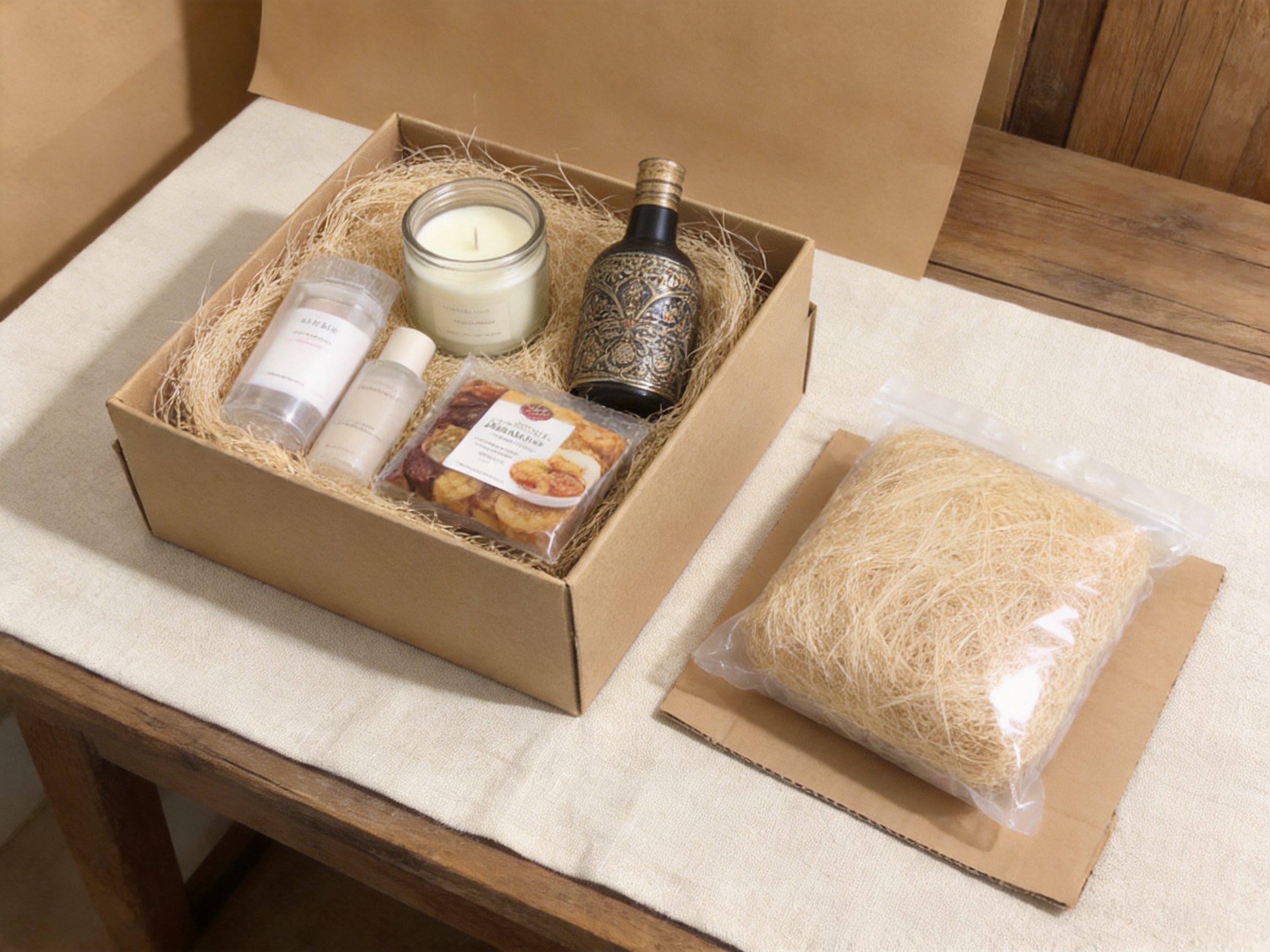
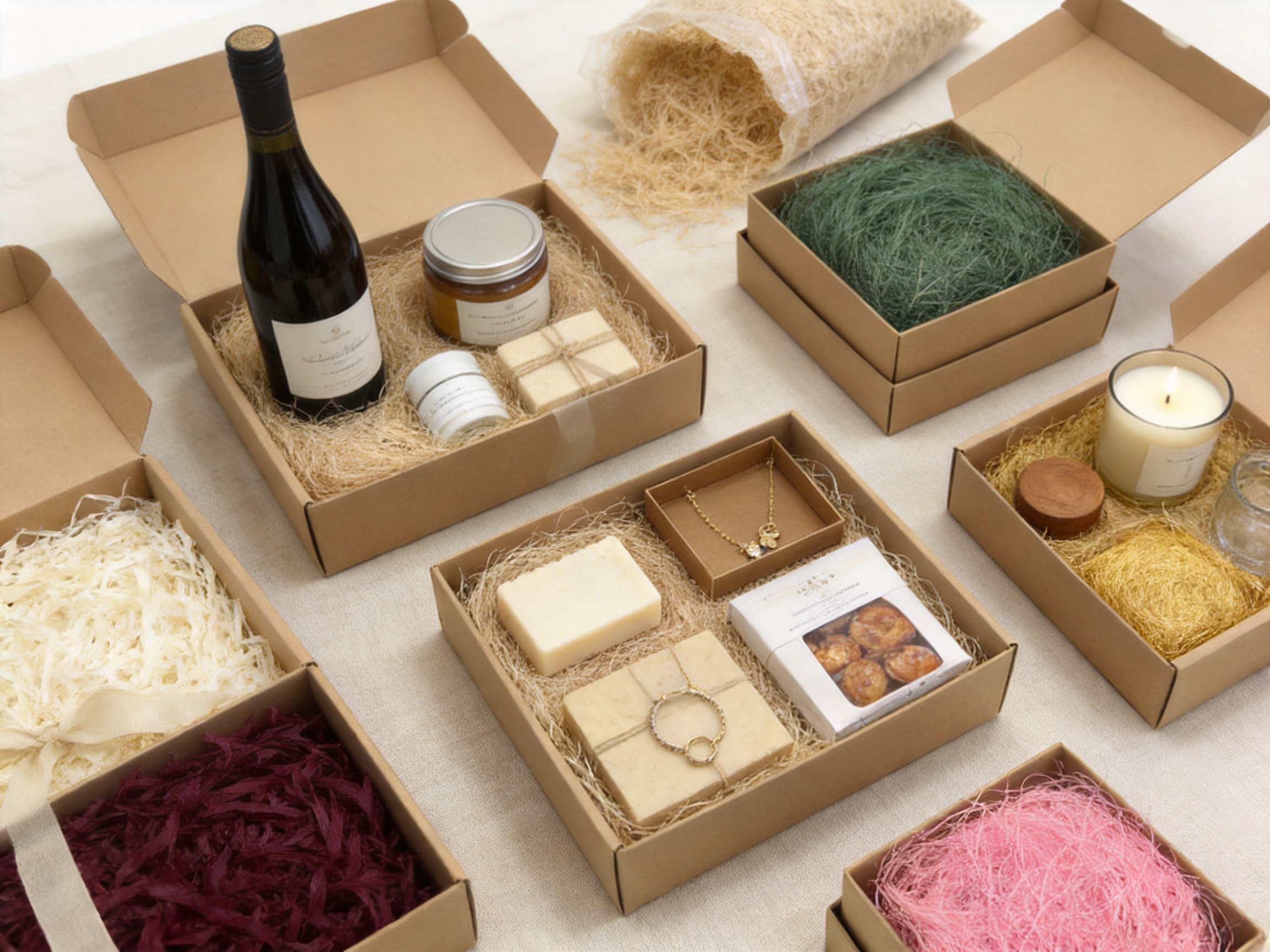
Gift box manufacturers use natural jute shreds to fill empty space and create a layered unboxing experience. The material can be placed below, around, or above products depending on the desired presentation. It works with rigid boxes, folding cartons, drawer boxes, magnetic boxes, baskets, and mailer-style gift packages.
For premium gift boxes, the shreds can be combined with printed tissue, ribbons, paper raffia yarn, greeting cards, and custom labels. The natural texture provides contrast against smooth coated boxes and helps prevent the package from appearing empty.
Wine and spirits packaging
Wine, spirits, and specialty beverage gifts often require a filler that supports a heavier bottle while maintaining an attractive appearance. Natural jute shreds can be used around bottle packaging or inside hamper-style presentations. They are especially suitable for gift sets that also contain glasses, food products, accessories, or promotional materials.
Because loose shreds are not a substitute for molded bottle protection, the bottle should still be secured through an appropriate box structure, divider, sleeve, or insert. The jute filler can then improve presentation and help occupy remaining space.
Gourmet food and confectionery hampers
Food hampers, chocolate collections, confectionery boxes, tea assortments, and specialty food packages benefit from the natural visual language of jute. The material can support an artisanal or farm-to-table presentation, particularly when paired with kraft paper, wood, recycled board, or muted colors.
For food-related applications, the filler should be kept separated from unpackaged food unless the specific product has been assessed for the required contact conditions. In most cases, the material is used around sealed food containers or individual retail packages.
Cosmetic and skincare gift sets
Natural jute filling shreds can complement skincare, soap, bath, fragrance, and wellness collections. Their plant-fiber appearance supports brands that emphasize natural ingredients, handcrafted production, botanical themes, or sustainable packaging.
For high-end cosmetic presentation, the shreds can be dyed in a brand color or used in a natural tone to create contrast with white, glass, kraft, or pastel packaging. Custom cutting length can help control the visual scale for small jars and bottles.
Jewelry and watch packaging
Jewelry and watches typically require a separate protective holder or fitted insert. Once the product is secured, natural jute shreds can fill the surrounding space in presentation boxes, promotional kits, or larger gift packages. The material provides a soft decorative background and can make the overall package feel more complete.
Candles, handmade soaps, and craft products
Handmade products often benefit from packaging that reinforces their artisanal identity. Natural jute shreds are suitable for candles, soaps, ceramics, small textiles, handmade stationery, craft tools, and decorative products. The fiber texture creates a visual connection between the product and the hand-finished character of the brand.
Seasonal and promotional packaging
Custom-dyed jute shreds can be developed for Christmas, Valentine’s Day, weddings, harvest themes, corporate events, and other seasonal campaigns. Multi-color blends can create a distinctive visual identity without changing the basic filling process.
Promotional product suppliers can use the material in employee gifts, conference packages, branded welcome kits, and client appreciation boxes. The option to combine natural and colored fibers allows one base material to support different campaigns throughout the year.
E-commerce and subscription boxes
E-commerce packaging must balance product protection, visual presentation, storage efficiency, and shipping cost. Natural jute filling shreds can make a mail-order package more attractive when opened by the customer. Vacuum-compressed supply packaging also supports efficient storage for fulfillment centers and distributors.
For subscription boxes, the filler can be standardized across multiple monthly themes or customized for special editions. Buyers should test the complete shipping package to confirm that the filler remains distributed correctly after vibration, compression, and changes in orientation.
7. Packaging Formats for Different Buyers
Vacuum-compressed bags
Vacuum bags are suitable for export shipments, wholesale orders, and customers that prioritize storage efficiency. The reduced volume can simplify warehouse handling and help lower transportation requirements. The outer carton or protective packaging should be selected according to shipment distance, humidity, stacking conditions, and container loading.
Transparent OPP bags
OPP bags are appropriate for retail-ready products, samples, online orders, and smaller distribution units. Transparent packaging allows the fiber appearance and color to be viewed before purchase. Product labels can include weight, material information, color, usage suggestions, batch details, and private-label branding.
Bulk woven bags
Woven bags are suitable for factories, distributors, and high-volume buyers. They offer practical handling and efficient storage for customers that repackage the filler into smaller units or use it directly in their own production lines.
Custom cartons and private-label packaging
Custom cartons support brand consistency across a product range. Private-label projects can include printed bags, custom cartons, labels, barcodes, product inserts, and coordinated color systems. The buyer should provide final artwork in an agreed format and approve a packaging proof before mass production.
8. Quality Control Considerations
Quality control for natural jute filling shreds should address both appearance and practical performance. Since the product is made from a natural plant fiber, some variation may be inherent. The purpose of inspection is to maintain commercially acceptable consistency while recognizing the natural character of the material.
Raw-fiber inspection
Incoming fiber should be checked for visible contamination, excessive foreign material, abnormal odor, moisture concerns, and unsuitable texture. Natural fibers can vary according to agricultural conditions and storage history, so appropriate material control is essential.
Dimensional consistency
Fiber width and cutting length should be compared with the approved specification. Excessive variation can influence the appearance, filling density, and handling behavior. Sampling plans should be agreed for large orders, especially when the product is sold under a retail label.
Color inspection
Natural color should be compared with the approved reference sample. Dyed colors should be inspected for consistency, surface coverage, and unacceptable staining or transfer under the conditions relevant to the customer’s application. Pantone matching provides a reference, but the final plant-fiber appearance should be approved physically.
Cleanliness and dust control
Decorative filling materials must be clean and suitable for their intended packaging environment. Buyers should discuss dust expectations, foreign-material controls, and storage conditions. Products intended for luxury retail, cosmetics, or sensitive display environments may require stricter cleanliness requirements than general craft applications.
Packaging weight and compression
Each package should meet the agreed net-weight or quantity requirement. Compression should be strong enough to reduce shipping volume but not so excessive that the fibers cannot recover useful volume after opening. Buyers should evaluate the packed product, the opened product, and the filling performance after storage.
Documentation and compliance
The supplied information indicates that REACH documentation is available upon request and that other standards may be addressed according to project requirements. Compliance needs vary by destination, application, labeling system, and customer policy. Importers should identify all required documents before production rather than waiting until shipment preparation.
9. How Buyers Can Evaluate Competing Products
Price alone is not enough to compare decorative fillers. A lower unit price may be offset by greater shipping volume, inconsistent fiber quality, higher usage per box, damaged packaging, or frequent replacement of rejected goods. A more complete evaluation should include material quality, usable volume, appearance, logistics, customization, and supply reliability.
Buyers should request samples from competing suppliers and compare the following points:
- Material identity and accuracy of the technical description
- Fiber width and cutting-length consistency
- Natural appearance and acceptable variation
- Color matching and color stability
- Amount of dust and visible foreign material
- Fluffiness after opening the package
- Volume produced by the same net weight
- Ability to stabilize products in the target box
- Compatibility with other fillers
- Packaging density and shipping efficiency
- Availability of private-label and OEM services
- Production capacity and repeat-order support
- Inspection procedures and documentation
- Lead time and communication during development
Natural jute filling shreds are particularly competitive when the buyer values renewable plant-fiber content, natural texture, low shipping volume, flexible customization, and the ability to purchase from an established manufacturer rather than a small reseller.
10. Recommended Purchasing Process
A structured purchasing process reduces misunderstanding and improves mass-production results. The first step is to define the application. Buyers should identify the product type, box dimensions, expected package weight, shipping method, intended market, and desired visual style.
The next step is to specify the material and technical requirements. These may include natural jute fiber, natural or dyed color, fiber width, cutting length, fluffiness, mixed-material ratio, packaging weight, and bag format. The product name and material description should be aligned on the purchase order and label.
Sample approval should take place in the final or representative package. A loose sample may look attractive but perform differently when placed around a bottle, jar, box, or irregularly shaped product. Testing should include filling quantity, appearance after closing, recovery after opening, product movement, and the effect of normal shipping handling.
For customized colors, the customer should approve a physical color sample. For private-label packaging, artwork, barcode information, warning statements, material declarations, and carton markings should be checked before production.
Before mass production, the buyer and manufacturer should agree on inspection standards. These standards can address fiber dimensions, color tolerance, net weight, package integrity, cleanliness, acceptable natural variation, and shipment quantity. Clear standards make final inspection more objective.
11. Sustainability and Responsible Communication
Natural jute filling shreds support packaging strategies that seek to replace petroleum-based decorative fillers with renewable plant fiber. Their natural appearance can also help brands communicate a less disposable and more considered packaging identity.
However, sustainability claims should remain specific and verifiable. Statements such as “natural jute fiber,” “not bleached,” and “biodegradable under suitable disposal conditions” are more precise than broad claims that imply universal compostability or complete environmental neutrality. Buyers should consider the entire package, including dyes, adhesives, labels, cartons, and transport.
The lightweight structure and vacuum-compressed supply format may also contribute to more efficient logistics. Lower volume can reduce storage requirements and improve shipment utilization, although the actual environmental effect depends on order size, transport distance, packaging configuration, and distribution methods.
Responsible sourcing also involves product durability and appropriate use. A filler that improves presentation and reduces damage can help prevent unnecessary product replacement. Buyers should select the correct amount of material and combine it with suitable structural protection when products are fragile or heavy.
12. Why Integrated Production Matters to International Buyers
International buyers often face difficulties when sourcing from multiple small suppliers. One company may provide the fiber, another may cut it, and a third may package it. This arrangement can create inconsistencies in color, dimensions, quality responsibility, documentation, and delivery timing.
An integrated manufacturer can coordinate more stages under one quality system. This simplifies communication and makes it easier to develop custom specifications. It also supports mixed orders involving natural fillers, paper raffia, fancy yarns, paper shreds, decorative accessories, and related gift-packaging materials.
The supplier’s broader product experience in raffia paper, paper yarns, DIY cords, fancy yarns, and gift packaging materials allows customers to explore coordinated product families. A packaging distributor may source several complementary materials from one manufacturing partner instead of managing separate suppliers for every component.
Long-term supply is another benefit. Once a product has been approved, repeat orders can follow a documented specification. This helps brands preserve packaging consistency across different seasons, retail channels, and geographic markets.
13. Frequently Asked Questions
Q1: What are Naturals Sisal Filling Shreds made of?
According to the supplied technical information, the product is made from natural jute fiber. The fibers are physically opened, combed, and precision cut without bleaching. Buyers should use the agreed technical material name in formal documents because the commercial title includes the word “Sisal,” while the specification identifies natural jute.
Q2: Are the shreds biodegradable?
Yes. Natural jute is a renewable plant fiber and is biodegradable under suitable disposal conditions. The final disposal performance may be influenced by dyes, coatings, labels, adhesives, contamination, and local waste facilities.
Q3: Are the shreds bleached?
No. The supplied specification states that the product is not bleached. The natural surface and original fiber appearance are retained through physical opening, combing, and cutting.
Q4: Can the color be customized?
Yes. The product is available in natural color and eco-friendly dyed colors. Pantone matching, brand-exclusive colors, seasonal colors, and multi-color combinations can be developed for suitable orders.
Q5: Can the fiber width and cutting length be changed?
Yes. The standard fiber width is listed as 1–2 millimeters, and customized fiber width, cutting length, and fluffiness are available. The final specification should be confirmed through samples and written approval.
Q6: Can natural jute shreds be mixed with other fillers?
Yes. The product can be mixed with paper shreds, glitter shreds, or multiple jute colors. Customers can request custom material ratios and visual effects.
Q7: What packaging formats are available?
Available formats include vacuum-compressed bags, transparent OPP bags, bulk woven bags, custom-weight packaging, private-label packaging, and custom cartons.
Q8: Are the shreds suitable for direct food contact?
The product is generally used around sealed food packages, gift boxes, hampers, and containers rather than in direct contact with unpackaged food. Buyers requiring food-contact suitability should request and review the appropriate documentation before placing an order.
Q9: Can the filler replace protective inserts?
It can provide light cushioning and help stabilize products, but it should not automatically be considered a complete replacement for structural inserts. Fragile, heavy, or sensitive products may require dividers, sleeves, molded components, or other protective systems.
Q10: Is the product suitable for export orders?
Yes. Vacuum-compressed packaging is available for export and bulk shipments. Packaging, labeling, documentation, carton configuration, and shipment requirements should be confirmed according to the destination market.
Q11: Does the manufacturer support OEM and ODM services?
Yes. Supported services include custom colors, custom fiber specifications, mixed-filler development, private-label packaging, custom cartons, and long-term bulk production.
Q12: What industries purchase this product?
Typical customers include gift box manufacturers, packaging distributors, wholesalers, importers, retailers, wine packaging companies, cosmetic packaging suppliers, jewelry packaging companies, floral packaging businesses, e-commerce packaging suppliers, promotional product providers, and brand owners.
Q13: What is the minimum order quantity?
The minimum order quantity is to be confirmed according to the material, color, packaging format, customization requirements, and production schedule.
Q14: How long is the lead time?
Lead time depends on order quantity, color development, packaging customization, sample approval, and current production scheduling. The exact lead time should be confirmed in the quotation or order confirmation.
Q15: Can compliance documentation be provided?
REACH documentation is available upon request, and other standards may be addressed according to project requirements. Buyers should list all destination-market and customer-specific documentation needs before production.
14. Conclusion
Natural jute filling shreds provide a practical and attractive solution for companies seeking decorative packaging materials with a natural appearance, lightweight cushioning, flexible customization, and biodegradable plant-fiber content. Their advantages over plastic and standard decorative fillers include authentic texture, compatibility with premium and handmade products, adaptability to different box sizes, and support for more responsible packaging concepts.
The product’s commercial value is strengthened by controlled physical opening, combing, precision cutting, optional eco-friendly dyeing, custom blending, compression packaging, and inspection before shipment. These processes help transform a natural raw material into a consistent packaging component suitable for wholesale distribution and branded applications.
The manufacturer’s integrated production base, established industry experience, large workforce, modern facility, high annual capacity, and OEM and ODM capabilities provide additional value for international buyers. From samples and color development to bulk production and private-label packaging, the supplier can support projects that require more than a standard off-the-shelf filler.
For the best results, buyers should confirm the material identity, evaluate samples inside the final package, define quality tolerances, verify compliance requirements, and select the appropriate packaging format. When these steps are managed carefully, natural jute filling shreds can improve product presentation, support efficient packaging operations, and help brands create a more distinctive and environmentally conscious unboxing experience.
References
1. Product technical information for Natural Jute Filling Shreds, including material, dimensions, processing method, packaging options, customization capabilities, and compliance support.
2. Manufacturer company information concerning production history, facility size, workforce, annual capacity, integrated manufacturing processes, export markets, and OEM and ODM services.
3. General technical principles of natural jute fiber processing, including physical opening, fiber combing, precision cutting, color processing, compression packaging, and quality inspection.
4. General packaging engineering principles concerning loose-fill materials, product stabilization, cushioning, package testing, warehouse handling, and transport performance.
5. General sustainability guidance concerning renewable plant fibers, biodegradable materials, accurate environmental claims, packaging-system assessment, and disposal conditions.
Product: Naturals Sisal Filling Shreds
 +86 15355323399
 kevin@raffia-paper.com
 No. 151 Guanshan North Road, Dongyang City, Zhejiang Province, China

Copyright © Zhejiang Raffia Paper Products Co., Ltd. All Rights Reserved.

Paper Raffia Yarn & Gift Packaging Factory