
 +86 15355323399
 En
En  中文简体
中文简体 日本語
日本語 Français
 Español
 Deutsch
 Türk
Türk عربى
عربى italiano
 русский
Raffia Decorative Sequins: High-Gloss Embellishment for Gift Packaging and Creative Crafts
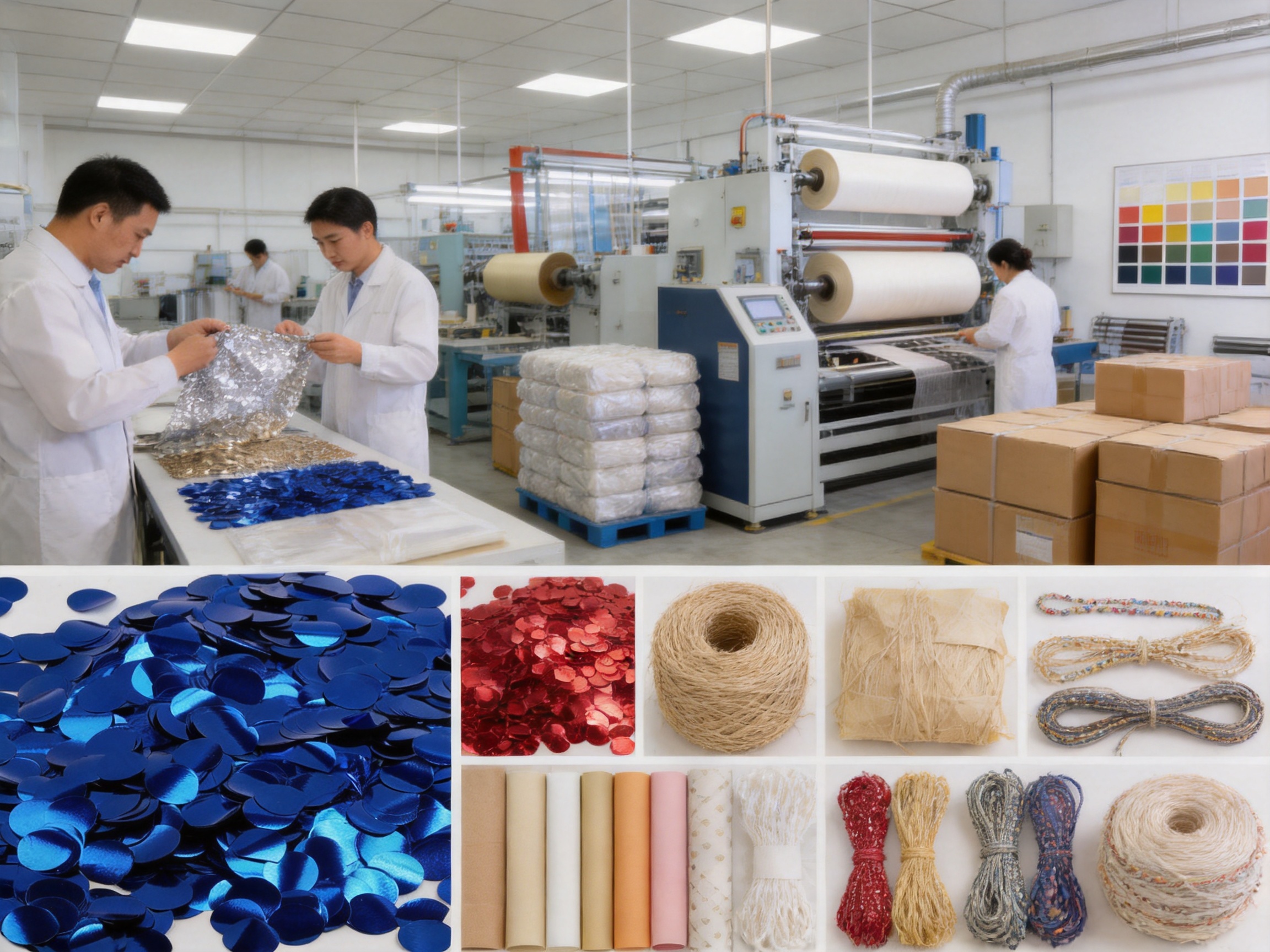
Raffia decorative sequins are an effective way to add color, movement, texture, and visual value to gift packaging, handmade products, craft projects, retail displays, and seasonal decorations. Designed for applications that require a bright and refined finish, these thin PET sequins combine high gloss with flexible handling, water resistance, and reliable color performance. Their metallic and iridescent surfaces reflect light from different angles, helping ordinary packaging and craft items achieve a more attractive and premium appearance.
Unlike many basic decorative materials that lose their brightness after handling or exposure to moisture, quality raffia decorative sequins are manufactured to provide a stable visual effect. The material is smooth, lightweight, and easy to apply. It can be used as a loose decorative filler, attached to gift boxes, incorporated into handmade cards, combined with ribbons and paper raffia, or used as part of a larger packaging design. These qualities make the product suitable for both professional packaging manufacturers and individual creators.
Raffia decorative sequins are part of a broader family of raffia-related products that includes paper raffia yarn, raffia filler, fancy yarn, wrapping paper, decorative cords, and other gift packaging accessories. When these products are sourced from an integrated manufacturer, buyers can coordinate colors, textures, sizes, and packaging formats across an entire product range. This makes it easier to develop consistent retail collections, seasonal packaging programs, and customized craft material lines.
What Are Raffia Decorative Sequins?
Raffia decorative sequins are thin, glossy decorative pieces made from PET, also known as polyethylene terephthalate. PET is a versatile material widely used in packaging and decorative applications because it can be produced in a lightweight, flexible, and visually attractive form. For decorative sequins, the material is processed to create smooth surfaces with metallic, iridescent, or customized color effects.
The sequins are designed to catch and reflect light. This reflective quality gives gift boxes, baskets, paper bags, greeting cards, craft projects, and display arrangements a lively appearance. Depending on the selected color and finish, the same basic product can create a luxurious metallic effect, a playful multicolor effect, or a subtle modern accent.
Because the product is thin and flexible, it can be used in many different ways. It may be scattered inside a gift box, placed around a product as a decorative filler, applied to an adhesive surface, mixed with other embellishments, or incorporated into creative handmade designs. Its smooth edges also support comfortable handling during packaging and crafting.
The product is especially useful when a designer wants strong visual impact without adding significant weight. Heavy decorative accessories can increase shipping costs or make a package difficult to handle. Lightweight PET sequins add a noticeable decorative effect while maintaining the practical advantages required for modern retail packaging.
Key Material Characteristics
PET Environmental Protection Material
The primary material is PET, selected for its balance of appearance, flexibility, durability, and processing performance. PET can be manufactured in a thin format while maintaining a stable surface and consistent visual quality. This makes it suitable for sequins that need to remain attractive during production, packing, transport, and final presentation.
For buyers seeking more responsible material choices, PET can offer a practical option for decorative packaging components when it is produced and managed within an appropriate environmental system. The material can be incorporated into lightweight product designs, helping reduce unnecessary bulk and transportation weight. Customers may also request further information about material specifications, packaging methods, and applicable sustainability requirements for their particular market.
Thin and Smooth Texture
The thin structure allows the sequins to blend naturally with paper, yarn, ribbon, wrapping materials, and other accessories. They do not need to dominate the entire design. Instead, they can be used as a fine highlight or distributed across a larger surface to create rhythm and sparkle.
A smooth texture improves handling and supports clean application. When decorative pieces have rough surfaces or poorly finished edges, they may catch on paper, fabric, or skin. Carefully processed sequins provide a more comfortable user experience and help reduce the risk of damage to delicate packaging materials.
High-Gloss Surface
Gloss is one of the most important visual advantages of raffia decorative sequins. A high-gloss surface reflects ambient light, making the product look brighter and more refined. This effect is valuable for gift packaging, where visual presentation can influence a customer’s perception of quality.
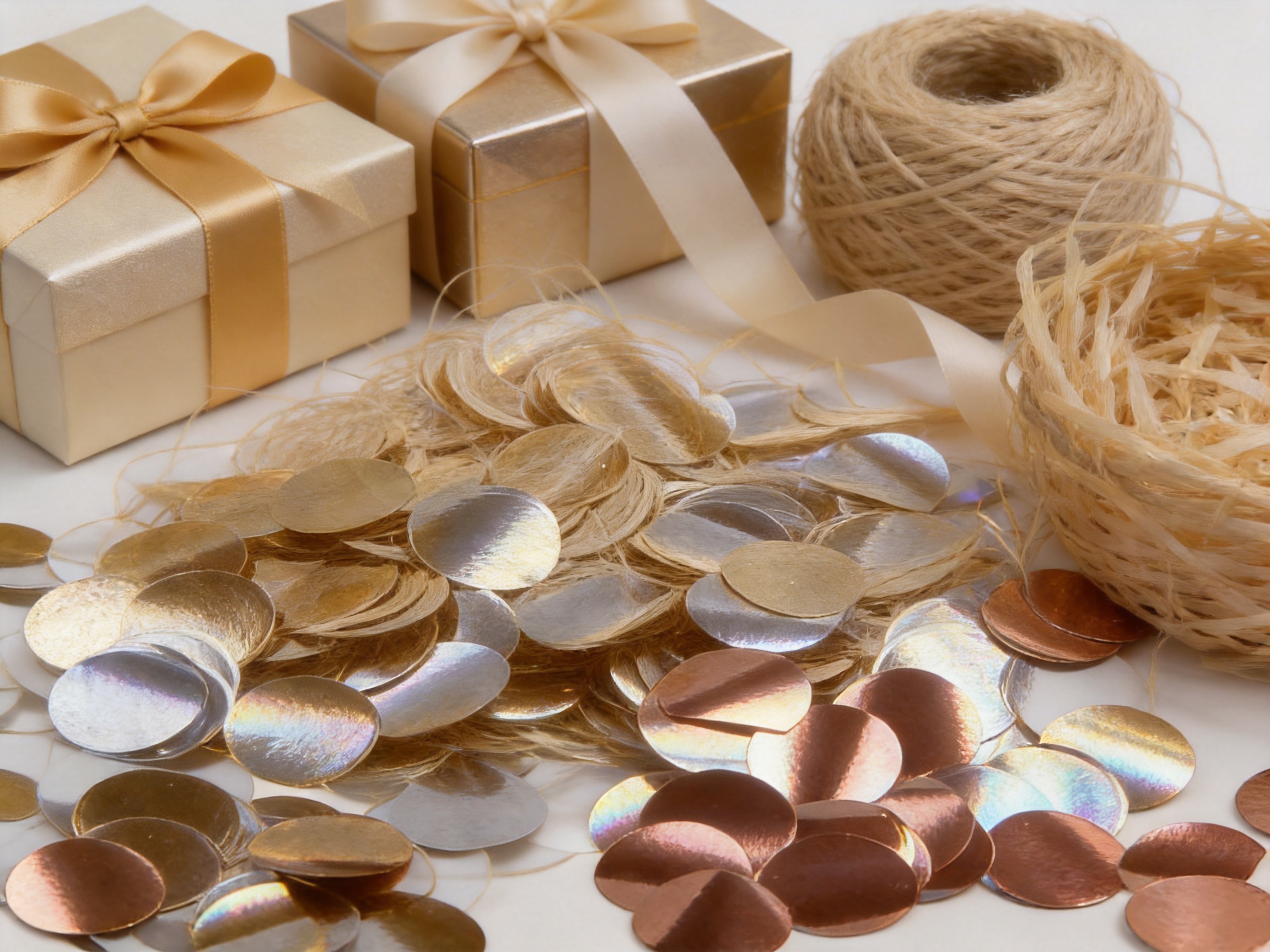
Metallic colors create a strong luxury impression. Gold, silver, copper, and other reflective tones are suitable for holiday packaging, cosmetics, premium gifts, wedding favors, and celebration products. Iridescent finishes provide a changing color effect as the viewing angle shifts. This makes them useful for creative brands, children’s products, seasonal collections, and packaging that needs a more dynamic appearance.
Water Resistance
Water resistance is another important advantage. Packaging materials may be exposed to condensation, humid storage conditions, handling by customers, or accidental contact with moisture. Sequins that absorb water can become dull, distorted, or difficult to use. PET sequins are designed to maintain their surface characteristics in ordinary moisture-related situations.
Water resistance does not mean that every finished package is waterproof. The performance of a complete package depends on the paper, adhesive, coating, box structure, and storage environment. However, the water-resistant nature of the sequins helps them remain a dependable decorative element when used alongside other packaging components.
Resistance to Oxidation and Fading
Decorative materials are often judged by their color and brightness. If the appearance changes quickly, the finished product may no longer match the original design. Raffia decorative sequins are developed to resist oxidation and fading, supporting more consistent color performance during storage and use.
This characteristic is especially valuable for bulk buyers. Retailers, packaging companies, and distributors may hold inventory for weeks or months before products reach the final customer. Stable visual quality helps reduce complaints, simplify quality inspection, and protect the consistency of a brand’s packaging system.
Flexible Handling
Flexibility allows the sequins to follow curves, corners, folds, and irregular surfaces. They can be used on boxes with rounded edges, handmade ornaments, decorative baskets, paper crafts, and other products that cannot be decorated effectively with rigid components.
Flexible materials are also easier to package and transport. They can be compressed or arranged in suitable formats without creating unnecessary volume. This is beneficial for manufacturers that need to optimize carton space and control logistics costs.
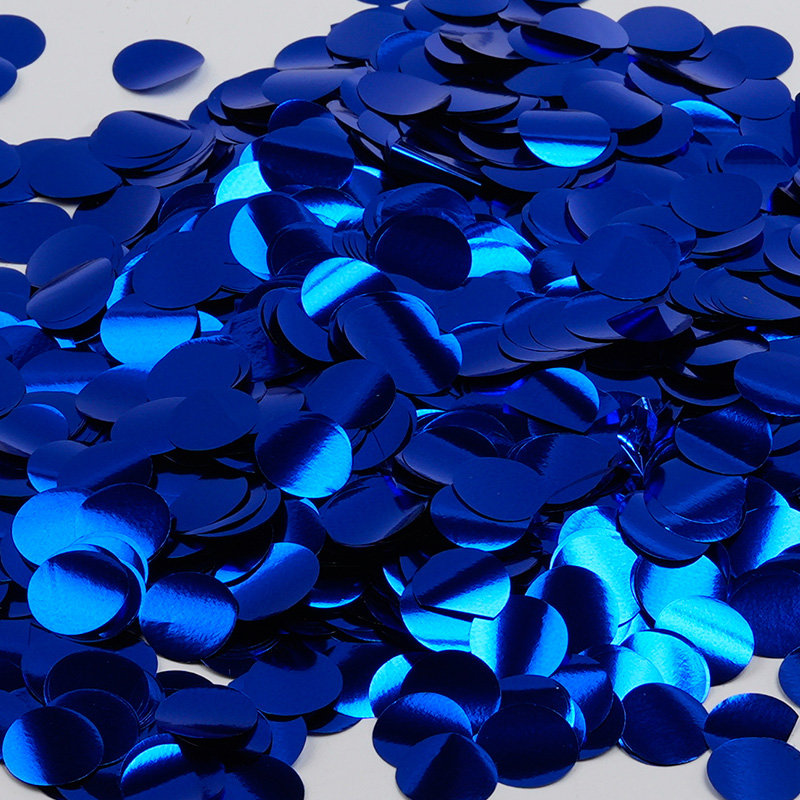
Raffia Decorative Sequins
Applications in Gift Packaging
Gift Box Embellishment
One of the most direct uses for raffia decorative sequins is gift box embellishment. Sequins can be placed on box lids, around logos, inside transparent windows, or along decorative borders. They can also be combined with paper raffia yarn, bows, labels, stickers, and printed wrapping paper to create a coordinated appearance.
For premium packaging, metallic sequins can emphasize the value of the product inside. Gold and silver shades are frequently associated with celebration, exclusivity, and luxury. For more artistic packaging, iridescent sequins can introduce color variation and movement without requiring complex printing techniques.
Gift Basket Filler
Sequins can be used as a decorative filler in gift baskets, presentation boxes, and product hampers. When scattered around the main product, they help fill empty spaces and create a more complete visual presentation. Their reflective surface attracts attention and can make the opening experience more memorable.
They may be used alone or mixed with crinkle paper, raffia shreds, paper strips, tissue paper, and fancy yarn. A carefully selected combination of textures creates depth. For example, soft paper filler can provide volume, while glossy sequins add brightness and contrast.
Seasonal Packaging
Seasonal packaging often depends on color, shine, and visual recognition. Metallic red, green, gold, silver, and other customized shades can support holiday themes. Iridescent colors may be used for spring celebrations, birthday packaging, party favors, and creative seasonal campaigns.
Because the product can be customized in color, packaging suppliers can create collections for different holidays and promotional periods. Consistent color matching across sequins, paper raffia, ribbons, and wrapping paper can help a retailer build a unified shelf presentation.
Cosmetic and Fragrance Packaging
Cosmetics, fragrances, skincare products, and personal care items often use decorative packaging to communicate elegance and quality. High-gloss sequins can be applied as a limited accent around a box or used as an interior decorative element. When properly coordinated with typography, coatings, and metallic printing, they can contribute to a sophisticated visual identity.
In these applications, neat finishing and consistent color are particularly important. A reliable manufacturing process helps ensure that different production batches maintain a similar appearance, reducing the risk of mismatch between packaging orders.
Wedding and Celebration Gifts
Wedding favors, anniversary gifts, birthday packages, party boxes, and event souvenirs can benefit from decorative sequins. Their reflective surface works well with soft lighting, table displays, and photography. They can be used in small quantities to highlight a ribbon knot or label, or in larger amounts to create an energetic party effect.
Customized colors allow event planners and packaging suppliers to coordinate decorative materials with a specific theme. This may include pastel shades, pearl-like effects, metallic tones, or multi-color combinations.
Applications in DIY Crafts
Handmade Cards and Scrapbooking
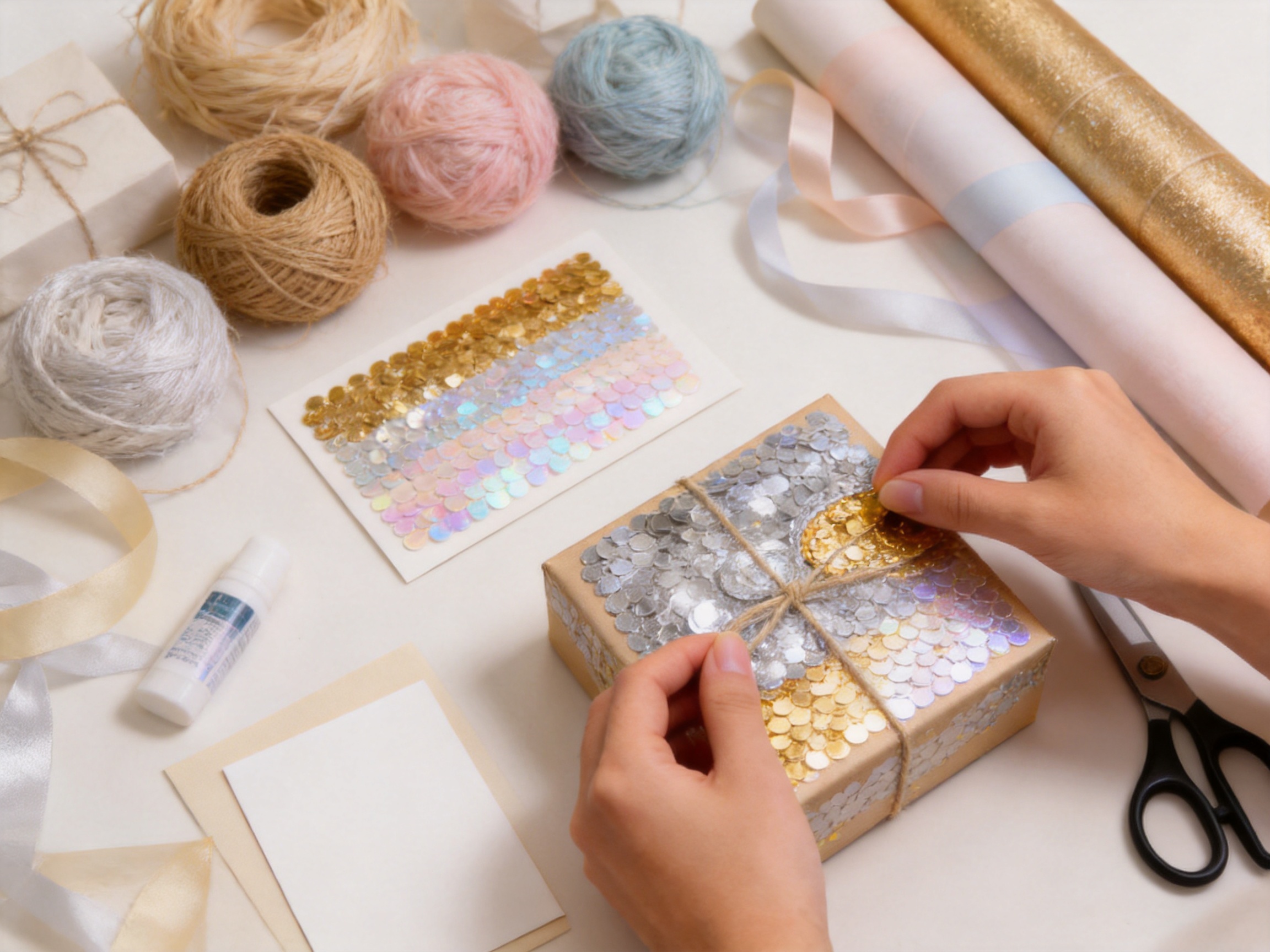
Raffia decorative sequins can be attached to handmade cards, scrapbook pages, invitations, and memory albums. They add a dimensional accent that flat ink and paper alone cannot provide. A small amount of sequins can outline a shape, emphasize a title, or create a decorative border.
When used with suitable craft adhesive, the sequins can remain in place while still preserving their reflective effect. Their thin structure helps prevent excessive thickness, which is useful for cards that need to be placed in envelopes or stored in albums.
Decorative Boxes and Paper Crafts
Paper boxes, storage containers, gift bags, and handmade organizers can be enhanced with sequins. Designers may apply them in geometric patterns, random arrangements, themed motifs, or simple edge details. Their flexibility makes them suitable for both flat and slightly curved surfaces.
They can also be combined with wrapping paper and paper raffia tape to create matching gift sets. This integrated approach is helpful for craft retailers that want to sell complete project kits rather than individual materials.
Home Decoration
Decorative sequins can be incorporated into seasonal ornaments, table displays, decorative jars, flower arrangements, and wall crafts. They can add sparkle to artificial flowers, paper decorations, or handmade centerpieces. Because the material is lightweight, it can be used in projects where heavier metal accessories would be impractical.
For home decoration, the choice of finish has a major effect on the atmosphere. Metallic colors create a modern or festive look, while iridescent finishes offer a softer and more playful visual effect. Custom colors can be developed for specific interior themes or retail collections.
Textile and Mixed-Media Projects
Although the product is primarily intended for gift decoration and crafts, it may also be incorporated into selected mixed-media projects. Designers can combine sequins with fancy yarns, cords, fabric trims, and paper fibers to create contrast between glossy and soft surfaces.
When used with textiles, the application method should be selected according to the fabric type and intended use. The sequins are most suitable for decorative projects rather than products that require repeated washing, heavy abrasion resistance, or direct skin contact for extended periods.
Advantages Over Ordinary Decorative Materials
More Visual Impact Than Plain Paper Filler
Plain paper filler is useful for volume and protection, but it may not provide enough visual excitement for premium presentation. Raffia decorative sequins create an immediate reflective effect. Used with paper filler, they provide both practical cushioning and decorative value.
This combination gives packaging designers greater control. Paper materials can establish the base color and volume, while sequins can be concentrated in selected areas to highlight the product or create a more attractive opening experience.
More Flexible Than Rigid Decorative Pieces
Rigid accessories may look attractive but can be difficult to place on curved or folded surfaces. They may also increase package weight or occupy more storage space. Flexible PET sequins adapt more easily to different packaging structures and can be shipped in compact formats.
More Stable Than Low-Quality Film Decorations
Low-quality decorative films may fade, oxidize, curl, or lose their surface gloss. Such changes can reduce the perceived value of the finished product. Higher-quality PET sequins offer improved resistance to fading and oxidation, helping preserve the original design effect.
Safer and More Comfortable to Handle
Smooth edges and non-toxic material characteristics are important for craft suppliers, packaging workers, and end users. Decorative components should be easy to handle without creating unnecessary discomfort. Proper edge finishing supports safer application and improves the overall usability of the product.
Suitable for Customized Color Programs
Standard colors are convenient for general packaging, but customized colors are essential for many brands and seasonal projects. A manufacturer with color development and production experience can help customers select metallic, iridescent, or custom shades that match their broader product system.
| Feature | Raffia Decorative Sequins | Plain Paper Filler | Rigid Decorative Accessories |
|---|---|---|---|
| Surface appearance | High gloss, metallic, or iridescent | Usually matte or lightly printed | May offer strong decoration but limited flexibility |
| Material structure | Thin and flexible PET | Lightweight paper | Often thicker or more rigid |
| Moisture performance | Water-resistant surface | May absorb moisture | Depends on material and coating |
| Color stability | Designed to resist fading and oxidation | Depends on paper and printing quality | Depends on surface treatment |
| Best use | Highlighting, embellishment, gift presentation, DIY crafts | Filling volume and protecting products | Structural decoration and visual accents |
| Customization potential | Metallic, iridescent, and custom colors | Color and printing customization | Usually requires specific tooling or components |
Manufacturing Strength and Process Control
The performance of decorative sequins depends not only on the selected material but also on the manufacturing process. Consistent thickness, stable color, smooth edges, accurate cutting, and suitable packaging all require organized production procedures and reliable inspection standards.
Zhejiang Raffia Paper Products Co., Ltd. has developed from a craft materials business unit into an integrated manufacturer serving the raffia and gift packaging sector. Founded in 2014 after the original business activity began in 2010, the company has accumulated more than ten years of experience in material processing, decorative product production, and packaging supply.
The company operates a modern production base in Dongyang, Zhejiang Province, covering approximately 20,000 square meters and employing more than 200 professional workers. This scale supports coordinated production, quality management, storage, order preparation, and shipment. It also gives the company the capacity to serve both standard orders and customized bulk programs.
Integrated Raw Material Processing
Integrated production begins with controlled raw material preparation. Proper material selection affects gloss, flexibility, surface smoothness, color performance, and final application results. By managing the manufacturing chain more closely, the company can improve consistency between incoming materials and finished products.
For decorative sequins, raw material control is particularly important because small differences in thickness or surface treatment can affect how the pieces reflect light. Consistent material preparation supports a more uniform appearance across a batch.
Slitting and Precision Material Handling
The company has production capabilities covering slitting, twisting, winding, and compression packaging. Although different products require different processing routes, these capabilities demonstrate experience in handling narrow, thin, and flexible materials. Such experience is valuable when manufacturing decorative accessories that must remain neat, stable, and easy to pack.
Slitting and material handling processes require attention to alignment, tension, and dimensional control. Poor control may result in uneven edges, irregular shapes, or inconsistent winding. Standardized procedures help reduce these problems and support dependable production performance.
Color and Surface Consistency
Color consistency is a critical concern for gift packaging. Buyers often need several products to match within one collection. If sequins, paper raffia, ribbons, and wrapping paper show noticeable differences, the finished package may appear uncoordinated.
Quality control should therefore cover color selection, surface gloss, visual comparison, and batch records. The company’s replicable quality control system is designed to support stable production and repeat orders. This is especially useful for long-term customers that need to replenish the same product over multiple seasons.
Compression Packaging and Shipment Preparation
Decorative materials must be packaged carefully to prevent contamination, moisture exposure, compression damage, and unnecessary volume. Compression packaging can improve storage efficiency and support economical transportation when applied appropriately.
Finished-goods packaging and shipment preparation are part of the company’s integrated manufacturing chain. This helps coordinate production quantities, packaging specifications, labeling requirements, and delivery schedules. For international buyers, organized shipment preparation can make communication and receiving procedures more efficient.
Quality Testing
Quality testing may include visual inspection, color checking, surface examination, edge inspection, packaging verification, and confirmation of customer-specific requirements. The exact inspection plan can vary according to the product specification and intended market.
A repeatable quality system is important because decorative products are often purchased in bulk and used in large production runs. A small defect rate can become significant when thousands or millions of pieces are involved. Consistent inspection helps protect the customer’s production efficiency and final presentation quality.
Large-Scale Supply Capacity
The company reports an annual production capacity of more than 200 million pieces across its product range. This capacity allows it to support high-volume packaging programs, retail supply chains, seasonal promotions, and repeated wholesale orders.
Large-scale capacity offers several practical advantages. It can reduce the risk of supply interruptions, support stable lead-time planning, and make it easier to coordinate different product categories. A buyer may source decorative sequins together with paper raffia yarn, raffia filler, wrapping paper, fancy yarn, and other accessories from one experienced supplier.
Consolidated sourcing can reduce communication complexity. Instead of managing multiple suppliers for every accessory, a packaging buyer can discuss colors, specifications, packaging formats, and delivery schedules with one integrated manufacturer. This can be especially valuable for international customers developing a coordinated product line.
At the same time, capacity should be matched with realistic specifications and order planning. Buyers should confirm sample approval, production timelines, packaging details, and quality requirements before placing a large order. Clear communication helps both parties achieve efficient production and dependable delivery.
OEM and ODM Customization
Customized production is important for brands that require a distinctive color system, exclusive packaging, special dimensions, or a private-label product range. Zhejiang Raffia Paper Products Co., Ltd. provides OEM and ODM services for customers seeking flexible development and long-term supply.
Exclusive Brand Customization
OEM programs allow customers to develop products under their own brand identity. This may include customized packaging, labels, color combinations, product names, and packing quantities. A well-designed private-label program can help craft retailers, packaging distributors, and gift companies build stronger market recognition.
Custom Size Development
Different applications may require different sequin sizes, shapes, thicknesses, or packing formats. A small sequin may be suitable for delicate cards and cosmetics packaging, while larger pieces may be preferred for gift baskets, event decoration, or display products.
Custom size development should consider the application method, surface area, visual effect, storage conditions, and final packaging. A manufacturer with experience in thin material processing can help evaluate whether a proposed specification is practical for mass production.
Color Matching and Finish Selection
Color is often the first feature customers notice. Buyers may request metallic, iridescent, translucent, seasonal, or brand-specific colors. Finish selection should also consider the lighting environment in which the product will be displayed.
Metallic finishes generally provide a stronger reflective effect, while iridescent finishes create changing color impressions. Custom colors can be developed to coordinate with wrapping paper, ribbon, paper raffia, printed cartons, and retail displays.
Long-Term Bulk Supply
Long-term supply requires more than one successful order. It depends on stable specifications, clear records, consistent materials, reliable quality inspection, and communication about production schedules. A standardized process helps ensure that replenishment orders remain close to the approved sample.
For customers with recurring demand, it is helpful to establish written requirements for color tolerance, packaging quantity, labeling, carton dimensions, inspection standards, and delivery terms. These details create a clearer foundation for ongoing cooperation.
Quality Considerations for Buyers
Surface Gloss
Buyers should inspect whether the sequins provide a consistent high-gloss effect across the sample. Uneven gloss may indicate differences in surface treatment or material quality. The finished product should be evaluated under the lighting conditions most relevant to its intended market.
Color Uniformity
Color should be compared across pieces in the same batch and, where applicable, against an approved reference sample. Metallic and iridescent products can appear different under different light sources, so a controlled evaluation process is recommended.
Edge Smoothness
Smooth edges support safer handling and cleaner application. Buyers should check for sharp corners, burrs, cracks, or irregular cutting. This is particularly important for craft products used by consumers and for packaging operations involving manual handling.
Flexibility and Recovery
The material should be flexible enough for the intended application without becoming excessively brittle. A simple handling test can reveal whether the pieces bend naturally and return to a suitable shape after ordinary movement.
Moisture and Storage Performance
Storage conditions should be reviewed before purchase. Even water-resistant decorative materials should be kept in clean, dry conditions and protected from unnecessary heat, direct sunlight, and contamination. Proper storage helps maintain color and surface quality until the product is used.
Packaging Quantity and Labeling
Bulk buyers should confirm the quantity per bag, box, or carton, as well as the labeling format. Accurate packaging information supports inventory management and reduces errors during production or resale. Customized labels may be available for OEM programs.
How to Use Raffia Decorative Sequins Effectively
Successful use begins with a clear design objective. Sequins can create a border, emphasize a logo, fill an empty area, add contrast, or provide a final sparkle to a finished package. Using too many pieces may make the design appear crowded, while using too few may not create enough visual impact.
Color coordination is equally important. Metallic gold works well with warm colors such as cream, red, brown, and deep green. Silver can complement white, blue, gray, black, and cool pastel shades. Iridescent sequins can be paired with neutral backgrounds to make their changing colors more visible.
For adhesive applications, the selected adhesive should be compatible with both the PET surface and the receiving material. The adhesive should be applied evenly, and the decorated item should be allowed to set according to the adhesive manufacturer’s instructions. Testing is recommended before full production.
For loose-fill applications, sequins can be mixed with paper filler or placed in a transparent inner package. This approach allows the glossy elements to remain visible while preventing them from spreading excessively during transport.
For retail craft kits, the sequins can be packed with complementary materials such as paper raffia yarn, wrapping paper, decorative cords, and instruction cards. Complete kits offer consumers convenience and encourage creative experimentation.
Sustainability and Responsible Product Development
Sustainability in gift packaging involves material selection, product weight, production efficiency, packaging design, logistics, and end-of-life considerations. Lightweight decorative sequins can support lower-volume packaging compared with heavier accessories. Efficient production and compression packaging may also help optimize transportation and storage.
PET is a widely used material, and its environmental performance depends on responsible sourcing, manufacturing, use, collection, and recycling systems. Buyers should evaluate the requirements of their target market and ask for appropriate material documentation when necessary.
The company emphasizes eco-friendly concepts and sustainable green supply chains as part of its broader business direction. For customers with specific sustainability goals, discussions may include material options, packaging reduction, production efficiency, and relevant compliance requirements.
Responsible design also means using decorative materials purposefully. A small amount of high-impact sequins may create the desired effect without excessive material use. Designers can balance visual quality and resource efficiency by selecting the appropriate size, quantity, and packaging format.
Why Choose an Integrated Manufacturer?
An integrated manufacturer can provide advantages beyond the production of one individual accessory. Zhejiang Raffia Paper Products Co., Ltd. specializes in paper raffia yarn, raffia paper, DIY cords, fancy yarns, gift packaging materials, and related products. This product breadth makes it possible to develop coordinated solutions rather than isolated components.
When one supplier manages several related items, buyers can simplify product development. Colors can be selected together, packaging styles can be coordinated, and order schedules can be planned more efficiently. This is useful for gift packaging companies that need a complete material system for different product categories.
The company’s experience with raw material processing, mass production, quality testing, and finished-goods shipment provides a foundation for professional supply management. Its customer base includes international retail and consumer brands, demonstrating experience with demanding quality, volume, and delivery expectations.
Its location in Zhejiang provides access to an established manufacturing and logistics environment. The company serves customers in China and exports to Europe, North America, South America, Asia, and other regions. International experience can help suppliers understand the importance of documentation, packaging protection, communication, and delivery coordination.
Recommended Purchasing Process
Step One: Define the Application
Before requesting a quotation, buyers should describe how the sequins will be used. Important information includes whether they will be used as loose filler, attached to a box, packed in a craft kit, or incorporated into a display product.
Step Two: Confirm Material and Finish
Specify the PET material, desired gloss level, metallic or iridescent finish, color requirements, and any relevant safety or environmental expectations. A clear specification reduces misunderstandings during sampling and production.
Step Three: Request Samples
Samples allow buyers to evaluate color, gloss, flexibility, edge smoothness, packaging quantity, and compatibility with other materials. It is advisable to test the product in a realistic application rather than judging it only as a loose sample.
Step Four: Approve the Specification
Once the sample is accepted, the buyer and manufacturer should record the approved color, dimensions, packaging method, labeling, inspection requirements, and order quantity. This information becomes a reference for future production.
Step Five: Plan Bulk Production
Bulk orders should be scheduled according to seasonal demand, promotional deadlines, shipping time, and inventory requirements. Early planning is particularly important before major holidays or retail campaigns.
Step Six: Inspect and Reorder
Inspection should be performed according to the agreed criteria. For repeat orders, buyers should compare production against the approved sample and maintain records of any approved changes. This supports stable long-term supply.
Q&A About Raffia Decorative Sequins
What material are raffia decorative sequins made from?
They are made from PET environmental protection material. PET is processed into thin, smooth, flexible decorative pieces with metallic, iridescent, or customized color effects.
Are the sequins waterproof?
The PET surface is water-resistant and designed to perform well in ordinary moisture-related situations. However, the complete package may not be waterproof because overall performance also depends on the paper, adhesive, coating, and structural design.
Do the colors fade easily?
The sequins are designed to resist fading and oxidation. Proper storage away from excessive heat, direct sunlight, and contamination will help preserve their color and gloss.
Can the colors be customized?
Yes. Metallic, iridescent, and custom colors are available for suitable projects. Buyers should provide a color reference or discuss the desired visual effect during the sampling stage.
Are the edges safe to handle?
The product is designed with smooth edges and non-toxic material characteristics. Buyers should still conduct application testing and follow appropriate handling procedures for their specific production environment.
Can the sequins be used with paper raffia yarn?
Yes. They can be combined with paper raffia yarn, raffia filler, fancy yarn, wrapping paper, ribbons, and other gift packaging materials. Combining glossy and fibrous textures can create a richer decorative effect.
What are the main applications?
Common applications include gift embellishment, DIY crafts, box decoration, gift basket filler, seasonal packaging, handmade cards, scrapbooking, decorative displays, and creative retail packaging.
Can they be used for OEM packaging?
Yes. OEM and ODM services may include customized colors, sizes, packaging formats, labels, and exclusive brand requirements. The exact options should be confirmed according to the project specification and order volume.
Why is batch consistency important?
Batch consistency ensures that color, gloss, size, flexibility, and packaging quantity remain stable from one production order to the next. This is especially important for brands and retailers that need regular replenishment.
What information should be provided when requesting a quotation?
Buyers should provide the intended application, color, finish, approximate size, packaging quantity, estimated order volume, labeling requirements, target market, delivery destination, and desired delivery schedule.
Can the manufacturer supply other related products?
The company also specializes in paper raffia yarn, raffia paper, DIY cords, fancy yarns, raffia filler, wrapping paper, and other gift packaging materials. This can support coordinated sourcing for complete packaging collections.
Conclusion
Raffia decorative sequins provide a practical and attractive way to improve gift presentation, craft design, and retail packaging. Their PET construction offers a useful combination of thin structure, flexibility, water resistance, high gloss, and resistance to oxidation and fading. Smooth edges and non-toxic material characteristics further support comfortable handling and broad application potential.
Compared with plain filler or rigid decorative accessories, these sequins deliver stronger visual impact with low weight and flexible application. Metallic and iridescent finishes make them suitable for luxury packaging, seasonal collections, celebrations, handmade projects, and creative retail displays. Custom color and size development can help buyers create a distinctive product line that matches their brand or event theme.
The manufacturing strength behind the product is equally important. Zhejiang Raffia Paper Products Co., Ltd. combines more than ten years of industry experience with an integrated production chain, a modern 20,000 square meter factory, more than 200 professional employees, large annual capacity, standardized production procedures, quality testing, and OEM and ODM support. Its wider range of raffia and gift packaging products enables customers to develop coordinated material programs from one experienced source.
For buyers seeking decorative materials that combine appearance, handling convenience, stable quality, and customization potential, raffia decorative sequins are a versatile solution. With proper specification, sampling, storage, and quality control, they can help transform ordinary packaging and handmade products into bright, memorable, and professionally presented creations.
References
1. Internal product information for PET raffia decorative sequins, including material, color, texture, features, applications, and safety characteristics.
2. Internal company information concerning manufacturing history, production capacity, factory facilities, quality control, OEM services, and international supply operations.
3. General technical reference materials on polyethylene terephthalate properties, flexible decorative films, and packaging applications.
4. General reference materials on gift packaging design, decorative filler selection, craft material handling, and visual merchandising.
5. General reference materials on sustainable packaging principles, lightweight material design, production efficiency, and responsible supply chains.
Product: Raffia Decorative Sequins
 +86 15355323399
 kevin@raffia-paper.com
 No. 151 Guanshan North Road, Dongyang City, Zhejiang Province, China

Copyright © Zhejiang Raffia Paper Products Co., Ltd. All Rights Reserved.

Paper Raffia Yarn & Gift Packaging Factory