
 +86 15355323399
 En
 中文简体
 日本語
 Français
 Español
 Deutsch
 Türk
 عربى
 italiano
 русский
Paper Raffia Fancy Yarn: A Scalable Material for Weaving, Packaging, and Creative Manufacturing
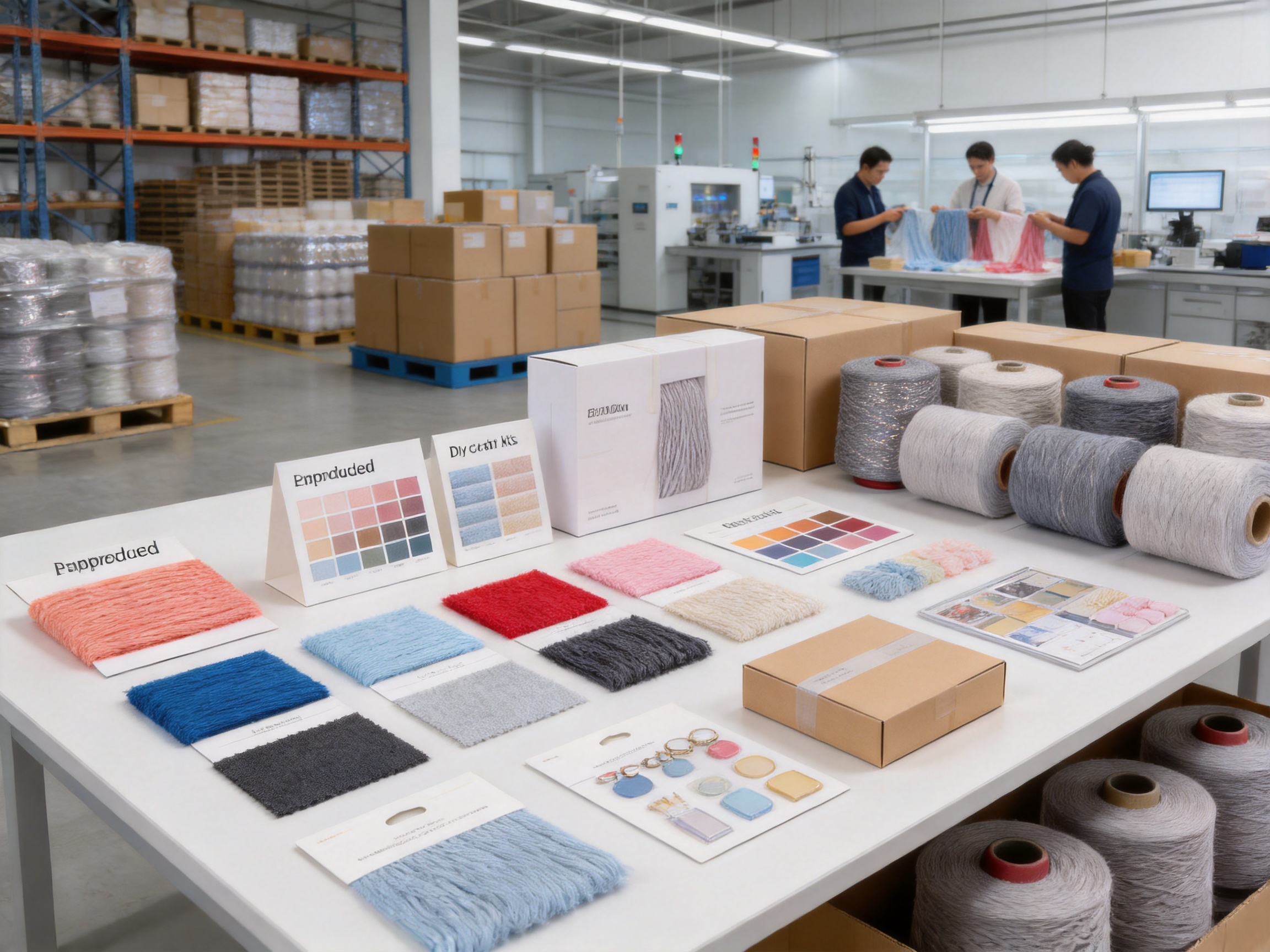
Paper Raffia Fancy Yarn is a specialized paper-based yarn developed for manufacturers, wholesalers, packaging suppliers, craft-kit businesses, and other professional buyers that need a stable material for repeatable production. It combines the visual character of natural raffia and straw with the consistency of an industrially produced yarn. Unlike a simple decorative cord intended mainly for occasional household use, this material is designed to function as a production input for weaving, gift packaging, retail display, DIY kits, and private-label product programs.
The product is made from Raffia-Specific Specialty Craft Paper, a high-tensile paper material processed through slitting, forming, twisting, winding, and packaging operations. This manufacturing approach creates a lightweight yarn with useful stiffness, shaping performance, and a straw-like appearance. At the same time, it provides the regularity required by modern supply chains, where color, weight, diameter, packaging, and delivery schedules must remain consistent from one production batch to the next.
For many buyers, the central value of Paper Raffia Fancy Yarn is not simply its appearance. Its greater value lies in its ability to replace less predictable natural materials, support standardized manufacturing, and provide flexible formats for different commercial applications. Buyers can select flat single strands, double-twisted strands, or triple and multi-strand structures. They can also request changes to twist, softness, color, diameter, packaging, and blending ratios.
This combination of material performance, manufacturing flexibility, and OEM support makes Paper Raffia Fancy Yarn a practical solution for companies developing woven accessories, seasonal packaging, DIY product lines, and high-volume craft-material distribution programs.
What Is Paper Raffia Fancy Yarn?
Paper Raffia Fancy Yarn is an industrial weaving yarn produced from specialty craft paper developed for raffia-style applications. The paper is converted into narrow, workable strands and then formed into yarn structures suitable for weaving, tying, winding, and packaging. Depending on the required result, the strand may remain relatively flat or may be twisted into a denser and stronger structure.
The material is intended to provide a balance between low weight, visual appeal, stiffness, flexibility, and process stability. It is not merely a paper strip and it is not simply a decorative string. It is a finished material system that can be supplied in standardized industrial formats or customized for specific product programs.
In use, the yarn can resemble natural straw, raffia fiber, or other plant-based decorative materials. This appearance is especially valuable for brands and manufacturers seeking a natural, handmade, sustainable, or seasonal visual theme. However, the manufacturing behavior is more controlled than that of many unstandardized natural fibers. The supplier can define the approximate diameter, twist level, weight, color, winding format, and packaging method according to the buyer’s requirements.
The yarn is suitable for both manual and semi-industrial processing. It can be woven, braided, crocheted, tied, bundled, wound, or combined with other yarns. Its stiffness helps formed products retain their shape, while the available twist and softness adjustments allow the material to be adapted to different production methods.
Why Industrial Buyers Choose Paper Raffia Yarn
Industrial buyers typically evaluate a material according to more than its appearance. They need to understand whether it can be purchased repeatedly, processed efficiently, stored safely, packaged attractively, and delivered with predictable specifications. Paper Raffia Fancy Yarn is designed around these procurement priorities.
Consistent Batch Performance
Natural straw, plant fibers, and other agricultural materials can vary according to harvest conditions, moisture, fiber maturity, storage, and regional supply. These variations may affect color, thickness, flexibility, surface texture, and strength. Such changes can make it difficult for a manufacturer to maintain a uniform product appearance.
Paper-based industrial production provides a more controlled starting point. The raw material, slitting width, forming method, twist level, winding process, and packaging procedure can be managed through standardized production controls. This helps reduce batch-to-batch differences and makes it easier for buyers to establish repeatable production specifications.
Stable Supply for Large Orders
A product concept may begin with a small sample, but successful commercial programs often require regular replenishment. A material that looks attractive in a sample but cannot be supplied reliably at scale creates problems for factories, wholesalers, and e-commerce brands.
Paper Raffia Fancy Yarn is positioned as a bulk-production material. It can be supplied in retail distribution packs, DIY kit formats, branded cards, industrial rolls, or bundled forms. This allows one material platform to support different sales channels without forcing the buyer to develop an entirely separate raw-material system for every application.
Controlled Cost for Scalable Production
Cost stability is a major consideration in large-scale procurement. Natural materials may experience seasonal price changes, regional supply shortages, or inconsistent processing costs. A manufactured paper yarn enables the supplier and buyer to define specifications in advance and establish a more predictable purchasing structure.
The material can also reduce waste caused by irregular strands, excessive breakage, or inconsistent dimensions. When a production line receives yarn with more predictable characteristics, operators can spend less time sorting or adjusting material. This can improve overall production efficiency, although the exact result depends on the equipment, product design, and processing conditions used by each buyer.
Lightweight Transportation and Storage
Paper Raffia Fancy Yarn is designed as a lightweight material. The low weight can be helpful when products are shipped over long distances, stored in warehouses, or included in DIY kits and gift sets. Different winding forms also make it possible to balance compact storage with ease of dispensing.
Egg-shaped rolls and small spool rolls are suitable for compact retail or craft-kit formats. Hollow large rolls and bundled packages are better suited to industrial buyers that need larger quantities. By selecting an appropriate winding form, a customer can improve warehouse organization, reduce tangling, and match the yarn format to its downstream production method.
Strong Visual Appeal
The yarn offers a straw-like visual effect that is appropriate for natural-style product design. It can be used in neutral colors such as off-white and beige, or supplied in black, pink, blue, yellow, and other customized shades. This color flexibility allows the same basic material to serve rustic, minimalist, playful, premium, seasonal, and branded design concepts.
Metallic yarn blending can add gold or silver highlights for festive packaging, while feather yarn blending can produce a softer and more expressive surface. Polyester blending can be used when additional durability is required for products subject to frequent handling or everyday use.
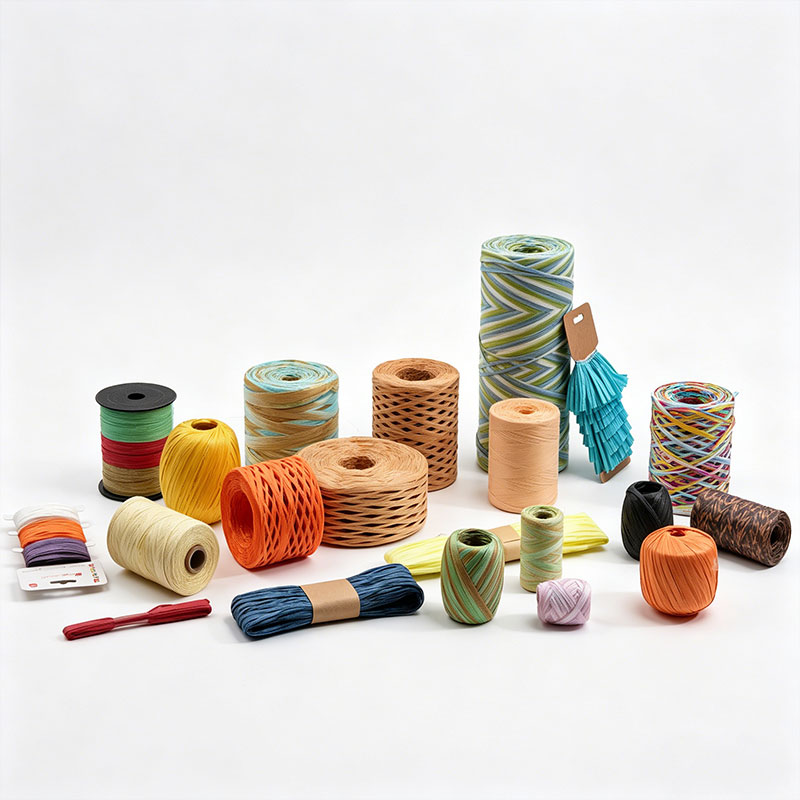
Paper Raffia Fancy Yarn
Advantages Over Less Controlled Alternatives
Paper Raffia Fancy Yarn competes with several categories of material, including natural raffia, paper strips, fabric ribbons, plastic cords, and basic decorative twine. Each alternative may be useful in a particular situation, but the paper raffia system offers a combination of advantages that can be important to commercial buyers.
Compared with Unprocessed Natural Raffia
Natural raffia has a strong association with handmade products, woven bags, hats, baskets, and tropical design. Its natural appearance is attractive, but its performance may vary depending on origin, harvest, moisture, storage, and preparation. Some strands may be too brittle, too irregular, or too short for standardized industrial production.
Paper Raffia Fancy Yarn provides a more controlled industrial alternative. The appearance can remain close to the natural aesthetic, while the strand dimensions, twist, color, and packaging can be specified in advance. This is particularly useful for factories making hundreds or thousands of similar products.
The paper-based structure also makes it easier to create a planned color system. Instead of depending only on naturally occurring fiber shades, buyers can request matching colors, gradient effects, mixed colors, or brand-oriented shades. This makes product collections easier to coordinate across packaging and finished goods.
Compared with Basic Paper Strips
Simple paper strips may be economical, but they are not necessarily optimized for weaving or tying. They may split, curl, tangle, or lose their shape during handling. Their performance can also depend heavily on how they are cut and folded.
Paper Raffia Fancy Yarn is processed into defined winding and twisting structures. The available double-twisted and multi-strand options provide a more usable balance of flexibility and strength. The yarn can therefore serve not only as a decorative element but also as a functional raw material for woven products, packaging assemblies, and craft kits.
Compared with Fabric Ribbons
Fabric ribbons are widely used in gift packaging, but they provide a different visual language. Paper raffia has a more natural, textured, and handmade appearance. It can be selected by brands that want packaging to communicate craft, sustainability, simplicity, or seasonal warmth.
For packaging suppliers, paper raffia also offers flexibility in winding and bundling. It can be provided on cards, in bags, in compact rolls, or in industrial formats. These options support both retail presentation and high-volume packaging operations.
Compared with Plastic Decorative Cords
Plastic cords can provide durability and smoothness, but they may not match the environmental positioning or tactile character desired for natural-style packaging and handmade products. A paper-based structure offers another design direction for buyers seeking paper-oriented or more sustainable material concepts.
Environmental performance should always be evaluated according to the exact composition, coating, dye, blend, and end-of-life conditions. Nevertheless, a specialty paper structure can support a paper-focused supply chain and may be appropriate for projects that prioritize reduced reliance on conventional plastic decorative materials.
Compared with Small-Scale Handmade Materials
Handmade materials are valuable for unique products, but they may be difficult to standardize. A commercial brand needs consistent color, repeatable specifications, dependable packaging, and predictable lead times. Paper Raffia Fancy Yarn is designed to bridge the gap between handmade appearance and industrial supply capability.
This makes it suitable for companies that want to sell products with a crafted visual identity while producing them through organized manufacturing, wholesale distribution, or cross-border e-commerce channels.
Material Structure and Performance
The material’s performance comes from the relationship between its paper base and the forming process used to create the finished yarn. A paper strand can be adjusted through width, thickness, twist, tension, winding density, and optional blending. These variables influence how the yarn behaves during weaving, tying, shaping, and packaging.
Stiffness and Shape Retention
One of the defining features of Paper Raffia Fancy Yarn is its useful stiffness. When woven or formed, the material can help products maintain a defined structure. This is beneficial for straw-style bags, hats, baskets, mats, coasters, and decorative forms that should not collapse easily.
Stiffness is not identical to brittleness. The correct balance depends on strand construction and application. For openwork weaving, a lighter and more flexible flat strand may be preferred. For load-bearing woven products or large packaging assemblies, a denser multi-strand structure may be more appropriate.
Adjustable Flexibility
The yarn can be produced with low, medium, or high twist. A lower twist may create a softer or more open structure, while a higher twist generally produces a denser and more compact strand. This allows buyers to select a construction that matches the intended processing method.
Softness customization is also available. A supplier may adjust the material for open crochet, manual tying, packaging speed, or woven product assembly. Because different factories use different tools and techniques, customization at the yarn stage can be more effective than attempting to correct a mismatch during final production.
Diameter Options
The standard customization range includes approximately 1 mm to 7 mm in diameter. Fine yarns can be used for delicate weaving, small decorative work, and lightweight ties. Thicker yarns can provide stronger visual presence and greater volume in baskets, larger woven products, retail displays, and gift packaging.
The selected diameter should be considered together with twist, material blend, winding density, and finished-product dimensions. A buyer should test the intended yarn in an actual production sample before confirming a large order.
Color Stability
Paper Raffia Fancy Yarn can be supplied in common colors such as off-white, beige, black, macaron pink, blue, and yellow. Custom colors can be developed through Pantone matching, gradient effects, or mixed-color combinations.
Color consistency is especially important for private-label products and seasonal packaging campaigns. A defined color specification helps different production batches remain visually coordinated. Buyers should confirm color standards, sample approval procedures, and acceptable tolerances before mass production.
Available Processing Types
Flat Single Strand
The flat single strand is lightweight and flexible. It is appropriate for openwork weaving, lightweight ties, and applications where a broad paper surface is part of the visual effect. It can be used in gift-box tying, decorative retail displays, simple weaving, and some DIY projects.
Because it is relatively open and light, the flat strand may be selected when softness, low weight, or a natural strip-like appearance is more important than maximum tensile performance.
Double-Twisted Strand
The double-twisted strand is described as the most universal specification. It offers a balanced combination of strength, flexibility, and handling convenience. This format is suitable for many DIY products, standard weaving applications, packaging ties, and general-purpose manufacturing.
For buyers who are still evaluating the best construction, the double-twisted format can provide a useful starting point for product trials. The final choice should be based on the required visual effect, equipment, knotting behavior, and finished-product strength.
Triple and Multi-Strand Twisted Yarn
Triple or multi-strand twisted yarn is designed for applications that require a more substantial structure. It can provide higher load-bearing capability and a stronger visual presence. Potential uses include large woven products, industrial packaging, heavier decorative assemblies, and products that receive frequent handling.
A multi-strand yarn may also be selected when the buyer wants to reduce the number of separate strands handled during assembly. Instead of combining several thin pieces at the production site, the supplier can provide a pre-formed structure tailored to the intended use.
Winding Forms for Different Supply Channels
A yarn’s winding format affects storage, dispensing, transportation, retail presentation, and production efficiency. Paper Raffia Fancy Yarn can be supplied in six standardized industrial winding forms.
Winding Form |
Typical Characteristics |
Suitable Commercial Uses |
Egg Roll Shape |
Compact and designed to reduce tangling |
Small DIY retail items, gift sets, and compact distribution packs |
Small Spool Roll |
Easy to dispense in a familiar yarn format |
Crochet, weaving, craft kits, and batch production |
Rugby Ball Roll |
Higher visual appeal and useful capacity |
Large woven products and premium DIY kits |
Balloon Sphere Roll |
Distinctive presentation for retail display |
Retail shelves, gift packaging, and promotional displays |
Hollow Large Roll |
Industrial bulk format for larger orders |
Factories, contract manufacturers, and high-volume production |
Bundled Package |
Straight bundled material for direct use |
Industrial packaging, tying, and bulk material supply |
Each winding format can be customized by weight, packaging, logo printing, and order requirements. Small sample orders are available with an indicated sample lead time of approximately 7 to 15 days, subject to specifications and production arrangements.
Applications in Weaving and Textile Manufacturing
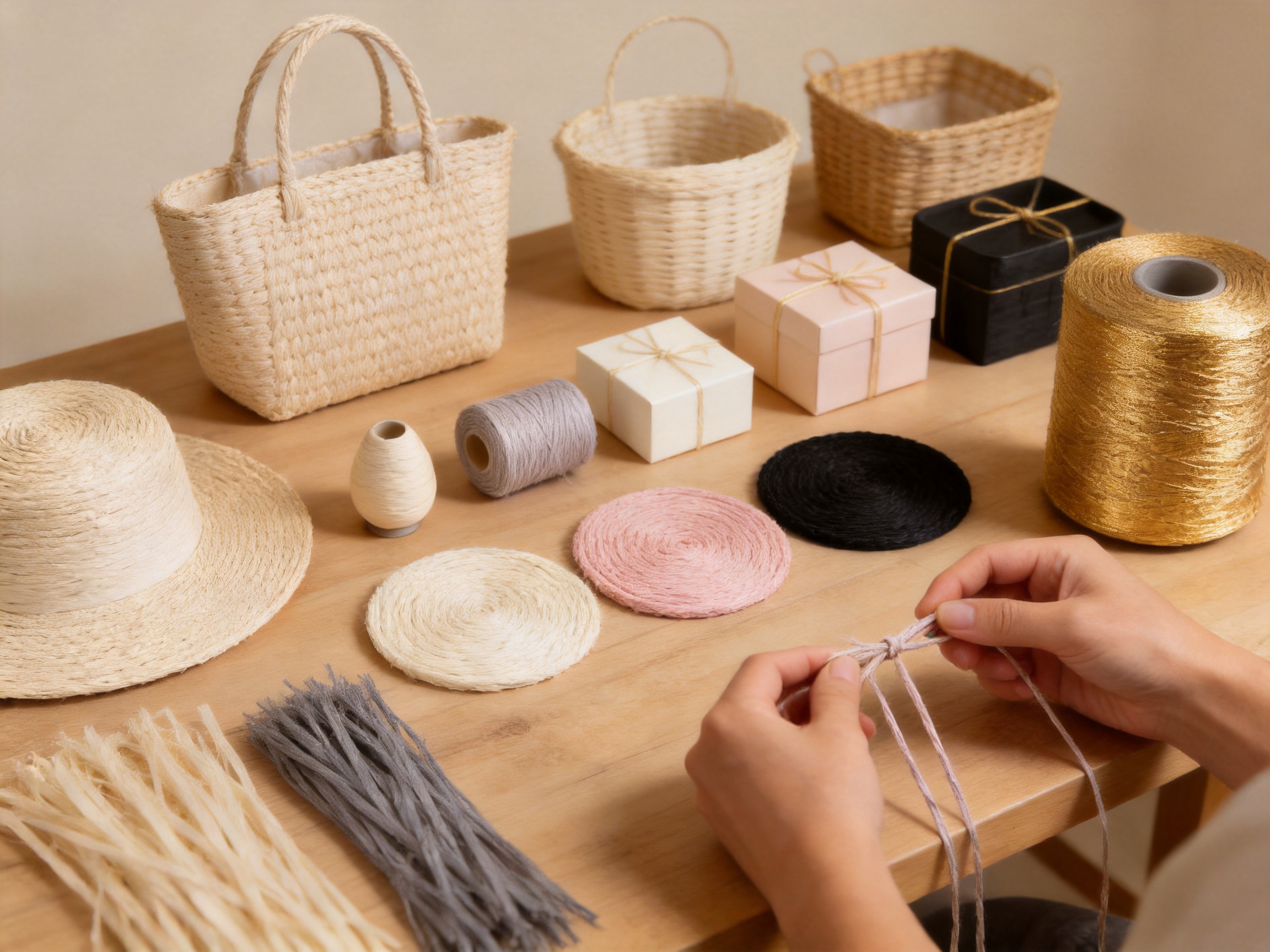
Paper Raffia Fancy Yarn is suitable for a wide range of woven and textile-style products. Its stiffness and straw-like appearance make it particularly appropriate for products that need a structured, natural-looking surface.
Bags and Totes
The yarn can be used to make straw-style bags, tote bags, woven handbags, and other fashion accessories. Different diameters and twist levels can be selected according to the desired density and surface texture. Neutral tones can support timeless collections, while bright or pastel colors can be used for seasonal lines.
For commercial bag production, the buyer should evaluate abrasion, handle attachment, seam construction, moisture exposure, and the strength required at load-bearing points. The yarn can provide the woven body material, while other components may be needed for lining, handles, closures, or reinforcement.
Hats and Headwear
Hollow crochet hats, sun hats, fisherman hats, and similar headwear can benefit from a structured paper yarn. The yarn’s formability helps create defined shapes, while the range of colors and diameters supports different collections and customer groups.
Manufacturers can compare flat, double-twisted, and multi-strand structures to determine which option offers the best balance of comfort, shape retention, production speed, and appearance. Prototyping is recommended because headwear designs vary considerably in density and construction.
Home Textile and Storage Products
Coasters, placemats, mats, storage baskets, and decorative organizers are additional applications. These products often depend on a combination of visual texture and shape retention. Paper Raffia Fancy Yarn can be used to create an informal, natural, or handcrafted appearance for home-decor collections.
For baskets and storage products, the designer should consider the expected load, humidity, cleaning method, and frequency of handling. Selecting an appropriate yarn structure and adding suitable internal support can help the finished product meet its intended use.
Applications in Gift Packaging
Gift packaging is one of the most direct commercial applications for paper raffia yarn. It can be used as a tying material, filler, decorative accent, or coordinated component in a broader packaging system.
Gift-Box Tying
Paper raffia can serve as an alternative to conventional fabric ribbons when the brand wants a more natural or craft-oriented presentation. It can be tied around gift boxes, paper bags, mailing cartons, and seasonal packages. Its available colors make it possible to coordinate the tie with the box, label, tissue paper, or printed graphics.
For premium packaging, metallic blending in gold or silver can provide a more festive appearance. For eco-oriented packaging, undyed or neutral shades can reinforce a paper-based visual identity.
Seasonal Packaging
Christmas, weddings, birthdays, corporate events, and retail holidays often require limited-edition packaging materials. Customized color matching and flexible winding forms allow the yarn to be incorporated into short-term campaigns and recurring seasonal programs.
Because the material can be supplied with branded hang tags, cards, or packaging, it can function as both a packaging component and a retail-ready accessory. This is useful for companies that sell gift-wrapping supplies, craft materials, or coordinated celebration products.
Display Fillers and Decorative Materials
Paper raffia can be placed in gift boxes, baskets, product trays, and retail displays as a filler or visual accent. Its texture can help create volume and support a natural presentation around cosmetics, food gifts, household products, and promotional items.
When used as a filler, the buyer should confirm the required cut length, softness, density, and color. Different display concepts may require loose material, bundled strands, or a more structured decorative form.
Applications in DIY and Cross-Border E-Commerce
DIY brands and cross-border e-commerce sellers often require materials that are easy to explain, attractive in photographs, simple to package, and suitable for standardized SKUs. Paper Raffia Fancy Yarn can be developed as a standalone craft material or as part of a complete kit.
DIY Craft Kits
The yarn can be included in weaving kits, crochet kits, gift-making sets, seasonal craft boxes, and home-decoration projects. Segment cards containing two, three, or five colors can simplify kit assembly and present the material in a ready-to-use format.
For online sales, the packaging should clearly state the weight, approximate length where applicable, color, strand construction, recommended applications, and any handling limitations. Clear specification reduces customer confusion and helps the seller maintain consistent product listings across different marketplaces.
Handmade Workshop Materials
Workshops, schools, studios, and creative organizations can use the yarn for group projects. Different winding formats can be selected according to whether the material will be distributed individually or supplied in larger quantities to instructors and production teams.
Color assortments can be prepared for themed activities. A supplier can also support custom packaging for educational programs, branded workshops, or event-based craft experiences.
Creative Gift Sets
Paper raffia yarn can be combined with cards, beads, paper shapes, boxes, ribbons, or other craft components to create complete gift sets. OEM packaging and logo printing allow brands to sell the material under their own identity.
For e-commerce sellers, this creates opportunities to offer multiple price points. Compact egg rolls may suit entry-level kits, while larger rugby ball rolls or multi-color packs may be positioned as premium sets.
Blended Material Options
Although pure paper raffia is suitable for many applications, blending allows the material to be adapted to specific performance or design requirements.
Polyester Blending
Polyester blending can improve durability and may be suitable for everyday woven products that receive repeated handling. It can help create a different balance of flexibility, resilience, and surface behavior than paper yarn alone.
The exact ratio should be selected according to the intended product, equipment, appearance, and environmental requirements. A buyer should request a sample of the proposed blend and test it under realistic production conditions.
Metallic Yarn Blending
Gold and silver metallic yarn blending adds shine and is suitable for holiday packaging, wedding products, celebration items, premium gift sets, and decorative accessories. Metallic elements can be blended into the yarn or used in coordinated color combinations.
This option is particularly valuable when a product needs to retain a paper or raffia base while adding a more luxurious visual effect.
Feather Yarn Blending
Feather yarn blending creates a softer and fluffier texture. It can be used for high-end handmade products, decorative gift sets, artistic packaging, and tactile craft applications where a smooth straw-like surface alone is not sufficient.
Because feather fibers can affect winding and handling, the final blend should be evaluated for tangling, dispensing, visual uniformity, and packaging stability.
Manufacturing Process and Quality Control
The strength of a professional paper raffia supplier depends not only on the raw material but also on the manufacturing system used to convert it into a finished product. Zhejiang Raffia Paper Products Co., Ltd. operates an integrated production chain covering raw-material processing, mass production, quality testing, packaging, and shipment.
Raw-Material Preparation
The process begins with specialty craft paper selected for raffia-style conversion. Material preparation may include inspection of paper quality, surface condition, thickness, color, and suitability for slitting and forming. Stable raw-material preparation supports more consistent downstream processing.
For customized products, the buyer’s required color, diameter, softness, twist, and blend must be translated into production specifications before the order is released. This technical definition is important because a small change in paper structure or strand width can influence the behavior of the final yarn.
Slitting and Strand Formation
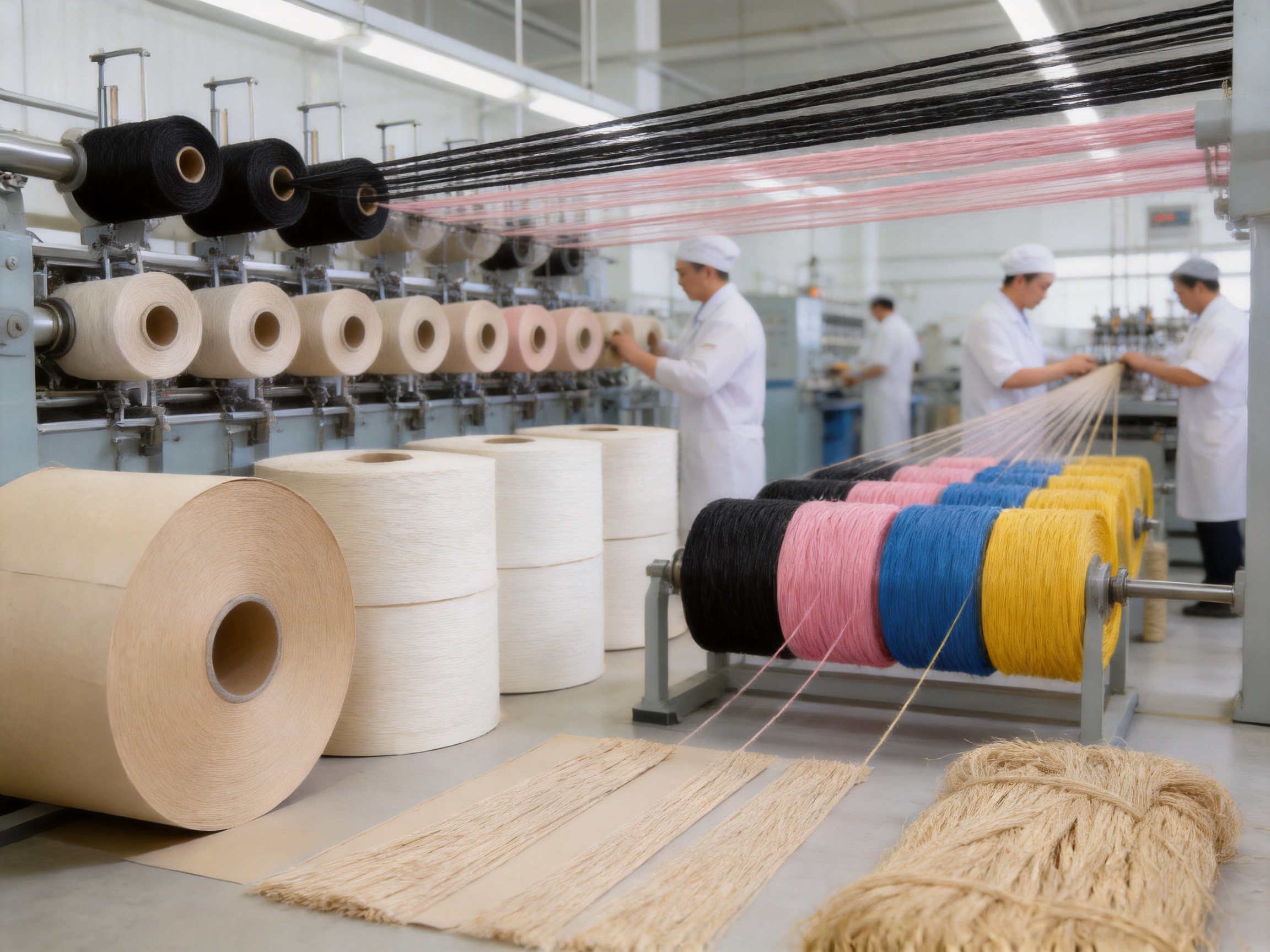
The paper is processed into narrow strips or strand components through controlled slitting operations. Slitting accuracy influences the consistency of yarn width and the final visual surface. Proper tension control is also important because uneven tension can affect subsequent twisting and winding.
The company has developed production capabilities for slitting, twisting, winding, and compression packaging. These processes can be coordinated within one manufacturing system rather than being handled by unrelated suppliers.
Twisting and Structural Adjustment
After slitting, the strand components can be formed into flat, double-twisted, triple, or multi-strand structures. Twist settings influence strength, flexibility, density, and appearance. Production teams can adjust the process to meet the selected specification.
For a buyer, this means that the yarn can be developed around the finished application. A lightweight gift tie does not necessarily need the same structure as a large woven basket or an industrial packaging material.
Winding and Compression Packaging
Once the yarn has been formed, it is wound into the required format. Winding controls affect compactness, dispensing, tangle resistance, and retail presentation. Compression packaging can help improve transport efficiency and protect the product during shipment.
The supplier can provide bag packaging, hang-tag cards, segment cards, industrial bulk rolls, or bundled packages. Logo printing and private-label presentation are also supported for qualified projects.
Quality Testing and Reproducibility
Quality control should cover the material’s appearance, weight, dimensions, color, winding quality, and basic structural performance. For customized projects, approved samples and production specifications provide a reference for subsequent batches.
A strict and replicable quality-control system is particularly important for buyers serving international markets. It supports clearer communication between the factory, brand owner, distributor, and final customer. The company’s integrated manufacturing model is designed to support this type of repeatable production.
Factory Strength and Supply Capability
Zhejiang Raffia Paper Products Co., Ltd. was founded in 2014 and developed from a craft-materials business unit established in 2010. With more than ten years of industry experience, the company has evolved from a trading-oriented enterprise into an integrated manufacturer of crinkle raffia paper shreds, fancy paper yarns, gift-packaging materials, and related products.
The company operates a modern production base in Dongyang, Zhejiang Province, covering approximately 20,000 square meters and employing more than 200 professional staff members. Its production system includes raw-material processing, specialized forming, quality inspection, packaging, and shipment. This integrated structure supports both standard product supply and customized OEM or ODM programs.
The company reports an annual production capacity of more than 200 million pieces. This capacity is relevant to customers that need continuous replenishment, multi-market distribution, or large-volume seasonal production. A larger manufacturing base can also provide more options for coordinating colors, specifications, packaging, and delivery schedules.
The company serves customers in China and exports to Europe, North America, South America, Asia, and other regions. Its products are used in gift packaging, textile knitting, home decoration, and global retail supply chains. The company also reports cooperation with well-known brands, including Costco, IKEA, LOKLIK, Disney, Lancôme, Chanel, Dior, and Primark.
For professional buyers, the value of this manufacturing background is the ability to move from sample development to mass production through one established supply chain. It also allows the supplier to support different order types, from standard yarn formats to private-label packaging and exclusive product development.
OEM and ODM Development Services
Paper Raffia Fancy Yarn can be supplied as a standard product, but many commercial buyers require a material that fits a specific product line. OEM and ODM services make it possible to tailor both the yarn and its presentation.
Color Development
Color can be matched according to Pantone references, approved physical samples, or a brand’s existing packaging palette. Gradient and mixed-color options are also available for products that require a more creative appearance.
Yarn Specification Development
The supplier can adjust yarn diameter, twist level, softness, strand construction, and blending ratio. The purpose is to create a material that works with the buyer’s product design and production method rather than forcing the buyer to adapt the entire product to a fixed yarn.
Private-Label Packaging
Packaging may include OPP bags, white cardboard hang tags, retail display cards, segment cards, cartons, and industrial packaging. Logo printing, brand graphics, and custom labeling can be incorporated into the finished supply program.
Exclusive DIY Kit Development
For craft brands and online sellers, the company can support the development of exclusive DIY kits. This may include color combinations, segmented winding cards, instructions, coordinated components, and branded packaging. A sample can be developed before the buyer commits to mass production.
Sample-to-Mass-Production Transition
A well-managed development process should connect the sample stage to the final production stage. The buyer can evaluate color, weight, structure, winding, packaging, and application performance before approving the full order. This reduces the risk of receiving a large quantity that does not match the intended product.
Environmental and Export Considerations
The product is based on a specialty paper structure and is positioned as an eco-friendly material for sustainable supply chains. Its paper-based composition may appeal to buyers seeking alternatives to conventional plastic decorative materials. Environmental claims should always be assessed according to the exact yarn structure, coatings, dyes, blends, packaging, and disposal conditions.
The material and production process are described as compatible with common EU environmental requirements such as REACH and RoHS. Test reports are available upon request. Buyers exporting to Europe, North America, or other regulated markets should request the relevant documentation and confirm whether additional requirements apply to their specific product category.
Compliance is not only a documentation issue. Buyers should also assess packaging materials, inks, metallic components, blended fibers, and any coatings used in the final product. A coordinated review during product development helps reduce compliance risks before mass production.
Procurement Guidance for Professional Buyers
Before placing an order, buyers should define the intended application and the required supply format. Important questions include:
Will the yarn be woven, crocheted, tied, bundled, or used as a filler?
What diameter and twist level are appropriate?
Is a flat strand or twisted structure preferred?
What weight should each retail or industrial package contain?
Does the product need to match a specific Pantone color?
Will the yarn be blended with polyester, metallic yarn, or feather yarn?
What packaging format is most efficient for the sales channel?
Are REACH, RoHS, labeling, or other market documents required?
What production quantity and replenishment schedule are expected?
The indicated standard weight range is approximately 50 g to 200 g per package, while yarn diameter can be customized from approximately 1 mm to 7 mm. The stated minimum order quantity is 500, although the final MOQ may vary according to specification, packaging type, and project requirements.
Standard production lead time is indicated as approximately 7 to 15 days. Buyers should confirm the final schedule because custom colors, special packaging, blended materials, testing, and seasonal demand may affect production timing.
Recommended Evaluation Process
A practical evaluation process can help buyers select the correct specification and avoid unnecessary production changes.
Step One: Define the Finished Product
Begin with the final application rather than selecting yarn only by appearance. A basket, gift tie, hat, and DIY kit may all require different structures. Define the finished product’s size, weight, handling conditions, appearance, and expected sales channel.
Step Two: Request Several Structures
Compare a flat single strand, double-twisted strand, and multi-strand option where appropriate. Test how each format behaves during weaving, tying, cutting, knotting, and packaging.
Step Three: Approve Color and Packaging
Review physical color samples and confirm the packaging artwork. Check whether the winding form is easy to dispense and whether the package protects the yarn during transportation and storage.
Step Four: Conduct Application Testing
Use the sample in the actual production process. Evaluate breakage, tangling, surface appearance, shape retention, operator convenience, and finished-product consistency. For packaging applications, test the yarn through the planned tying or assembly process.
Step Five: Confirm the Production Specification
Record the approved diameter, twist, softness, color, weight, winding format, packaging, logo, tolerances, and documentation requirements. This production specification becomes the reference for future replenishment orders.
Q&A: Frequently Asked Questions
Q1: Is Paper Raffia Fancy Yarn easy to break?
No. The yarn is produced in single, double-twisted, triple, and multi-strand structures with adjustable tensile performance. The correct specification should be selected according to the intended application. Heavy woven products and industrial packaging may require a denser multi-strand construction, while lightweight ties may use a flat or lighter structure.
Q2: Can the yarn be used for industrial weaving?
Yes. It is positioned as an industrial weaving and packaging material rather than only a decorative string. It can be used for bags, hats, baskets, mats, coasters, storage products, and other woven applications. Buyers should conduct application testing to confirm the best diameter, twist, and softness.
Q3: Can colors be customized?
Yes. Standard colors include off-white, beige, black, macaron pink, blue, and yellow. Custom Pantone matching, gradient colors, and mixed-color options are available subject to project requirements and sample approval.
Q4: What is the available yarn diameter?
The indicated customizable diameter range is approximately 1 mm to 7 mm. The appropriate size depends on the finished product, desired visual effect, weaving density, and required strength.
Q5: What winding formats are available?
The available formats include egg roll shape, small spool roll, rugby ball roll, balloon sphere roll, hollow large roll, and bundled package. Each format can be matched to retail display, DIY kits, industrial production, or packaging applications.
Q6: What is the minimum order quantity?
The listed MOQ is 500, but the final minimum order may vary according to yarn specification, color, packaging type, and customization requirements. It should be confirmed for each project.
Q7: How long does production take?
Standard production is indicated at approximately 7 to 15 days. Custom color development, special winding, branded packaging, testing, and large seasonal orders may require a different schedule.
Q8: Can the material be exported to Europe and the United States?
Yes. The material and production process are described as compatible with REACH and RoHS environmental requirements, and test reports can be provided upon request. Buyers should confirm the documentation required for their specific finished product and destination market.
Q9: Is OEM packaging available?
Yes. OEM support includes logo printing, hang tags, retail packaging, segment cards, cartons, private-label presentation, and custom DIY kit development.
Q10: Can Paper Raffia Fancy Yarn be blended with other materials?
Yes. Polyester blending can improve durability, metallic yarn blending can add gold or silver shine, and feather yarn blending can create a soft, fluffy texture. Custom blending ratios can be discussed according to the intended product and required performance.
Q11: Is the product intended for individual hobby users?
The product is primarily positioned as a B2B industrial raw material. Its target buyers include wholesalers, distributors, OEM manufacturers, cross-border e-commerce sellers, brand supply-chain teams, packaging suppliers, and contract manufacturers. Small sample orders may be available for professional product evaluation, but the main supply model is bulk production.
Q12: What information should be included in an inquiry?
A useful inquiry should include the intended application, required color, diameter, twist level, softness, weight per package, winding form, packaging design, estimated quantity, destination market, and any compliance documentation required. Providing this information allows the supplier to recommend a more accurate specification and prepare a relevant sample.
Conclusion
Paper Raffia Fancy Yarn offers a practical combination of natural visual appeal and industrial supply stability. Its specialty paper base, controlled forming process, adjustable twist, multiple diameters, flexible winding formats, and optional material blends make it suitable for a broad range of commercial applications.
Compared with less standardized natural fibers, simple paper strips, fabric ribbons, and plastic decorative cords, it provides a strong balance of repeatability, customization, and scalable supply. It can support woven bags, hats, baskets, home-textile products, gift packaging, retail displays, DIY kits, and private-label product lines.
The manufacturing capabilities of Zhejiang Raffia Paper Products Co., Ltd. strengthen this product proposition. The company provides integrated processing from raw materials through slitting, twisting, winding, quality testing, packaging, and shipment. Its production base, workforce, reported capacity, international market experience, and OEM and ODM services enable buyers to move from concept development to repeatable bulk supply.
For professional buyers, the most important step is to match the yarn structure and packaging format to the final application. With proper sampling, specification approval, and application testing, Paper Raffia Fancy Yarn can become a dependable material platform for brands and manufacturers seeking consistent, customizable, and visually distinctive paper-based products.
References
1. Product specification information for Paper Raffia Fancy Yarn, including raw material, available colors, diameter range, winding formats, MOQ, and lead time.
2. Technical product description covering paper-based construction, strand structures, applications, blending options, and OEM customization.
3. Manufacturing information supplied by Zhejiang Raffia Paper Products Co., Ltd., including company history, production base, equipment capabilities, quality-control procedures, and supply-chain services.
4. General industry guidance on paper yarn conversion, slitting, twisting, winding, compression packaging, and material specification management.
5. General reference materials concerning REACH and RoHS compliance considerations for exported material products and finished goods.
Product: Paper Raffia Fancy Yarn

 +86 15355323399
 kevin@raffia-paper.com
 No. 151 Guanshan North Road, Dongyang City, Zhejiang Province, China

Copyright © Zhejiang Raffia Paper Products Co., Ltd. All Rights Reserved.

Paper Raffia Yarn & Gift Packaging Factory