
 +86 15355323399
 En
En  中文简体
中文简体 日本語
日本語 Français
 Español
 Deutsch
 Türk
Türk عربى
عربى italiano
 русский
Paper Raffia Fancy Yarn for Scalable Weaving, Packaging, and Creative Manufacturing
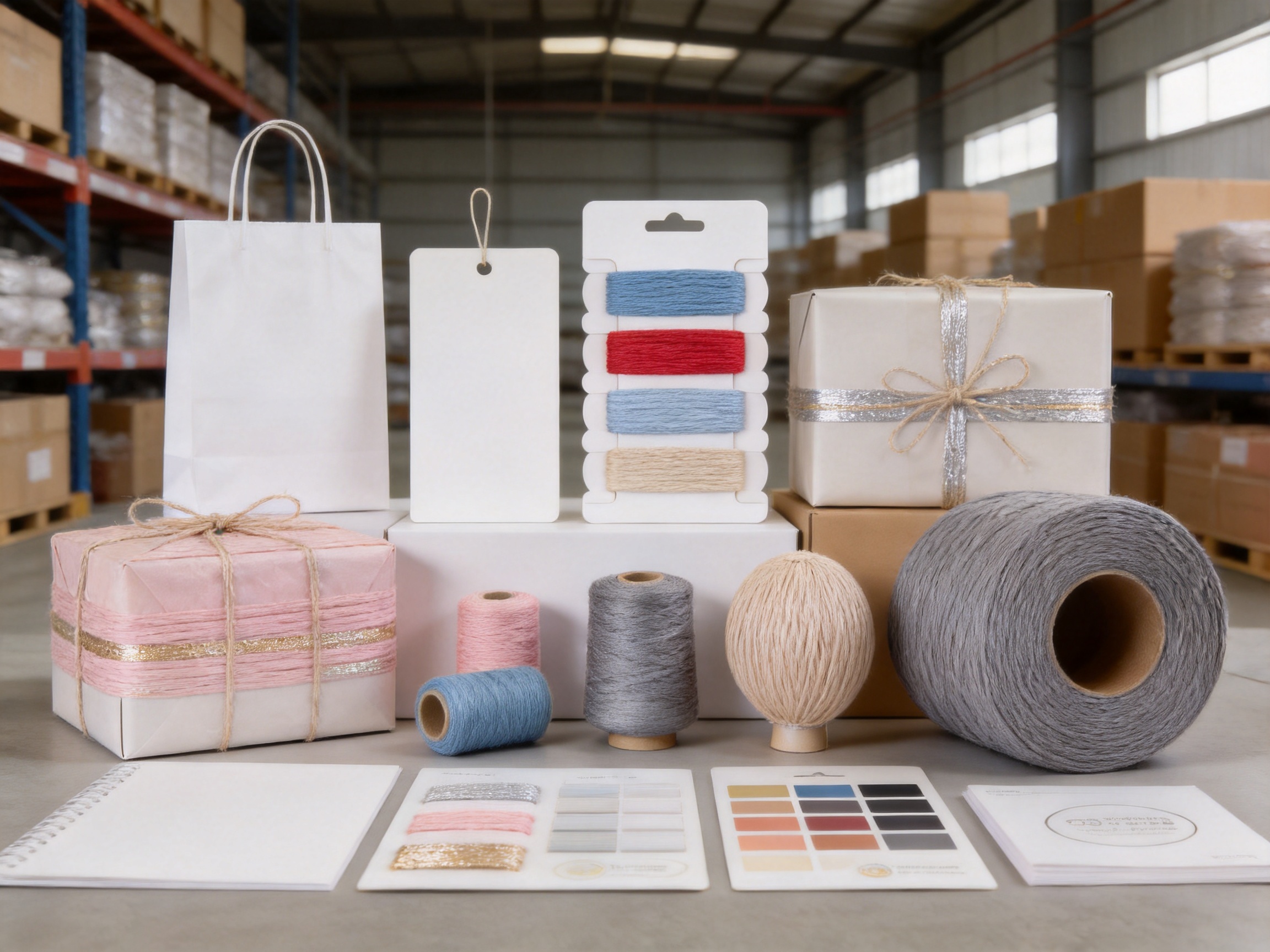
Paper Raffia Fancy Yarn is a specialized paper-based yarn developed for buyers that need a stable, scalable, and versatile material for weaving, gift packaging, craft kits, and decorative product manufacturing. Unlike ordinary decorative string or loosely prepared natural raffia, this product is designed as an industrial input for repeatable production. Its structure, forming process, winding options, color system, and packaging formats can all be adapted to different manufacturing and distribution requirements.
The yarn is produced from raffia-specific specialty craft paper, a high-tensile paper-based material selected for its lightweight structure, stiffness, and shaping performance. Through slitting, forming, twisting, winding, and packaging processes, the paper is converted into a material with a visual character similar to natural straw fibers while offering greater consistency for commercial production.
For wholesalers, OEM manufacturers, packaging suppliers, brand procurement teams, and cross-border e-commerce businesses, consistency is often more important than the appearance of a single sample. A material may look attractive in a small quantity but become difficult to manage when the order expands to thousands of units. Paper Raffia Fancy Yarn addresses this challenge by providing standardized specifications, adjustable processing options, custom colors, multiple winding forms, and industrial bulk supply capabilities.
The product is suitable for companies that want to replace unstable or difficult-to-standardize natural materials with an engineered paper-based alternative. It can support woven bags, hats, baskets, mats, gift boxes, seasonal packaging, DIY kits, retail display fillers, and other products requiring a structured yet lightweight fiber-like material.
What Is Paper Raffia Fancy Yarn?
Paper Raffia Fancy Yarn is an industrial weaving and packaging yarn made from raffia-specific specialty craft paper. The paper serves as the core raw material and is processed into strands that can be supplied in flat, twisted, multi-strand, wound, or bundled formats.
The material is not intended merely to function as a decorative cord. Its primary role is to serve as a production-grade material for manufacturers and supply chains. This distinction is important because industrial buyers typically require more than visual appeal. They need predictable performance, stable colors, repeatable dimensions, manageable packaging, and reliable delivery schedules.
The yarn has a distinctive paper-based appearance and a texture that can create a straw-like visual effect in finished products. At the same time, its forming and twisting characteristics make it suitable for structured designs. It can be woven, tied, shaped, bundled, packed, or incorporated into craft sets according to the requirements of the final product.
Depending on the selected specification, the yarn can be made softer or stiffer, lightly or heavily twisted, and supplied in different diameters. Standard customization includes yarn diameter from approximately 1 mm to 7 mm, adjustable twist levels, customized weights from approximately 50 g to 200 g for retail-oriented formats, and industrial bulk rolls for larger production programs.
The product can be supplied in off-white, beige, black, macaron pink, blue, yellow, and other customized colors. Pantone matching, gradient effects, mixed-color combinations, and segmented color winding are available for projects requiring a coordinated brand or seasonal palette.
Why Industrial Buyers Choose Paper Raffia Yarn
Industrial buyers generally evaluate materials according to a combination of performance, procurement stability, processing compatibility, packaging efficiency, and total cost. Paper Raffia Fancy Yarn is designed around these requirements rather than around one-time retail use.
Stable Batch-to-Batch Production
Natural straw and other plant-based fibers can vary according to harvest conditions, moisture, maturity, storage, and processing quality. This natural variation may be desirable in certain handmade products, but it can create challenges for standardized manufacturing. Differences in thickness, color, strength, and texture may affect production speed and finished-product consistency.
Paper Raffia Fancy Yarn is manufactured through controlled paper processing and yarn-forming procedures. The use of a defined specialty paper base, standardized slitting, adjustable twisting, and controlled winding helps reduce unnecessary variation between batches. This is valuable for brands that need to reproduce the same product collection over several purchasing cycles.
Lightweight Structure with Useful Stiffness
The yarn is engineered to remain lightweight while providing enough stiffness for shaping and structured weaving. This balance allows it to create defined edges, stable loops, and a straw-inspired surface without making the finished product unnecessarily heavy.
For packaging applications, its light weight can help reduce the material burden of gift boxes, bags, and decorative displays. For woven applications, the combination of low weight and structural performance can support hats, baskets, bags, mats, and other products that benefit from shape retention.
Adjustable Flexibility and Twist
Different applications require different handling characteristics. A loosely twisted strand may be preferred for openwork weaving or light decorative tying, while a tighter multi-strand structure may be needed for packaging or larger woven products.
Paper Raffia Fancy Yarn can be produced with low, medium, or high twist levels. Softness can also be adjusted according to the intended use. This makes it possible to select a specification for crochet work, weaving, tying, retail display, or industrial packaging without relying on one fixed yarn format.
Color Consistency for Commercial Collections
Color inconsistency can create significant problems for brands, especially when a product line is sold through multiple channels or replenished over time. A stable color system helps manufacturers maintain the appearance of finished products and packaging materials.
The yarn can be produced in standard colors or developed according to a buyer’s color reference. Pantone color matching, gradient effects, and mixed-color options allow buyers to coordinate the yarn with seasonal collections, corporate identity systems, event themes, gift packaging, and DIY kit designs.
Efficient Packaging and Distribution
Material packaging affects storage, transportation, shelf presentation, and repacking costs. Paper Raffia Fancy Yarn is available in several supply forms, including OPP bags, hang-tag cards, segmented winding cards, industrial bulk rolls, and straight bundled packages.
These options allow the same basic yarn to serve different commercial channels. A wholesaler may require compact 50 g or 100 g bags. A retail display program may need hang tags with printed logos. A DIY brand may require two-color, three-color, or five-color cards. An industrial manufacturer may prefer hollow large rolls or bundled material for direct production use.
Adaptability to OEM and ODM Programs
Many companies do not want a generic material. They need a yarn that matches a specific product concept, packaging system, or merchandising plan. OEM and ODM support can include yarn diameter, twist level, color, winding form, packaging artwork, logo printing, hang tags, cartons, and exclusive DIY kit development.
This degree of customization allows buyers to integrate the material into their own product architecture instead of treating it as an unbranded commodity. It can also simplify the transition from sampling to mass production by keeping the selected specification consistent throughout the project.
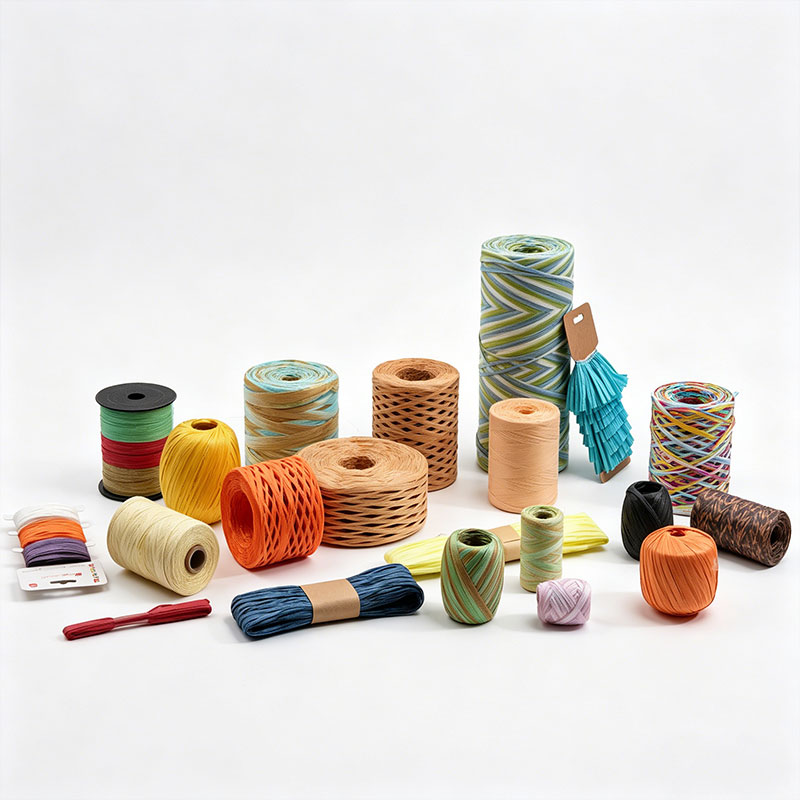
Paper Raffia Fancy Yarn
Advantages Compared with Natural Raffia and Other Decorative Materials
Paper Raffia Fancy Yarn does not replace every natural fiber or synthetic yarn in every application. However, it offers several practical advantages when the purchasing objective is stable, scalable, and visually consistent production.
More Predictable Than Unprocessed Natural Straw
Natural straw and raffia fibers may provide an authentic organic appearance, but they can be affected by seasonal availability and differences in fiber quality. Natural materials may also require more sorting, moisture control, and preparation before they can be used in standardized production.
A paper-based yarn offers a more controlled starting material. Its dimensions, twisting, winding, and color can be defined during production, which helps manufacturers organize their processes around known specifications. This reduces the need to compensate for large differences between individual bundles or shipments.
More Scalable Than Handmade Decorative String
Decorative string sold for hobby use is often packaged in small quantities and produced for occasional consumer projects. It may not be suitable for manufacturers that need continuous material input, private-label packaging, or large-volume replenishment.
Paper Raffia Fancy Yarn is positioned for wholesale, OEM, contract manufacturing, and supply-chain applications. Buyers can select industrial winding forms, request custom weights, develop branded packaging, and order standardized specifications for repeated production.
More Structured Than Conventional Paper Cord
Ordinary paper cord may be designed mainly for tying or simple decorative use. Paper Raffia Fancy Yarn is developed with forming and shaping performance in mind. The selected specialty paper base and multi-process construction allow the yarn to maintain a more defined structure during weaving and packaging.
The available flat, double-twisted, and multi-strand forms enable manufacturers to match the material to different levels of strength, flexibility, and visual fullness. This broadens its application range beyond simple gift tying.
More Visually Distinctive Than Basic Synthetic Cord
Polyester and other synthetic cords can provide durability, but they may not deliver the natural, paper-like, or straw-inspired visual effect required for eco-oriented packaging and handmade-style products. Paper Raffia Fancy Yarn offers a different surface identity that can help finished goods communicate a craft, natural, or sustainable design direction.
For buyers seeking higher visual differentiation, the paper yarn can also be blended with metallic yarn, feather yarn, or polyester. These combinations create additional surface effects while preserving the possibility of industrial production.
More Practical for Standardized Export Programs
Export-oriented buyers often need documentation, repeatability, clear specifications, and packaging suitable for international distribution. The product is designed to support common environmental requirements such as REACH and RoHS-compatible standards, with test reports available upon request.
Compliance requirements depend on the destination market, product category, packaging configuration, and applicable regulations. Buyers should confirm the exact documentation required for their project. Nevertheless, a controlled paper-based material with available testing support can simplify the evaluation process for international procurement teams.
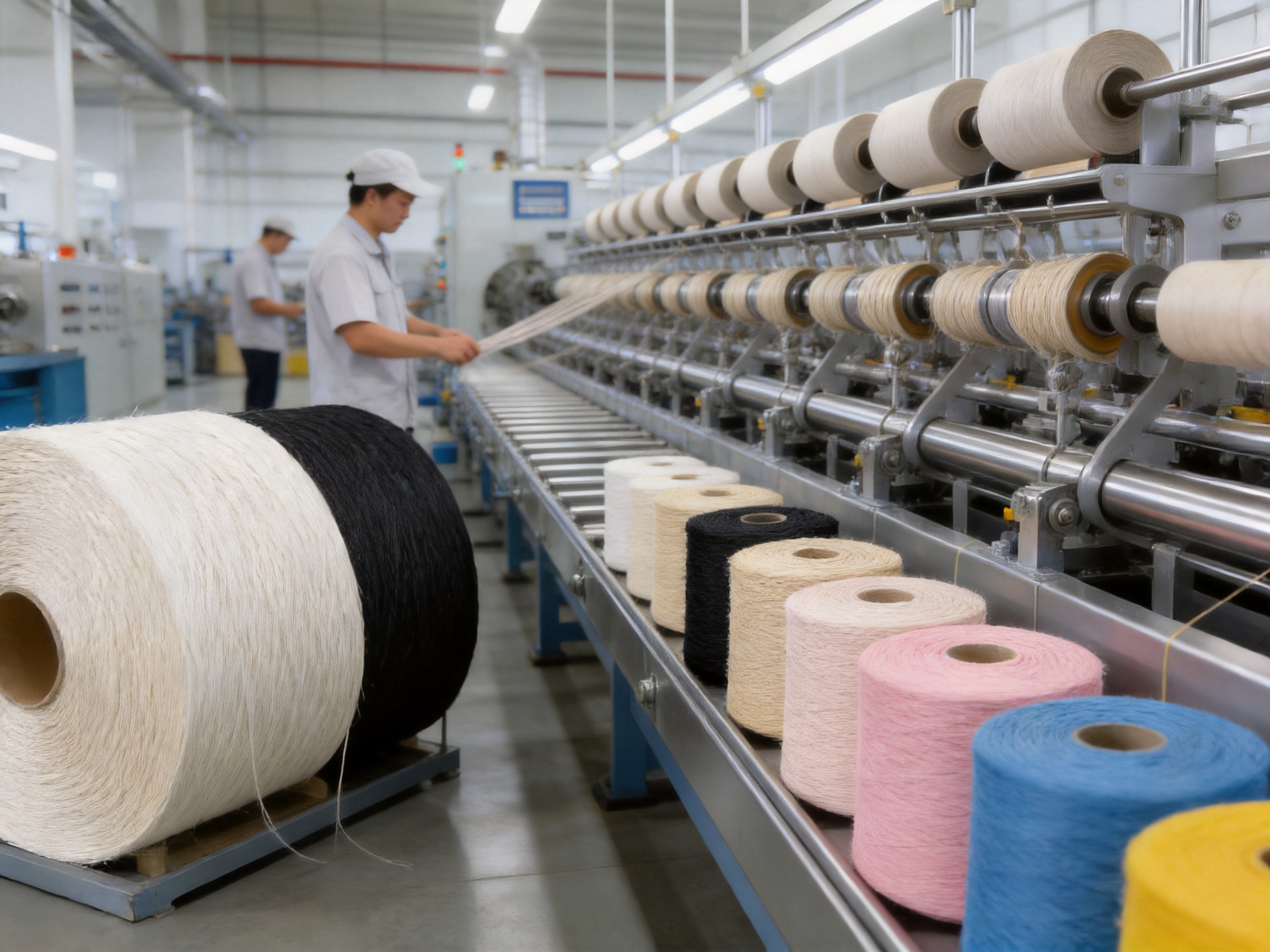
Manufacturing Process and Quality Control
The production performance of Paper Raffia Fancy Yarn depends on more than the raw material itself. The paper must be converted through a sequence of controlled processes that determine strand width, density, twist, softness, winding shape, and final packaging condition.
Specialty Paper Selection
Production begins with raffia-specific specialty craft paper selected for high tensile performance, processability, and visual quality. The paper must be suitable for slitting and forming without excessive tearing or unwanted surface damage.
Material selection also affects the finished yarn’s stiffness, handling, color appearance, and suitability for twisting. By using a defined paper base instead of inconsistent recovered scraps or uncontrolled inputs, the manufacturer can establish a more repeatable foundation for further processing.
Slitting and Width Control
Slitting converts the larger paper structure into narrower strips suitable for yarn formation. Slitting accuracy is important because the strip width influences the apparent thickness, flexibility, tensile behavior, and final appearance of the yarn.
Controlled slitting helps maintain uniformity across a production batch. It also allows the manufacturer to develop different yarn diameters and flat-strip formats for specific applications. A narrow strip may be suitable for lightweight tying or fine craft work, while a wider or layered structure may be preferred for larger woven products.
Forming and Strand Preparation
After slitting, the paper strips are prepared for forming. This stage may involve shaping, folding, layering, or other processes that convert the flat paper strip into a more yarn-like structure.
The objective is to create a material that remains lightweight but can be handled by production workers, winding equipment, and downstream manufacturing systems. The forming process influences surface texture, compression, flexibility, and the ability of the strand to maintain its shape after twisting.
Twisting and Strength Development
Twisting is one of the most important stages in the construction of the yarn. A flat single strand provides a lightweight and flexible format. A double-twisted strand offers a balanced structure for general use. Triple or multi-strand twisting increases fullness and can provide improved load-bearing performance for larger products and industrial packaging.
The twist level can be adjusted according to the buyer’s application. Low twist may preserve flexibility and an open visual appearance. Medium twist is commonly suitable for general production. High twist can produce a firmer structure with greater resistance to deformation during handling.
Twisting must be controlled carefully. Excessive twist may reduce flexibility, while insufficient twist may lead to poor strand integrity. A consistent process helps ensure that the selected specification performs similarly across different production lots.
Color Processing and Inspection
Color development may use standard shades or customized references. The production team can prepare off-white, beige, black, pastel-style colors, bright colors, gradients, and mixed-color combinations according to the project requirements.
Color inspection is especially important for brand packaging and large woven collections. Production controls help reduce visible differences between rolls, cards, and batches. Buyers developing a new color should provide a physical reference or a recognized color code whenever possible, since the appearance of paper-based materials can be influenced by lighting, surface texture, and display conditions.
Winding and Compression Packaging
Winding determines how the yarn is stored, displayed, transported, and fed into downstream production. The manufacturer provides several standardized winding forms, including egg rolls, small spool rolls, rugby ball rolls, balloon sphere rolls, hollow large rolls, and bundled packages.
Each format has a different commercial purpose. Compact egg rolls are suitable for small retail items and tangle-free storage. Small spool rolls are practical for crochet and batch production. Rugby ball rolls provide a larger supply format for woven products and premium DIY kits. Balloon sphere rolls create strong retail visibility. Hollow large rolls and bundled packages are designed for industrial use and larger orders.
Compression and packaging processes help optimize shipping volume and protect the yarn during transportation. The most suitable packaging format depends on order quantity, warehouse conditions, retail presentation, and the way the buyer’s production line consumes the material.
Quality Testing and Final Inspection
Final inspection may cover visual appearance, color, winding quality, package weight, strand integrity, dimensions, and packaging accuracy. For export orders, documentation and labeling can also be reviewed before shipment.
A standardized quality control system helps the manufacturer reproduce approved samples during mass production. This is particularly important for OEM programs, where a buyer may need the same yarn specification to remain available across multiple seasonal or regional product launches.
Product Structures and Processing Types
Flat Single Strand
The flat single strand is lightweight and flexible. It can be used for openwork weaving, light decorative applications, and gift box tying where a flatter paper appearance is preferred.
Because it has a relatively open structure, it may be suitable for product designs that require visual lightness, broad surface coverage, or easy hand manipulation. It can also be included in craft kits where users need a material that is simple to position and shape.
Double-Twisted Strand
The double-twisted strand is a balanced, general-purpose specification. It provides a combination of flexibility, structure, and manageable strength for many standard applications.
This format is often appropriate for DIY projects, general weaving, packaging decoration, and small-to-medium manufactured products. It can be supplied in customized colors and winding formats, making it practical for both wholesale distribution and standardized production.
Triple and Multi-Strand Twisted Yarn
Triple and multi-strand twisted yarns are designed for applications requiring a fuller or stronger structure. They may be used for larger woven bags, heavier decorative packaging, industrial tying, and products that require more pronounced shaping performance.
Multi-strand construction can also create a richer visual texture. Buyers can discuss the appropriate twist level, strand count, diameter, and softness according to the expected load, production method, and appearance of the finished product.
Blended Material Options
Blending expands the visual and functional range of paper raffia yarn. Polyester blending can improve durability for everyday woven products. Metallic yarn blending in gold or silver can introduce reflective highlights for seasonal packaging, celebrations, and premium gift presentation.
Feather yarn blending creates a softer and fluffier surface for high-end handmade products and decorative collections. Custom blending ratios are available so that buyers can balance paper character, durability, softness, shine, and cost.
Processing or Blend Option |
Main Characteristics |
Typical Applications |
Flat single strand |
Lightweight, flexible, open appearance |
Openwork weaving, light tying, craft materials |
Double-twisted strand |
Balanced strength and flexibility |
General weaving, DIY kits, standard production |
Triple or multi-strand twisted |
Fuller structure and stronger load-bearing capability |
Large woven goods, industrial packaging |
Polyester blend |
Improved durability and everyday performance |
Frequently handled woven products |
Metallic blend |
Gold or silver shine |
Festive packaging and premium presentation |
Feather yarn blend |
Soft, fluffy, decorative texture |
High-end handmade and creative products |
Applications Across Multiple Industries
Woven Bags and Handbags
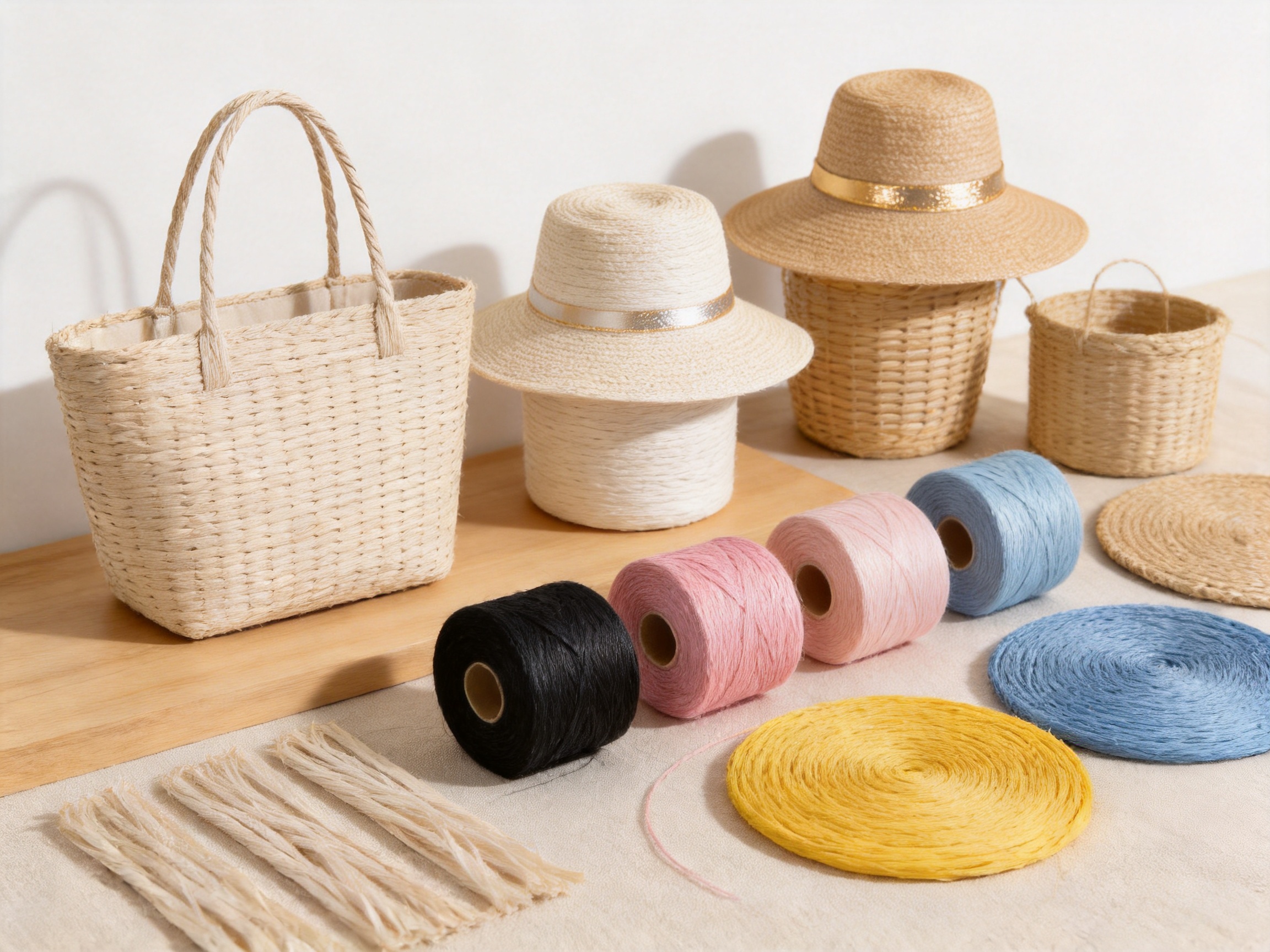
Paper Raffia Fancy Yarn can be used as a raw material for straw-style bags, tote bags, woven handbags, and other fashion accessories. Its stiffness and shaping performance can help manufacturers produce defined surfaces and structured forms.
Different strand constructions can be selected according to the desired bag size, handle design, surface density, and production method. A softer specification may be useful for flexible decorative panels, while a firmer multi-strand format may be preferred for structured bodies or handles.
Hats and Headwear
Hollow crochet hats, sun hats, fisherman hats, and similar products can benefit from a lightweight paper-based material with a straw-inspired appearance. The yarn can support open crochet patterns, flat woven structures, and shaped brims.
For headwear collections, color consistency is especially valuable because multiple sizes and styles may need to be sold as a coordinated range. Customized colors can also support seasonal collections, resort products, children’s accessories, and private-label fashion programs.
Home Textile and Storage Products
The yarn can be incorporated into coasters, placemats, mats, storage baskets, trays, and other home decoration products. Its paper texture contributes to a natural or handmade visual identity, while its controlled construction supports repeatable production.
Manufacturers can choose between flat, double-twisted, and multi-strand structures depending on whether the final product requires surface coverage, flexibility, edge definition, or additional load-bearing capacity.
Gift Box Tying and Premium Packaging
Paper Raffia Fancy Yarn provides an alternative to conventional fabric ribbon for gift boxes, product bundles, seasonal packages, wedding favors, event materials, and promotional presentation.
Its paper-based appearance can complement kraft paper, recycled board, textured cartons, and natural-color packaging systems. Metallic blending can add a festive effect, while custom colors can coordinate with brand identity or campaign themes.
Retail Display Fillers
Wound paper yarn can be used as a filler or decorative material in gift boxes, baskets, product displays, seasonal installations, and retail presentations. Compact winding formats are useful where the material must be stored efficiently and dispensed easily.
Retail display packaging with white cardboard hang tags can provide a shelf-ready presentation. Logos, product information, and color identification can be printed on cards or tags to support wholesale and retail distribution programs.
DIY Craft Kits
DIY craft businesses can use the yarn in kits sold through marketplaces, independent online stores, workshops, and creative education programs. Segmented winding cards containing two, three, or five colors can simplify kit assembly and improve the customer experience.
For cross-border e-commerce sellers, standardized yarn specifications make it easier to create repeatable SKUs. A business can develop a product family based on color sets, project sizes, seasonal themes, or skill levels while sourcing the material from one controlled manufacturing system.
OEM and Contract Manufacturing
OEM manufacturers and contract producers may use the yarn as a standardized material input for private-label woven products, gift collections, packaging systems, and creative product lines.
The ability to specify diameter, twist, color, blend ratio, winding form, and packaging allows the yarn to be integrated into a broader manufacturing plan. It can be purchased in bulk, repacked under a buyer’s brand, or supplied directly to a production facility for conversion into finished goods.
Packaging and Supply Formats
Supply format selection should be based on the buyer’s sales channel and material consumption method. Retail, wholesale, DIY, and industrial customers have different requirements, so the product is offered in several forms.
Retail Distribution Packaging
Packaging in 50 g or 100 g OPP bags is suitable for wholesale distribution, craft stores, online sellers, and smaller standardized SKUs. These formats make the quantity easy to identify and can be combined into color assortments or project-specific sets.
Retail Display Packaging
White cardboard hang-tag cards provide a shelf-ready presentation. They can be printed with logos, color names, product information, barcodes, and other details required by a retail program.
DIY Kit Packaging
Segmented winding cards containing two, three, or five colors are suitable for craft kits and gift sets. The cards can be developed around a specific project or color theme, helping the buyer combine material supply with instructions and accessories.
Industrial Bulk Rolls
Hollow large rolls and bundled packages are designed for large orders and continuous production. These formats reduce the need for repeated small-package handling and can support more efficient storage and material feeding at the manufacturing site.
All standard winding formats can support custom weights, custom packaging, logo printing, and small sample orders. Sample development and standard production generally require approximately 7 to 15 days, depending on the specification, packaging design, and order complexity.
Technical Specification Overview
Item |
Specification |
Product name |
Paper Raffia Fancy Yarn |
Raw material |
Raffia-specific specialty craft paper |
Environmental standard |
REACH and RoHS-compatible requirements; test reports available upon request |
Standard colors |
Off-white, beige, black, macaron pink, blue, and yellow |
Color customization |
Pantone matching, gradients, and mixed-color options |
Weight range |
Approximately 50 g to 200 g for customizable packaged formats |
Yarn diameter |
Approximately 1 mm to 7 mm, customizable |
Twist level |
Low, medium, or high twist |
Packaging types |
Bag, hang-tag card, segment card, industrial bulk roll, or bundled package |
Minimum order quantity |
Standard MOQ of 500, subject to project confirmation |
Standard lead time |
Approximately 7 to 15 days for standard production |
Specifications may vary according to the selected paper structure, color, winding method, blend ratio, and packaging configuration. Buyers should confirm final technical details during sampling and quotation.
Manufacturing Strengths of the Supplier
Zhejiang Raffia Paper Products Co., Ltd. has developed its production capabilities through more than ten years of industry experience. The business originated from a craft materials unit established in 2010 and was formally founded in 2014. It has evolved from a trading-oriented enterprise into an integrated manufacturer specializing in crinkle raffia paper shreds, fancy paper yarns, and related packaging materials.
The company’s manufacturing base is located in Dongyang, Zhejiang Province, China. Its modern production facility covers approximately 20,000 square meters and is supported by more than 200 professional employees. The production organization includes raw material processing, slitting, twisting, winding, quality testing, compression packaging, and finished-goods shipment.
This integrated structure allows the supplier to coordinate several stages internally rather than relying entirely on disconnected external processors. Internal coordination can help improve communication, shorten response times, and maintain greater control over the relationship between raw material condition, yarn construction, packaging, and final delivery.
Integrated Processing Equipment
The supplier continues to upgrade its equipment for slitting, twisting, winding, and compression packaging. These processes are central to the performance of paper raffia yarn. Accurate slitting supports dimensional control. Controlled twisting supports strand integrity and handling. Standardized winding supports storage and distribution. Compression packaging supports transport efficiency.
When these processes are connected within one manufacturing system, production teams can evaluate the complete material flow rather than treating each stage as an isolated operation. This is useful for customized projects in which a change in diameter or twist level may also require an adjustment to winding or packaging.
Standardized Production Procedures
Standard operating procedures are used to support repeatable results. The company emphasizes a strict and replicable quality control system, allowing approved samples to serve as production references for future orders.
Standardization is especially important for international buyers that require regular replenishment. A stable process can help reduce the risk that the same product specification will look or perform substantially differently during a later production cycle.
Large Production Capacity
The company reports an annual production capacity of more than 200 million pieces across its product range. This capacity supports both regular wholesale programs and larger OEM or ODM projects.
Capacity is not only a measure of quantity. It also indicates whether a supplier can allocate production resources, manage multiple packaging formats, and support the transition from sample development to mass production. Buyers should still confirm available capacity, production schedules, and order-specific lead times before placing a purchase order.
International Supply Experience
The supplier serves customers throughout China and exports to Europe, North America, South America, Asia, and other regions. Its products are used in gift packaging, textile knitting, home decoration, and global retail supply chains.
International supply experience can help a manufacturer understand the practical needs of export packaging, documentation, labeling, quality inspection, and shipment coordination. These factors are important when paper raffia yarn is purchased as part of a broader cross-border product program.
OEM and ODM Development Support
The company provides flexible OEM and ODM services, including exclusive brand customization, custom size development, packaging design, logo printing, DIY kit development, and long-term bulk-order supply.
This support is useful for brands that want to create a complete material system rather than purchase a standard product. A project may begin with a sample color and twist level, then move to custom cards, branded cartons, retail labels, and recurring mass production.
Procurement Benefits for Different Buyer Types
Wholesalers and Distributors
Wholesalers can select multiple colors, winding formats, and package weights to build a diversified product range. Standardized bags and hang-tag cards are suitable for resale, while bulk rolls can serve professional manufacturing customers.
The ability to combine standard products with customized packaging also allows distributors to serve different markets without changing the basic material source.
Packaging Material Suppliers
Packaging suppliers can use paper raffia yarn as an alternative or supplement to fabric ribbon, plastic cord, and other decorative tying materials. Flat strands, double-twisted yarns, metallic blends, and custom colors can be matched to different packaging concepts.
The paper-based surface can complement natural, minimalist, festive, luxury, and handmade packaging styles. It is particularly suitable for companies developing gift boxes, wedding packaging, seasonal collections, and corporate presentation materials.
Cross-Border E-Commerce Sellers
Online sellers can use segmented color cards, compact rolls, or retail bags to develop standardized SKUs for marketplaces and independent stores. Custom packaging and logo printing can help create a more complete branded product instead of a generic craft-material listing.
Because the product is available in multiple colors, diameters, and structures, sellers can develop beginner, advanced, seasonal, and professional versions of a craft kit or weaving-material range.
OEM Woven-Product Manufacturers
Manufacturers producing bags, hats, baskets, mats, and home decoration goods can select the yarn structure according to their machinery, hand-production method, or finished-product design.
For large programs, industrial bulk rolls and bundled packages can reduce repacking work and improve material availability at the production site. For smaller product lines, spool rolls or cards may be more convenient.
Private-Label Brands
Private-label brands can request color matching, custom yarn diameter, specified twist, printed hang tags, branded cartons, and exclusive kit development. This enables the material to become part of a differentiated brand experience.
The supplier’s integrated capabilities can support both early-stage sampling and subsequent mass production. This is important for brands that want to validate a product concept before committing to a larger volume.
Solving Common Material Supply Problems
Problem: Inconsistent Raw Materials
Uncontrolled variation in natural or manually prepared fibers can affect production efficiency and finished-product appearance. Paper Raffia Fancy Yarn addresses this issue through specialty paper selection, controlled processing, and standardized specifications.
Problem: Fragile Natural Straw
Natural straw may become fragile when dry, poorly stored, or repeatedly handled. The reinforced paper-based structure provides an alternative for buyers that need a more controlled material for production, packaging, or distribution.
Problem: Difficulty Scaling Handmade Materials
Handmade materials can be appropriate for limited editions but difficult to source consistently at industrial volumes. Paper raffia yarn is manufactured through continuous and repeatable processes that support bulk supply and contract manufacturing.
Problem: Limited Packaging Options
A single package format may not work for retail, wholesale, DIY, and industrial customers at the same time. The range of bags, cards, rolls, and bundles allows buyers to select a format that fits their distribution model.
Problem: Color Reproduction Challenges
Brand and seasonal collections require reliable color coordination. Standard colors, Pantone matching, gradients, and mixed-color options help buyers develop a more consistent visual system.
Problem: Unstable Procurement Costs
Seasonal natural materials may experience price fluctuations related to supply, harvesting, and preparation. A standardized industrial paper-based system can provide a more predictable basis for large-scale purchasing and production planning.
How to Select the Right Specification
Buyers should begin by defining the final application. A material for delicate gift tying may require a different construction from a material for a large woven basket. The most important selection factors include strand structure, diameter, twist, softness, color, blend ratio, winding form, and package weight.
For Light Decorative Tying
Choose a flat single strand or lightweight double-twisted yarn with a low or medium twist. Compact rolls or 50 g to 100 g bags may be suitable for distribution and retail presentation.
For General Weaving and DIY Projects
A double-twisted strand with balanced flexibility and strength is a practical starting point. Small spool rolls, egg rolls, and segmented cards are suitable for workshop, kit, and standard production use.
For Large Woven Products
Triple or multi-strand twisted yarn may provide a fuller and stronger structure. Rugby ball rolls, hollow large rolls, or industrial bundles can be selected according to production volume and material consumption.
For Premium and Seasonal Packaging
Metallic blending can add gold or silver highlights, while custom color matching can coordinate the material with a brand or event theme. Hang-tag cards, printed cartons, and private-label packaging can strengthen the product presentation.
For Soft Decorative Effects
Feather yarn blending can create a fluffy and tactile appearance. The blend ratio should be evaluated through sampling to ensure that the final material has the desired balance between softness, paper character, and handling performance.
Environmental and Export Considerations
Paper Raffia Fancy Yarn is based on a paper structure and is positioned to support more sustainable supply chains. Its paper-based composition can appeal to buyers seeking alternatives to certain plastic-heavy decorative materials or unstable natural inputs.
The product is described as compatible with common EU environmental requirements such as REACH and RoHS, and test reports are available upon request. Compliance is project-specific, so importers should verify the applicable legal and technical requirements in the destination country before shipment.
Export buyers should also confirm packaging materials, labeling language, documentation, color specifications, carton dimensions, and any required third-party inspection. Early confirmation of these requirements can reduce delays during order approval and shipment preparation.
For companies with sustainability targets, material selection should be evaluated across the complete product lifecycle, including raw material sourcing, dyeing or coating, packaging, transport, end use, and disposal. Paper raffia yarn can contribute to a paper-oriented material strategy, but buyers should assess the entire finished product rather than relying on a single material attribute.
From Sample to Mass Production
A successful project normally begins with a clear sample brief. The buyer should provide the intended application, target diameter, preferred twist, softness requirement, color reference, winding format, package weight, logo requirements, and estimated order quantity.
The supplier can then prepare a sample or confirm an existing standard specification. Buyers should evaluate not only appearance but also handling, weaving behavior, knot performance, abrasion during production, package unwinding, color under actual lighting, and compatibility with the finished product.
Once the specification is approved, the sample should become the reference for mass production. Any changes to raw material, color, twist, blend ratio, winding method, or packaging should be confirmed before production begins.
Small sample orders generally require approximately 7 to 15 days, while standard production lead time is also listed at approximately 7 to 15 days. Actual timing can vary according to customization, order quantity, packaging artwork, testing, and production scheduling.
The standard minimum order quantity is listed as 500, although the final MOQ may vary according to specification and packaging type. Buyers should request a project-specific quotation that confirms unit weight, carton quantity, production lead time, delivery terms, and documentation.
Q&A: Paper Raffia Fancy Yarn
Q1: Is Paper Raffia Fancy Yarn easy to break?
No. The multi-strand twisting structure provides adjustable tensile strength for industrial weaving and packaging applications. Performance depends on the selected diameter, strand construction, twist level, and application. Buyers should test the chosen specification for the exact production conditions.
Q2: Is the material suitable for large-scale manufacturing?
Yes. The product is designed as a bulk-production-grade material rather than a simple decorative string. It is available in industrial rolls, bundled packages, and customized winding forms for OEM, contract manufacturing, packaging, and woven-product production.
Q3: Can the yarn be used for straw bags and hats?
Yes. Typical applications include straw bags, tote bags, woven handbags, hollow crochet hats, sun hats, fisherman hats, baskets, mats, and other products with a straw-inspired appearance.
Q4: Can colors be customized?
Yes. Standard colors include off-white, beige, black, macaron pink, blue, and yellow. Pantone matching, gradient colors, and mixed-color combinations can also be developed for qualified projects.
Q5: What yarn diameters are available?
The customizable diameter range is approximately 1 mm to 7 mm. The correct diameter depends on the product design, weaving method, desired surface effect, and strength requirement.
Q6: Can the twist level and softness be adjusted?
Yes. Low, medium, and high twist options are available. Softness can also be adjusted to support different applications, from openwork weaving and tying to stronger industrial packaging and structured woven products.
Q7: What winding formats are available?
Available formats include egg roll shape, small spool roll, rugby ball roll, balloon sphere roll, hollow large roll, and bundled package. Custom weight, packaging, and logo printing can be discussed for each format.
Q8: Can the yarn be blended with other materials?
Yes. Polyester blending can improve durability, metallic yarn blending can add gold or silver shine, and feather yarn blending can create a soft, fluffy texture. Custom blending ratios are available according to project requirements.
Q9: Is OEM packaging supported?
Yes. OEM services can include logo printing, hang tags, retail bags, cartons, segmented color cards, private-label packaging, and complete branding solutions.
Q10: Is the product suitable for export to Europe and the United States?
The material and production process are described as compatible with REACH and RoHS environmental requirements, with test reports available upon request. Buyers should confirm destination-market requirements for the specific product, packaging, and shipment.
Q11: What is the MOQ?
The listed standard MOQ is 500. The actual MOQ may vary according to yarn specification, color, winding format, packaging type, and customization requirements. It should be confirmed for each project.
Q12: How long does production take?
Standard production and small sample orders are generally listed at approximately 7 to 15 days. Custom color development, artwork approval, special testing, and large orders may require additional time.
Conclusion
Paper Raffia Fancy Yarn is a practical material solution for businesses that need the visual character of raffia or straw with the consistency of controlled industrial production. Its paper-based construction, adjustable twist, customizable diameter, stable color system, multiple winding forms, and optional blends make it suitable for a wide range of applications.
The product offers clear advantages for buyers that are concerned about natural-material inconsistency, fragile straw, limited scalability, unstable procurement, and insufficient packaging flexibility. It can support weaving, crochet, packaging, retail display, DIY kits, private-label products, and industrial supply programs.
Zhejiang Raffia Paper Products Co., Ltd. strengthens this product offering through integrated manufacturing, specialized processing equipment, standardized quality procedures, large production capacity, international supply experience, and OEM and ODM development support. Its capabilities cover raw material processing, slitting, twisting, winding, testing, compression packaging, and shipment preparation.
For wholesalers, manufacturers, packaging suppliers, and brand supply-chain buyers, the most important value is repeatability. By replacing unstable or difficult-to-scale materials with a controlled paper-based yarn system, companies can develop more consistent products, improve production planning, and build long-term supply programs.
References
1. Product specification and application information supplied for Paper Raffia Fancy Yarn.
2. Manufacturer information concerning paper slitting, twisting, winding, compression packaging, and quality-control procedures.
3. REACH regulatory framework, European Union chemical-safety requirements.
4. RoHS restriction framework for hazardous substances in electrical and electronic equipment.
5. General industry practices for yarn construction, packaging-material development, OEM sourcing, and supply-chain quality control.
Product: Paper Raffia Fancy Yarn

 +86 15355323399
 kevin@raffia-paper.com
 No. 151 Guanshan North Road, Dongyang City, Zhejiang Province, China

Copyright © Zhejiang Raffia Paper Products Co., Ltd. All Rights Reserved.

Paper Raffia Yarn & Gift Packaging Factory