
 +86 15355323399
 En
En  中文简体
中文简体 日本語
日本語 Français
 Español
 Deutsch
 Türk
Türk عربى
عربى italiano
 русский
Raffia Decorative Cards: A Refined Paper Accessory for Gift Packaging and Creative Presentation
Raffia decorative cards are small but highly influential elements in gift presentation. They provide a dedicated space for greetings, thank-you notes, festival messages, brand statements, and personal signatures while adding a polished finishing touch to a package. When coordinated with raffia paper, paper yarn, decorative cords, gift boxes, wrapping paper, and other craft materials, these cards help transform ordinary packaging into a more thoughtful and memorable experience.
Raffia Decorative Cards are made from thick white card paper and coated art paper. Their construction combines a firm writing surface with a smooth finish that supports clear printing and comfortable handwriting. Available in white, beige, and customized printed colors, they can be adapted to different packaging styles, seasonal collections, retail concepts, and personal craft projects.
Although a decorative card may appear simple, its performance depends on several factors, including paper selection, thickness, surface treatment, print clarity, cutting accuracy, moisture resistance, packaging protection, and quality control. Zhejiang Raffia Paper Products Co., Ltd. applies its experience in paper raffia yarn, raffia paper, fancy yarns, and gift packaging materials to develop decorative accessories that are functional, attractive, and suitable for professional supply chains.
The Role of Decorative Cards in Modern Gift Packaging
Gift packaging is no longer limited to protecting an item during transportation. It has become an important part of product presentation, customer experience, seasonal merchandising, and brand communication. A decorative card helps packaging communicate a message that may not be possible through the wrapping material alone.
A small card can carry a birthday greeting, a holiday wish, a wedding message, a product-care instruction, a thank-you note, or a short brand story. Because the card is separate from the main package, it can be removed, read, stored, or displayed without damaging the wrapping. This makes it a practical and emotionally meaningful accessory for both personal and commercial applications.
For retailers, decorative cards can support coordinated product collections. A gift box may use one color of raffia filler, a matching raffia cord, a printed wrapping paper, and a card using the same visual theme. This creates a consistent appearance across the entire package. For craft businesses, cards offer an affordable way to add a professional detail to handmade products. For consumers, they provide a convenient surface for personal messages.
The card also helps create a separation between the practical function of packaging and the emotional purpose of gifting. Wrapping paper protects and conceals the product. Raffia filler cushions and decorates the interior. Paper yarn and cords secure or embellish the package. The card communicates the human message behind the gift.
Product Overview
Raffia Decorative Cards are designed as lightweight paper accessories for greeting messages and gift-box matching. The product uses thick card paper and coated paper to achieve a balance between rigidity, smoothness, print quality, and writing performance.
| Product Element | Description | Practical Benefit |
|---|---|---|
| Primary material | Thick card paper and coated art paper | Provides firmness, durability, and a smooth surface |
| Available colors | White, beige, and custom printed colors | Supports neutral, natural, seasonal, and branded designs |
| Surface texture | Stiff, smooth, and writing-friendly | Allows clear handwriting and comfortable message writing |
| Printing performance | Clear printing with support for customized artwork | Improves visual quality and brand consistency |
| Functional features | Moisture-resistant, portable, and clean | Helps protect the appearance during handling and delivery |
| Main applications | Gift message cards and festival gift coordination | Suitable for retail, craft, events, and personal gifting |
| Safety characteristics | No fluorescent agent and eco-friendly material concept | Supports cleaner packaging and responsible product selection |
The card is intentionally versatile. It can be used as an individual greeting card, attached to a gift box, inserted into a package, combined with raffia filler, or coordinated with other decorative accessories. Its compact format makes it easy to store and transport, while its firm paper structure helps it remain presentable from production through final use.
Material Construction and Paper Performance
The choice of paper is one of the most important factors in decorative card quality. A thin or weak paper may bend easily, absorb ink unevenly, or create a poor writing experience. By using thick card paper, the product achieves a more stable structure and a more substantial feel in the hand.
Rigidity is particularly valuable when the card is attached to a gift box or inserted into a package. A stiff card is less likely to curl, collapse, or become difficult to handle. It also gives the package a more finished appearance. The card does not need to be large to create a premium impression; its firmness and clean surface can communicate quality through touch and visual presentation.
Coated art paper contributes to the smoothness and clarity of the surface. Coated paper is designed to provide a more uniform face for printing, allowing text, illustrations, decorative patterns, and colored graphics to appear sharper. This is useful for customized applications where visual detail is important.
The combination of thick card paper and coated paper makes the product suitable for both printed and handwritten content. Printed elements can include borders, seasonal artwork, logos, patterns, short greetings, or product information. The smooth writing-friendly surface allows a user to add a personal note with a pen or marker.
Paper selection also influences the way the card interacts with other packaging components. A card with sufficient body can sit neatly beside crinkle raffia paper shreds, remain visible among filler materials, or stay aligned when secured with a paper raffia cord. This coordination is important for gift boxes in which several materials are layered together.
Smoothness and Writing Comfort
A decorative card should not only look attractive; it should also be pleasant to use. A rough surface can interrupt handwriting, cause ink to spread, or make fine writing uncomfortable. The smooth surface of the cards supports clear lettering and allows users to write short or detailed messages with greater control.
Writing-friendly paper is especially important for wedding favors, handmade products, seasonal gift baskets, corporate appreciation packages, and customer thank-you cards. These applications often rely on handwritten notes to create a personal connection. A consistent surface helps the message appear cleaner and more intentional.
Stiffness and Shape Retention
Stiffness improves the card’s ability to retain its shape during storage, handling, and presentation. This is valuable in commercial packaging, where products may pass through multiple stages before reaching the end user. Cards can be counted, bundled, packed, shipped, unpacked, and inserted into boxes. A stable structure reduces the likelihood of an untidy final presentation.
Shape retention also supports creative use. A card may be tied to a handle, placed on top of a wrapped package, slipped into a ribbon arrangement, or displayed alongside a product. In each situation, the card benefits from paper that remains flat and visually organized.
Clear Printing for Professional Presentation
Clear printing is a central advantage of the product. Gift packaging often depends on small visual details, and text or graphics that appear blurred, uneven, or poorly defined can reduce the perceived quality of the entire package. A clean printing surface allows fine lines, readable lettering, and decorative artwork to appear more precise.
Customized printing can be used for different purposes. A retailer may print a seasonal greeting. A manufacturer may add a product-care message. A wedding planner may request names and event dates. A handmade brand may use a logo and thank-you statement. An event organizer may include a short invitation or commemorative message.
Printed colors can also be coordinated with other packaging materials. White and beige provide versatile neutral bases, while custom colors support brand identity and seasonal themes. A natural beige card may work well with kraft boxes, jute-style materials, brown paper, and natural raffia. A bright custom color may suit birthday packaging, children’s products, or festive retail displays.
The ability to combine printing and handwriting is another practical benefit. A card can carry a standard printed design while leaving an open area for a personal note. This approach helps businesses maintain consistent branding without removing the human element from gift presentation.
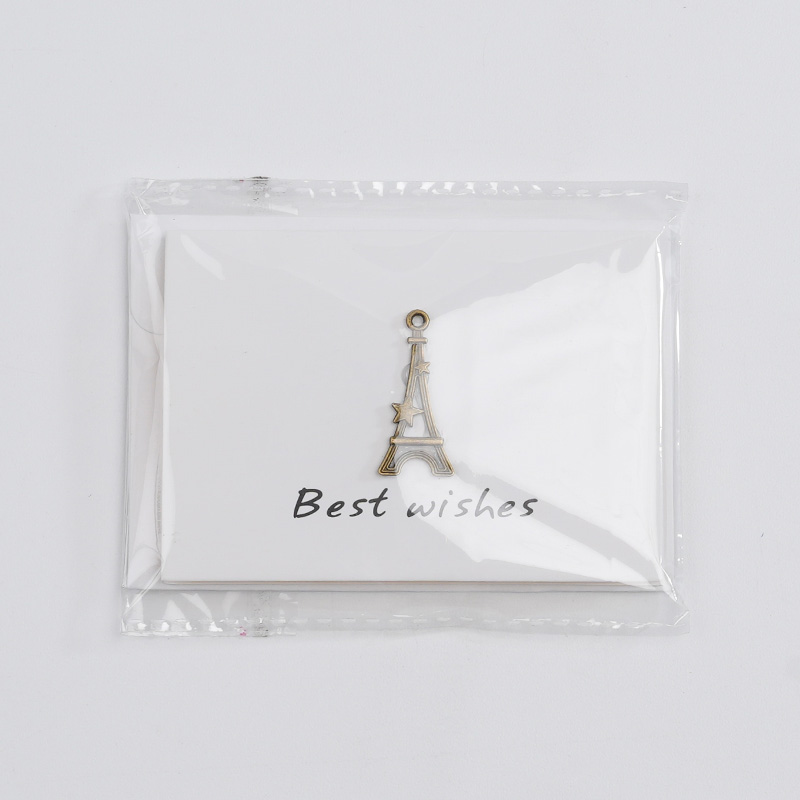
Raffia Decorative Cards
Advantages Compared with Ordinary Paper Tags and Thin Message Inserts
Decorative cards are sometimes compared with ordinary paper tags, lightweight inserts, or uncoated sheets. These alternatives may be suitable for basic applications, but they do not always provide the same combination of firmness, print clarity, writing comfort, and decorative value.
| Comparison Point | Raffia Decorative Cards | Ordinary Thin Inserts |
|---|---|---|
| Structural firmness | Thick and stiff paper construction | May bend, fold, or collapse more easily |
| Writing surface | Smooth and writing-friendly | May feel rough or absorb ink unevenly |
| Printed appearance | Designed for clear printing and attractive presentation | Print quality may vary with paper type and surface |
| Moisture resistance | Moisture-resistant characteristics help during handling | Thin paper may show damage more quickly |
| Packaging coordination | Suitable for gift boxes, raffia materials, and wrapping paper | May appear less substantial in premium packaging |
| Customization | Supports custom printed colors and visual designs | May offer fewer options depending on the supplier |
| Perceived value | Creates a more finished and intentional detail | Can look functional but less refined |
The main competitive advantage is not based on one single feature. It comes from the combination of several characteristics. A card that is thick but difficult to write on is not ideal. A card that prints well but bends easily may not remain attractive. A card with a smooth surface but weak moisture resistance may be unsuitable for complex shipping conditions. Raffia Decorative Cards are designed to address these requirements as one coordinated product.
Another advantage is compatibility with broader gift packaging systems. The product is not isolated from the other materials used by gift and craft businesses. It can be sourced alongside raffia paper, paper yarn, decorative cords, filler materials, wrapping paper, and other accessories. This can simplify product coordination and help buyers create more consistent packaging sets.
Moisture Resistance and Handling Reliability
Paper packaging products are often exposed to changing environmental conditions. During production and storage, they may encounter humid air, temperature changes, warehouse handling, or transportation over long distances. Moisture-resistant characteristics help the cards remain cleaner and more stable during ordinary handling.
Moisture resistance does not mean that the cards are intended for soaking or direct water exposure. Rather, it supports their performance in realistic packaging environments where minor humidity or brief contact with damp surfaces may occur. This is especially helpful for products shipped internationally or stored in facilities with changing seasonal conditions.
For retailers and wholesalers, packaging reliability is closely connected to inventory efficiency. Damaged, curled, or stained cards can create unnecessary waste and additional sorting work. A cleaner and more stable paper product supports better stock management and helps reduce presentation problems at the point of use.
Eco-Friendly and Clean Product Considerations
Consumers and businesses are paying greater attention to the materials used in gift packaging. Decorative accessories are small, but they form part of a larger sustainability conversation. The product is described as free from fluorescent agents and aligned with an eco-friendly, clean packaging concept.
The absence of fluorescent agents is relevant for buyers who prefer a more controlled and straightforward paper specification. Clean material selection can be important for gift packaging, handmade products, children’s crafts, and brands that communicate responsible sourcing values.
Paper-based accessories can also be integrated into packaging concepts that emphasize renewable-looking, recyclable, or lower-plastic visual themes. A decorative card can be paired with paper raffia yarn, kraft wrapping paper, paper filler, and cardboard boxes to create a cohesive paper-focused presentation. The precise recycling treatment of a finished package depends on its complete material combination, inks, coatings, adhesives, and local recycling rules, but selecting paper-based components is an important starting point for many businesses.
Eco-friendly positioning should always be supported by transparent specifications and responsible manufacturing. Zhejiang Raffia Paper Products Co., Ltd. emphasizes standardized production, quality control, and sustainable green supply chain concepts as part of its broader business approach.
Applications Across Gift and Craft Markets
Retail Gift Boxes
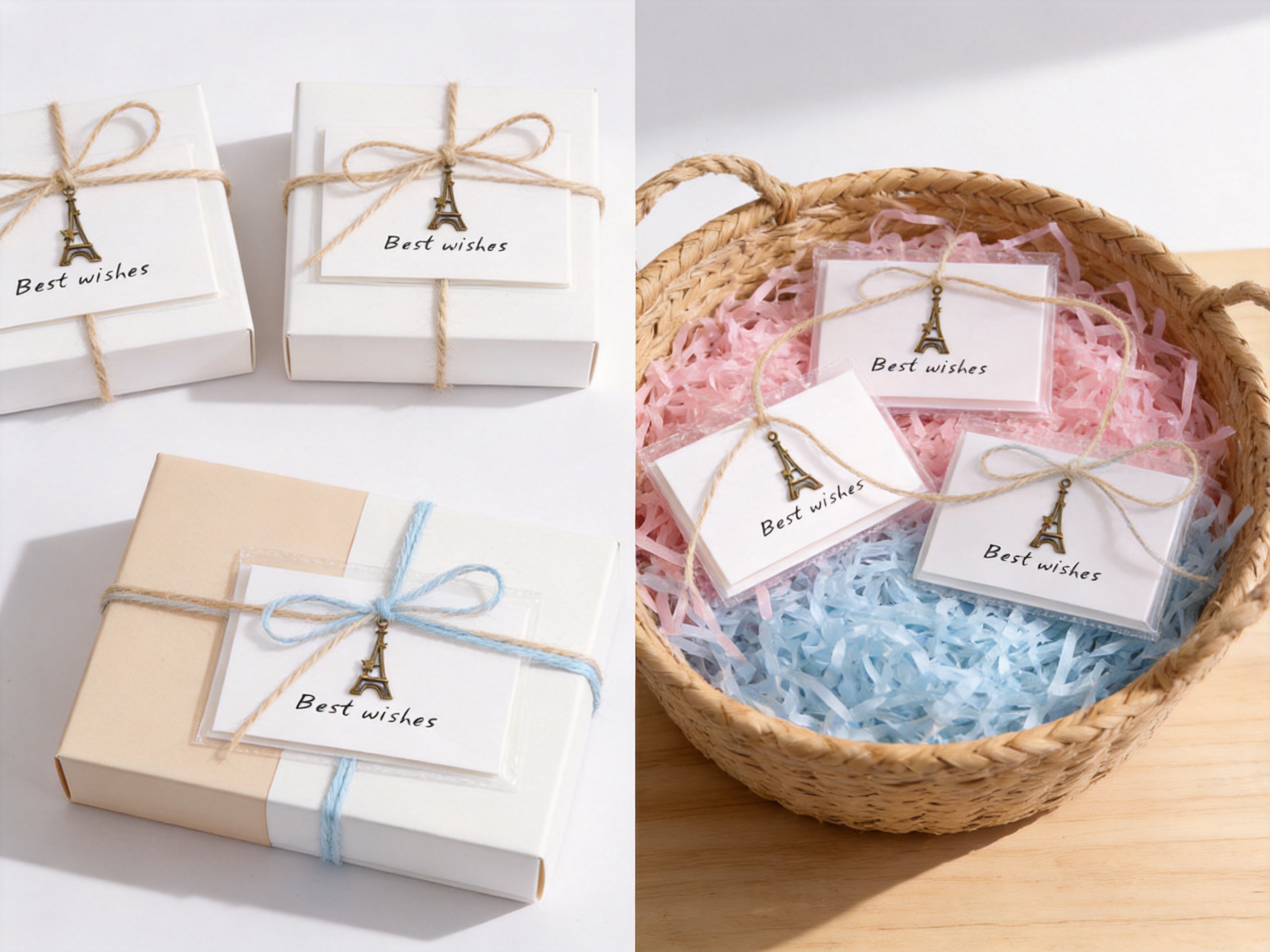
Retailers can use decorative cards in curated gift boxes, seasonal collections, and premium product bundles. A card may be placed on top of filler material so that the customer sees the greeting as soon as the box is opened. It can also be tied to the exterior using a paper cord or attached to a handle.
For retail applications, the card provides a simple way to standardize the customer experience. Every box can contain the same printed thank-you note, while selected packages can include an additional handwritten message. This supports consistent presentation without making the package feel completely impersonal.
Festival and Holiday Packaging
Festivals and holidays create strong demand for gift presentation materials. Decorative cards can be customized with seasonal colors, patterns, and messages for occasions such as Christmas, New Year celebrations, Valentine’s Day, birthdays, weddings, anniversaries, and regional festivals.
Because the cards can be printed in custom colors, buyers can create collections suited to different events. Beige and neutral tones may suit natural or minimalist packaging, while richer colors can support festive themes. Coordinating the card with raffia filler and wrapping paper helps create a complete visual arrangement.
Handmade and DIY Products
Craft sellers and DIY enthusiasts often need small packaging accessories that are easy to store and flexible enough for different product styles. A stiff decorative card can be added to handmade candles, soaps, knitted goods, accessories, stationery, pottery, ornaments, or gift baskets.
The writing-friendly surface is valuable for small businesses that add personalized messages to individual orders. It also suits workshops and craft projects in which participants design their own cards using stamps, pens, stickers, ribbons, or additional paper embellishments.
Corporate and Promotional Gifts
Companies can use customized cards to accompany employee gifts, client appreciation packages, event materials, and promotional products. A printed company message can be combined with a blank writing area for a signature or short personal note.
Corporate packaging often requires consistency across large quantities. Clear printing, standardized production, and reliable packaging are therefore important. Customized decorative cards can help a company maintain a professional visual identity while keeping the package warm and approachable.
Wedding and Event Favors
Decorative cards are well suited to wedding favors, party favors, guest gifts, and commemorative packages. Names, dates, short quotations, or thank-you messages can be printed on the cards. Their firm structure helps them remain attractive when attached to small boxes, bags, jars, or wrapped favors.
Event planners can coordinate the card with table decorations, invitations, wrapping paper, ribbon, and floral colors. This creates a unified theme without requiring complex packaging construction.
Brand Storytelling and Customer Care
A card can provide more than a greeting. It can explain how to care for a product, introduce a handmade process, communicate a brand value, or invite customers to return. Because the card occupies a small area, the message should be concise, but even a few lines can make the package more informative and memorable.
For products sold through online channels, a decorative card can help compensate for the lack of face-to-face interaction. A well-designed note gives the customer a physical expression of appreciation when opening the delivery.
Coordinating Cards with Raffia Packaging Materials
Raffia Decorative Cards are part of a wider group of packaging and craft materials. Their greatest visual impact often appears when they are combined with complementary products rather than used alone.
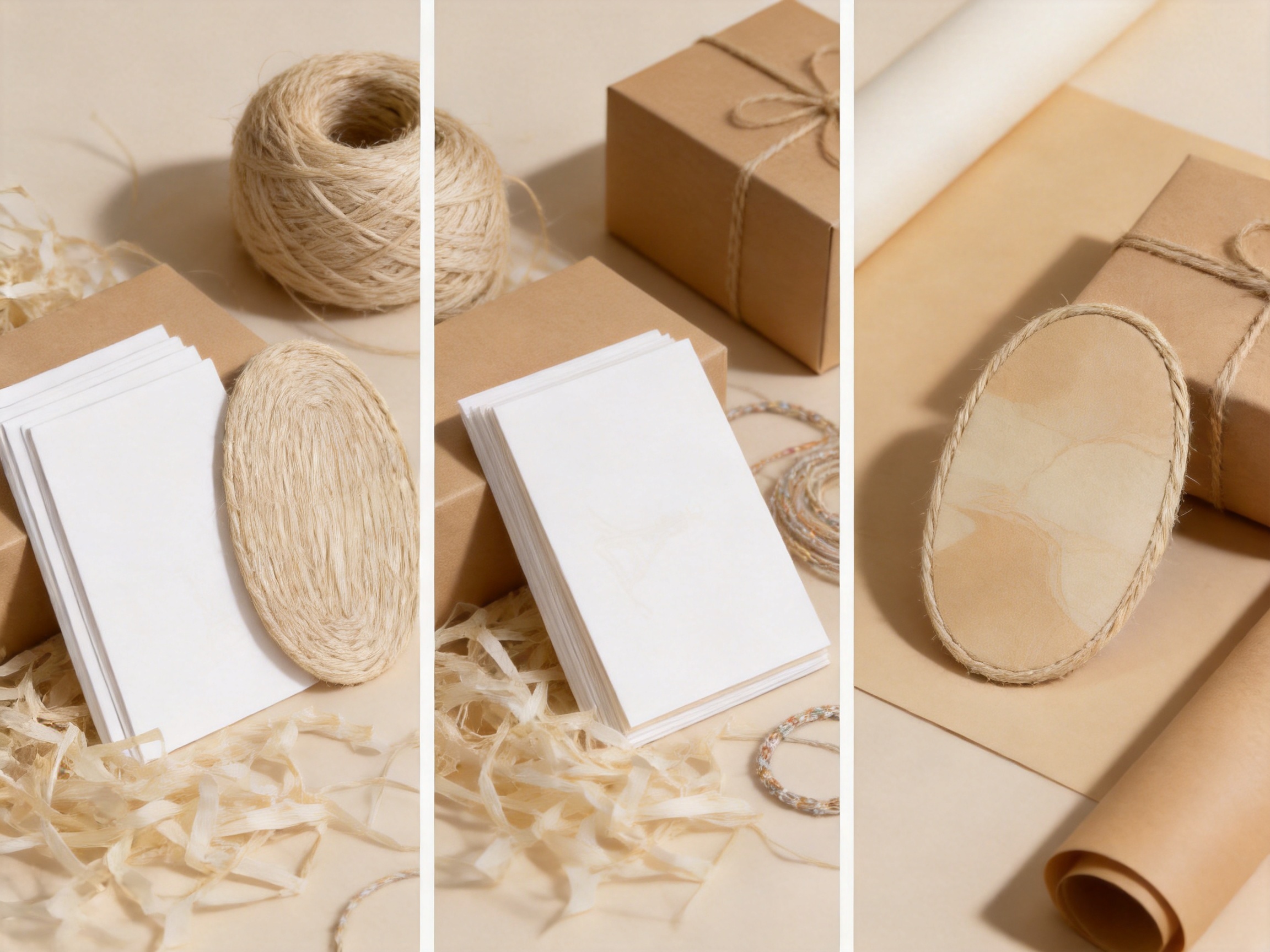
Raffia filler creates volume and texture inside a gift box. Paper raffia yarn or DIY raffia cord can be used to tie a card to a package or form a decorative bow. Wrapping paper provides the main exterior surface, while the card supplies the message and finishing detail. Fancy yarns can add color and tactile contrast to the package.
A coordinated package should consider color, texture, size, and visual balance. For example, a smooth coated card can contrast effectively with crinkle raffia filler. A beige card may complement natural-toned wrapping paper and brown paper yarn. A brightly printed card may become the focal point of a neutral gift box.
It is also important to avoid visual overcrowding. If the wrapping paper has a strong pattern, the card may benefit from a simple border and clear typography. If the box is plain, the card can carry more decorative artwork. The product’s adaptable surface allows buyers to plan different design directions around the same basic card construction.
Manufacturing Expertise Behind the Product
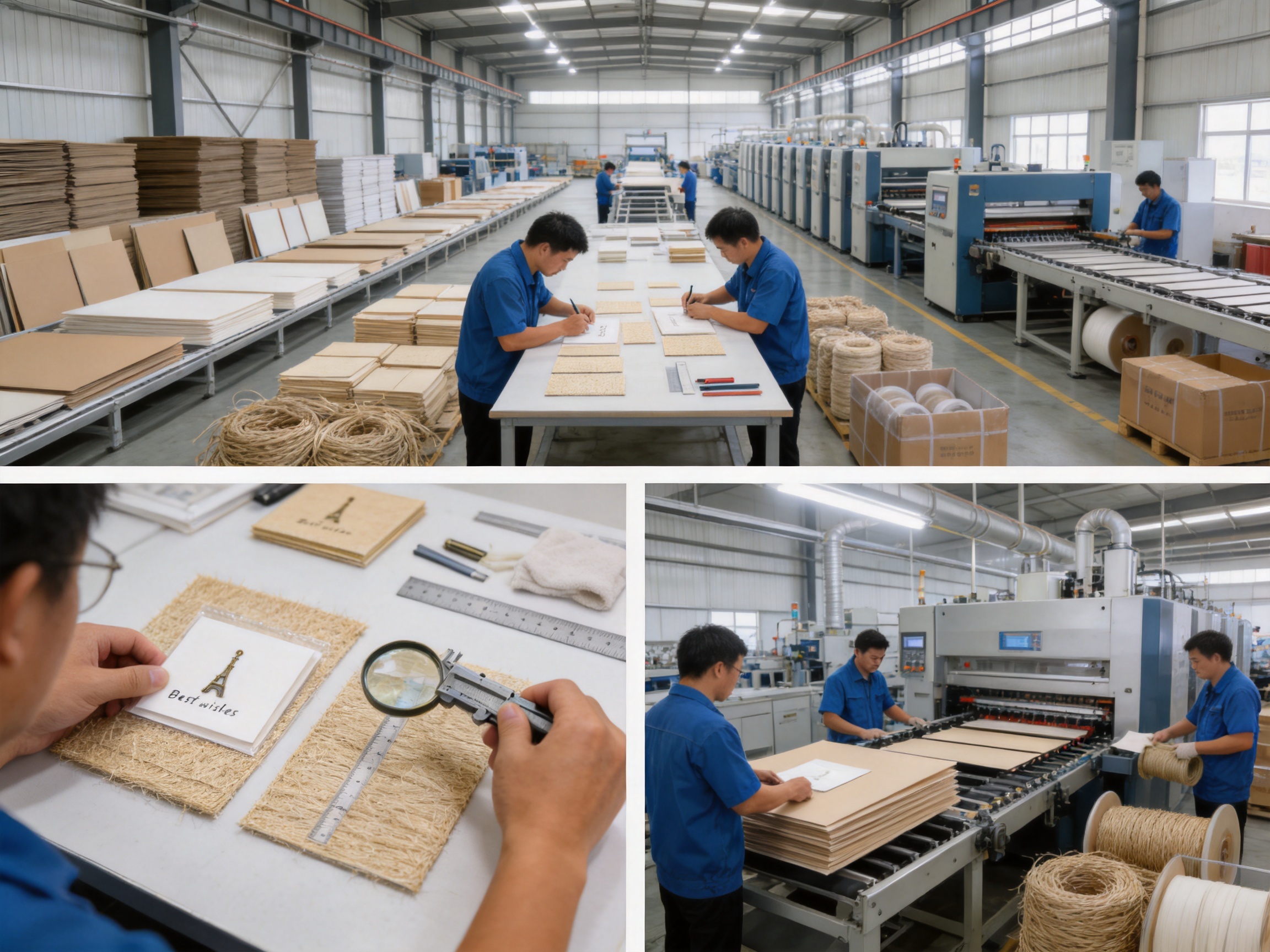
The performance of a paper accessory depends not only on its raw materials but also on the manufacturing system used to process, print, finish, inspect, and pack it. Zhejiang Raffia Paper Products Co., Ltd. has operated in the craft materials sector since 2010 and was formally founded in 2014. Over more than ten years of industry experience, the company has developed from a trading enterprise into an integrated manufacturer.
The company specializes in crinkle raffia paper shreds, fancy paper yarns, paper raffia products, DIY cords, gift packaging materials, and related decorative accessories. This product background provides a strong understanding of paper behavior, including slitting, twisting, winding, compression packaging, surface appearance, color coordination, and bulk-order handling.
Its manufacturing base is located in Dongyang, Zhejiang Province, and covers approximately 20,000 square meters. The facility employs more than 200 professional workers and operates an integrated production chain that includes raw material processing, mass production, quality testing, finished-goods packaging, and shipment preparation.
Raw Material Processing
Raw material processing is the foundation of consistent paper product manufacturing. The paper must be selected and prepared according to the intended thickness, surface quality, color requirements, and application. For decorative cards, the material needs to support stiffness, smooth writing, clean printing, and reliable cutting.
Standardized procedures help reduce variation between production batches. This is important for buyers who use cards in recurring seasonal collections or long-term retail programs. Consistency in paper appearance and physical feel helps ensure that products ordered at different times coordinate with one another.
Precision Slitting and Cutting
Paper processing often requires accurate slitting and cutting to create consistent dimensions and clean edges. Although the decorative card is a relatively compact product, edge quality directly affects its appearance. Uneven or rough edges can be noticeable when cards are displayed on premium gift boxes.
Controlled processing supports efficient material utilization and helps manufacturers manage custom size requests. Different packaging projects may require different card proportions, and an experienced factory is better positioned to evaluate material usage, production feasibility, and packing requirements for customized formats.
Printing and Surface Finishing
Printing must be coordinated with the paper surface and intended visual result. Clear text, stable color application, and accurate placement are essential for professional packaging. Standardized production procedures help reduce problems such as misalignment, inconsistent color, incomplete artwork, or unclear small lettering.
Surface finishing also influences how the card feels and how it handles ink. The smooth, coated surface is designed to support a refined appearance while remaining suitable for writing. For customized orders, artwork preparation, proofing, color review, and production inspection are important steps in maintaining the expected result.
Quality Testing
Quality testing is integrated into the company’s broader production chain. Depending on the order and specification, inspection may involve material appearance, dimensions, surface condition, print clarity, color consistency, stiffness, packaging integrity, and quantity verification.
A strict and replicable quality control system is particularly valuable for wholesale and OEM orders. Buyers need confidence that the delivered products will match the approved specification and perform consistently across multiple packages or sales channels.
Compression Packaging and Shipment Preparation
The company’s experience with compression packaging and finished-goods preparation supports efficient storage and logistics. Decorative paper products must be packed in a way that protects them from bending, contamination, moisture exposure, and unnecessary movement during transit.
Proper packaging also helps buyers receive organized inventory. When products are packed in suitable quantities and protected during shipment, they can be transferred more efficiently into warehouses, production rooms, retail displays, or craft workspaces.
Production Capacity and Supply Chain Strength
Zhejiang Raffia Paper Products Co., Ltd. reports an annual production capacity of more than 200 million pieces across its product operations. This scale supports both regular wholesale supply and larger customized programs. Production capacity is important for businesses that need dependable replenishment during high-demand seasons.
The company serves customers throughout China and exports to Europe, North America, South America, Asia, and other regions. International experience requires attention to packaging protection, communication, production scheduling, documentation, and shipment coordination. These factors are especially important when paper products are ordered in bulk and transported across long distances.
The integrated manufacturing chain can reduce the need to coordinate multiple independent suppliers for raw materials, processing, quality inspection, and shipment. For buyers, this may simplify communication and improve control over product consistency. It can also make it easier to develop coordinated packaging programs involving cards, raffia paper, paper yarn, filler, and other accessories.
The company’s products and services have been used by brands including Costco, IKEA, LOKLIK, Disney, Lancôme, Chanel, Dior, and Primark. Such market exposure indicates experience with diverse packaging expectations, though each order remains subject to its own specifications, approvals, and quality requirements.
OEM and ODM Customization Capabilities
Customization is an important advantage for businesses that do not want generic packaging accessories. Zhejiang Raffia Paper Products Co., Ltd. provides flexible OEM and ODM services, including exclusive brand customization, custom size development, and long-term bulk order supply.
OEM production can support buyers that already have a defined design, logo, color system, or packaging specification. ODM cooperation can help businesses develop a product concept based on intended use, market positioning, or seasonal requirements. In both cases, the process should begin with clear communication regarding material, dimensions, artwork, printing, quantity, packaging, and delivery schedule.
Custom Printed Colors
Custom colors allow decorative cards to fit a brand identity or collection theme. A buyer may request a specific color palette for a product launch, festival range, wedding event, or retail campaign. Color coordination is particularly valuable when the card is used with matching raffia yarn, wrapping paper, or decorative filler.
Color development should consider the selected paper surface, printing method, viewing conditions, and the appearance of related packaging components. Approving a production sample or color proof can help establish a clear reference before mass production.
Custom Sizes and Shapes
Different gift boxes and packages require different card dimensions. A small card may suit a jewelry box, while a larger format may be needed for a gift basket or premium product set. Custom size development enables the card to remain proportionate to the package rather than appearing too small or oversized.
Shape development may also be considered where suitable for the order. Rounded corners, special die-cut outlines, or unique proportions can reinforce a seasonal or brand-specific design. Any special shape should be evaluated for production efficiency, writing area, packaging method, and shipping protection.
Exclusive Brand Design
Businesses can use exclusive artwork to distinguish their packaging from standard market products. A card may include a logo, signature color, illustration, slogan, thank-you message, or collection identifier. This creates a branded touchpoint that customers can recognize and associate with the product experience.
Exclusive design is especially useful for online retailers, subscription boxes, boutique gift companies, cosmetics packaging, handmade brands, and event suppliers. The card can be standardized across multiple product categories while still allowing different messages or seasonal editions.
How to Select the Right Decorative Card Specification
Buyers should consider the intended package before confirming a decorative card order. The most suitable specification depends on the application, message length, attachment method, design complexity, storage conditions, and order quantity.
Determine the Purpose
First, identify whether the card will be used for a personal greeting, a printed thank-you note, a product instruction, a festival message, a brand card, or a combination of these purposes. A card designed mainly for handwriting may need more blank space, while a promotional card may require a larger printed area.
Match the Card to the Package
The card should be proportionate to the box, bag, basket, or wrapped product. It should be visible without dominating the package. Buyers should also decide whether the card will be inserted inside, attached outside, tied with a cord, placed under a ribbon, or secured to a handle.
Choose the Color Direction
White and beige are flexible choices for neutral and natural packaging. Custom printed colors are more appropriate when the card needs to match a brand or seasonal design. The color should be evaluated alongside the wrapping paper, filler, yarn, ribbon, and box material rather than considered separately.
Review the Artwork
Artwork should be supplied in a clear and production-ready format. Small text must remain readable, and important elements should not be placed too close to the edge. If the card will include handwriting, the design should reserve an uncluttered writing area.
Confirm the Material and Finish
Buyers should confirm that the selected paper provides the required stiffness, smoothness, print performance, and writing comfort. If the cards will be stored or shipped in humid conditions, moisture-resistant characteristics should be discussed as part of the specification.
Plan Quantity and Replenishment
Seasonal projects may require a one-time quantity, while retail programs may need repeated production. Discussing forecasted demand can help determine suitable packing quantities, production schedules, and long-term supply arrangements. Consistent reordering is easier when the approved specification is clearly documented.
Quality Control Priorities for Bulk Buyers
Bulk buyers should establish quality criteria before production begins. Clear expectations help both the buyer and manufacturer evaluate the finished product objectively.
| Quality Area | What to Review | Why It Matters |
|---|---|---|
| Paper structure | Thickness, stiffness, flatness, and edge condition | Influences handling and perceived product quality |
| Surface | Smoothness, cleanliness, coating uniformity, and writing performance | Supports printing and handwritten messages |
| Printing | Color accuracy, sharpness, alignment, and text readability | Protects brand and presentation quality |
| Dimensions | Length, width, shape, and corner consistency | Ensures compatibility with the intended package |
| Moisture handling | Resistance to ordinary humidity and storage conditions | Helps prevent curling and surface damage |
| Packaging | Counting, bundling, protection, labeling, and carton condition | Improves warehouse and shipment efficiency |
| Safety | Material declarations and absence of fluorescent agents | Supports clean and responsible product selection |
Pre-production samples are useful when the order includes custom colors, logos, special sizes, or complex artwork. A sample allows the buyer to assess the paper feel, printing clarity, visual proportion, and writing area before mass production.
Batch consistency is another important consideration. For businesses that sell gift packaging throughout the year, variation between production runs can create noticeable differences in color or material feel. A documented specification and repeatable quality control process help reduce this risk.
Advantages of Working with an Integrated Manufacturer
An integrated manufacturer can provide advantages beyond the production of one individual item. Since Zhejiang Raffia Paper Products Co., Ltd. works across paper raffia yarn, raffia paper, fancy yarns, filler, cords, wrapping materials, and decorative accessories, buyers can discuss complete packaging concepts with a supplier that understands how these products function together.
This integrated perspective can help with material matching. For example, the manufacturer may be able to coordinate card colors with paper yarn or recommend a practical card format for a particular gift box. It can also support consolidated purchasing, where several related products are planned under one supply program.
Integrated production may also improve communication. Instead of explaining the same packaging concept to separate suppliers, the buyer can share a complete design direction with one experienced manufacturing partner. This may simplify quotation, sample development, production planning, and shipment organization.
The company’s experience in slitting, twisting, winding, compression packaging, and paper product processing demonstrates a broad manufacturing foundation. These capabilities are relevant because many decorative packaging products require precise control of paper width, tension, shape, surface appearance, and packing density.
Storage, Handling, and Use Recommendations
Decorative cards should be stored in a clean, dry environment away from direct water exposure and excessive heat. Keeping cartons level can help protect the flatness of the cards. Heavy items should not be placed on top of the product if they may cause bending or compression damage.
When opening cartons, workers should use suitable tools and avoid cutting into inner bundles. Cards should be handled with clean hands or appropriate gloves when the surface is highly visible and intended for premium presentation.
Before inserting a card into a package, check that the writing area is clean and that the printed design is correctly oriented. If the card is being handwritten, allow ink to dry before placing it against glossy surfaces or other materials. If a cord or ribbon is used, the attachment method should not create excessive pressure that could crease the paper.
For retail displays, cards can be organized by color, design, season, or application. Clear inventory labeling helps prevent different artwork versions from being mixed during busy periods. Businesses that use multiple card formats should also maintain a simple specification record for each product code.
Why Paper Details Influence Perceived Gift Value
Customers often evaluate a package through several senses at once. They see the colors and arrangement, feel the paper and card, read the message, and observe whether the components appear carefully coordinated. A decorative card contributes to all of these impressions.
A stiff card can make the package feel more substantial. A smooth surface can make handwriting appear cleaner. Clear printing can make the message easier to read. A coordinated color can make the entire package look intentional. These effects are subtle individually, but together they influence the perceived value of the gift.
This is why a decorative card should not be treated as an afterthought. It is a small communication surface and a design element. When produced with reliable materials and accurate printing, it can strengthen the appearance of the entire packaging system.
Business Strengths of Zhejiang Raffia Paper Products Co., Ltd.
Zhejiang Raffia Paper Products Co., Ltd. combines long-term industry experience, integrated manufacturing, product variety, customization capability, and international supply experience. Founded in 2014 after developing from a craft materials business unit established in 2010, the company has more than a decade of experience in the paper and decorative materials sector.
Its 20,000-square-meter production base and workforce of more than 200 professional employees support organized production at commercial scale. The company’s annual capacity of more than 200 million pieces provides a foundation for wholesale orders, repeat supply programs, and high-volume seasonal demand.
The company’s manufacturing chain covers raw material processing, mass production, quality testing, finished-goods packaging, and shipment. This helps establish control over the product from the beginning of the process through final delivery. Standardized production procedures and a strict, replicable quality control system are designed to support consistent batch performance.
The product range includes crinkle raffia paper shreds, fancy paper yarns, paper raffia, DIY cords, gift packaging materials, and decorative accessories. This breadth allows the company to serve gift packaging, textile knitting, home decoration, craft production, and global retail supply chains.
Its OEM and ODM services include exclusive brand customization, custom size development, and long-term bulk order supply. The company emphasizes consistent batch quality, on-time delivery, sustainable green supply chain concepts, and long-term cooperation. These strengths make it suitable for buyers seeking more than a standard catalog item.
Q&A About Raffia Decorative Cards
What are Raffia Decorative Cards used for?
They are used for greeting messages, gift-box coordination, festival packaging, handmade product presentation, corporate gifts, wedding favors, promotional packages, and other decorative applications. They can be inserted into a package or attached to the exterior with a cord, ribbon, or similar accessory.
What materials are used to make the cards?
The cards are made from thick card paper and coated art paper. This combination provides a firm structure, smooth surface, clear printing performance, and comfortable writing characteristics.
Are the cards suitable for handwriting?
Yes. The surface is designed to be stiff, smooth, and writing-friendly. Users can add personal greetings, signatures, thank-you notes, or short product messages after printing.
What colors are available?
Standard color options include white and beige. Custom printed colors can also be developed for specific brand identities, festival themes, retail collections, or event designs.
Can the cards be customized with a logo?
Customized artwork, including brand-related designs and printed messages, can be discussed through OEM or ODM cooperation. Buyers should provide the required artwork, dimensions, color direction, and quantity for evaluation.
Are the cards moisture-proof?
The product is described as moisture-resistant, which supports ordinary handling and storage conditions. It is not intended to be submerged or exposed to direct water for extended periods. Buyers with special environmental requirements should confirm the specification before ordering.
Are fluorescent agents used?
The product information states that the cards contain no fluorescent agent. This supports buyers seeking a clean and eco-friendly paper accessory for gift and craft packaging.
Can the cards be matched with raffia filler and paper yarn?
Yes. They are designed for gift packaging coordination and can be combined with raffia filler, paper raffia yarn, DIY cords, fancy yarns, wrapping paper, gift boxes, and other decorative materials.
Are custom sizes possible?
Custom size development is available for suitable OEM and ODM projects. The final size should be selected according to the package dimensions, message area, attachment method, artwork, and production quantity.
What should be confirmed before placing a bulk order?
Buyers should confirm the paper material, thickness, dimensions, shape, color, artwork, printing requirements, writing area, packaging method, quantity, quality standards, and delivery schedule. A sample or proof is recommended for customized projects.
Does the manufacturer support international orders?
The company exports to Europe, North America, South America, Asia, and other regions. International buyers should provide complete shipping, packaging, labeling, and documentation requirements during the quotation and order-planning stages.
Can several related packaging products be sourced from the same company?
The company manufactures and supplies multiple product categories, including paper raffia yarn, raffia paper, DIY cords, fancy yarns, filler materials, gift packaging products, and decorative accessories. Buyers can discuss coordinated sourcing according to their packaging program.
Conclusion
Raffia Decorative Cards provide an efficient way to add communication, structure, and visual refinement to gift packaging. Made from thick card paper and coated art paper, they combine stiffness, smoothness, clear printing, writing comfort, portability, and moisture-resistant characteristics. Their white, beige, and customized color options make them suitable for neutral packaging, natural craft styles, seasonal collections, retail programs, and branded gift presentations.
Compared with thin paper inserts and ordinary tags, the cards offer a more substantial feel and a more reliable presentation. Their value becomes even stronger when they are coordinated with raffia filler, paper raffia yarn, decorative cords, wrapping paper, gift boxes, and fancy yarns.
The manufacturing strength behind the product is equally important. Zhejiang Raffia Paper Products Co., Ltd. brings more than ten years of industry experience, a 20,000-square-meter production base, more than 200 professional employees, an annual capacity exceeding 200 million pieces, integrated processing and quality control, international supply experience, and flexible OEM and ODM capabilities.
For businesses seeking a practical and customizable paper accessory, Raffia Decorative Cards offer a balanced solution. They help packages communicate a message, support a cohesive design, and create a more memorable customer experience while benefiting from the production expertise of an established raffia paper and gift packaging manufacturer.
References
1. Zhejiang Raffia Paper Products Co., Ltd. Product information for Raffia Decorative Cards.
2. Zhejiang Raffia Paper Products Co., Ltd. Company profile and manufacturing capability statement.
3. Internal product specifications concerning thick card paper, coated art paper, printing, color, texture, moisture resistance, and safety characteristics.
4. Internal manufacturing information concerning slitting, twisting, winding, compression packaging, quality testing, and integrated shipment preparation.
5. General principles of paper-based gift packaging design, material coordination, product presentation, and quality control.
Product: Raffia Decorative Cards

 +86 15355323399
 kevin@raffia-paper.com
 No. 151 Guanshan North Road, Dongyang City, Zhejiang Province, China

Copyright © Zhejiang Raffia Paper Products Co., Ltd. All Rights Reserved.

Paper Raffia Yarn & Gift Packaging Factory