
 +86 15355323399
 En
En  中文简体
中文简体 日本語
日本語 Français
 Español
 Deutsch
 Türk
Türk عربى
عربى italiano
 русский
Honeycomb Filling Packing Paper: An Advanced Plastic-Free Cushioning Solution for Modern B2B Packaging
Packaging is no longer evaluated only by its ability to contain a product. For manufacturers, e-commerce businesses, brand owners, logistics providers, and packaging distributors, the ideal packaging material must also protect goods, improve operational efficiency, support attractive presentation, reduce environmental impact, and remain commercially practical at scale. Honeycomb Filling Packing Paper meets these requirements by combining a flexible paper structure with reliable cushioning performance and a refined natural appearance.
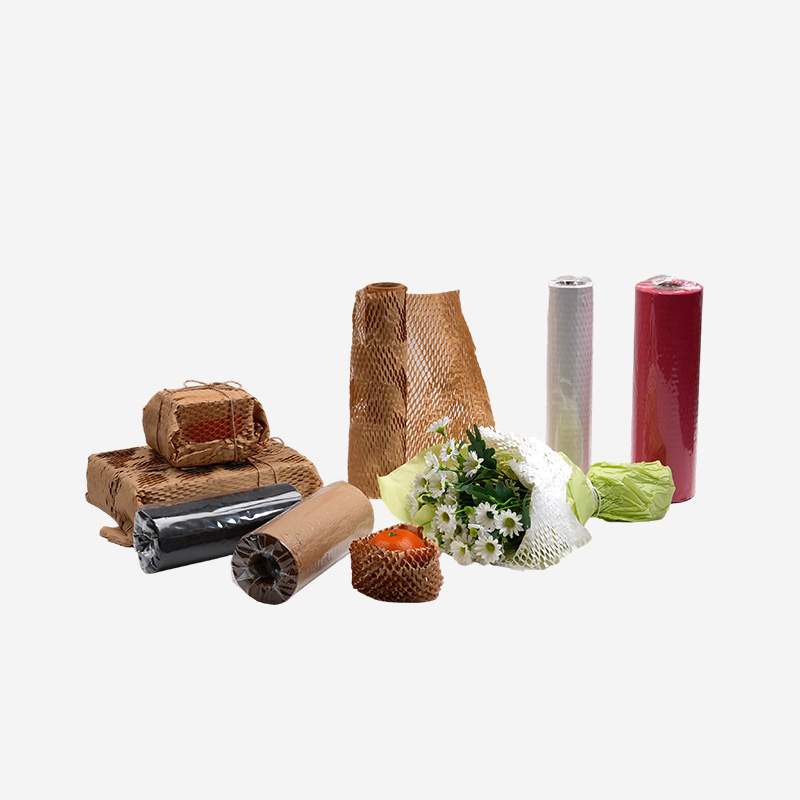
Honeycomb Filling Packing Paper is an expandable kraft paper material designed for product wrapping, void filling, gift packaging, and transportation protection. Before expansion, it is compact and space-efficient. When stretched, its precision-cut pattern opens into a three-dimensional honeycomb structure. The expanded material creates multiple contact points around a product, helping absorb and distribute external forces during handling and shipping.
Unlike ordinary flat kraft paper, this material is stretchable, wrapable, and structurally cushioning. Unlike bubble wrap, plastic air pillows, EPE foam, and plastic filling pellets, it is paper-based and can support plastic-free packaging programs. It also provides a more natural visual effect than many conventional protective materials, making it suitable for both industrial shipping and premium gift presentation.
For companies seeking a dependable bulk packaging material, the product offers a combination of protection, sustainability, customization, and supply-chain efficiency. Its value is particularly strong when it is integrated into a standardized packaging system rather than used as an occasional consumer craft item.
Honeycomb Filling Packing Paper
What Is Honeycomb Filling Packing Paper?
Honeycomb Filling Packing Paper is manufactured from kraft paper that has been processed into an expandable geometric pattern. The cut lines and connecting sections are arranged to form a honeycomb grid. When the roll or sheet is pulled lengthwise, the pattern expands and creates a cellular structure with depth.
This structure is the key to the product’s performance. The expanded cells create a network of flexible contact points that can surround products, separate items, stabilize contents, and reduce direct contact between the product and the inside walls of a carton. The paper can be used as an outer wrap, as an internal filler, or as a combination wrapping-and-separation material.
In its compact form, the material is supplied in rolls or cartons. Its compressed format reduces storage requirements compared with ready-to-use bulky fillers. During packaging, operators can pull the required length, expand the honeycomb pattern, and wrap or place it around the item. This reduces the need for extensive cutting, pre-forming, or complicated manual preparation.
The material may be supplied in natural kraft or in custom-dyed colors. Different GSM options, widths, honeycomb densities, and tensile characteristics can be developed according to the intended application. Uncoated paper is suitable for many general packaging uses, while optional eco coatings or food-grade paper selections may be considered for specialized requirements.
How the Honeycomb Structure Works
When a product is wrapped with expanded honeycomb paper, the open cells create a cushioning layer between the product and possible external impact points. If the package is dropped, compressed, or subjected to vibration, the cellular configuration helps distribute the force over a broader area instead of allowing the entire impact to concentrate on one small point.
The expanded structure also helps fill empty spaces inside a carton. Empty space allows products to move during transportation, and uncontrolled movement can cause abrasion, breakage, or deformation. By placing honeycomb paper around the product, a packaging operator can improve positioning and reduce unnecessary movement.
Once expanded, the material generally maintains its open structure rather than immediately returning to a flat form. This supports consistent packing and helps the wrapped product remain stabilized during carton closing, warehousing, and shipment.
Core Product Specifications
The following specifications represent the standard product configuration. Exact values can be adjusted for application requirements, order volume, and customer packaging systems.
| Item | Standard Information | Customization Possibilities |
|---|---|---|
| Product name | Honeycomb Filling Packing Paper or Honeycomb Paper Roll | Private-label product names and packaging labels |
| Base material | Kraft paper | Custom GSM, paper grade, and selected specialty papers |
| Structure | Expandable honeycomb pattern | Honeycomb density, cell size, and tensile performance |
| Cutting method | Precision die-cut or laser-capable processing | Application-based structural development |
| Color | Natural kraft | Custom dyed colors and brand color systems |
| Expansion ratio | Approximately 1.5 to 2.5 times, depending on structure | Adjusted according to cushioning and wrapping requirements |
| Surface treatment | Uncoated paper | Optional eco coating |
| Environmental profile | Recyclable, biodegradable, and plastic-free paper-based option | Material selection according to market requirements |
| Food contact option | Available upon request | Food-grade paper selection and related documentation |
| Packaging format | Roll or carton packaging | Customized roll dimensions, labels, and master cartons |
Why Businesses Are Replacing Conventional Plastic Fillers
Many packaging operations still depend on bubble wrap, EPE foam, plastic air pillows, and loose plastic pellets. These materials can provide cushioning, but they also create several operational and environmental challenges.
Plastic fillers are often difficult to recycle through ordinary paper recycling systems. They can occupy considerable space in waste streams, create additional disposal requirements, and conflict with the sustainability policies of retailers, brands, and government authorities. In addition, some customers view visible plastic packaging as inconsistent with premium or environmentally responsible brand positioning.
Honeycomb Filling Packing Paper offers a paper-based alternative that can be incorporated into recycling-oriented packaging systems. It helps companies reduce their dependence on plastic cushioning materials without abandoning the protective function required for shipping fragile goods.
The comparison is not limited to environmental performance. Honeycomb paper can also deliver practical benefits in warehouse handling. Its compact roll format can reduce storage pressure, while its easy expansion allows operators to prepare protective material quickly. A business can keep rolls at packing stations and use only the amount required for each order.
Compared with loose paper shreds, honeycomb paper offers more structural control. Loose shreds can be attractive in gift boxes, but they may shift during transportation and may not provide uniform wrapping around fragile products. Honeycomb paper can function as a connected cushioning layer, improving stability and reducing the chance of individual pieces becoming displaced.
Compared with ordinary flat wrapping paper, the honeycomb structure offers greater volume and cushioning after expansion. Flat paper may prevent scratches, but it normally provides limited impact absorption unless it is folded into multiple layers. Honeycomb paper creates a formed structure more efficiently, using a relatively compact material before expansion.
Key Advantages Over Competing Packaging Materials
1. Paper-Based and Plastic-Free Positioning
The most visible advantage is its paper-based composition. For brands working toward plastic reduction, replacing bubble wrap or plastic loose fill with expandable kraft paper can support a clearer sustainability message. The material is recyclable and biodegradable when supplied in an appropriate paper configuration and disposed of according to local systems.
This advantage is particularly important for export-oriented businesses. Packaging regulations, retailer requirements, and customer expectations increasingly encourage recyclable or plastic-reduced formats. A paper cushioning solution can help companies develop packaging systems that are easier to explain, label, and integrate into sustainability reporting.
2. Protective Cushioning Through Cellular Geometry
The honeycomb pattern is not merely decorative. Its three-dimensional structure provides multiple stress points and contact surfaces. When a package encounters impact, the cellular layer can help disperse the force and reduce direct pressure on the product.
This makes the material suitable for glassware, ceramics, fragrance bottles, cosmetics containers, candles, small electronics, accessories, and other products that may be vulnerable to scratches, chips, dents, or surface damage. Product protection always depends on correct material selection and packing design, but the honeycomb configuration provides a stronger starting point than ordinary flat paper.
3. Efficient Use of Warehouse Space
Expanded fillers are often bulky before they reach the packing station. Honeycomb paper is stored in rolls or cartons and expands during use. This allows a business to stock a substantial quantity of protective material without dedicating the same volume of warehouse space required by pre-expanded plastic or foam products.
Reduced storage volume can be valuable for e-commerce warehouses, contract packers, gift packaging facilities, and distributors that manage multiple packaging sizes. More compact packaging material can also simplify inventory planning and reduce the frequency of replenishment.
4. Simple Manual Operation
Most operators can use the material with a short learning process. The roll is pulled to the required length, expanded, and placed around the product. It does not normally require complex cutting equipment, adhesive application, or specialized assembly tools.
This simplicity helps reduce packaging time and makes the product suitable for operations with varied order sizes. A worker can use a small amount for a compact accessory or several layers for a fragile bottle, depending on the packing specification.
5. Stronger Brand Presentation
Natural kraft paper communicates a handmade, responsible, and premium impression. The honeycomb texture creates visual interest inside a carton or gift box and can enhance the unboxing experience. For many brands, the internal packaging is part of the product presentation, not merely a protective afterthought.
Custom colors and printed branding can further support a consistent visual identity. A cosmetics company may select a refined neutral shade, a seasonal gift business may choose festive colors, and an e-commerce brand may coordinate the paper with its cartons, labels, and tissue paper.
6. Flexible Use as Wrap and Filler
Some protective materials are designed only for wrapping, while others are intended only to occupy empty space. Honeycomb paper can perform both functions. It can be wrapped around an individual product, layered between products, placed into voids, or combined with paper shreds and raffia fibers for a more decorative package interior.
This multifunctional quality reduces the number of different materials that a packaging department needs to manage. It also supports more consistent procurement and simplifies training for packing staff.
7. Customizable Performance
Different products require different levels of flexibility, stretch, density, and cushioning. A small lightweight item may need a fine honeycomb structure, while a heavier or more fragile product may require a stronger paper grade and a denser configuration.
Customization can involve GSM, width, color, cell density, expansion behavior, tensile strength, surface treatment, and roll packaging. This allows buyers to develop an application-based specification rather than accepting a one-size-fits-all product.
Applications Across Commercial Packaging Industries
E-Commerce and Cross-Border Logistics
E-commerce orders pass through multiple handling points, including fulfillment centers, courier networks, sorting hubs, local delivery vehicles, and customer homes. During this process, cartons may experience vibration, compression, impacts, and changes in orientation.
Honeycomb paper can be used to wrap electronics accessories, earphones, small devices, cosmetic containers, skincare bottles, candles, glass products, ceramic items, and household accessories. It helps hold the product in place and provides a protective layer that reduces direct contact with the carton.
For cross-border sellers, the material also contributes to a more professional customer experience. A parcel that opens with clean, coordinated paper packaging may create stronger brand recognition than one filled with loose plastic. This can be important for independent online stores competing with larger marketplaces.
Gift Boxes and Premium Packaging
Gift packaging requires a balance between protection and appearance. The material must prevent damage while also making the package look thoughtful and complete. Honeycomb paper provides internal volume and texture without creating the untidy appearance that may result from randomly inserted protective waste.
It can be used for birthdays, Christmas, weddings, corporate gifts, promotional packages, product launches, and seasonal collections. Custom colors, brand labels, and coordinated carton designs allow companies to create a recognizable packaging system.
Cosmetics, Skincare, and Fragrance Products
Bottles and jars used in cosmetics and fragrance packaging are often vulnerable to scratches, chips, leakage caused by impact, or breakage during delivery. Honeycomb paper can surround individual containers or separate several products within a gift set.
The natural paper texture also fits well with clean beauty, botanical, handmade, and environmentally conscious brand positioning. Where food-contact or specialized material requirements apply, an appropriate paper grade and compliance review should be completed before production.
Glassware and Ceramics
Glass and ceramic items require cushioning, separation, and stable positioning. Honeycomb paper can be wrapped around individual pieces, placed between nested products, and used to fill open areas within a box.
For fragile products, packaging performance depends on the complete system, including carton strength, product shape, edge protection, number of layers, and shipping conditions. Honeycomb paper is therefore best treated as an adaptable component of a professionally tested packaging design.
Handmade and Lifestyle Brands
Small and medium-sized brands selling candles, handmade ceramics, art objects, soaps, home accessories, and craft products often want packaging that reflects the character of the goods. Honeycomb paper offers a more tactile and natural alternative to generic plastic filler.
It can be combined with paper raffia yarn, paper shreds, decorative cords, tissue paper, and custom stickers. This creates layered interiors that protect the product while reinforcing a handmade or premium identity.
Warehousing and Export Shipments
In warehouses, products may be stored for extended periods or moved between facilities before final shipment. Honeycomb paper can act as an anti-scratch buffer, a separator for mixed products, and a stabilizing filler for cartons containing several item types.
For export shipments, the compact roll format can help simplify material storage at packing locations. Standardized roll widths and packaging specifications also make it easier for procurement teams to plan recurring orders.

Manufacturing Process and Quality Control
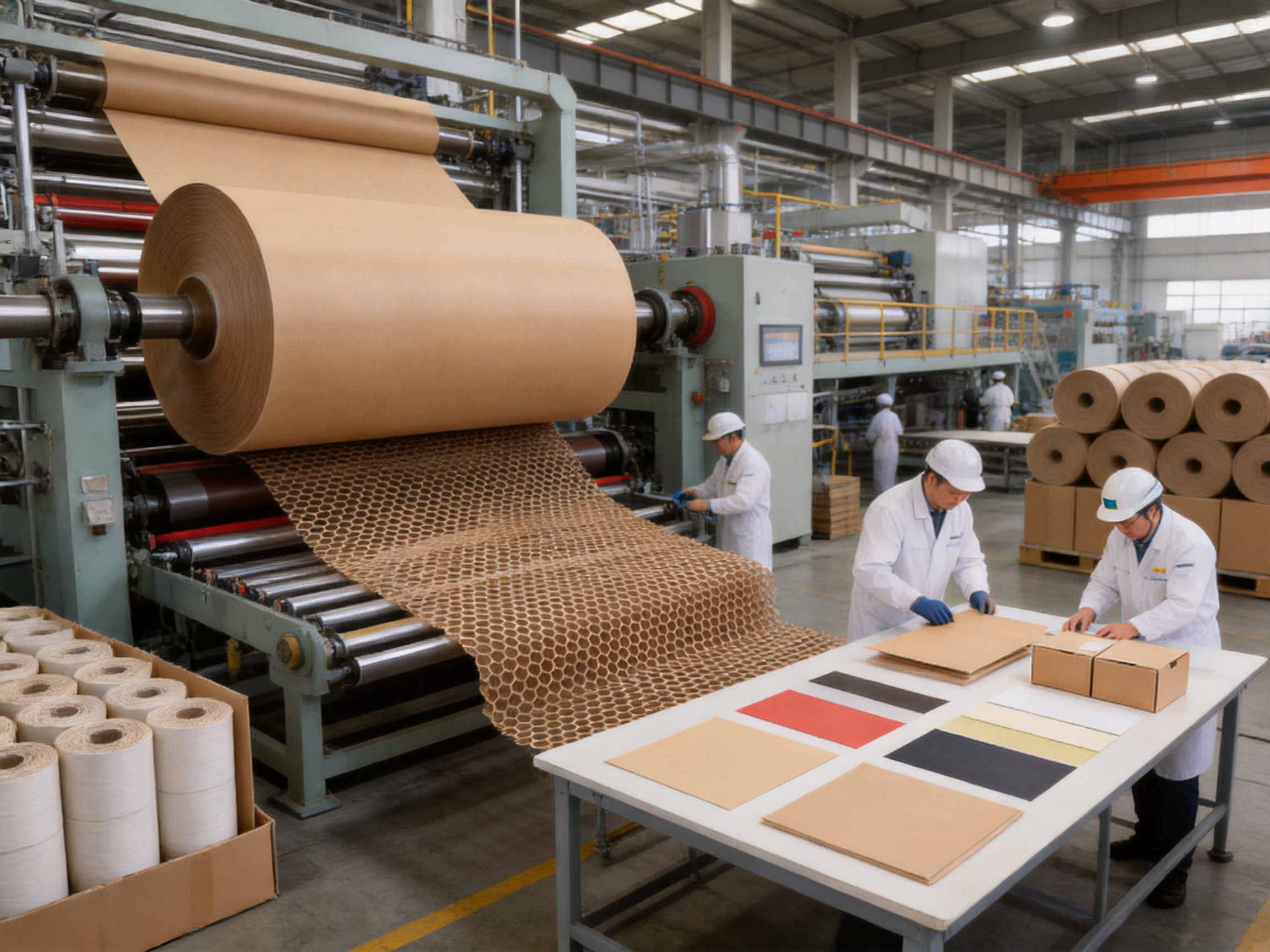
The performance of honeycomb paper depends on more than the visible pattern. Paper selection, slitting accuracy, pattern formation, tension control, winding, packaging, and inspection all influence the final result. A professional manufacturer must coordinate these stages to ensure that the material expands consistently and performs predictably in practical use.
1. Raw Material Selection
Production begins with the selection of kraft paper suitable for the target application. Important factors include paper GSM, fiber quality, moisture condition, surface consistency, tensile strength, color stability, and compatibility with any requested treatment.
General shipping applications may use standard kraft paper, while premium packaging may require a smoother appearance or a specific color. Applications involving special regulatory requirements may require food-grade paper or other documented material choices.
Raw materials are checked before entering production. Consistent incoming paper quality helps reduce variation between batches and supports more reliable expansion performance.
2. Slitting and Width Preparation
Large parent rolls are processed into narrower widths according to the final product specification. Accurate slitting is important because uneven edges can affect roll appearance, feeding behavior, and operator convenience.
Modern slitting equipment supports repeatable dimensions and cleaner edges. This is especially important for buyers that use fixed packing stations, dispensing equipment, semi-automated processes, or standardized carton formats.
3. Precision Pattern Formation
The kraft paper is processed into an expandable honeycomb pattern using precision cutting technology. Depending on the product configuration and production requirements, the manufacturing system may use die-cutting, laser-capable processing, or other controlled pattern-forming methods.
The spacing and connection points must be balanced carefully. If the pattern is too tight, the material may be difficult to expand. If it is too open or weak, the expanded structure may not provide sufficient support. A stable pattern allows the material to stretch smoothly while preserving the integrity of the connected paper cells.
4. Tension and Expansion Control
During pattern formation and winding, tension must be controlled to prevent deformation. Excessive tension can influence expansion behavior, while insufficient tension may create loose or irregular rolls. Production operators monitor the movement of the paper through the machinery to maintain consistent structure and appearance.
Expansion ratio is reviewed according to the target specification. A product designed for decorative filling may prioritize appearance and easy expansion, while a product designed for fragile shipping may require a different balance between density, tensile strength, and cushioning volume.
5. Winding and Roll Formation
After pattern processing, the material is wound into rolls or prepared in other requested formats. Uniform winding helps the roll feed smoothly and reduces the risk of crushed edges, telescoping, or loose layers.
Roll dimensions can be developed around the buyer’s packing process. Width, length, core size, outer diameter, and carton configuration may all influence warehouse handling and dispensing efficiency.
6. Inspection and Testing
Quality control should include visual inspection, dimension checks, paper weight verification, expansion observation, tensile assessment, and packaging inspection. Production teams may also evaluate how the material behaves when wrapped around representative products.
Batch consistency is particularly important for B2B buyers. A packaging operation does not want one shipment to expand easily while the next shipment behaves differently. Reproducible manufacturing procedures help buyers maintain stable packing speed and predictable material usage.
7. Compression Packaging and Shipment Preparation
Finished rolls are packed into cartons or other protective outer packaging. Compression and carton design are managed to protect the material during storage and transportation without damaging the honeycomb pattern.
Labels can include product information, roll specifications, batch identification, customer branding, and handling instructions. Clear labeling supports warehouse organization and makes repeat purchasing easier for distributors and brand owners.
Manufacturing Strengths of Zhejiang Raffia Paper Products Co., Ltd.
Zhejiang Raffia Paper Products Co., Ltd. has developed its production capabilities through more than a decade of experience in paper-based craft and packaging materials. The company originated from a craft materials business unit established in 2010 and was formally founded in 2014. Its development from a trading enterprise into an integrated manufacturer has enabled it to combine market understanding with direct production control.
The company operates a modern production base in Dongyang, Zhejiang Province, covering approximately 20,000 square meters and supported by more than 200 professional employees. This scale provides the infrastructure needed for material processing, mass production, quality testing, finished-goods packaging, and shipment coordination within an integrated manufacturing chain.
Its experience includes crinkle raffia paper shreds, paper raffia yarns, decorative packaging materials, and related paper products. This background is valuable for honeycomb paper buyers because it reflects familiarity with paper behavior across slitting, twisting, winding, compression packaging, and decorative applications.
The factory uses standardized procedures for raw material processing and production. Standardization is important when serving B2B buyers that require repeat orders, private-label programs, and consistent packaging across multiple product lines.
According to the supplied company information, annual production capacity exceeds 200 million pieces across its product portfolio. The company serves customers in China and exports to Europe, North America, South America, Asia, and other markets. Its products have been used by recognized international and retail brands, demonstrating experience with demanding supply-chain expectations.
The company also emphasizes equipment upgrades and core technology improvement. For honeycomb paper, this may include developments in slitting precision, pattern processing, winding stability, compression packaging, and inspection procedures. These capabilities help support customized sizes, colors, densities, strengths, and packaging formats.
OEM and ODM Customization for B2B Buyers
Packaging requirements differ significantly among industries. A cosmetics company may need visually refined material in a controlled color system. An electronics distributor may prioritize tensile strength and consistent roll dimensions. A wine or fragrance packer may require greater cushioning density and carefully tested wrapping behavior.
For this reason, customization is a major advantage of working with an integrated manufacturer rather than purchasing a generic retail product.
OEM Services
OEM programs allow buyers to use a manufacturer’s established product platform while applying their own commercial identity. Available services may include custom logo printing, branded labels, customized outer cartons, product identification, and coordinated color systems.
Private-label packaging helps distributors and brand owners build a consistent product range. It also makes recurring procurement easier because the packaging material can be identified by the buyer’s internal product code and visual system.
ODM Development
ODM services focus on developing a product configuration for a particular use case. The buyer may request a certain honeycomb density, tensile strength, expansion ratio, width, GSM, or roll length. The manufacturer can then evaluate the requirements and develop samples or a production specification.
Industry-specific development may be appropriate for electronics, cosmetics, wine, gift boxes, handmade goods, and mixed-product shipping cartons. The objective is to align the material with the actual product, carton dimensions, packing speed, and expected transportation conditions.
Color and Appearance Development
Natural kraft is widely used because it communicates an authentic and eco-conscious character. However, custom dyed colors can help brands create stronger shelf and unboxing recognition. Color development should consider paper absorbency, shade consistency, print compatibility, and batch repeatability.
Size and Packaging Development
Buyers can discuss roll width, length, carton dimensions, core specifications, and outer packaging requirements. A properly sized roll reduces waste and improves operator convenience. It can also be designed to fit existing dispensers or packaging workstations.
Solving Common B2B Packaging Problems
High Shipping Damage Rates
Damage during shipping creates direct replacement costs, customer complaints, negative reviews, refund requests, and additional transportation expenses. Honeycomb paper cannot eliminate every shipping risk, but its cushioning structure can help reduce the effects of impact, vibration, and product movement when correctly integrated into the package.
For best results, businesses should test the material with actual products and realistic shipping simulations. Packaging engineers can adjust the number of layers, honeycomb density, carton size, and product positioning according to the results.
Pressure to Reduce Plastic Use
Companies often need to reduce plastic without sacrificing protection. Honeycomb paper provides a practical route for replacing bubble wrap, EPE foam, and plastic void fill in many applications. It also gives brands a visible sustainability improvement that customers can recognize immediately when opening a parcel.
Slow and Inconsistent Packing Operations
Manual packaging becomes inefficient when workers must cut multiple materials, prepare irregular pieces, or search for different filler types. A roll of expandable paper can simplify the workflow. Workers can pull, expand, wrap, and place the material with fewer preparation steps.
Standardized widths and lengths can further improve consistency. Businesses can establish packing instructions for different products, such as one layer for small accessories, two layers for glass containers, or a specified amount for a gift box.
Unstable Packaging Costs
Packaging expenses include more than the purchase price of material. They also include warehouse storage, labor time, damaged goods, disposal, replenishment frequency, and shipping weight or volume. A compact paper roll that is easy to process may offer a better total cost position than a cheaper material that requires more storage or labor.
Bulk supply and repeat-order planning can help buyers stabilize costs over the long term. A manufacturer with integrated production can also coordinate material purchasing, production scheduling, quality control, and finished-goods shipping more efficiently.
Inconsistent Brand Presentation
Using different filler materials for different orders can create an inconsistent customer experience. Custom color, printed packaging, and standardized roll specifications allow brands to create a more uniform internal package appearance.
This is particularly useful for companies operating across multiple warehouses or sales channels. A controlled packaging specification helps customers receive a similar unboxing experience regardless of where an order is fulfilled.
How Honeycomb Paper Compares with Other Fillers
Compared with Bubble Wrap
Bubble wrap is plastic-based and uses air-filled bubbles to provide cushioning. It can be effective for certain products, but it is generally less aligned with paper-recycling systems and plastic-reduction goals. Honeycomb paper offers a paper-based cellular alternative with a natural appearance and strong customization potential.
Compared with EPE Foam
EPE foam is lightweight and resilient, but it is a petroleum-based material and may be difficult to recycle through ordinary consumer systems. Honeycomb paper is more compatible with paper-based sustainability programs and can be used for both protective and decorative purposes.
Compared with Plastic Filling Pellets
Plastic pellets are designed mainly to fill empty space. They can shift inside a carton, create cleanup problems, and present an undesirable appearance to environmentally conscious consumers. Honeycomb paper provides more connected structural support and is easier to integrate into a coordinated gift or brand package.
Compared with Loose Paper Shreds
Paper shreds provide attractive volume and are popular for gift packaging. However, they may not wrap individual products as closely as honeycomb paper. Honeycomb material is often better suited to direct product protection, while paper shreds may be used as a decorative complement. The two materials can be combined to achieve both cushioning and visual layering.
Compared with Flat Kraft Paper
Flat kraft paper can prevent surface scratches and provide a basic wrapping layer. Honeycomb paper adds three-dimensionality and cushioning after expansion, allowing it to protect and fill with less folding or crumpling work.
Recommended Packaging Methods
Individual Product Wrapping
Pull the required length from the roll and expand the pattern evenly. Wrap the material around the product, paying particular attention to corners, edges, necks, handles, and other vulnerable areas. Place the wrapped item into the carton and add additional material if movement remains.
Void Filling
Expand the material and place it around the sides, top, or bottom of the product. The goal is to restrict movement without applying excessive pressure. This method is useful for cartons containing irregularly shaped goods or several products with different dimensions.
Product Separation
Place a layer of honeycomb paper between individual products to reduce rubbing and direct contact. For glass or ceramic products, separators can be combined with outer wrapping for increased protection.
Gift Box Presentation
Use a controlled amount of expanded honeycomb paper to create a neat cushion around the product. Combine it with paper raffia fibers, decorative shreds, tissue paper, or printed cards to develop a layered and premium presentation.
Mixed-Product Cartons
When a carton contains multiple product categories, honeycomb paper can be used to divide sections and stabilize items of different shapes. This reduces the chance that heavier products will shift into lighter or fragile products during transportation.
Purchasing Guidance for Importers and Distributors
Buyers should define the intended application before requesting a quotation. Important information includes the product type, product weight, dimensions, fragility, carton size, expected shipping route, packing speed, desired color, roll format, and estimated monthly or annual volume.
The requested GSM should be matched with the cushioning requirement. A higher GSM may provide greater strength, but it may also affect flexibility, cost, and expansion behavior. Honeycomb density should be selected according to whether the priority is decorative volume, lightweight wrapping, or stronger product stabilization.
Buyers should also confirm whether the product will be used with automatic or semi-automatic equipment. Core size, roll diameter, width tolerance, feeding direction, and winding consistency may become important when the material is integrated into a dispensing system.
For export orders, purchasers should review the required environmental declarations, paper composition, packaging labels, and destination-market documentation. If food contact is relevant, the specification should clearly request food-grade paper and the applicable supporting documents.
Samples are recommended before mass production. A sample review should evaluate expansion, tear resistance, appearance, wrapping convenience, storage condition, and performance around representative products. For fragile goods, the packaging should be tested under realistic handling conditions rather than judged only by appearance.
Why an Integrated Manufacturer Matters
An integrated manufacturer can provide more than a basic product catalog. It can coordinate raw materials, processing, customization, production scheduling, quality control, and shipment preparation. This reduces communication gaps that may occur when buyers source paper, pattern processing, printing, and packing from separate suppliers.
For long-term B2B programs, integrated production supports better batch continuity. The same product specification can be maintained over repeated orders, helping brands avoid changes in color, expansion, roll size, or surface appearance.
It also supports faster problem solving. If a buyer reports that a roll is too difficult to expand or that a carton format is inefficient, the manufacturer can review the relevant production stage and adjust the paper grade, pattern, tension, winding, or packaging method.
Zhejiang Raffia Paper Products Co., Ltd. combines manufacturing experience in paper raffia yarns, paper shreds, fancy yarns, and decorative packaging materials with OEM and ODM development capabilities. Its factory infrastructure, professional workforce, standardized processes, and international customer experience provide a suitable foundation for buyers seeking customized paper packaging solutions.

Suitable Buyer Profiles
Honeycomb Filling Packing Paper is designed primarily for B2B procurement. It is most suitable for manufacturers, brand owners, e-commerce sellers, packaging distributors, fulfillment companies, contract packers, gift packaging suppliers, and supply-chain organizations.
These buyers typically need stable bulk supply rather than one-time retail quantities. They may also require private labeling, customized specifications, recurring production schedules, export cartons, and technical support during packaging development.
The product is not intended primarily for occasional personal DIY use or small consumer trial orders. A minimum order quantity may apply because production efficiency depends on material preparation, pattern setup, color development, printing, and carton configuration.
Environmental and Commercial Value
The environmental value of honeycomb paper begins with its paper-based composition, but its commercial value comes from the combination of environmental performance and operational practicality. A sustainable material is more useful to a business when it also protects products, fits existing workflows, and can be supplied consistently.
Its compact pre-expansion format can help reduce storage requirements. Its recyclable paper structure can support waste-sorting objectives. Its attractive appearance can improve customer perception. Its customizable design can help brands create a consistent identity. Its ability to replace several plastic filler applications can simplify material management.
Businesses should still evaluate the full life cycle of the packaging system. This includes the paper source, coating selection, printing method, carton design, transport efficiency, and local recycling infrastructure. Responsible packaging decisions are strongest when they consider the complete supply chain rather than focusing on one material characteristic alone.
Implementation Plan for a Packaging Upgrade
Step One: Identify Current Problems
Record the types of packaging damage, the amount of plastic filler used, the time required for each packing process, the storage volume occupied by fillers, and the most common customer complaints. This creates a practical baseline for improvement.
Step Two: Select Representative Products
Choose several products with different shapes and risk levels. Include at least one fragile product, one irregular product, and one standard item. Testing a range of products provides a clearer understanding of the material’s flexibility.
Step Three: Define the Required Specification
Discuss GSM, width, honeycomb density, expansion ratio, color, roll length, carton size, and any coating or food-grade requirements with the manufacturer. The specification should be connected to actual packing conditions.
Step Four: Test Packing Efficiency
Measure the time needed to wrap and stabilize each product. Compare the result with the current packaging method. Also evaluate whether workers can use the material consistently without excessive training.
Step Five: Perform Shipping Simulation
Use drop, vibration, compression, and handling tests where appropriate. Inspect products after testing and record whether the honeycomb material has shifted, torn, compressed excessively, or remained stable.
Step Six: Standardize the Work Instruction
Create simple packing instructions that specify the amount of material, number of layers, wrapping direction, and placement inside the carton. Standardization improves consistency across workers and facilities.
Step Seven: Establish Recurring Supply
After approval, define forecast quantities, reorder points, delivery schedules, quality standards, and packaging labels. Long-term cooperation is easier when the technical specification and acceptance criteria are recorded clearly.
Frequently Asked Questions
What is the difference between honeycomb paper and bubble wrap?
Honeycomb paper is a paper-based material that expands into a three-dimensional cellular structure. Bubble wrap is a plastic film containing air bubbles. Honeycomb paper is recyclable and biodegradable in suitable paper recycling systems, while bubble wrap generally requires separate plastic recycling arrangements.
Is honeycomb paper suitable for fragile products?
Yes. It can be used for glass, ceramics, cosmetics bottles, fragrance products, candles, and other fragile items. The correct paper grade, density, number of layers, carton design, and packing method should be selected according to the product and shipping conditions.
Can the material replace all plastic packaging?
It can replace many applications of bubble wrap, EPE foam, plastic void fill, and plastic pellets, but the final suitability depends on the product and performance requirements. Some highly sensitive or heavy products may require additional protective components or a specially engineered package.
Can the honeycomb density be customized?
Yes. Honeycomb density, cell structure, GSM, width, tensile performance, and expansion behavior can be developed according to the application. A buyer should provide product dimensions, weight, fragility, and packaging conditions when requesting customization.
What colors are available?
Natural kraft is the standard choice. Custom dyed colors may also be developed to match a brand identity, seasonal theme, gift collection, or product category. Color consistency should be confirmed for repeat production orders.
Can logos be printed on the product or carton?
OEM services can include custom logo printing, branded labels, customized cartons, and product identification. The available printing method and print position depend on the roll format, paper surface, artwork, and order quantity.
What is the usual expansion ratio?
The approximate expansion ratio is 1.5 to 2.5 times, depending on the honeycomb structure and production specification. Actual expansion may vary according to the material density, pulling direction, and operator technique.
Can honeycomb paper be used with other fillers?
Yes. It can be combined with paper shreds, raffia fibers, tissue paper, corrugated inserts, and other compatible materials. This is useful when the package requires both direct cushioning and decorative volume.
Is a food-grade version available?
Food-grade paper can be supplied as an option when the application requires it. Buyers should specify the intended food-contact use before production so that the appropriate paper and documentation can be reviewed.
Is the material suitable for export packaging?
Yes. It is used in export trade and cross-border logistics packaging. Material selection, labeling, documentation, and recycling claims should be reviewed according to the destination market and the buyer’s compliance requirements.
Is this product available for small retail orders?
The product is designed mainly for B2B bulk procurement. Minimum order quantities may apply, particularly for custom colors, printed logos, special densities, customized cartons, and new product development.
How should buyers request a quotation?
Buyers should provide the required width, roll length, GSM, color, honeycomb density, estimated quantity, packaging format, target market, and application. Product samples and product dimensions are helpful when a customized cushioning solution is required.
Conclusion
Honeycomb Filling Packing Paper is a practical response to the changing requirements of modern packaging. It combines the cushioning effect of an expandable cellular structure with the environmental and visual advantages of kraft paper. Its compact storage format, simple operation, customizable specifications, and suitability for both protective and decorative use make it valuable across e-commerce, export logistics, gift packaging, cosmetics, ceramics, handmade products, and brand packaging systems.
Compared with bubble wrap, foam, plastic pellets, loose shreds, and ordinary flat paper, it offers a distinctive balance of cushioning, sustainability, presentation, and operational efficiency. Its strongest commercial value appears when it is implemented as part of a standardized B2B packaging program supported by reliable manufacturing and quality control.
Zhejiang Raffia Paper Products Co., Ltd. provides an integrated production base, extensive experience in paper-based materials, OEM and ODM services, customized product development, and international supply capability. With appropriate specification development and application testing, the company can help manufacturers, brand owners, e-commerce sellers, distributors, and supply-chain companies upgrade their packaging from a single protective material to a more complete, efficient, and environmentally responsible packaging solution.
References
1. Kraft Paper Packaging Material Specifications, internal product information supplied for Honeycomb Filling Packing Paper.
2. Packaging Protection Principles for Fragile Goods, general industrial guidance on cushioning, void filling, vibration control, and product stabilization.
3. Paper-Based Packaging and Recycling Considerations, general reference material concerning recyclable paper structures and plastic-reduction strategies.
4. OEM and ODM Packaging Development Practices, general reference material concerning private-label packaging, custom dimensions, color systems, and application-based material design.
5. Zhejiang Raffia Paper Products Co., Ltd. Company Manufacturing Profile and Product Information, supplied company information regarding factory capacity, production processes, quality control, and export experience.
Product: Honeycomb Filling Packing Paper

 +86 15355323399
 kevin@raffia-paper.com
 No. 151 Guanshan North Road, Dongyang City, Zhejiang Province, China

Copyright © Zhejiang Raffia Paper Products Co., Ltd. All Rights Reserved.

Paper Raffia Yarn & Gift Packaging Factory