
 +86 15355323399
 En
En  中文简体
中文简体 日本語
日本語 Français
 Español
 Deutsch
 Türk
Türk عربى
عربى italiano
 русский
PP Raffia Yarn: High-Performance Synthetic Fiber for Packaging, Crafts, and Industrial Supply
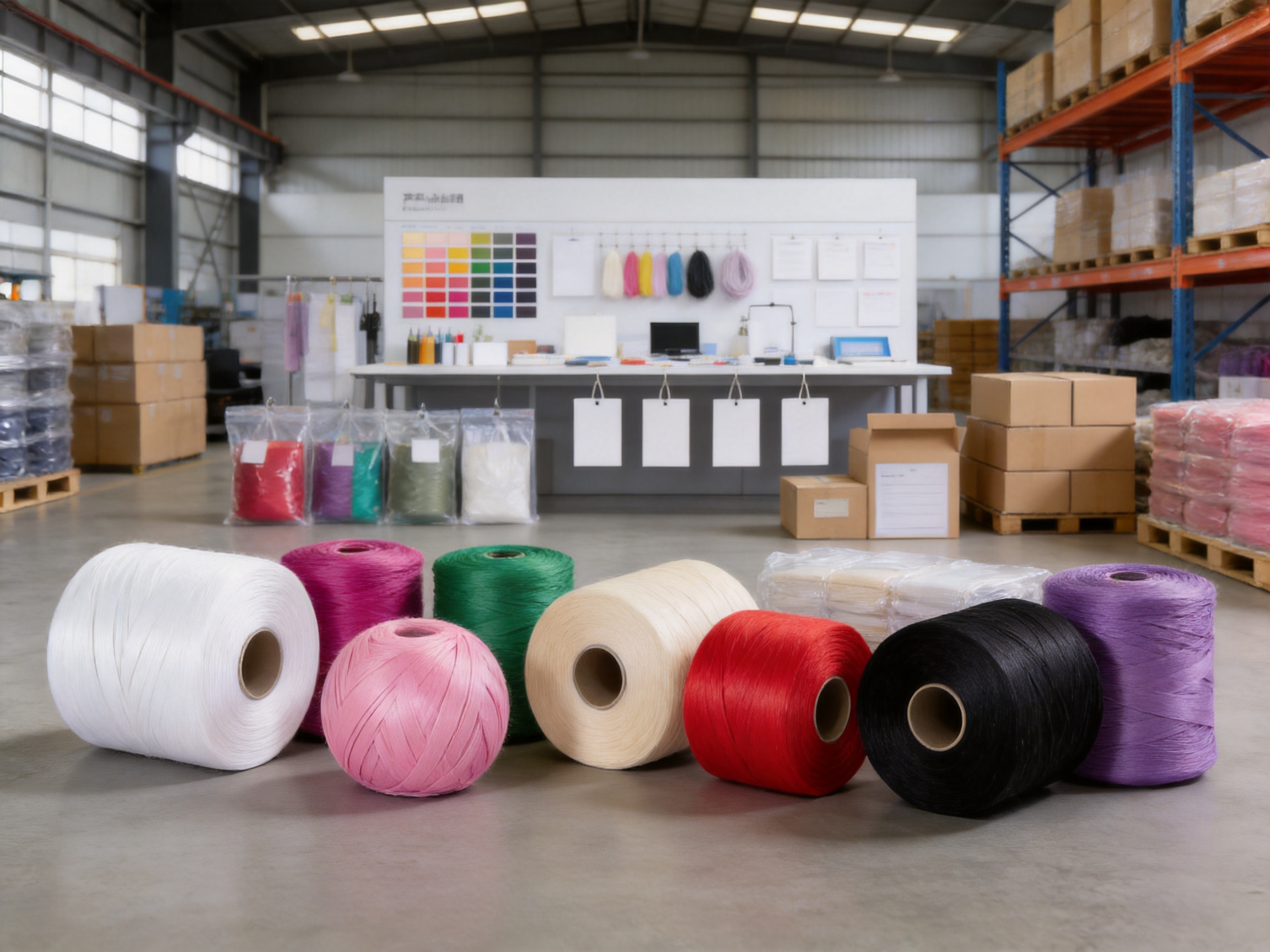
PP raffia yarn is a versatile synthetic fiber material developed for applications that require strength, flexibility, moisture resistance, and reliable production performance. Manufactured from polypropylene, this type of raffia yarn provides a practical alternative to natural raffia and other plant-based fibers when products must withstand outdoor conditions, repeated handling, long-distance shipping, or long-term storage. Its low weight, stable color, and adaptable structure make it suitable for packaging, shopping bags, gardening products, decorative wrapping, craft kits, retail materials, and industrial supply programs.
For buyers, the value of PP raffia yarn extends beyond the basic yarn itself. The most dependable supply programs combine consistent raw materials, accurate slitting, controlled twisting, flexible winding formats, precise color management, suitable packaging, and responsive customization. A manufacturer with integrated production capabilities can help customers move from an initial sample to a repeatable commercial SKU while maintaining stable quality across large orders.
This article examines the material characteristics, construction options, applications, packaging formats, customization services, and manufacturing strengths associated with PP raffia yarn. It also explains why a professionally managed production system can provide important advantages over low-cost, inconsistent, or purely decorative alternatives.
Understanding PP Raffia Yarn
PP raffia yarn is a synthetic yarn made from polypropylene, commonly abbreviated as PP. Polypropylene is a lightweight thermoplastic polymer known for its low moisture absorption, chemical stability, and useful balance of strength and flexibility. When processed into thin strips, tapes, or twisted strands, it can be converted into raffia-style yarn for weaving, tying, wrapping, decorating, and craft applications.
Unlike natural raffia fibers, which are obtained from plant leaves and may vary in texture, moisture content, color, and tensile behavior, polypropylene yarn can be engineered to meet defined production requirements. Thickness, width, twist, weight, color, winding method, and packaging can all be adjusted according to the intended use. This makes synthetic raffia yarn particularly useful for businesses that need repeatable output across multiple production batches.
The yarn can be supplied as a flat single strip, a twisted double-ply structure, or a reinforced multi-ply construction. Each structure produces a different combination of softness, flexibility, bulk, strength, and visual effect. A flat yarn may be preferred for decorative wrapping and delicate weaving, while a multi-ply yarn may be better suited to shopping bags, plant support, or applications involving frequent pulling and handling.
Because polypropylene is naturally resistant to water absorption, PP raffia yarn is suitable for many environments where paper, cotton, or untreated natural fiber could weaken. It is not intended to replace every natural material, especially where a biodegradable or organic appearance is essential. However, for industrial supply, outdoor use, cost-sensitive manufacturing, and products requiring stable performance, it offers significant practical advantages.
Core Advantages of PP Raffia Yarn
Waterproof and Moisture-Resistant Performance
One of the most important advantages of PP raffia yarn is its resistance to water and moisture. Polypropylene does not readily absorb water, so the yarn can retain its basic structure when exposed to humid storage conditions, splashes, light rain, or damp environments. This characteristic is valuable for gardening materials, outdoor craft products, woven shopping bags, plant tying systems, and packaging used in regions with high humidity.
Moisture resistance also helps reduce the risk of performance changes during transportation and warehousing. Paper-based or natural fiber products may become soft, distorted, or damaged when stored in unsuitable conditions. PP raffia yarn is more stable, provided that the finished product is correctly packaged and protected from excessive heat, sharp abrasion, and prolonged ultraviolet exposure where relevant.
High Tensile Strength
PP raffia yarn offers a useful strength-to-weight ratio. Its strands can be pulled, twisted, woven, and handled repeatedly without breaking easily when the correct specification is selected. This makes it suitable for tote bags, plant ties, decorative bundling, craft construction, and other products that require more than a purely visual material.
Strength depends on several factors, including the thickness of the strip, the number of plies, twist level, processing quality, and the intended load. A professional manufacturer can recommend a suitable construction rather than applying one yarn type to every project. This approach helps customers avoid problems such as excessive stiffness in a decorative product or insufficient strength in a reusable bag.
Lightweight Structure
Polypropylene raffia yarn is lightweight compared with many traditional fibers and heavier synthetic materials. Lower material weight can reduce shipping costs, simplify handling, and support more compact retail packaging. For international buyers, this benefit can be especially meaningful when products are shipped in large quantities or sold through cross-border e-commerce channels.
A lighter yarn can also make finished craft and packaging products easier for consumers to handle. Gift wrapping, decorative baskets, small woven accessories, and DIY kits can remain attractive without becoming unnecessarily heavy. For industrial customers, reduced weight may improve production efficiency and lower the total cost of packaging and distribution.
Resistance to Mildew
Moisture-resistant synthetic yarn is generally less favorable to mildew growth than many untreated natural fibers. This does not mean that finished products should be stored in wet or poorly ventilated conditions. However, PP raffia yarn provides an additional level of stability for products kept in warehouses, shipping containers, gardening environments, or seasonal storage.
For retailers and importers, reduced moisture sensitivity can help minimize quality claims caused by dampness during transportation. Proper export cartons, moisture protection, ventilation, and warehouse management remain essential, but the material itself provides a strong foundation for reliable storage.
Stable Color and Visual Consistency
PP raffia yarn can be manufactured in a broad range of colors, including customer-specific shades. Stable coloration is important for brand packaging, seasonal collections, retail craft displays, and coordinated product lines. Consistent color matching helps ensure that yarn supplied at different times remains visually compatible with earlier batches.
Full-color customization can support corporate colors, holiday palettes, children’s craft programs, event themes, and private-label packaging systems. Color stability also improves the appearance of finished goods when several rolls, balls, or bundles are used in the same product.
Cost Efficiency for Mass Production
For customers purchasing commercial volumes, PP raffia yarn can provide a practical balance between performance and cost. Its lightweight structure, efficient processing, and compatibility with automated or semi-automated production can support competitive unit economics. The material is especially useful when buyers need large quantities with consistent specifications rather than small amounts of irregular natural fiber.
Cost efficiency should be evaluated across the entire supply chain rather than by comparing the price of one kilogram of yarn alone. Stable quality can reduce production interruptions, sorting labor, rework, packaging waste, and customer complaints. A reliable manufacturer may therefore provide a lower total cost even when its initial quotation is not the cheapest available.
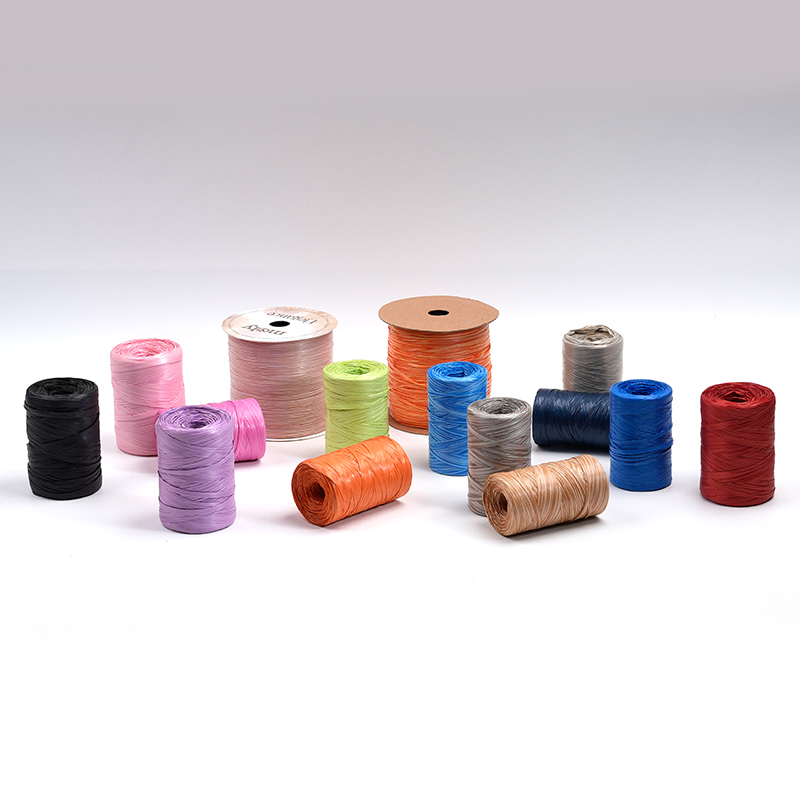
PP Raffia Yarn
Yarn Structures for Different Product Requirements
Flat Single Yarn
Flat single yarn is a lightweight and flexible structure made from a single raffia strip or strand. It is often selected for fine weaving, decorative wrapping, gift presentation, and craft projects where flexibility and surface appearance are more important than maximum tensile strength.
The flat profile can create an attractive ribbon-like effect. It may also be easier to arrange around gift boxes, baskets, floral designs, and seasonal decorations. Depending on the width and thickness, flat yarn can be folded, braided, looped, or combined with other decorative materials.
For retail craft products, flat single yarn can be wound into compact balls, egg rolls, display coils, or segmented multi-color sets. These formats make the product approachable for consumers and provide convenient options for gift shops, craft stores, online marketplaces, and DIY subscription boxes.
Double-Ply Twisted Yarn
Double-ply twisted yarn combines two strands to create a balanced structure with improved strength and flexibility. It is suitable for general-purpose packaging, DIY products, decorative tying, and standard craft applications. The twisting process can provide a more dimensional appearance than a single flat strip while helping the yarn resist separation during use.
This construction is often a useful middle option for buyers who need more durability than a single yarn but do not require a heavy-duty reinforced product. It can be supplied in multiple colors, custom weights, and different twist levels. The final specification can be adjusted to achieve a softer hand feel, a tighter visual texture, or a firmer construction.
Multi-Ply Reinforced Yarn
Multi-ply reinforced yarn is designed for applications that demand higher strength and greater resistance to repeated handling. Several strands are combined through controlled twisting or bundling to create a more robust structure. Typical uses include woven tote bags, reusable shopping bags, heavier decorative products, plant support systems, industrial bundling, and construction-related packaging.
Although multi-ply yarn may be heavier and less delicate than a flat single yarn, it can provide greater reliability when products are pulled, tied, loaded, or transported repeatedly. Correct engineering is important because excessive twist or bulk could make the yarn difficult to process. Manufacturers should therefore evaluate the required load, weaving method, machine speed, and final product dimensions before confirming the specification.
Comparison with Natural Raffia and Other Materials
Natural raffia has a distinctive organic appearance and is valued for handmade products, traditional crafts, and environmentally themed designs. Its natural texture can be a major selling point. However, natural fibers may vary between harvests and can be more sensitive to moisture, mildew, breakage, and changes in flexibility. They may also require additional sorting and conditioning before use.
PP raffia yarn provides a more uniform industrial alternative. Its width, thickness, color, twist, and weight can be defined more precisely. This consistency is valuable for businesses that must produce the same product repeatedly or comply with retail packaging requirements. It also enables better inventory planning because replacement orders can follow an established specification.
Paper raffia yarn and paper-based decorative materials offer a natural visual effect and can be appropriate for gift packaging, floral presentation, and eco-positioned product lines. Nevertheless, paper products may be more vulnerable to water, tearing, and deformation. PP raffia yarn is often selected when durability and moisture resistance are more important than a paper-like texture.
Cotton and other textile yarns can provide softness and a traditional fabric feel, but they may absorb moisture and carry a higher material weight. They can also require different production equipment and finishing processes. PP raffia yarn is preferred when a customer needs a lightweight, water-resistant, color-consistent material that remains economical for large-scale supply.
| Material or Structure | Main Strength | Typical Limitation | Recommended Uses |
|---|---|---|---|
| PP flat single yarn | Lightweight, flexible, decorative | Lower strength than reinforced constructions | Wrapping, fine weaving, craft kits |
| PP double-ply twisted yarn | Balanced strength and flexibility | Moderate bulk and processing requirements | DIY products, standard packaging, tying |
| PP multi-ply reinforced yarn | High strength and durability | Heavier and less delicate | Tote bags, plant support, industrial bundling |
| Natural raffia | Organic appearance and handmade character | Variable moisture and quality performance | Traditional crafts and natural-style products |
| Paper raffia | Paper-like visual effect and decorative appeal | Lower water resistance | Gift packaging and dry decorative use |
| Cotton yarn | Soft textile feel | Moisture absorption and higher weight | Textile crafts and soft-touch applications |
The best choice depends on the product objective. Buyers should consider appearance, tensile requirements, moisture exposure, packaging format, machine compatibility, storage conditions, customer expectations, and target price before selecting a yarn.
Applications Across Multiple Industries
Woven Shopping Bags and Tote Bags
PP raffia yarn is widely used in reusable shopping bags, promotional totes, market bags, beach bags, and lightweight storage baskets. The yarn can be woven into attractive patterns while offering resistance to moisture and everyday handling. Multi-ply constructions are generally more appropriate for bag handles, structural sections, or products expected to carry heavier loads.
For retailers and promotional product companies, the yarn can be produced in custom brand colors and supplied with private-label packaging. The ability to coordinate yarn color with printed logos, labels, hang tags, and retail cartons supports a unified product presentation.
Gardening and Plant Support
Gardening applications often expose materials to humidity, soil contact, watering, and outdoor handling. PP raffia yarn can be used for plant tying, vine support, bundling, nursery organization, and decorative garden construction. Its moisture resistance helps it remain functional in conditions where untreated paper or natural fibers may deteriorate more quickly.
The correct softness and thickness are important for gardening because a yarn that is too rigid may damage delicate stems, while a yarn that is too thin may not provide enough support. Customized twisting, width, and weight can help match the material to the plant type and use method.
Gift Packaging and Decorative Wrapping
PP raffia yarn can add texture, color, and volume to gift boxes, hampers, bottles, floral arrangements, and seasonal packages. Flat single yarn is particularly useful for ribbon-like wrapping, while twisted yarn creates a fuller handmade appearance. Multiple colors can be combined for holiday themes, birthdays, weddings, promotional events, and luxury presentation.
For packaging companies, the yarn can be supplied in retail-friendly coils, compact balls, or bulk industrial formats. The selected winding shape influences display quality, dispensing convenience, product recognition, and carton utilization.
DIY Craft Kits
DIY craft businesses require materials that are visually attractive, easy to use, safe to package, and consistent from kit to kit. PP raffia yarn can be included in basket-making sets, decorative weaving kits, gift-wrapping kits, floral projects, party decorations, and seasonal craft boxes.
Multi-color segmented winding is especially suitable for DIY kits. Two to six colors can be combined into one packaged unit, allowing the consumer to access a coordinated palette without purchasing separate rolls. This format can increase perceived value and simplify inventory for e-commerce sellers.
Retail Craft Material Supply
Craft stores and online retailers need products that are easy to display and understand. Hanging card packaging, transparent OPP bags, color labels, barcode areas, and compact winding formats can help PP raffia yarn perform well in retail environments. Clear specifications, color names, weight information, and application suggestions further improve the customer experience.
Retail supply programs may include different weights, mixed-color assortments, seasonal colors, and private-label packaging. A manufacturer capable of handling multiple SKU configurations can support product line expansion without requiring a completely new supplier for every variation.
Seasonal Decorations and Event Styling
PP raffia yarn can be used in holiday displays, party decorations, wedding styling, retail window decoration, event backdrops, and themed gift presentation. Its broad color range and flexible structure allow designers to create bows, bundles, garlands, hanging elements, table decorations, and decorative accents.
For event and seasonal supply, delivery timing is often as important as product quality. Early sampling, confirmed production schedules, standardized color records, and export-ready packaging help reduce the risk of missing a selling season.
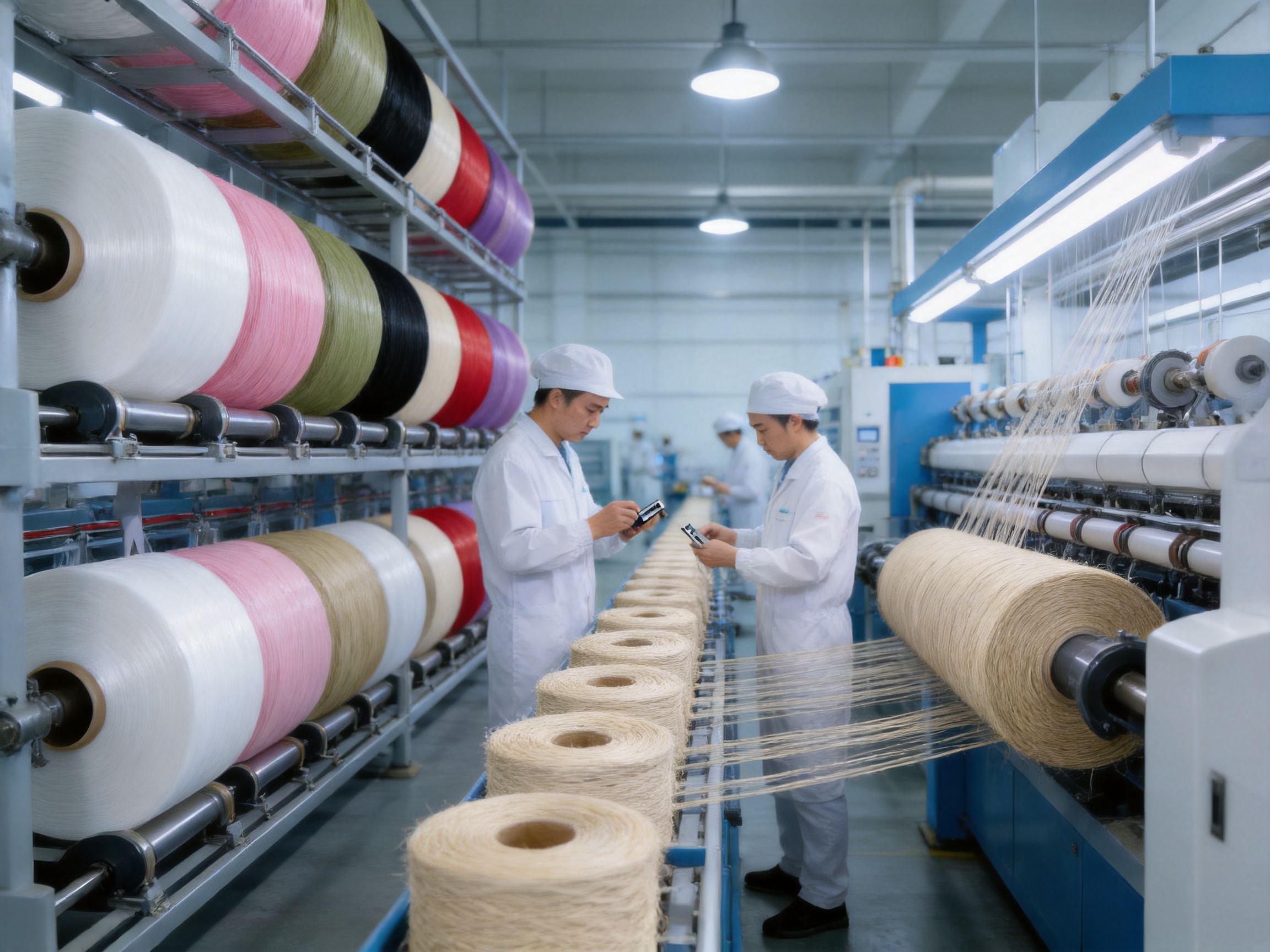
Packaging Options for Different Sales Channels
Retail Packaging
Retail packaging commonly includes 50-gram or 100-gram OPP bags, sometimes combined with hanging cards or printed labels. This format is suitable for supermarkets, craft stores, gift shops, and online product listings. The transparent bag allows customers to see the color and texture, while the card provides space for branding, usage instructions, barcodes, and product information.
Retail packaging should protect the yarn from dust, moisture, compression, and tangling. Winding tension must be controlled so that the product remains neat without becoming difficult to unwind. The package should also be designed to balance shelf visibility with efficient carton packing.
DIY Kit Packaging
DIY kit packaging may use segmented winding, individual color compartments, printed boxes, resealable bags, or customized sets. Multi-color products can be designed around a specific craft project or seasonal theme. Instructions, color references, and project accessories can be added according to the customer’s requirements.
For cross-border e-commerce, packaging should be compact, durable, and suitable for parcel transportation. Strong outer cartons and clear SKU identification help reduce fulfillment errors. Customized packaging may include multilingual labels, private-label tags, product inserts, and platform-specific requirements.
Custom Branding
Private-label services can include logo printing, custom tags, color boxes, retail cartons, stickers, instruction cards, and complete packaging systems. The purpose is not simply to place a logo on a bag. Effective branding requires coordinated color, typography, product naming, package dimensions, and product information.
An integrated manufacturer can help customers develop a packaging solution that matches their market position. A premium gift brand may require rigid boxes and refined color coordination, while a high-volume craft retailer may prioritize compact packaging, clear labeling, and efficient carton loading.
Industrial Winding Formats
Winding format affects product appearance, storage density, dispensing convenience, and production efficiency. PP raffia yarn can be supplied in several forms to suit retail, manufacturing, and bulk distribution requirements.
Egg Roll Coil
The egg roll coil is a retail-friendly format with a compact, recognizable shape. It can be displayed attractively and handled easily by consumers. This form is suitable for craft stores, gift shops, small packaging departments, and online retail orders.
Tube Coil
A tube coil is commonly used in factory production. The central tube supports stable unwinding and can be compatible with holders, winding equipment, or low-speed industrial knitting machines. It is useful when a customer requires a consistent feed during repeated production operations.
Rugby Ball Coil
The rugby ball coil offers an ergonomic shape for larger items. Its rounded profile can make handling more comfortable while providing a practical way to store a larger quantity of yarn. This format may be used in workshops, production rooms, and larger craft supply programs.
Display Ball Coil
A display ball coil is intended to present the material attractively in retail or showroom environments. Its shape communicates volume and color while allowing the yarn to function as both a product and a visual merchandising element.
Hollow Bulk Coil
The hollow bulk coil is designed for industrial raw material supply. It can provide a higher quantity in a space-efficient form and may be suitable for customers who process the yarn into bags, woven products, or other manufactured goods.
Bundled Packaging
Bundled packaging is appropriate for bulk and construction-related use. Multiple coils or strands can be grouped together and protected with outer film, cartons, or reinforced packaging. Weight and bundle dimensions can be customized to match the buyer’s handling equipment and warehouse system.
All of these winding formats can support custom weights and OEM packaging. The choice should be based on the buyer’s production equipment, sales channel, required quantity, storage plan, and preferred method of dispensing.
Blended Yarn Options
PP raffia yarn can also be combined with other fibers to create a special visual effect or modify performance. Blending should be developed through sampling because the ratio of each component affects softness, strength, appearance, winding behavior, and cost.
PP and Polyester
A PP and polyester blend can provide improved durability and a balanced cost structure. Polyester may contribute additional dimensional stability and surface characteristics, while polypropylene maintains low weight and moisture resistance. This combination can be considered for products that require a more refined appearance or stronger repeated-use performance.
PP and Metallic Yarn
Metallic yarn can be added to PP raffia for festive, decorative, and premium applications. The metallic component creates sparkle and visual contrast in gift packaging, holiday decorations, event styling, and specialty craft products. Careful processing is needed to prevent excessive roughness or breakage during winding and use.
PP and Feather Fiber
A PP and feather fiber combination can create a softer, fuller, or more tactile DIY product. This type of blend is useful when visual volume and touch appeal are important. It may be selected for decorative gift sets, novelty craft materials, and premium handmade-style products.
Custom ratios and samples allow buyers to evaluate the blend before placing a commercial order. Testing should consider color compatibility, tensile behavior, shedding, winding stability, packaging appearance, and the requirements of the final application.
Manufacturing Process and Quality Control
The performance of PP raffia yarn depends heavily on how it is manufactured. A strong product concept can fail if raw materials are inconsistent, slitting is inaccurate, twist is unstable, or winding tension is poorly controlled. An integrated factory is therefore an important advantage for buyers who need repeatable quality and dependable delivery.
Raw Material Preparation
Production begins with the selection and preparation of polypropylene raw material. Material choice influences color, strength, flexibility, processing stability, and final appearance. Standardized incoming inspection helps ensure that the production line starts with material that meets the intended specification.
Colorants and additives, where required, should be managed according to approved formulas and production records. Consistent material preparation supports more reliable color matching and reduces variation between batches.
Slitting and Width Control
Slitting converts the material into narrow strips or tapes suitable for raffia yarn production. Accurate slitting is essential because variations in width can affect the finished yarn’s appearance, strength, twisting behavior, and unwinding performance.
Modern slitting equipment and standardized operating procedures help maintain uniform dimensions. Operators and quality personnel can monitor edge quality, strip width, surface condition, and production speed. Consistent slitting is particularly important for machine use and large-scale weaving, where irregular strips may cause interruptions.
Twisting and Structure Formation
Twisting determines how individual strips are combined and how the finished yarn behaves. The factory can adjust twist level, ply count, direction, and structure according to the customer’s specification. Controlled twisting produces a more stable yarn with fewer loose sections, uneven areas, or unexpected changes in bulk.
Different structures require different processing settings. Flat single yarn should preserve flexibility and visual flatness, while double-ply and multi-ply products must achieve a secure combination without becoming excessively stiff. Process records help reproduce approved samples in future orders.
Winding and Forming
Winding converts the yarn into a usable commercial format. Tension, speed, coil density, and shape must be controlled to prevent tangling, loose layers, crushing, and uneven unwinding. The selected format may be an egg roll coil, tube coil, rugby ball coil, display ball coil, hollow bulk coil, or bundled package.
Accurate winding also improves packing efficiency. Uniform coils are easier to count, weigh, label, stack, and place into export cartons. This reduces handling time and supports better warehouse organization for both the manufacturer and the buyer.
Quality Testing
Quality control can include checks for weight, width, thickness, tensile behavior, twist consistency, color, surface condition, winding stability, packaging integrity, and label accuracy. The specific inspection plan should reflect the product application and customer requirements.
For a long-term supply program, approved samples and documented specifications are especially valuable. They create a reference point for later production and help both parties identify whether a variation is within the agreed range.
Compression and Export Packaging
Finished products may be compressed or packed to improve carton utilization while protecting the yarn from dust and moisture. Export packaging can include PE film, reinforced corrugated cartons, moisture-proof cartons, color boxes, retail cartons, and palletized shipment for full-container-load transportation.
Shipping marks, carton labels, barcode information, and customer-specific packaging instructions can be incorporated into the packing process. Good export preparation reduces damage, identification errors, and delays during international distribution.
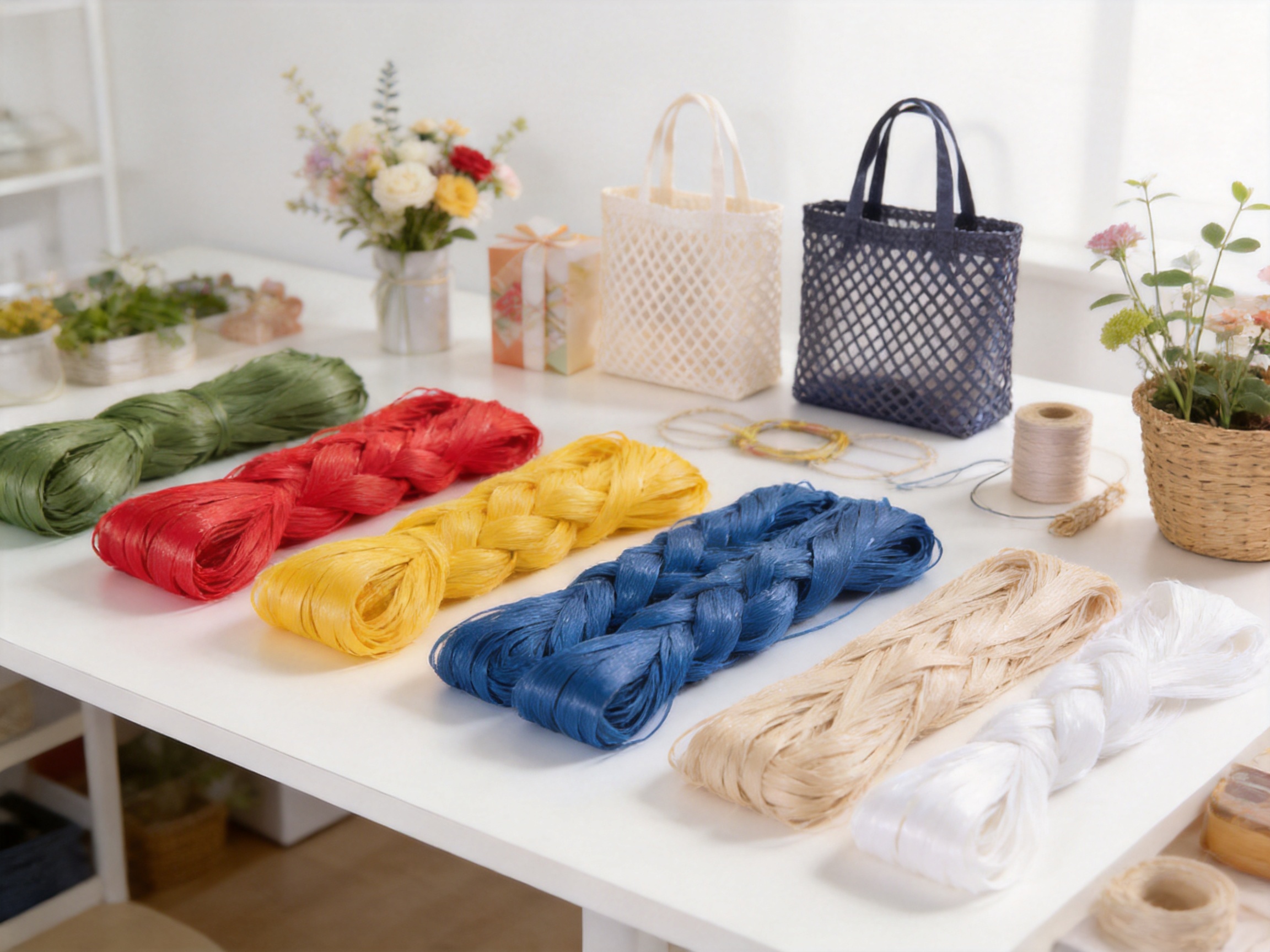
Integrated Manufacturing Strengths
A professional production partner should offer more than equipment. The most valuable capability is an integrated system connecting raw material processing, mass production, quality testing, packaging, and shipment. This reduces dependence on multiple subcontractors and gives the buyer a clearer point of responsibility.
The manufacturer described in the supplied company information was founded in 2014 and developed from a craft materials business unit established in 2010. This background provides more than ten years of industry experience in raffia paper products, fancy paper yarns, slitting, twisting, winding, and compression packaging.
Its production base is located in Dongyang, Zhejiang Province, and covers approximately 20,000 square meters. With more than 200 professional employees, the facility is organized to support standardized production procedures and repeatable quality control. The reported annual production capacity exceeds 200 million pieces, allowing the company to serve both regular retail orders and larger international supply programs.
An integrated manufacturing chain supports control over raw material processing, production scheduling, quality inspection, finished-goods packaging, and shipment preparation. This is particularly useful when a customer requires several yarn structures, multiple colors, different winding formats, or a combination of retail and bulk packaging.
Large-scale capacity can also improve supply continuity. Buyers working with seasonal products or rapidly growing e-commerce sales need a manufacturer that can respond to increased demand without changing the approved material or outsourcing production to unknown facilities. Stable equipment, trained personnel, documented procedures, and production planning all contribute to better continuity.
Customization and OEM Development
PP raffia yarn can be customized in several ways. Yarn thickness and weight may be adjusted to suit the final product. Twist level and ply structure can be modified to provide a softer, firmer, flatter, or stronger result. Full Pantone color matching supports branded product lines and coordinated collections.
Packaging customization may include OPP bags, hanging cards, printed labels, color boxes, retail cartons, bulk cartons, pallet configurations, and private-label systems. Customers can also request logo printing, product inserts, barcode areas, multilingual information, and e-commerce-ready SKU designs.
Sampling is an essential part of customization. A sample allows the buyer to examine color, hand feel, flexibility, tensile behavior, winding shape, package size, and visual compatibility with the finished product. The stated sampling lead time is approximately seven to fifteen days, depending on the complexity of the requested development.
Good sample management requires clear communication. Buyers should provide intended application, target weight, desired color, package dimensions, estimated order quantity, machine requirements, and delivery destination. The manufacturer can then recommend a suitable construction and identify potential production issues before mass manufacturing begins.
OEM and ODM cooperation can extend beyond a single yarn specification. A customer may develop a complete product series including yarn, decorative accessories, gift packaging, craft kits, retail labels, and seasonal assortments. A supplier capable of handling these connected requirements can shorten development time and help maintain consistent visual quality across the range.
Export and Global Supply Support
International buyers require more than a product that performs well in a factory test. They also need secure packaging, clear documentation, predictable lead times, and communication throughout the order process. Export-ready production should consider the conditions products may experience during loading, sea or air transportation, customs handling, warehousing, and final delivery.
Moisture-proof export cartons and PE film help protect the yarn during transportation. Reinforced corrugated cartons provide structural support, while palletized shipments improve handling efficiency for full-container-load orders. Shipping marks and carton labels can be customized to match the customer’s logistics system.
Customers in Europe, North America, South America, Asia, and other regions may have different expectations regarding packaging, labeling, documentation, and delivery. A manufacturer with experience in global retail supply chains can help identify these requirements at an early stage.
Long-term supply also benefits from production records, approved samples, repeat color references, and planned capacity allocation. These systems reduce the chance that a repeat order will differ significantly from the original shipment. They are especially important for brands that sell the same craft kit or packaging product throughout the year.
Sustainability and Responsible Material Selection
PP raffia yarn should be evaluated responsibly according to the full application and product life cycle. Its long service life, low weight, and resistance to moisture can reduce replacement frequency and transportation weight in some products. Durable reusable bags, long-lasting garden ties, and stable packaging materials may provide practical resource benefits compared with products that fail quickly.
At the same time, polypropylene is a synthetic polymer and should be managed through appropriate waste reduction, reuse, recycling, and responsible disposal practices. Buyers can reduce unnecessary material consumption by selecting the correct yarn weight, optimizing packaging dimensions, and designing products for repeated use.
Manufacturing efficiency also contributes to responsible production. Accurate slitting, controlled winding, careful color management, and quality inspection can reduce offcuts, defective goods, packaging waste, and rejected batches. Integrated production helps the factory monitor these processes more effectively.
Customers seeking sustainability-oriented product lines should discuss recycled content, packaging reduction, recyclable packaging, production waste management, and end-of-life considerations with the manufacturer. The best solution depends on the final application and the customer’s market requirements.
How to Select the Correct PP Raffia Yarn
Define the Final Application
Start by identifying whether the yarn will be woven, tied, wrapped, knitted, bundled, or used as a decorative accent. A shopping bag, gift package, garden tie, and craft kit will not require the same structure. The final application determines the necessary balance between flexibility, strength, surface appearance, and cost.
Choose the Required Strength
Light decorative work may use a flat single yarn, while products exposed to pulling or loading may require double-ply or multi-ply construction. Buyers should explain the expected handling conditions and, where possible, provide a sample of the finished product or a description of the required load.
Confirm Color and Surface Effect
Color requirements should be documented through a physical reference, approved color card, Pantone reference, or previous production sample. Buyers should also describe whether they want a matte, glossy, metallic, natural-style, smooth, or textured effect.
Select the Winding Format
Retail customers may prefer egg roll or display ball coils, while factories may need tube coils or hollow bulk coils. The selected format should be compatible with the buyer’s equipment, shelf presentation, storage method, and distribution channel.
Plan Packaging Early
Packaging affects cost, lead time, carton quantity, shipping volume, and product presentation. It should be developed alongside the yarn specification rather than after production is complete. Early packaging planning also allows the manufacturer to confirm label size, logo placement, bag dimensions, and carton requirements.
Request a Pre-Production Sample
A sample is the best way to confirm that the yarn meets practical expectations. Test the sample in the intended production method, such as weaving, tying, wrapping, or machine feeding. Check whether the yarn unwinds smoothly, maintains color, provides adequate strength, and fits the planned package.
Q&A: Common Questions About PP Raffia Yarn
Is PP raffia yarn suitable for outdoor use?
Yes. PP raffia yarn is waterproof, moisture-resistant, and resistant to mildew, making it suitable for many outdoor and gardening applications. It can be used for plant tying, support systems, outdoor craft products, and reusable bags. The finished product should still be protected from prolonged extreme heat, sharp abrasion, and excessive ultraviolet exposure when these conditions are expected.
How does PP raffia yarn differ from natural raffia yarn?
PP raffia yarn is manufactured from polypropylene and offers more consistent dimensions, color, moisture resistance, and industrial repeatability. Natural raffia provides an organic appearance and natural fiber character but may show greater variation and sensitivity to humidity. The appropriate choice depends on whether the priority is industrial stability or natural visual appeal.
Can PP raffia yarn be supplied for long-term projects?
Yes. Stable bulk supply and OEM cooperation are available for customers with repeat orders or long-term product programs. Approved samples, documented specifications, planned capacity, and consistent packaging help maintain continuity across multiple shipments.
Can PP raffia yarn be used on machines?
Yes. It can be suitable for low-speed industrial knitting machines and other production equipment when the yarn structure, thickness, winding format, and tension are correctly matched to the machine. Buyers should provide equipment information and conduct a sample test before confirming mass production.
Can the color be customized?
Yes. Full-color customization and brand-specific colors are available. Buyers can use Pantone references, physical samples, color cards, or previously approved production standards. A pre-production sample is recommended because the final appearance can be influenced by yarn structure, lighting, package material, and the finished application.
What is the minimum order quantity?
The minimum order quantity depends on the specification, color, winding format, and packaging requirements. Sample orders are supported, allowing buyers to evaluate the product before committing to a larger order. Customers should provide their estimated volume so the manufacturer can recommend a suitable development and quotation plan.
What packaging methods are available?
Available options include 50-gram or 100-gram OPP bags, hanging card packaging, multi-color DIY kits, color boxes, retail cartons, moisture-proof export cartons, PE film, reinforced corrugated cartons, palletized shipments, and bulk bundled packaging. Custom branding and private-label systems can also be developed.
How long does sampling take?
The stated sampling lead time is approximately seven to fifteen days. The actual time may depend on color matching, special blends, winding format, packaging artwork, and the complexity of the requested customization.
Can blended yarn be developed?
Yes. Options include PP combined with polyester for durability and cost efficiency, PP combined with metallic yarn for festive decoration, and PP combined with feather fiber for a softer premium effect. Custom ratios and samples can be evaluated before production.
What information should be provided when requesting a quotation?
Buyers should provide the intended application, yarn structure, approximate thickness or weight, color requirements, winding format, packaging method, logo or private-label needs, estimated quantity, destination country, and desired delivery schedule. More complete information allows the manufacturer to recommend a more accurate specification and provide a more reliable quotation.
Why a Specialized Manufacturer Matters
PP raffia yarn may appear simple, but consistent commercial production requires control at every stage. An inexperienced supplier may offer a low price while producing irregular widths, unstable twist, inconsistent color, weak winding, or unsuitable packaging. These problems can create hidden costs throughout the buyer’s operation.
A specialized manufacturer can combine technical knowledge with practical product development. It can recommend the correct yarn structure, prepare samples, adjust color, select a winding format, design packaging, and organize export shipment. Integrated control also makes it easier to investigate and correct quality issues if they occur.
The manufacturing organization described in the supplied information has experience in raffia paper products, paper yarns, fancy yarns, slitting, twisting, winding, and compression packaging. Its facility, workforce, production capacity, integrated process, and international market experience provide a foundation for supporting both standard PP raffia yarn and customized OEM projects.
For buyers, the strongest partnership is one that combines material performance, production capacity, quality consistency, flexible customization, export readiness, and long-term communication. These factors are more important than a short-term price comparison because they influence the reliability of the entire product supply chain.
Conclusion
PP raffia yarn is a practical synthetic material for businesses seeking lightweight strength, moisture resistance, stable color, flexible construction, and cost-efficient supply. Its applications range from woven shopping bags and gardening products to gift packaging, DIY craft kits, retail materials, and seasonal decorations.
Flat single yarn, double-ply twisted yarn, and multi-ply reinforced yarn allow the material to be adapted to different performance requirements. Retail packaging, multi-color DIY kits, industrial coils, bulk bundles, and private-label systems provide further flexibility for different sales channels and production environments.
The greatest advantages arise when the yarn is supported by a capable manufacturing system. Controlled raw material preparation, accurate slitting, stable twisting, precise winding, careful quality inspection, and export-ready packaging help ensure that the final product performs consistently. An experienced factory with integrated production, substantial capacity, OEM development, and international supply expertise can provide much more than a basic commodity yarn.
For companies developing new packaging products, craft collections, gardening supplies, or retail programs, PP raffia yarn offers a dependable platform for customization and scale. By selecting the correct structure, testing samples, confirming packaging, and working with a stable manufacturing partner, buyers can achieve attractive products with reliable performance and efficient long-term supply.
References
1. Supplied product specifications for PP Polypropylene Raffia Yarn, including material properties, yarn structures, applications, packaging formats, winding formats, blended yarn options, and customization capabilities.
2. Supplied company information for Zhejiang Raffia Paper Products Co., Ltd., including manufacturing history, production base, workforce, capacity, integrated processes, export markets, and OEM and ODM services.
3. General polymer engineering principles concerning polypropylene density, moisture resistance, tensile behavior, chemical stability, and processing characteristics.
4. General textile manufacturing principles concerning slitting, twisting, ply construction, winding tension, yarn handling, and quality control.
5. General international packaging practices concerning moisture protection, corrugated cartons, palletized shipment, shipping marks, and export preparation.
Product: PP Raffia Yarn
 +86 15355323399
 kevin@raffia-paper.com
 No. 151 Guanshan North Road, Dongyang City, Zhejiang Province, China

Copyright © Zhejiang Raffia Paper Products Co., Ltd. All Rights Reserved.

Paper Raffia Yarn & Gift Packaging Factory