
 +86 15355323399
 En
En  中文简体
中文简体 日本語
日本語 Français
 Español
 Deutsch
 Türk
Türk عربى
عربى italiano
 русский
Raffia Bow Accessories: A Reliable Decorative Solution for Gift Packaging and Floral Presentation
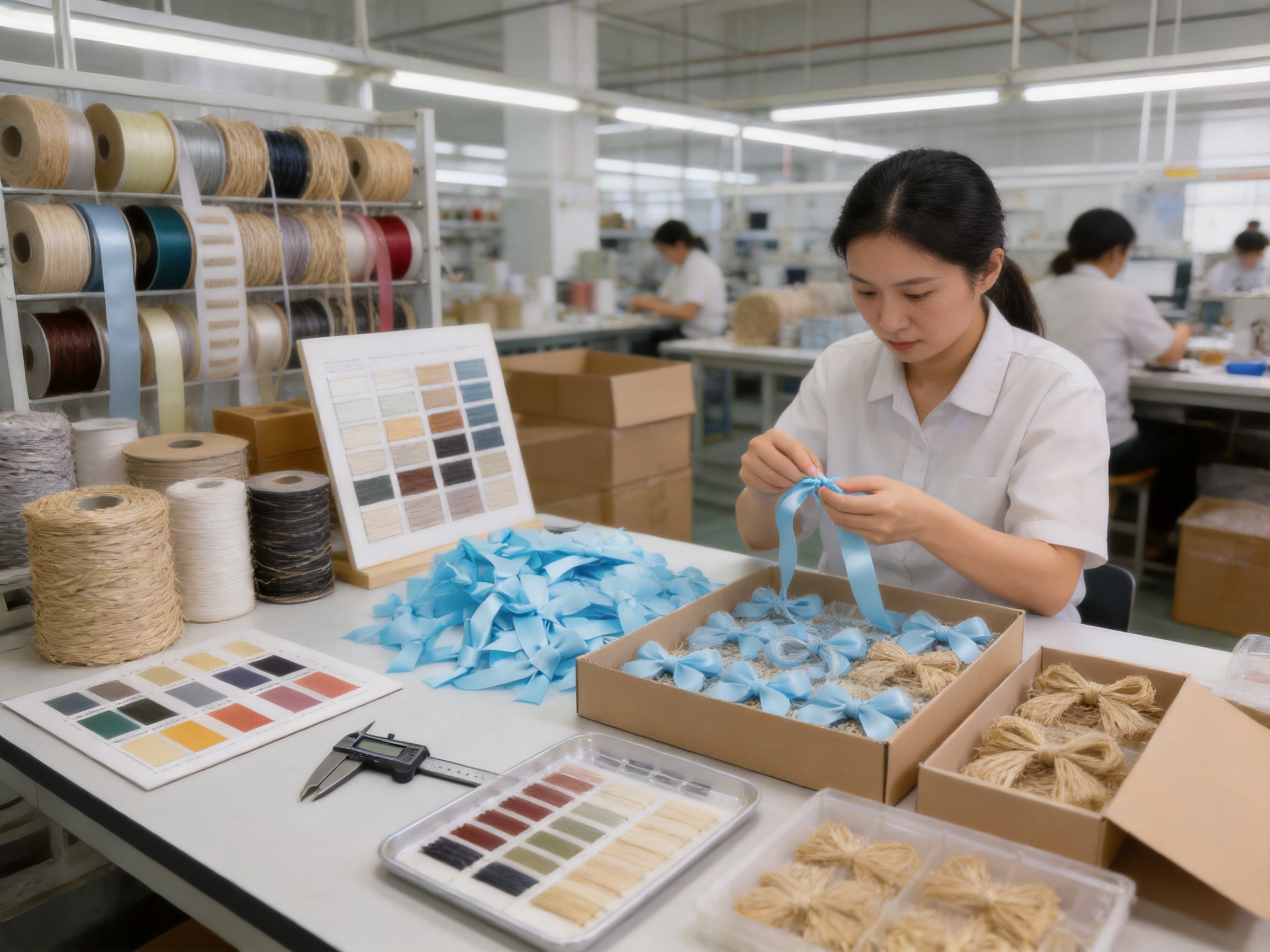
Raffia bow accessories are small decorative components with a major visual impact. Used on gift boxes, flower bouquets, retail packages, craft projects, and seasonal displays, a carefully made bow can transform ordinary packaging into a refined and memorable presentation. The right bow must do more than look attractive. It should hold its shape, remain securely assembled, coordinate with different packaging styles, and arrive in consistent condition after storage and transportation.
The raffia bow accessories introduced in this article are handmade decorative bows produced from polyester ribbon, grosgrain ribbon, and yarn ribbon. They combine the soft visual appeal of textile-based materials with a firm, three-dimensional structure. Their classic colors, printed options, and customizable tones make them suitable for a broad range of commercial and creative applications.
Unlike low-quality decorative bows that may flatten, fray, fade, or loosen during handling, these accessories are developed with attention to structure, material compatibility, finishing, and batch consistency. Their production is supported by Zhejiang Raffia Paper Products Co., Ltd., an established manufacturer with integrated capabilities in raffia paper, fancy yarn, gift packaging materials, DIY cords, and related decorative products.
What Are Raffia Bow Accessories?
Raffia bow accessories are pre-formed decorative bows designed to add a finished appearance to packages and creative products. Although the word “raffia” is commonly associated with natural raffia fibers or paper raffia, modern decorative applications often use a wider family of ribbon and yarn materials. This product uses polyester ribbon, grosgrain ribbon, and yarn ribbon to create a bow with a stable shape, attractive texture, and adaptable appearance.
The bow can be used as a ready-made embellishment instead of being tied manually during packing. This saves time for gift shops, florists, retailers, craft studios, event suppliers, and packaging companies. A ready-made accessory also supports visual consistency because each package can receive a bow with a similar shape, proportion, and color.
Depending on the design, the bow may have smooth ribbon surfaces, ribbed grosgrain details, or a more dimensional yarn-based texture. Combining several ribbon types allows manufacturers to create different visual effects without changing the basic decorative function. The result can be elegant and restrained, playful and colorful, rustic and handmade, or premium and luxurious.
The accessories are especially suitable for businesses that need decoration in repeated quantities. Handmade production gives each item a crafted appearance, while standardized procedures help maintain a dependable overall result. This balance between hand-finished character and controlled manufacturing is one of the product’s most important qualities.
Product Composition and Material Characteristics
Polyester Ribbon
Polyester ribbon is valued for its strength, color retention, and versatility. It can provide a smooth surface and a clear outline, helping the loops and tails of a bow remain visually defined. Polyester also works well in a variety of packaging environments because it is less vulnerable to ordinary handling than many delicate natural fibers.
In a decorative bow, polyester ribbon can be used as the principal structural material or as part of a layered design. Its surface may be smooth, lightly lustrous, printed, or finished in a custom tone. This makes it suitable for both everyday packaging and more distinctive seasonal collections.
Grosgrain Ribbon
Grosgrain ribbon has a characteristic ribbed texture that adds visual depth and tactile interest. The transverse ribs can help a bow appear more substantial, even when the accessory is compact. Grosgrain is widely used in gift packaging, apparel decoration, stationery, and craft production because it combines a refined appearance with good handling performance.
When used in raffia bow accessories, grosgrain ribbon introduces a structured, textile-inspired finish. It can contrast with a smooth ribbon or complement a yarn ribbon to produce a layered design. This combination is useful for brands that want packaging decoration to look carefully assembled rather than mass-produced and visually flat.
Yarn Ribbon
Yarn ribbon contributes softness, volume, and a handmade visual quality. It may be used to create a textured surface or to add an additional decorative layer to the bow. Yarn-based elements are particularly suitable for gift boxes, floral arrangements, craft packaging, and seasonal displays where a warmer and more tactile effect is preferred.
The use of yarn ribbon also expands the product’s design possibilities. It can support natural-inspired packaging, cozy holiday presentations, boutique retail displays, and handmade product branding. When combined with polyester and grosgrain ribbons, it creates contrast between smoothness, ribbing, and three-dimensional texture.
Key Product Advantages
Stable Three-Dimensional Shape
A decorative bow must retain its shape to perform its visual function. If the loops collapse or the tails become disordered, the entire package can look unfinished. These raffia bow accessories are made with a firm structure designed to remain well-shaped during normal handling, storage, and application.
The three-dimensional form gives the bow visual presence without requiring excessive size. It can stand out on a gift box or bouquet while remaining light enough for practical packaging use. The stable shape also helps businesses reduce the time spent reshaping individual pieces before application.
Reduced Risk of Loosening
One common problem with low-quality bows is that the ribbon gradually loosens at the center or the loops separate during transport. A properly assembled bow should remain secure after it has been attached to a package. The production approach used for these accessories emphasizes firm assembly and reliable shaping to reduce the possibility of unraveling.
This advantage is important for wholesalers and retailers because decorative defects can increase sorting, rework, and customer-service costs. A more dependable bow supports smoother packing operations and helps finished goods reach customers in an attractive condition.
Multiple Texture Options
The combination of smooth polyester ribbon, ribbed grosgrain ribbon, and yarn ribbon provides a broader texture range than a single-material bow. This enables packaging designers to create coordinated collections with different levels of softness, structure, sheen, and volume.
Texture is especially important in premium packaging. Consumers often judge quality through touch as well as appearance. A bow with visible dimensionality and a carefully finished surface can make a simple package feel more considered and valuable.
Classic, Printed, and Custom Colors
Color selection has a direct influence on brand identity and seasonal presentation. The product is available in classic solid colors, printed designs, and custom tones. Solid colors are useful for year-round packaging and coordinated product lines. Printed versions can support holiday themes, celebrations, promotional events, or children’s products. Custom tones can be developed to match a brand palette, collection, or campaign.
Color flexibility also benefits businesses that serve several market segments. A single bow construction can be adapted across luxury gifts, floral products, cosmetics, home décor, craft supplies, and retail packaging simply by changing the color or print treatment.
Suitable for a Wide Range of Packaging Styles
The bows can complement paper gift boxes, folding cartons, rigid boxes, kraft packaging, floral wraps, tissue paper, baskets, and decorative bags. They can be used as a central focal point, a corner accent, or part of a larger arrangement.
Because the accessories are lightweight and compact, they can be incorporated into packaging without significantly changing the package’s basic structure. This makes them practical for products that need an attractive appearance while still requiring efficient storage and shipping.
Eco-Conscious Manufacturing Considerations
The manufacturer emphasizes eco-friendly concepts and uses environmentally considerate dyeing principles for its decorative product range. The stated safety characteristics of the bows include harmless and odorless materials and dye processes intended to support safer use in packaging and craft environments.
Material selection, responsible production, efficient packaging, and controlled waste management are increasingly important to international buyers. While specific environmental requirements may vary by market, buyers can discuss material specifications, dye standards, packaging methods, and documentation during the quotation and sampling process.
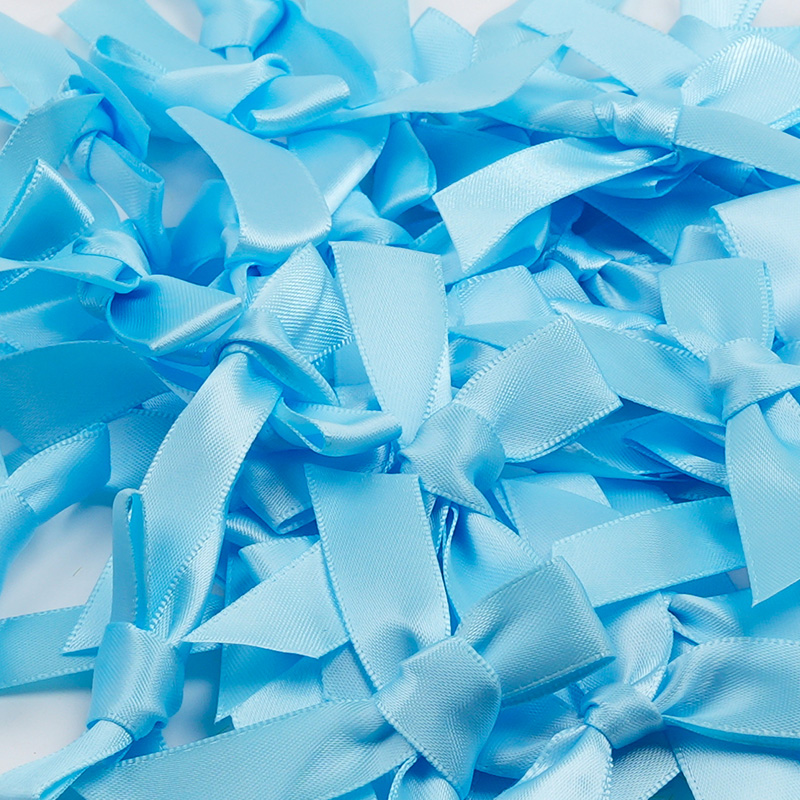
Raffia Bow Accessories
Applications in Gift Packaging
Gift Boxes and Rigid Packaging
A bow can give a gift box an immediate sense of completion. It can be attached to the lid, positioned at the center of a sleeve, or used as part of a layered paper and ribbon design. For premium products, the bow can reinforce the perception of care and presentation. For everyday products, it can add an affordable decorative upgrade without requiring a complete packaging redesign.
Raffia bow accessories are suitable for personal gifts, retail gift sets, corporate presents, holiday assortments, and promotional packages. They can be coordinated with box colors, tissue paper, labels, stickers, and printed cards to create a complete packaging theme.
Flower Wrapping and Floral Presentation
Florists and flower wholesalers often need decorative materials that are attractive but practical to handle. A pre-formed bow can be attached to bouquet paper, flower sleeves, baskets, vases, and gift arrangements. The texture of grosgrain and yarn ribbon can work particularly well with natural flowers because it adds visual softness without competing with the main floral display.
Different colors can be used to reflect flower types, holidays, wedding themes, corporate events, or customer preferences. A restrained neutral tone may suit a minimalist bouquet, while a bright printed bow can support a festive arrangement.
Retail and E-Commerce Packaging
In retail and e-commerce, packaging often serves as part of the customer experience. A well-presented parcel can encourage positive first impressions and support social-media sharing. A decorative bow can make a package look more gift-ready, helping sellers present ordinary shipping cartons, mailer boxes, or product boxes as a more thoughtful experience.
For online retailers, pre-made bows can also standardize presentation across a high volume of orders. Packing employees do not need advanced ribbon-tying skills, and the accessory can be attached according to a simple work instruction.
Seasonal and Event Decoration
Raffia bow accessories can be adapted to Christmas, Valentine’s Day, weddings, birthdays, anniversaries, graduations, baby celebrations, and corporate events. Printed ribbons and custom colors make it possible to develop a decorative series around a particular theme.
Event planners and packaging suppliers may use different sizes, patterns, and materials for reception favors, invitation boxes, table gifts, flower arrangements, and branded promotional packages. Because the bows are produced in a repeatable format, they are suitable for coordinated events requiring a consistent appearance across many items.
Craft and DIY Projects
Craft users can apply the bows to scrapbooking, handmade cards, wreaths, baskets, hair accessories, home décor, ornaments, and decorative storage boxes. The ready-made form is useful for makers who want a polished result without spending time tying and shaping every bow individually.
For craft retailers, the accessories can be sold as individual embellishments, multipacks, themed assortments, or components in DIY kits. Their range of colors and textures can help retailers create collections for different creative styles.
How the Product Compares with Ordinary Decorative Bows
Not all decorative bows provide the same level of performance. Low-cost products may use thin or poorly matched materials, weak assembly points, inconsistent dimensions, or unstable shaping. Such products can still appear attractive in a product photograph but may not perform well in actual packaging operations.
| Evaluation Area | Raffia Bow Accessories | Typical Low-Quality Alternative | Benefit for Buyers |
|---|---|---|---|
| Material combination | Polyester ribbon, grosgrain ribbon, and yarn ribbon options | Usually one thin or basic ribbon type | More texture, depth, and design flexibility |
| Shape retention | Firm, three-dimensional construction | Loops may flatten or become uneven | Better presentation after handling |
| Assembly stability | Designed to resist loosening during ordinary use | Center may open or tails may separate | Less rework and fewer presentation defects |
| Color selection | Solid, printed, and custom color possibilities | Limited standard color range | Improved seasonal and brand coordination |
| Surface appearance | Smooth, ribbed, and dimensional textures | Flat or visually inconsistent surface | More premium tactile impression |
| Production support | Integrated manufacturing and customization capabilities | Limited customization or inconsistent sourcing | More dependable supply planning |
| Application range | Gift packaging, flowers, crafts, retail, and events | Often suitable for only one basic use | One product platform can support several markets |
The comparison should not be understood as a guarantee that every alternative product has the same limitations. Rather, it identifies the performance factors buyers should examine when sourcing decorative bows. Material quality, construction, sampling, color matching, packaging, and inspection all influence the final result.
The main competitive advantage of these accessories is the combination of decorative appeal and operational reliability. A bow that looks attractive but cannot survive handling is not an efficient packaging component. Conversely, a durable bow with poor texture or limited color selection may not meet the expectations of premium packaging. The product is designed to address both sides of this requirement.
Manufacturing Capabilities Behind the Product
Integrated Material and Product Experience
Zhejiang Raffia Paper Products Co., Ltd. was founded in 2014 and originated from a craft materials business unit established in 2010. This background gives the company more than a decade of experience in decorative materials, paper raffia, yarn products, and packaging-related manufacturing.
The company developed from a trading enterprise into an integrated manufacturer. This transition is significant because it reflects the development of internal knowledge in material selection, production planning, quality control, product development, and customer service. For buyers, an integrated factory can offer more direct communication between product design and production execution.
Modern Production Base
The company operates a production base of approximately 20,000 square meters in Dongyang, Zhejiang Province, China, with more than 200 professional employees. A facility of this scale supports organized production areas, material storage, equipment management, inspection procedures, packaging operations, and order coordination.
Manufacturing scale does not replace quality control, but it can improve supply stability when supported by standardized procedures. Large and recurring orders require more than manual skill. They require production scheduling, material planning, staff coordination, process documentation, and consistent packaging and shipment systems.
Slitting, Twisting, Winding, and Compression Packaging Expertise
The company’s core technologies include slitting, twisting, winding, and compression packaging. These capabilities were developed primarily around crinkle raffia paper shreds and fancy paper yarns, but they also contribute to broader expertise in decorative material preparation and handling.
Slitting requires control over material width and edge quality. Twisting influences yarn structure, thickness, and surface appearance. Winding affects how material is stored, transported, and fed into later production. Compression packaging helps optimize volume and shipment efficiency while protecting the product from unnecessary movement.
For raffia bow accessories, this process knowledge supports better control of ribbon and yarn preparation. Consistent material dimensions and organized handling can improve the uniformity of finished bows. It can also make it easier to repeat a design across multiple batches.
Standardized Production Procedures
Handmade appearance does not have to mean uncontrolled production. The manufacturer uses standardized procedures and a strict, replicable quality control system. A standardized workflow may include material inspection, color confirmation, cutting or preparation, bow formation, fastening, shaping, visual inspection, packing, and final shipment checks.
Each stage has a practical purpose. Material inspection helps identify defects before assembly. Color confirmation helps reduce variation between approved samples and mass production. Forming and fastening determine whether the bow remains stable. Final inspection helps identify loose threads, irregular loops, visible stains, inconsistent color, and packaging issues.
Standardization is especially valuable for wholesale customers. A buyer may order the same accessory repeatedly over several months or years. Consistent procedures help reduce differences between production batches, although buyers should still approve samples and specify tolerances for important projects.
Quality Testing and Finished-Goods Inspection
The company’s integrated manufacturing chain includes quality testing and finished-goods packaging. Decorative accessories require visual inspection, but quality evaluation can include more than appearance. Depending on the buyer’s requirements, inspection may consider dimensions, shape retention, fastening strength, color consistency, surface cleanliness, odor, and packaging quantity.
For international shipments, finished-goods inspection is also important because products may experience handling, compression, humidity changes, and long transportation routes. Proper packing helps protect the bows from excessive crushing and keeps cartons organized for warehouse receiving.
Large-Scale Production Capacity
The company reports an annual production capacity of more than 200 million pieces across its product operations. This capacity gives the factory the ability to support both regular supply and large seasonal programs. It is particularly relevant for retailers, wholesalers, and packaging companies that need high quantities before major holidays or promotional campaigns.
Capacity should always be evaluated together with the product specification. Buyers should confirm the required bow design, size, material, color, packing method, lead time, and quality standard before placing a large order. Nevertheless, a substantial production base provides a stronger foundation for volume supply than a small workshop with limited equipment and personnel.
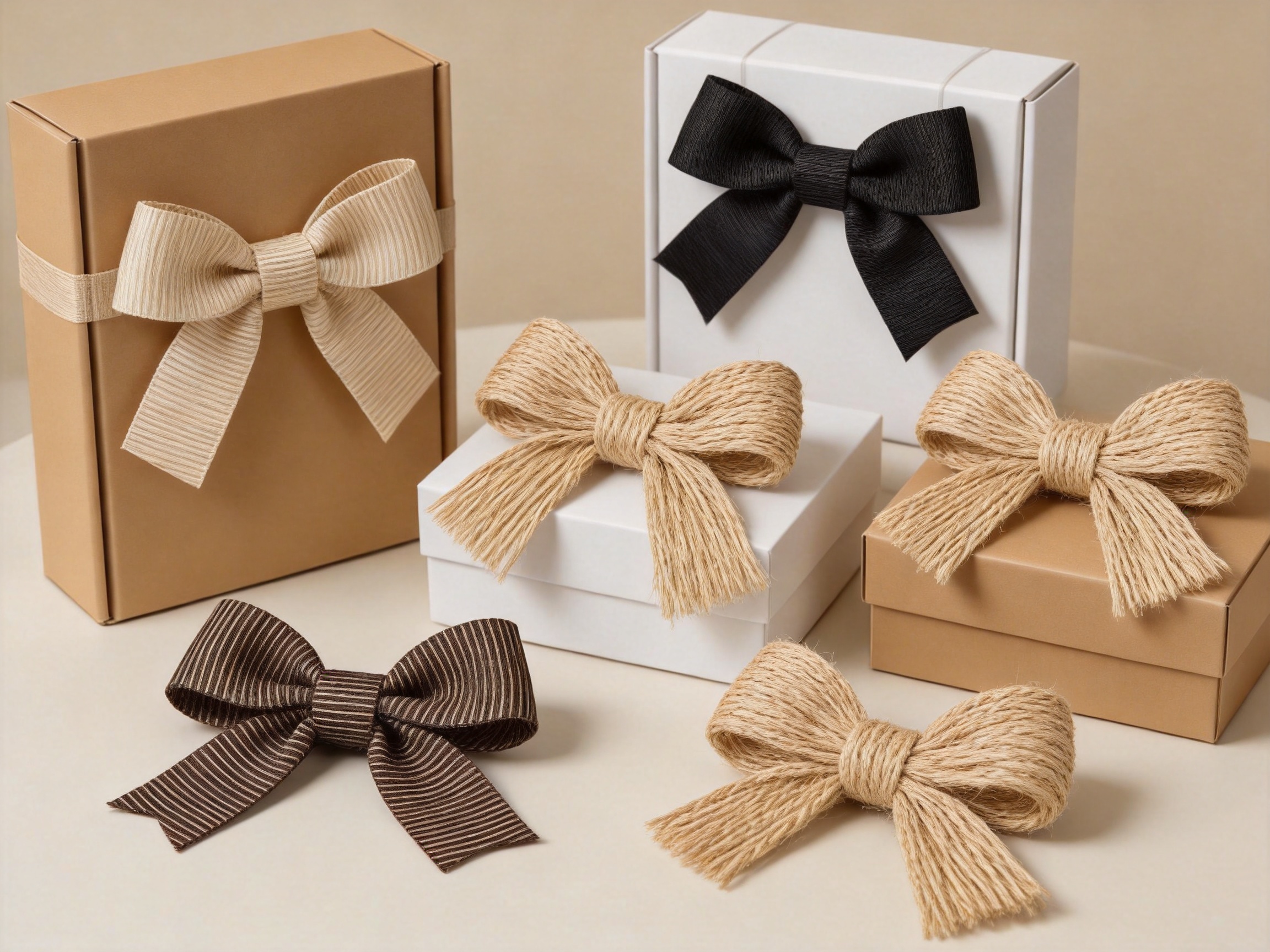
OEM and ODM Customization Options
Custom Color Development
Color customization is one of the most useful options for packaging programs. Buyers may request a standard solid tone, a combination of colors, a seasonal shade, or a brand-specific color target. The final result can be reviewed through physical samples or agreed color references before mass production.
Because materials can appear different under various lighting conditions, professional buyers should evaluate color samples in the environment where the finished product will be displayed. The appearance of a bow may also change slightly according to ribbon texture, print coverage, and layering.
Printed Ribbon Designs
Printed ribbons can include patterns, symbols, seasonal graphics, words, or brand-related design elements. They are suitable for promotional campaigns, holiday packaging, children’s products, wedding favors, and special events.
Before production, buyers should confirm the print repeat, artwork dimensions, color expectations, and placement. It is also useful to approve a pre-production sample to verify that the printed design appears correctly on the final bow rather than only on a flat ribbon sample.
Size and Shape Development
Different packaging formats require different bow proportions. A small cosmetics box may need a compact bow, while a large floral basket may require a broader and more dimensional accessory. Custom size development allows the bow to be matched to the package rather than forcing every application to use the same standard proportion.
Important design specifications may include overall width, loop height, tail length, ribbon width, center fastening, attachment method, and packing quantity. Buyers should explain how the bow will be applied so the manufacturer can recommend a practical construction.
Exclusive Brand Customization
For companies building a recognizable packaging identity, exclusive customization can help distinguish their products from generic alternatives. Custom colors, printed ribbons, coordinated accessories, and defined packaging standards can create a consistent visual language across multiple product lines.
Brand customization may also involve private labels, customized cartons, individual polybags, barcode labels, or product assortments. The exact options should be discussed during the product development stage so that design, production, and packing requirements are aligned.
Long-Term Bulk Supply
Long-term supply programs benefit from documented specifications. Once a bow has been approved, the buyer and manufacturer can record the material combination, color reference, dimensions, packing method, and quality expectations. This reduces the risk of misunderstandings during repeat orders.
For seasonal products, early planning is particularly important. Orders for holidays and promotional events should allow sufficient time for design approval, raw material preparation, production, inspection, and international transportation. Early forecasting can also improve the chance of securing the required materials and production schedule.
Quality Control Considerations for Buyers
Buyers evaluating raffia bow accessories should request representative samples before confirming bulk production. A sample allows the buyer to assess appearance, texture, size, fastening, odor, color, and compatibility with the intended package.
It is useful to test the bow in real conditions. Attach it to the target box, flower wrap, bag, or craft surface. Handle the package several times, place it in a storage carton, and observe whether the bow remains presentable. If the package will be shipped, simulate reasonable compression and movement to identify possible issues.
Color should be evaluated against the actual packaging material. A bow that looks balanced on a computer screen may appear too bright, too dark, too warm, or too cool beside the final box. Physical approval is therefore recommended for important color-sensitive projects.
Buyers should also confirm the packaging quantity and arrangement. Bows may be packed in bulk, individual units, sets, cartons, or customized retail packaging. The choice affects warehouse handling, counting efficiency, product protection, and final selling format.
For large orders, buyers may establish acceptable quality limits for visible defects. These may include uneven loops, loose threads, stains, damaged ribbon, incorrect color, missing pieces, and crushed shapes. Clear criteria help both parties conduct a more objective inspection.
Storage, Handling, and Application Guidance
Storage Conditions
Raffia bow accessories should be stored in a clean, dry, and well-ventilated environment. Direct sunlight should be avoided for long periods because extended exposure may affect certain colors or printed surfaces. Excessive humidity can also influence packaging materials and should be controlled where possible.
Cartons should not be stacked in a way that places unnecessary pressure on the bows. If the product is three-dimensional, suitable inner packing can help preserve the loops and prevent excessive compression. Stock rotation is recommended for businesses that maintain large inventories.
Handling During Packing
Employees should handle the bows by the central fastening area or a stable portion of the accessory rather than pulling strongly on individual loops. If an adhesive is used for application, the packaging surface should be clean and dry. For products exposed to heat, moisture, or frequent handling, the attachment method should be selected according to the application environment.
Packaging teams can benefit from a simple placement guide. A consistent position improves the appearance of the finished product and reduces variation between employees. For high-volume operations, a sample package can be placed at the workstation as a visual reference.
Combining Bows with Other Materials
The accessories can be combined with raffia paper shreds, wrapping paper, tissue paper, paper tape, tags, stickers, floral sleeves, and gift boxes. Coordinating textures often produces a stronger result than using many unrelated decorative elements.
For a natural presentation, a yarn ribbon bow can be paired with kraft paper and paper raffia. For a premium presentation, a smooth polyester bow may be combined with a rigid box and a subtle printed card. For a festive presentation, a printed bow can be layered with contrasting tissue paper or a decorative gift tag.
Why Manufacturing Experience Matters in Decorative Accessories
Decorative accessories may be small, but producing them consistently at commercial scale requires practical manufacturing knowledge. The factory must understand how materials behave during cutting, shaping, fastening, storage, compression, and shipment. It must also coordinate design requests with equipment, labor, inspection, and packing requirements.
A manufacturer experienced in raffia paper and fancy yarn products is familiar with the importance of fiber appearance, material tension, winding, texture, color, and packaging volume. That knowledge can support the development of decorative bows with more reliable visual and physical characteristics.
The company’s experience serving customers in China and exporting to Europe, North America, South America, Asia, and other regions also indicates familiarity with international order coordination. Export supply involves more than production. It requires communication across time zones, commercial documentation, carton planning, shipping coordination, and attention to customer-specific requirements.
The company reports that its products and services have been used by brands and retail organizations including Costco, IKEA, LOKLIK, Disney, Lancôme, Chanel, Dior, and Primark. Such references demonstrate exposure to demanding commercial environments, although each project remains subject to its own specifications, approvals, and quality requirements.
Business Benefits for Different Customer Groups
For Gift Shops and Retailers
Gift shops can use ready-made bows to improve the presentation of merchandise without adding complex labor to every transaction. Standard colors can support everyday wrapping, while seasonal and printed versions can be introduced for holidays and promotions.
For Florists
Florists can coordinate bow colors with flower varieties, wrapping paper, and event themes. The dimensional structure helps a bouquet look finished, and the range of textures provides alternatives to ordinary smooth ribbon.
For Packaging Wholesalers
Wholesalers can offer the accessories as part of a broader packaging-material portfolio. The products are suitable for multipacks, assorted colors, private-label packaging, and customer-specific programs.
For E-Commerce Sellers
Online sellers can use bows to create a more memorable unboxing experience. A standardized accessory can help maintain consistent presentation even when orders are packed by different employees or at different facilities.
For Craft Distributors
Craft distributors can stock the bows as ready-to-use embellishments for hobbyists, event makers, scrapbookers, and handmade-product businesses. A range of materials and colors encourages customers to purchase several styles for different projects.
For Corporate and Event Buyers
Corporate gifting and event decoration often require large quantities with consistent color and appearance. OEM and ODM options can support event themes, company colors, seasonal messages, and coordinated gift sets.
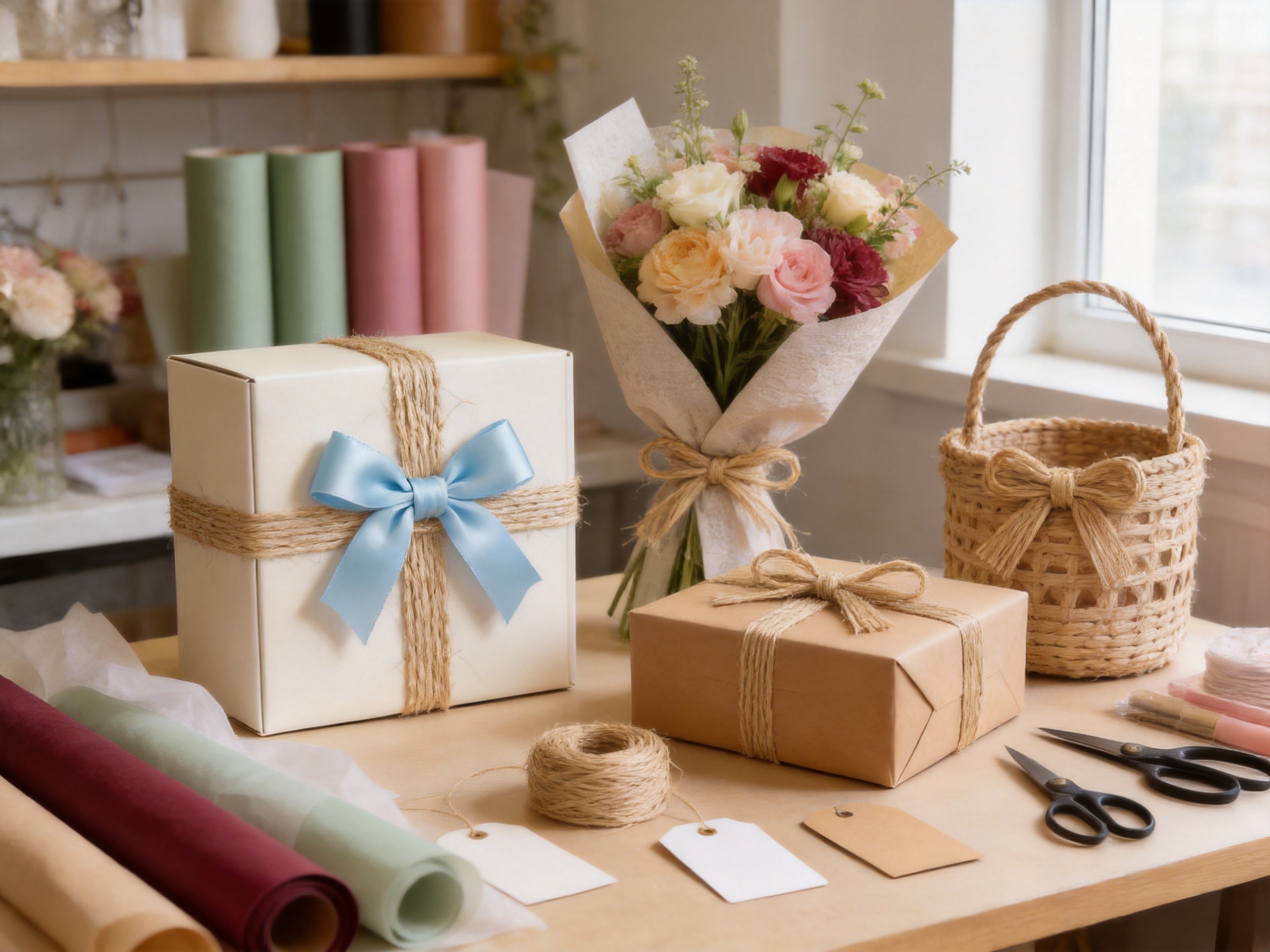
Frequently Asked Questions
What materials are used to make the raffia bow accessories?
The product is made from polyester ribbon, grosgrain ribbon, and yarn ribbon. These materials may be used individually or in coordinated combinations depending on the design, texture, and customization requirements.
Are the bows handmade?
Yes. The product is described as handmade, with attention to shaping and assembly. Handmade finishing gives the bows a crafted appearance, while standardized production and quality procedures support consistency across larger orders.
Will the bows keep their shape during handling?
The accessories are designed with a firm, three-dimensional structure intended to remain well-shaped during normal handling. Buyers should still select suitable packing methods, especially for large bows or long-distance shipments.
Can the bows be customized in color?
Yes. Options include classic solid colors, printed designs, and custom tones. Specific color development should be confirmed through samples and agreed references before mass production.
Can printed patterns or branding be added?
Printed ribbon designs and brand-related customization can be discussed as part of an OEM or ODM project. Artwork, print repeat, color, size, and packaging requirements should be reviewed before production.
Where can these accessories be used?
They can be used for gift boxes, flower wrapping, retail packaging, e-commerce parcels, craft projects, event decoration, baskets, decorative bags, and seasonal displays.
Are the materials safe and odorless?
The product information states that the accessories use eco-friendly dye and are harmless and odorless. Buyers with specific regulatory or market requirements should request the applicable material and safety documentation for their order.
Can the manufacturer supply large quantities?
The company operates a large production base with more than 200 employees and reports annual production capacity exceeding 200 million pieces across its product operations. Specific capacity, lead time, and minimum order quantity depend on the design and order schedule.
What should be confirmed before placing a bulk order?
Buyers should confirm material composition, size, color, print design, bow structure, attachment method, packing format, carton quantity, inspection standards, delivery schedule, and required documentation. A production sample or approved pre-production sample is recommended.
Can the product be used with paper raffia and wrapping paper?
Yes. The bows are suitable for use with raffia paper, wrapping paper, tissue paper, kraft packaging, gift boxes, and other decorative materials. Coordinating color and texture can create a more unified finished presentation.
How should the bows be stored?
They should be kept in a clean, dry, ventilated area away from prolonged direct sunlight and unnecessary pressure. Appropriate inner packing can help protect their three-dimensional shape during storage and transportation.
Does the company offer other related products?
The company specializes in paper raffia yarn, raffia paper, DIY cords, fancy yarns, gift packaging materials, raffia tape, and decorative accessories. This broader product range may support coordinated sourcing for packaging and craft-material programs.
Conclusion
Raffia bow accessories offer an efficient way to improve the appearance of gift packaging, floral arrangements, retail products, and handmade projects. Their value comes from the combination of decorative impact and practical performance. Polyester ribbon contributes strength and versatility, grosgrain ribbon adds ribbed texture and structure, and yarn ribbon brings softness and dimensional character.
The product is designed to be firm, well-shaped, and resistant to loosening during normal use. Solid, printed, and custom color options allow it to serve many markets, from everyday gift wrapping to seasonal retail campaigns and exclusive brand packaging.
Its competitive position is strengthened by the manufacturing capabilities behind it. Zhejiang Raffia Paper Products Co., Ltd. combines more than ten years of industry experience with a 20,000-square-meter production base, more than 200 employees, integrated processing capabilities, standardized procedures, quality testing, finished-goods packaging, and OEM and ODM support. These strengths provide a practical foundation for buyers seeking both product attractiveness and dependable supply.
For the best result, buyers should define the intended application clearly, request samples, confirm color and size, test the bow on the actual package, and establish inspection and packing requirements before mass production. With appropriate customization and handling, raffia bow accessories can turn simple packaging into a more polished, tactile, and memorable presentation.
References
1. Product information provided for Raffia Bow Accessories, including material composition, color options, texture, features, application, and safety statements.
2. Company information provided for Zhejiang Raffia Paper Products Co., Ltd., including company history, manufacturing base, production capabilities, employee numbers, export markets, and OEM and ODM services.
3. General principles of ribbon selection, decorative packaging design, product presentation, material handling, and packaging quality control.
4. General manufacturing considerations for slitting, twisting, winding, compression packaging, batch consistency, and finished-goods inspection.
Product: Raffia Bow Accessories

 +86 15355323399
 kevin@raffia-paper.com
 No. 151 Guanshan North Road, Dongyang City, Zhejiang Province, China

Copyright © Zhejiang Raffia Paper Products Co., Ltd. All Rights Reserved.

Paper Raffia Yarn & Gift Packaging Factory