
 +86 15355323399
 En
En  中文简体
中文简体 日本語
日本語 Français
 Español
 Deutsch
 Türk
Türk عربى
عربى italiano
 русский
Pearlescent Snow Pear Packaging Paper: A Sustainable Material for Premium B2B Packaging
Pearlescent Snow Pear Packaging Paper is a recyclable decorative packaging material developed for companies that want to improve product presentation without relying on plastic fillers, foam, or conventional packaging tissue. Its soft iridescent finish creates a refined “snow pear shimmer,” while its lightweight paper structure remains flexible enough for wrapping, folding, crumpling, layering, and box filling.
Designed primarily for business-to-business purchasing, this packaging paper is suitable for cosmetic brands, jewelry suppliers, fashion retailers, gift packaging manufacturers, e-commerce fulfillment companies, wholesale distributors, and other organizations that purchase packaging materials in bulk. It combines visual appeal, practical protection, customization flexibility, and paper-based environmental advantages in one material.
As packaging regulations become stricter and customers pay more attention to sustainable materials, companies are actively replacing plastic packaging accessories with recyclable paper alternatives. Pearlescent Snow Pear Packaging Paper responds to this market demand by offering a premium appearance without requiring a complete redesign of an existing packaging system.
1. Product Overview
Pearlescent Snow Pear Packaging Paper is a lightweight tissue-grade paper material with a non-toxic pearlescent coating. The coating gives the paper a soft, luminous appearance that changes subtly with light and viewing angle. Unlike heavily metallic packaging surfaces, the snow pear effect is designed to look delicate, elegant, and suitable for premium product presentation.
The paper is made from recyclable paper fiber and is available in sheet, roll, and custom-cut formats. Its flexible structure allows packaging operators to use it in different ways. It can be placed around a perfume bottle, folded inside a jewelry box, crumpled as a decorative filler, layered between products, or used to create an enhanced unboxing presentation for online orders.
The product is not positioned as a general-purpose retail craft paper. It is developed for professional packaging systems and repeat purchasing. This distinction is important because B2B buyers often require stable quality, predictable processing, consistent color, custom dimensions, private-label support, and reliable long-term supply.
For a packaging manufacturer or brand, the material can serve both a functional and visual purpose. It helps fill empty space, reduces movement inside a package, provides a soft separation layer, and adds a premium finish that standard tissue paper may not provide. At the same time, its paper-based construction offers a practical alternative to plastic film, foam pieces, and synthetic fillers.
2. Why Pearlescent Packaging Paper Is Gaining Attention
Packaging is no longer viewed only as a protective outer layer. It is also part of product communication, brand positioning, customer experience, and environmental strategy. A package is often the first physical contact a customer has with an online purchase. The color, texture, sound, and appearance of the internal packaging can influence how the customer evaluates the product.
Standard tissue paper can provide basic wrapping and separation, but it may not offer enough visual distinction for luxury cosmetics, jewelry, fashion products, or premium gifts. Plastic fillers can create volume and cushioning, but they may conflict with sustainability targets and consumer expectations. Foam materials can provide protection, yet they are often difficult to recycle and may create an undesirable appearance when used in presentation-oriented packaging.
Pearlescent Snow Pear Packaging Paper occupies a useful position between ordinary tissue paper and highly specialized protective packaging. It improves appearance while retaining the flexibility and low weight associated with tissue materials. This makes it suitable for companies seeking a more attractive packaging experience without adopting a complicated structural solution.
The material also supports packaging standardization. A brand can use the same paper in several product categories, such as skincare, fragrance, accessories, apparel, subscription boxes, and gift sets. This can simplify purchasing and help create a consistent visual identity across multiple stock-keeping units.
3. Main Product Advantages
3.1 Recyclable Paper-Based Construction
The primary advantage of the product is its paper-based construction. It is made from 100% recyclable paper fiber and is designed as a plastic-free packaging option. For companies working to reduce unnecessary plastic, this offers a practical way to improve the material profile of internal packaging components.
Replacing a plastic filler with a paper alternative can also improve communication with customers. Words such as recyclable, paper-based, and plastic-free may support a company’s packaging goals when used accurately and in accordance with local recycling requirements. Packaging buyers should always confirm local disposal guidance, coating requirements, and regulatory conditions before making environmental claims in a specific market.
Compared with synthetic fillers, paper tissue is familiar to consumers and is generally easier to integrate into existing paper-based packaging systems. It can be placed in paperboard boxes, mailer cartons, gift boxes, and product presentation trays without creating a visual conflict between different material types.
3.2 Premium Snow Pear Shimmer
The pearlescent finish is a major differentiating feature. It adds a soft reflective quality without turning the material into a glossy plastic-like film. The effect can make a package appear more refined, especially when used with white, champagne, pastel, or other light color palettes.
The snow pear appearance is suitable for brands that want to communicate cleanliness, elegance, softness, celebration, or modern luxury. It works well in cosmetic packaging, jewelry presentation, wedding and seasonal gift packaging, fashion retail, and premium e-commerce shipments.
Compared with standard tissue paper, the pearlescent coating creates a stronger visual impression. Compared with metallic foil or heavily laminated materials, it can provide a more subtle and flexible appearance. This balance allows packaging designers to enhance the inside of a box without overwhelming the product itself.
3.3 Lightweight and Flexible Structure
The paper is designed to remain lightweight and flexible. It can be folded into precise shapes, loosely crumpled for volume, wrapped around individual products, or layered to create separation. This flexibility is useful when one packaging material must accommodate products of different sizes.
Flexible paper also supports efficient storage and handling. Sheets and rolls can be packed in a compact form before use, helping packaging facilities organize material inventory. The exact packaging configuration will depend on the order format, sheet size, roll width, thickness, and customer requirements.
Because it is easy to manipulate, the material can be used by manual packing teams as well as by companies with semi-automated packaging workflows. Buyers that require machine processing should evaluate feeding, cutting, folding, and dispensing requirements during the sample approval stage.
3.4 Product Surface Protection
Pearlescent Snow Pear Packaging Paper can help protect surfaces from light scratches, rubbing, and direct contact between products and packaging components. It is suitable for cosmetic containers, perfume bottles, jewelry boxes, accessories, glass products, and other items that require a soft separation layer.
The paper is not intended to replace heavy-duty shock-absorbing packaging for fragile or high-impact transportation. Instead, it provides lightweight protection and presentation support. For products that require stronger protection, it can be combined with paperboard inserts, molded pulp components, corrugated structures, or other appropriate protective materials.
Its medium tear resistance can be adjusted through GSM and other specifications. This gives buyers the opportunity to select a suitable balance between softness, drape, strength, and cost. A higher-strength specification may be appropriate for larger products or repeated handling, while a lighter grade may be suitable for decorative box filling.
3.5 Custom Color and Size
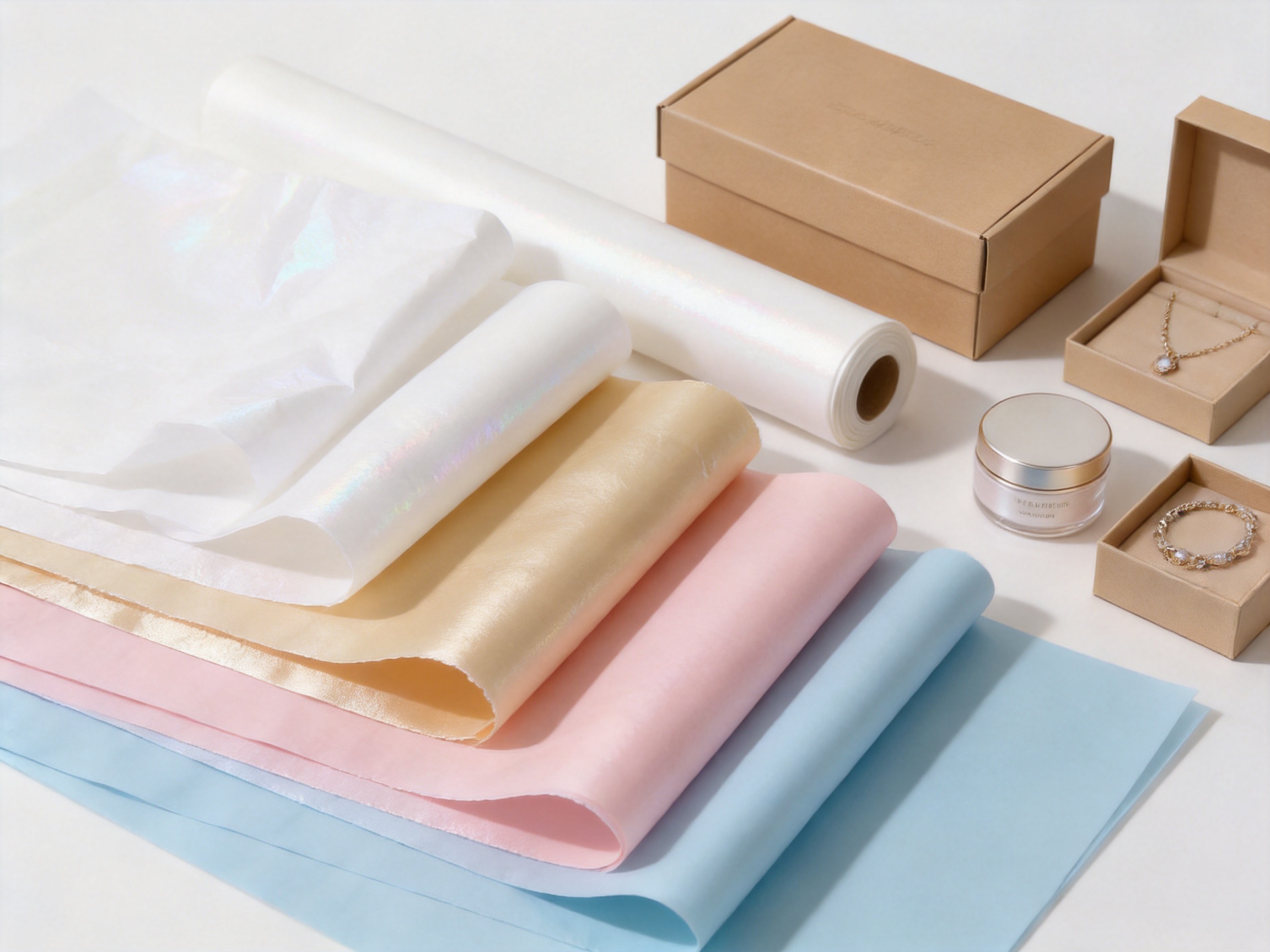
Standard color options include white, snow pear white, champagne, pink, and blue. Custom colors can also be developed for bulk orders. Custom color matching can help brands coordinate the paper with product packaging, seasonal campaigns, corporate identity systems, or specific retail collections.
Size customization is equally important. Packaging companies may require specific sheet dimensions for jewelry boxes, cosmetic cartons, gift sets, apparel mailers, or subscription boxes. Roll customers may need a particular width to match a cutting line, dispensing system, or manual packing process.
Custom sizing can reduce unnecessary trimming and material waste. It may also improve packing efficiency by ensuring that each sheet or roll is suitable for a defined package format. OEM buyers can discuss sheet size, roll width, thickness, GSM, color, printing, packaging method, and order quantity during product development.
4. Comparison with Conventional Packaging Materials
A key benefit of Pearlescent Snow Pear Packaging Paper is its ability to combine decorative performance with environmental and operational advantages. Different packaging materials serve different purposes, so the best choice depends on product weight, transportation conditions, appearance requirements, and sustainability objectives.
| Material | Visual Performance | Environmental Position | Flexibility | Typical Limitation |
| Pearlescent Snow Pear Packaging Paper | Soft iridescent premium appearance | Recyclable paper-based and plastic-free design | High flexibility for wrapping, folding, and filling | Not designed as heavy-impact protection |
| Standard Tissue Paper | Basic decorative appearance | Generally paper-based | Flexible and easy to handle | Lower visual differentiation |
| Plastic Filler | May provide strong volume and color variety | Often less compatible with plastic-reduction goals | Flexible depending on format | Disposal and sustainability concerns |
| Foam Filler | Usually functional rather than decorative | Recycling may be difficult depending on material | Can provide cushioning | May look less premium and create additional waste concerns |
| Metallic Laminated Paper | Strong reflective appearance | Composite structure may complicate recycling | Depends on lamination and paper grade | May be less soft and less suitable for delicate wrapping |
Compared with standard tissue paper, the pearlescent product offers a stronger premium effect. Compared with plastic or foam fillers, it provides a paper-based alternative that is more compatible with sustainability-oriented packaging systems. Compared with heavily laminated decorative materials, it emphasizes softness and flexibility.
These advantages are especially valuable for companies that want to upgrade packaging without significantly increasing the number of packaging components. A single decorative paper material can contribute to filling, wrapping, separation, scratch reduction, and visual presentation.
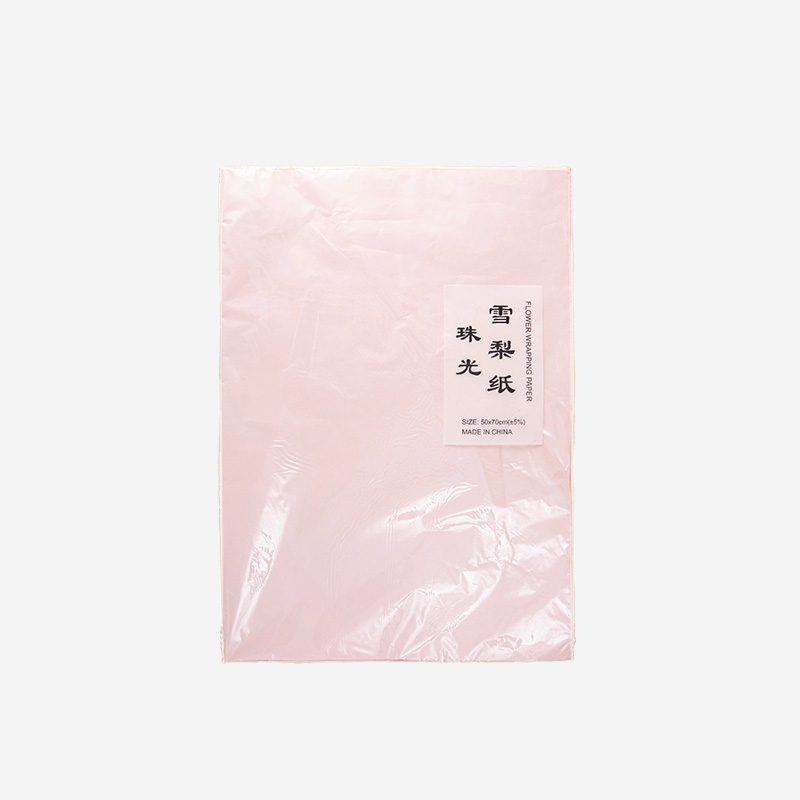
Pearlescent Snow Pear Packaging Pape
5. Applications in Cosmetic Packaging
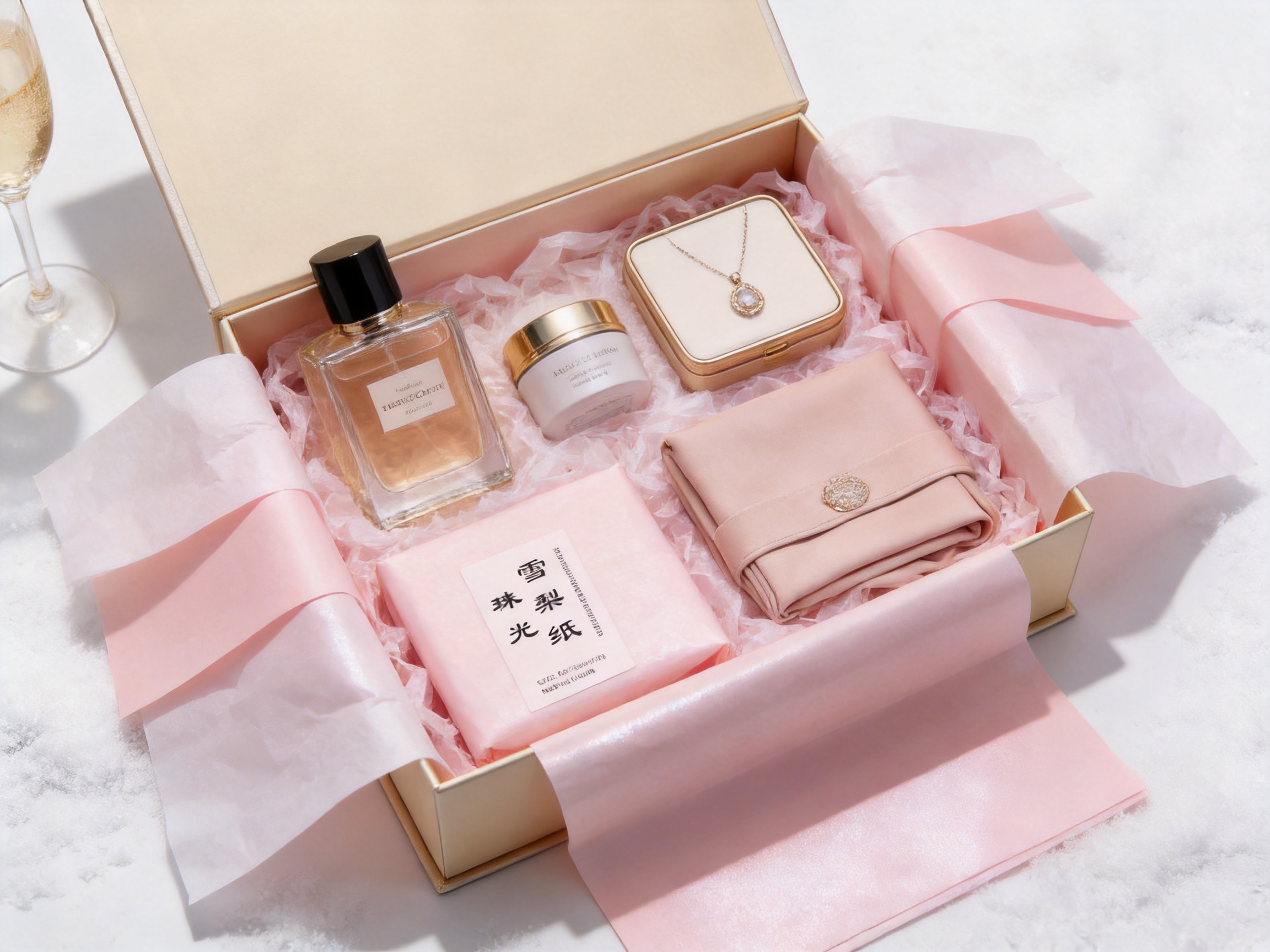
Cosmetic packaging is one of the most suitable application areas for Pearlescent Snow Pear Packaging Paper. Beauty products often rely on visual presentation, and customers may associate clean, coordinated packaging with product quality. A pearlescent tissue layer can be used inside a gift box, around a skincare bottle, beneath a perfume carton, or as a filler for a product set.
The paper can be used with skincare products, makeup collections, fragrance packages, personal care gift sets, and promotional beauty kits. Its soft appearance complements common cosmetic color schemes such as white, cream, champagne, pale pink, soft blue, and metallic neutrals.
For perfume and glass containers, the paper may help reduce surface contact and minor rubbing during handling. Packaging designers can wrap each item individually or use crumpled paper to fill empty areas within a rigid box. The final design should always be tested with the actual product, box structure, and transportation conditions.
Cosmetic companies can also use custom colors and logo printing to build a private-label packaging system. A consistent pearlescent paper color across multiple product lines can help unify seasonal collections and improve brand recognition during unboxing.
6. Applications in Jewelry and Accessories Packaging
Jewelry and accessories require packaging that protects delicate surfaces while communicating value. Pearlescent Snow Pear Packaging Paper can be used as jewelry box filler, a wrapping layer, or a soft decorative separator for items such as bracelets, necklaces, earrings, watches, hair accessories, and small luxury goods.
The material’s soft and flexible structure allows it to fit around irregular product shapes. It can be folded into a compact presentation layer or lightly crumpled to create volume around a product box. Its iridescent surface can add visual interest without competing with the color or shine of the jewelry itself.
For jewelry packaging suppliers, custom sheet sizes can improve production efficiency. Small, accurately cut sheets may reduce preparation time for individual boxes. Larger sheets or rolls may be more suitable for fulfillment centers that package multiple product sizes.
The paper should be tested for contact compatibility with the specific product surface, especially when jewelry contains sensitive finishes, polished metals, gemstones, or coatings. Appropriate product testing helps confirm that the selected paper grade and coating are suitable for the intended application.
7. Applications in Fashion and Retail Packaging
Fashion brands and boutiques can use pearlescent tissue paper to create a more distinctive experience when customers open clothing boxes, accessory packages, footwear cartons, or promotional gift packages. A soft shimmer can make ordinary internal packaging feel more coordinated with a premium retail environment.
The paper is suitable for apparel packaging, boutique packaging, clothing brand unboxing, seasonal product launches, and retail packaging upgrades. It can be printed with a logo or used in a custom color that matches a fashion collection.
Fashion retailers often need packaging materials that can work across multiple product categories. The same tissue paper may be used for folded garments, wallets, scarves, small bags, and accessory boxes. This versatility can simplify procurement and create consistency across online and offline sales channels.
For retail stores, the paper can also support gift-ready packaging. It may be placed inside a shopping box or used as a decorative layer around a product before the package is closed. For e-commerce operations, the material can help reproduce the visual quality of an in-store purchase in a shipped order.
8. Applications in E-Commerce Fulfillment
E-commerce brands increasingly use packaging as part of their customer retention and marketing strategy. An order that arrives in an organized and attractive package can create a stronger impression than an order protected only by plain plastic or excessive void-fill material.
Pearlescent Snow Pear Packaging Paper can be used in subscription boxes, online beauty orders, fashion shipments, gift deliveries, promotional product packages, and direct-to-consumer fulfillment. It can fill empty space, separate products, wrap individual items, and create a more memorable opening sequence.
The material is particularly useful when brands want to reduce plastic while maintaining a premium appearance. It provides a practical paper alternative that can be incorporated into an existing box, mailer, or corrugated carton without requiring a major packaging redesign.
E-commerce companies should evaluate the paper together with the complete shipping system. Testing should include product movement, compression, humidity, stacking, drop conditions, and the effects of automated or manual handling. Pearlescent paper can support presentation and light protection, but package engineering remains necessary for fragile or high-value goods.
9. Gift, Floral, and Seasonal Packaging
Gift packaging depends heavily on visual emotion. The opening process should feel intentional, attractive, and appropriate for the occasion. Pearlescent Snow Pear Packaging Paper can be used for gift box filling, floral arrangements, holiday packaging, wedding products, anniversary gifts, and seasonal retail promotions.
Its shimmer is suitable for festive themes, while the flexible paper structure allows it to be shaped around products or used as loose filler. White and snow pear white can support winter and wedding themes. Champagne can create a warm premium appearance. Pink and blue can be used for coordinated product campaigns or seasonal collections.
Florists and gift packaging suppliers can use the paper as a wrapping layer or decorative filler. When used with flowers, the material should be evaluated for moisture exposure and direct contact requirements. The paper is primarily designed for packaging applications, so buyers should confirm the appropriate grade for each floral use case.
Seasonal businesses may benefit from custom colors and printing. A limited-edition paper design can help a retailer refresh its packaging without changing the box, insert, or shipping carton. This makes the product suitable for campaigns where speed, appearance, and manageable material changes are important.
10. Manufacturing Strengths and Production Capabilities
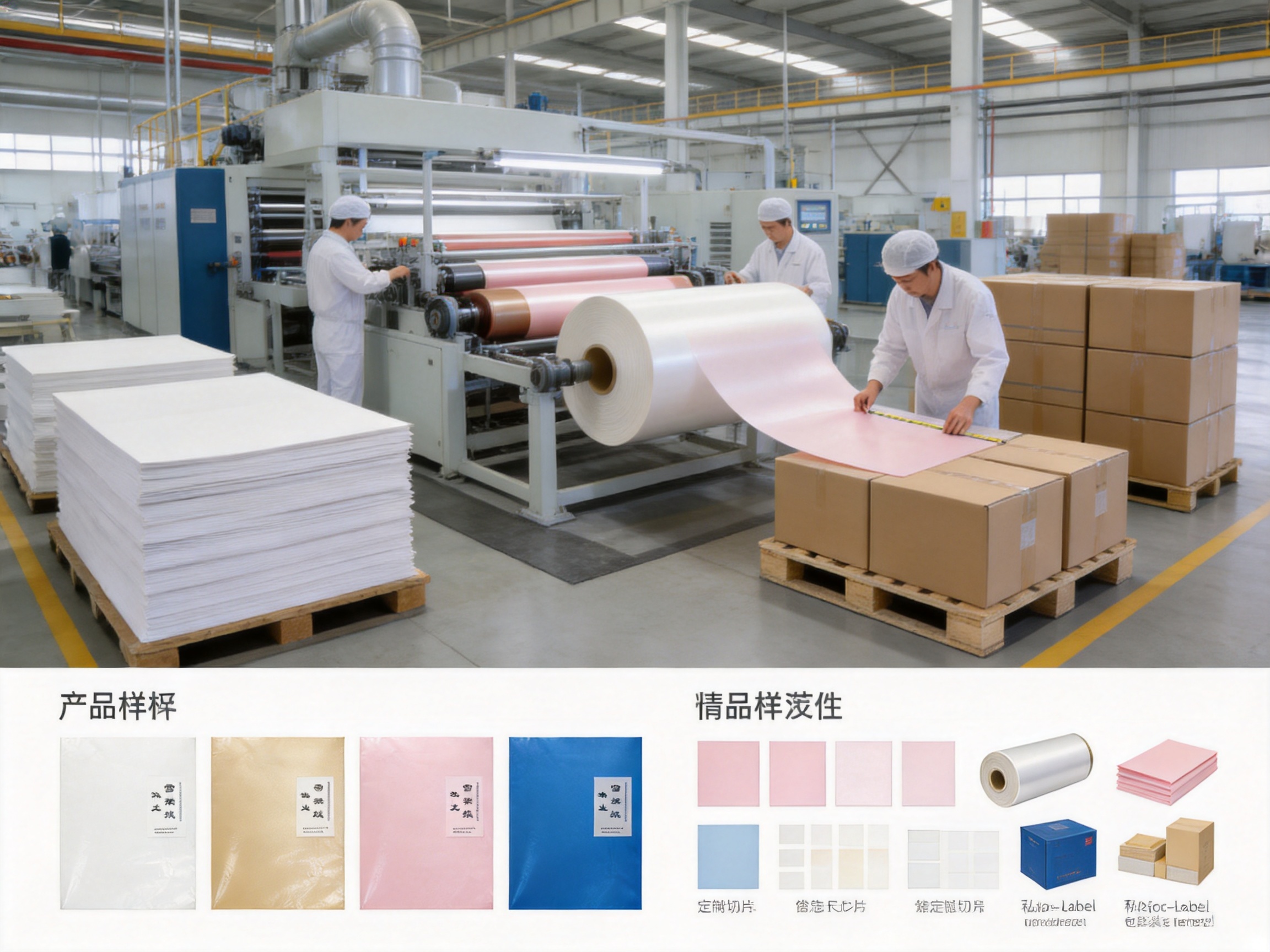
The quality of a decorative packaging paper depends not only on the raw material but also on the consistency of converting, coating, slitting, winding, cutting, packaging, and inspection. Zhejiang Raffia Paper Products Co., Ltd. operates as an integrated manufacturer with more than ten years of industry experience and a production base in Dongyang, Zhejiang Province, China.
The company originated from a craft materials business unit established in 2010 and was formally founded in 2014. It developed from a trading enterprise into a large-scale manufacturer specializing in crinkle raffia paper shreds, fancy paper yarns, packaging materials, and related paper products.
Its manufacturing operation covers approximately 20,000 square meters and employs more than 200 professional workers. The integrated production chain includes raw material processing, mass production, quality testing, finished-goods packaging, and shipment. This structure gives the company greater control over production coordination than a business that depends entirely on unrelated subcontractors.
The company reports annual production capacity of more than 200 million pieces. This capacity supports both standard products and long-term wholesale supply programs. For international buyers, production scale is important because packaging materials often need to be replenished regularly across multiple product lines and markets.
10.1 Slitting and Width Control
Slitting is an essential process for paper materials supplied in rolls, narrow strips, or specific widths. Accurate slitting helps ensure that the paper is compatible with customer equipment and manual packing procedures. Consistent width also supports predictable appearance and efficient material usage.
For buyers ordering custom rolls, width control can reduce the need for secondary processing. This may save labor and help packaging operations maintain a more consistent workflow. Slitting specifications should be confirmed during sample development and documented for repeat orders.
10.2 Twisting, Winding, and Paper Converting Experience
The company has developed production expertise in twisting, winding, and compression packaging through its broader experience with paper raffia yarns and related materials. Although Pearlescent Snow Pear Packaging Paper is a tissue-style packaging product, this converting background supports practical knowledge of paper behavior, tension, winding, handling, and packing.
Proper winding is important for roll products because uneven tension can affect dispensing, cutting, and storage. Controlled compression packaging can help manage shipping volume while protecting the finished goods from unnecessary handling damage.
10.3 Coating and Appearance Consistency
The pearlescent effect must remain visually consistent across production batches. A stable coating process helps control shimmer, surface appearance, and color presentation. Batch consistency is particularly important for brands that use the material across repeated orders or several package sizes.
Appearance inspection may include checking color uniformity, coating distribution, surface defects, folding behavior, and overall presentation. Buyers with strict visual requirements can establish approved samples or reference standards for future production.
10.4 Quality Control and Standardized Procedures
The company emphasizes standardized production procedures and a strict, replicable quality control system. This approach is valuable for B2B buyers because packaging materials are often purchased repeatedly, and inconsistent batches can create operational problems or visible differences in finished packages.
Quality control may be organized around incoming materials, in-process production, finished-product inspection, and shipment preparation. The exact inspection plan can be adapted to customer requirements and product specifications. Important factors may include thickness, GSM, sheet size, roll width, color, coating appearance, tear resistance, softness, packaging condition, and quantity.
Standardized procedures also make it easier to develop private-label programs. When product parameters are documented and repeatable, the manufacturer can better support customers that require consistent color and size across multiple orders.
11. OEM and ODM Packaging Support
OEM and ODM services are important for professional packaging buyers that require more than an off-the-shelf material. The company supports custom color matching, custom sheet sizes, roll widths, logo printing, private-label packaging, sample development, packaging material selection, and structural optimization advice.
OEM service allows a buyer to specify the appearance and format of the finished product. For example, a cosmetic brand may request a custom champagne shade, a precise sheet dimension, and branded outer packaging. A fulfillment company may require a standard roll width that fits its packing station. A distributor may need private-label cartons for regional sales.
ODM service is useful when a buyer knows the desired packaging result but needs technical assistance selecting the material format. The manufacturer can help evaluate whether sheets, rolls, or custom cuts are more suitable. It can also support sample development for a new product line or advise on material combinations for a specific package structure.
Custom development should begin with a clear specification. Buyers should provide the product dimensions, package style, required appearance, order volume, use environment, printing requirements, shipping conditions, and expected delivery schedule. A sample approval process can then confirm the practical fit before mass production.
12. Supply Chain Advantages for B2B Buyers
Professional buyers require more than attractive material. They need reliable supply, clear communication, production planning, quality consistency, and shipment coordination. The company’s integrated manufacturing model supports long-term wholesale relationships and multi-SKU packaging material programs.
Stable mass production capacity can help customers reduce the risk of material shortages during product launches, seasonal campaigns, and recurring e-commerce fulfillment. Multi-SKU support is useful for companies that purchase several colors, sizes, or formats from one supplier.
Consolidating purchases with one experienced manufacturer may also simplify supplier management. Instead of sourcing paper, raffia-related materials, decorative fillers, and other packaging accessories from separate vendors, a buyer may coordinate several requirements through an integrated paper products supplier.
The company exports to Europe, North America, South America, Asia, and other regions. Its products are used in gift packaging, textile knitting, home decoration, and global retail supply chains. This international experience can help support communication regarding export packaging, bulk order preparation, and delivery coordination.
13. How the Product Addresses Common Buyer Problems
13.1 Replacing Plastic Fillers
Many buyers are looking for alternatives to plastic fillers because of environmental goals, retailer requirements, and changing regulations. Pearlescent Snow Pear Packaging Paper offers a paper-based option that can replace some decorative plastic fillers in suitable applications.
The replacement process should be based on function. If the existing plastic material is used only to fill space and improve presentation, pearlescent paper may be an effective alternative. If the plastic component provides significant impact protection, the package may need a combined solution that includes paper filler and a structural protective insert.
13.2 Improving an Ordinary Unboxing Experience
A plain package may protect the product but fail to create a memorable customer experience. The pearlescent finish adds a premium visual layer without requiring a new box structure. This can be an efficient way to upgrade packaging for online brands, subscription services, and gift programs.
The material can be coordinated with printed cards, stickers, ribbons, tissue layers, and branded cartons. Because it is available in several colors and can be customized, it supports different brand moods and product categories.
13.3 Reducing Inconsistent Bulk Quality
Inconsistent tissue paper can create visible differences between orders. Color variation, uneven coating, irregular cutting, or inconsistent dimensions may affect packaging efficiency and brand presentation.
A standardized manufacturing and inspection system helps reduce these risks. Buyers can further improve consistency by approving a reference sample, confirming technical specifications, and using the same production parameters for repeat orders.
13.4 Balancing Premium Appearance and Cost
Premium packaging does not always require expensive structural components. Pearlescent paper can improve the visual effect of an existing package with a relatively simple material change. It may therefore provide a cost-efficient alternative to redesigning the entire box or adding complex decorative elements.
The final cost depends on paper grade, coating, size, order volume, printing, packaging method, and shipping. Buyers should evaluate the total packaging cost rather than the unit price alone. Reduced secondary processing, simpler inventory management, and improved customer perception may also contribute to overall value.
14. Recommended Procurement Process
A structured procurement process helps buyers select the correct specification and avoid unnecessary production changes. The first step is to identify the intended use. Buyers should determine whether the paper will be used as a wrapping sheet, box filler, protective separator, roll-fed material, decorative layer, or a combination of these functions.
The next step is to confirm the product dimensions and package structure. Measure the internal box size, product size, required overlap, and desired volume. For roll applications, specify the required width, roll length, core size, and dispensing method if applicable.
Color and surface appearance should be reviewed under the lighting conditions used in the customer’s packaging area and retail environment. A color that looks suitable under one light source may appear different under another. Sample approval is therefore recommended before a bulk order.
Buyers should also specify the required softness, thickness, GSM, tear resistance, and folding behavior. If the paper will contact glass, polished metal, jewelry, or coated cosmetic containers, compatibility and scratch-protection performance should be evaluated with actual products.
Finally, buyers should confirm order quantities, production lead time, packaging method, export documentation, inspection requirements, and delivery schedule. Clear specifications help the manufacturer provide accurate quotations and reduce the possibility of misunderstanding.
15. Storage and Handling Recommendations
Paper products should be stored in a clean, dry environment away from direct water exposure, excessive humidity, and sources of heat. The material should remain in its protective packaging until it is ready for use. Proper storage helps preserve softness, flatness, color, and coating appearance.
Rolls should be placed securely to prevent deformation, while sheets should be stored flat when possible. Heavy objects should not be placed on top of delicate paper packaging. Warehouse teams should use clean hands or suitable gloves when handling light-colored pearlescent paper to reduce the risk of marks.
Before full production use, packaging teams should test the material at the intended packing speed. Manual and automated processes may place different demands on paper feeding, folding, cutting, and crumpling. A short trial run can identify adjustments needed for efficient operation.
16. Sustainability Considerations
Pearlescent Snow Pear Packaging Paper is designed around a paper-based, recyclable, biodegradable, and plastic-free concept. These characteristics make it relevant to companies developing more sustainable packaging systems. However, sustainability performance should always be assessed as part of the entire package rather than as an isolated material claim.
Buyers should consider the paper fiber source, coating composition, printing inks, adhesive components, outer packaging, transportation distance, and local recycling infrastructure. The actual disposal route may vary by market and by the facilities available in a customer’s region.
The material can support waste reduction when it replaces unnecessary plastic fillers or when its custom dimensions reduce trimming. It can also contribute to more efficient packaging design by combining decorative and light protective functions in one component.
Companies should use environmental claims accurately and maintain appropriate supporting documentation for their target markets. The manufacturer can discuss material composition, processing, and available specifications during the technical evaluation stage.
17. Suitable Buyer Profiles
This product is intended for professional and commercial buyers rather than small personal-use customers. Suitable customers include packaging material wholesalers, cosmetic and skincare manufacturers, fashion brands, jewelry packaging suppliers, gift packaging companies, e-commerce logistics companies, retail distributors, and fulfillment centers.
Packaging manufacturers may purchase the paper as a component for their own box and presentation systems. Brands may purchase it directly for internal packing operations. Distributors may source multiple colors and sizes for resale to regional customers.
The product is less suitable for occasional DIY use, low-volume personal gift wrapping, or small craft purchases. B2B ordering is preferred because customization, production planning, private labeling, and bulk pricing are central to the product’s value.
18. Why Choose an Experienced Paper Products Manufacturer
An experienced manufacturer can provide more than a finished paper roll or sheet. It can help buyers select specifications, develop samples, optimize packaging formats, coordinate production, and maintain repeat-order consistency.
Zhejiang Raffia Paper Products Co., Ltd. combines paper material expertise with manufacturing experience in raffia paper yarn, fancy yarns, crinkle paper shreds, DIY cords, decorative accessories, and gift packaging products. This broader product knowledge can be valuable for customers developing coordinated packaging systems rather than purchasing one isolated material.
The company’s integrated production base, professional workforce, large annual capacity, quality procedures, and international supply experience support its role as a long-term B2B supplier. It offers OEM and ODM services for customers that require custom colors, sizes, branding, product development, and multi-SKU supply.
For buyers seeking an alternative to standard tissue paper, plastic filler, or foam packaging, the product provides a combination of decorative quality, flexible application, paper-based construction, and scalable supply support.
19. Product Specification Summary
| Product Name | Pearlescent Snow Pear Packaging Paper |
| Material | 100% recyclable paper fiber |
| Surface Finish | Non-toxic pearlescent coating |
| Appearance | Soft snow pear iridescent shimmer |
| Texture | Soft, flexible, easy to fold and crumple |
| Thickness | Customizable lightweight tissue grade |
| Tear Resistance | Medium, adjustable by GSM |
| Standard Colors | White, snow pear white, champagne, pink, and blue |
| Custom Options | Custom color, size, roll width, sheet format, cut format, and logo printing |
| Processing Forms | Sheet, roll, and custom cut |
| Environmental Features | Biodegradable, plastic-free, and recyclable paper-based design |
| Main Applications | Cosmetic, jewelry, fashion, retail, e-commerce, gift, and floral packaging |
20. Q&A
Q1: What is Pearlescent Snow Pear Packaging Paper used for?
It is used for cosmetic packaging, jewelry wrapping, gift box filling, fashion retail packaging, e-commerce shipments, subscription boxes, floral presentation, and other decorative or light-protection packaging applications.
Q2: Is the product suitable for bulk commercial packaging?
Yes. It is designed primarily for B2B buyers, including packaging manufacturers, brands, wholesalers, distributors, and fulfillment companies. Sheet, roll, and custom-cut formats are available for different production environments.
Q3: Is the material recyclable?
The product is made from recyclable paper fiber and is designed as a paper-based, plastic-free packaging option. Buyers should confirm local recycling requirements and the treatment of coated paper in their target market.
Q4: Can it replace plastic fillers?
It can replace plastic fillers in applications where the primary requirements are decoration, space filling, wrapping, and light surface protection. It may need to be combined with stronger protective packaging when products require impact or compression resistance.
Q5: Can the paper be used for perfume bottles and glass products?
Yes. It can be used as a wrapping or separation layer for perfume bottles, cosmetic containers, and other glass products. The complete package should be tested to confirm scratch protection, product fit, and transportation performance.
Q6: What colors are available?
Standard colors include white, snow pear white, champagne, pink, and blue. Custom colors can be developed for bulk orders, including colors selected to match a brand or product collection.
Q7: Can the size and roll width be customized?
Yes. Buyers can request custom sheet sizes, roll widths, thicknesses, GSM levels, and cutting formats. Custom dimensions may improve packing efficiency and reduce unnecessary trimming.
Q8: Is logo printing available?
Logo printing and private-label packaging support are available for suitable OEM orders. Printing details, artwork requirements, colors, minimum quantities, and production conditions should be confirmed during development.
Q9: Is this paper intended for personal craft use?
No. The product is intended for professional packaging systems, bulk purchasing, and commercial applications. Small-volume DIY consumers and occasional personal gift-wrapping buyers are not the primary target market.
Q10: What quality factors should buyers check before ordering?
Buyers should check color consistency, pearlescent coating appearance, thickness, GSM, sheet dimensions, roll width, softness, tear resistance, folding behavior, packaging condition, and compatibility with the intended product and packing process.
Q11: Does the manufacturer provide samples?
Sample development is supported as part of the company’s OEM and ODM services. Samples can help buyers evaluate color, size, finish, texture, handling, and practical performance before mass production.
Q12: Which industries use this product most often?
The main industries include cosmetics, skincare, fragrance, jewelry, accessories, fashion retail, gift packaging, e-commerce fulfillment, subscription commerce, floral packaging, and packaging material distribution.
21. Conclusion
Pearlescent Snow Pear Packaging Paper offers a practical way to combine premium presentation with paper-based sustainability goals. Its soft shimmer differentiates it from ordinary tissue paper, while its flexible structure supports wrapping, filling, folding, crumpling, and product separation.
The material is especially suitable for cosmetics, jewelry, fashion, gifts, retail, floral products, and e-commerce packaging. It can help companies replace selected plastic or foam fillers, improve unboxing presentation, standardize packaging materials, and introduce custom colors or sizes without redesigning the complete package.
Its value is strengthened by the manufacturing capabilities of Zhejiang Raffia Paper Products Co., Ltd., including integrated production, standardized quality control, custom converting, OEM and ODM development, large-scale capacity, and international supply experience. These strengths make the product suitable for buyers seeking a reliable long-term packaging material supplier rather than a one-time retail purchase.
For companies developing more attractive and responsible packaging systems, this pearlescent paper provides an adaptable material solution. With proper specification, testing, storage, and application design, it can support both the functional needs of commercial packaging and the visual expectations of modern consumers.
References
1. Product specification and application information for Pearlescent Snow Pear Packaging Paper, supplied by the manufacturer.
2. Manufacturer information for Zhejiang Raffia Paper Products Co., Ltd., including production history, facility scale, product categories, OEM and ODM services, and export markets.
3. General principles of paper-based packaging design, material selection, converting, storage, and commercial packaging quality control.
4. General guidance on recyclable packaging development, plastic reduction, packaging optimization, and responsible environmental communication.
Product: Pearlescent Snow Pear Packaging Pape

 +86 15355323399
 kevin@raffia-paper.com
 No. 151 Guanshan North Road, Dongyang City, Zhejiang Province, China

Copyright © Zhejiang Raffia Paper Products Co., Ltd. All Rights Reserved.

Paper Raffia Yarn & Gift Packaging Factory