
 +86 15355323399
 En
En  中文简体
中文简体 日本語
日本語 Français
 Español
 Deutsch
 Türk
Türk عربى
عربى italiano
 русский
Raffia Decorative Paper Confetti: An Eco-Friendly Filler for Gift Packaging and Celebrations
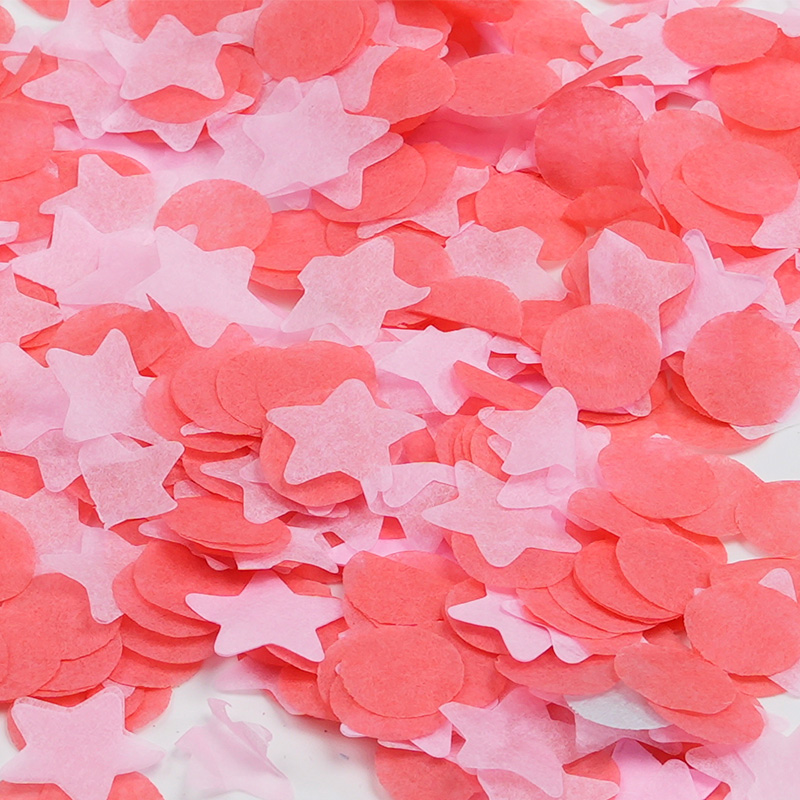
Raffia decorative paper confetti is a lightweight, colorful, and practical material designed to add visual appeal and protective cushioning to gift boxes, retail packaging, party displays, and creative projects. Made from natural wood pulp paper and colored cardstock, this type of confetti combines attractive presentation with the sustainability advantages increasingly expected by modern consumers and businesses.
Unlike many conventional plastic fillers, paper confetti can be recyclable, biodegradable, odorless, and easy to handle. Its neat cut, thin texture, and rich color selection make it suitable for both simple packaging applications and highly customized visual designs. It can be used as a single-color filler, a coordinated color combination, or a mixed-color decorative element that creates a lively unboxing experience.
This article examines the material composition, manufacturing considerations, product advantages, applications, customization possibilities, and quality strengths of raffia decorative paper confetti. It also explains why an experienced manufacturer with integrated production capabilities can offer more consistent results than fragmented or purely trading-based suppliers.
Raffia Decorative Paper Confetti
What Is Raffia Decorative Paper Confetti?
Raffia decorative paper confetti consists of narrow, neatly cut pieces of paper or colored cardstock used for filling, decorating, and enhancing packages or displays. Although it is often called confetti, it is generally produced in a controlled size and shape for practical use rather than being randomly punched into small circles. Depending on the intended application, the material may appear as thin strips, small paper pieces, or lightweight shredded elements.
The product described here is made from natural wood pulp paper and colored cardstock. These materials provide a balance between flexibility, visual brightness, and ease of processing. The paper is thin enough to fold and arrange inside a package, yet sufficiently structured to create volume and prevent a gift box from looking empty.
Raffia-style paper confetti is especially useful where a business wants a natural presentation without sacrificing color. The paper base supports a handcrafted appearance, while colored cardstock allows the filler to coordinate with brand themes, holidays, wedding palettes, seasonal campaigns, and product packaging schemes.
Because the material is lightweight, it adds decorative volume without significantly increasing shipping weight. This is important for e-commerce sellers, subscription-box companies, gift shops, florists, event planners, and retailers that need attractive packaging while controlling logistics costs.
Material Composition and Product Characteristics
The primary material is natural wood pulp paper. Wood pulp paper is a familiar packaging substrate with established recycling pathways in many markets. When responsibly selected, processed, and disposed of, it can support a more environmentally considerate alternative to petroleum-based plastic fillers.
Colored cardstock is used to provide stronger color expression and a more structured visual effect. It can help the confetti retain its shape during handling, filling, and presentation. A combination of paper and cardstock gives manufacturers flexibility in creating different appearances, weights, textures, and color combinations.
The product is characterized by a thin and neat texture. This makes it easy to fold, spread, layer, and position within a package. It can be placed around a product, under an item, or over the top as a finishing layer. The material can also be gently shaped by hand, making it useful for packaging teams and craft users who need to adjust the filler quickly.
Available color options include rich solid colors and mixed colors. Solid colors are suitable for businesses seeking a clean and coordinated appearance. Mixed-color combinations are useful when the packaging needs more energy, contrast, or visual movement. Color combinations can also be developed to match specific holidays, retail campaigns, corporate themes, or event decorations.
| Product Feature | Practical Benefit | Typical Application |
|---|---|---|
| Natural wood pulp paper | Supports a paper-based, lightweight packaging solution | Gift boxes, retail packaging, craft projects |
| Colored cardstock | Provides rich color and improved visual structure | Brand-themed packaging and event decoration |
| Thin, neat texture | Easy to fold, arrange, and distribute | Box filling and decorative layering |
| Solid and mixed colors | Allows coordinated or lively presentation styles | Seasonal campaigns, parties, and product launches |
| Lightweight construction | Adds volume without excessive shipping weight | E-commerce and subscription packaging |
| Odorless and non-toxic characteristics | Supports clean and pleasant handling | Retail goods, handmade products, and gift presentation |
Why Paper Confetti Is Gaining Attention
Packaging is no longer viewed only as a protective outer layer. It is part of the customer experience, a visual communication tool, and an important expression of brand values. A package that looks carefully prepared can influence how customers perceive the product inside.
Paper confetti supports this experience by filling empty space and creating a more complete presentation. A product placed directly in a large box may appear poorly packed, while the same product surrounded by neatly arranged colored paper can look more valuable and thoughtfully presented.
At the same time, many consumers and businesses are reconsidering the use of plastic-based packaging accessories. Plastic foam, synthetic shreds, and non-recyclable decorative materials may create disposal challenges and can conflict with sustainability goals. Paper-based filler provides an option that is familiar, lightweight, and more compatible with paper recycling systems where local facilities accept it.
The demand for sustainable packaging does not mean that buyers want to sacrifice appearance. On the contrary, successful packaging materials must combine environmental considerations with color, texture, consistency, and convenience. Raffia decorative paper confetti addresses these requirements by offering a visually appealing material with practical handling properties.
Its versatility also contributes to its popularity. The same basic product can be used by a luxury gift company, a small handmade business, a florist, an event planner, or a large retail supplier. The difference lies in the selected color, cut, packing format, and application method.
Advantages Over Conventional Decorative Fillers
Paper-Based Sustainability
One of the most important advantages of raffia decorative paper confetti is its paper-based composition. Compared with many synthetic fillers, wood pulp paper and cardstock are generally easier to integrate into paper-oriented packaging systems. They can also support a recyclable and biodegradable product positioning, subject to local recycling infrastructure, coatings, dyes, and disposal conditions.
Businesses should communicate environmental claims responsibly and consider the complete product specification. Even so, an odorless and paper-based filler offers a strong starting point for companies seeking to reduce unnecessary plastic in gift presentation and decorative packaging.
Natural Appearance with Bright Color
Some sustainable packaging materials have a plain or unfinished appearance. Raffia decorative paper confetti offers a different balance. Its paper base can provide a natural and handcrafted impression, while colored cardstock creates strong visual impact. This combination allows a package to appear environmentally conscious without looking dull or generic.
Rich solid colors can be matched with product labels, tissue paper, ribbons, and boxes. Mixed colors can create a festive appearance for celebrations and promotional campaigns. The material can therefore serve both minimalist and highly decorative packaging styles.
Lightweight Handling
Heavy fillers increase transportation costs and can make packaging operations more tiring. Paper confetti is lightweight and easy to portion by hand or through organized packing procedures. Workers can place a measured quantity into a box without needing specialized equipment for ordinary applications.
Its low weight also helps businesses manage shipping costs. This benefit is particularly relevant for online retailers, where packaging weight may influence delivery fees and fulfillment efficiency.
Easy Folding and Arrangement
The thin texture allows the product to be folded, spread, layered, and adjusted. It can be shaped around irregular products and used to fill narrow spaces that larger packaging inserts cannot reach. The material is also easy to remove when the customer opens the package.
For craft users, this flexibility makes the product suitable for decorative bowls, gift baskets, handmade cards, seasonal displays, and creative compositions. The filler can be used as a finished decorative element rather than only as internal packaging protection.
Clean and Pleasant Presentation
Odorless, non-toxic, and clean material characteristics are important in gift packaging. Strong odors can negatively affect the unboxing experience, particularly when the package contains textiles, handmade soaps, candles, stationery, or other products that customers handle closely.
A clean, neat cut also helps the packaging look professional. Poorly processed filler may contain excessive dust, irregular pieces, or inconsistent color. Controlled production and suitable packaging can reduce these issues and help maintain a polished appearance.
Protective and Decorative Functions
Raffia decorative paper confetti is primarily a decorative and space-filling material. It helps prevent products from moving freely inside a box, reducing the empty visual space between the product and the container. When used in an appropriate quantity, it can provide light cushioning against minor movement during handling.
It should not be treated as a replacement for engineered protective packaging when a product is fragile, heavy, or vulnerable to impact. Glassware, electronics, ceramics, and other sensitive products may require molded pulp, corrugated inserts, foam alternatives, or other structural protection in addition to decorative paper.
For lightweight products, the confetti can offer a practical combination of presentation and positioning. It can be placed below a product to raise it closer to the box opening, around the sides to reduce movement, or above the product as a colorful finishing layer.
Gift baskets benefit particularly from this function. The paper helps stabilize smaller products while making the basket appear fuller. It can also separate products visually, allowing each item to be seen more clearly when the package is opened.
In retail packaging, the filler may be used in presentation boxes for cosmetics, accessories, stationery, handmade crafts, apparel items, and promotional products. The selected color can reinforce the product’s identity and create a consistent appearance across different package sizes.
Applications Across Different Industries
Gift Packaging
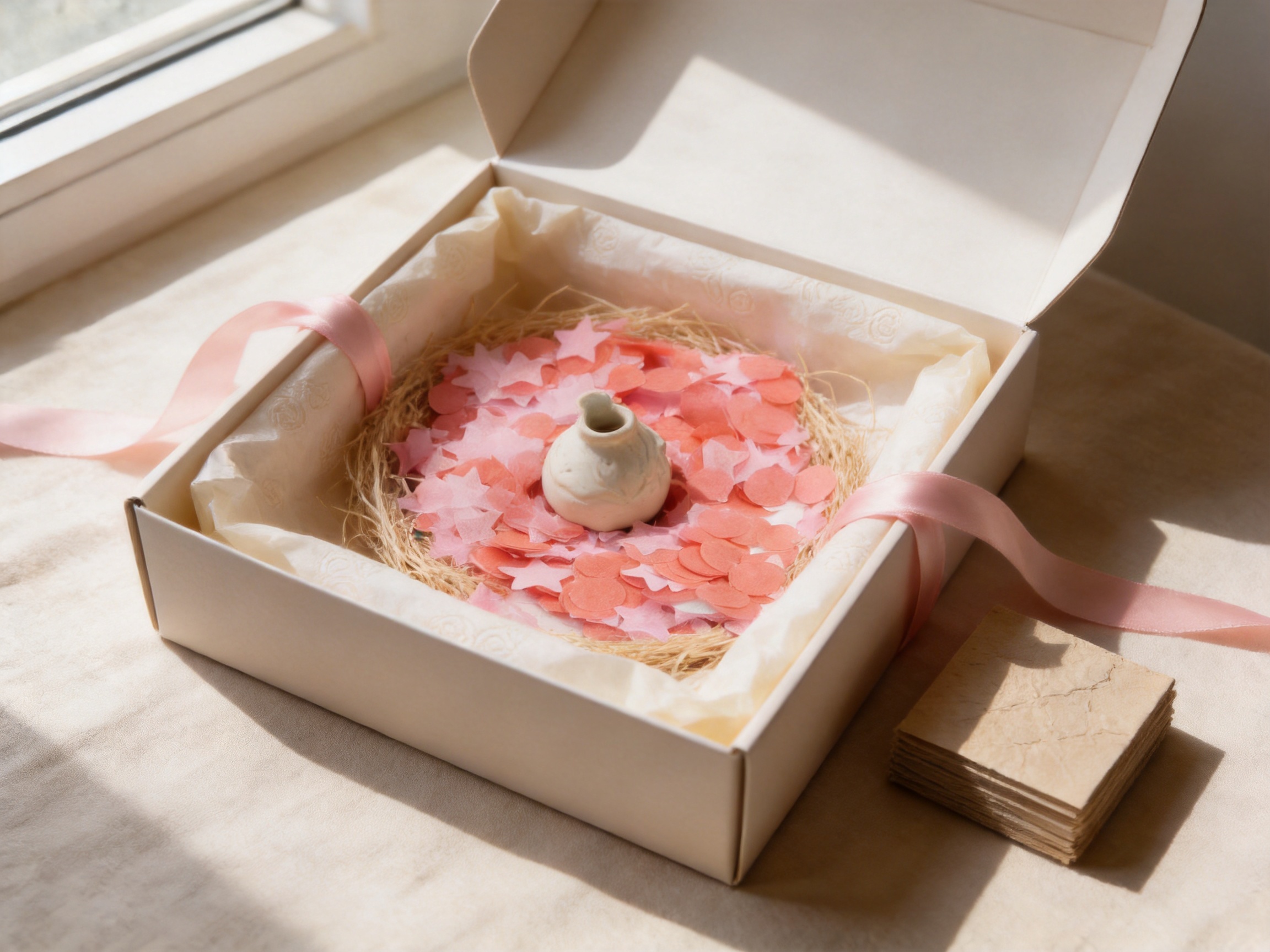
Gift boxes are one of the most common applications. Paper confetti can be placed beneath a product, around its sides, or over the top of tissue paper. It creates volume and gives the recipient a stronger sense of opening a carefully prepared gift.
Businesses can select colors according to the occasion. Soft colors may suit weddings, baby gifts, and spring events. Red, green, gold, and silver can support holiday packaging. Bright mixed colors are appropriate for birthdays, children’s gifts, and party favors.
E-Commerce Fulfillment
Online retailers need packaging materials that are easy to store, portion, and use quickly. Paper confetti can be kept in cartons or sealed bags and added to orders during fulfillment. Its low weight and flexible shape make it suitable for different box sizes.
For small businesses, the material can help create a consistent unboxing style without requiring complex packaging machinery. A standard color palette can be used across orders, while seasonal colors can be introduced for limited campaigns.
Subscription Boxes
Subscription-box businesses often rely on presentation to encourage repeat purchases and social media sharing. A coordinated filler can support the theme of each monthly shipment. For example, a wellness box may use calm natural shades, while a children’s activity box may use bright mixed colors.
Because paper confetti is easy to combine with cards, stickers, tissue paper, and ribbons, it can become part of a repeatable packaging system. The result is a recognizable experience that can be adjusted for each product category.
Party and Event Decoration
The product is also suitable for party decoration. It can be scattered on tables, used in transparent containers, added to gift bags, or placed around centerpieces. Its light weight makes it simple to transport and distribute across an event space.
Event planners can select mixed colors that match a theme or use one strong color for a clean visual effect. The paper material is especially appropriate for events where disposable plastic decorations are being reduced.
Retail Displays
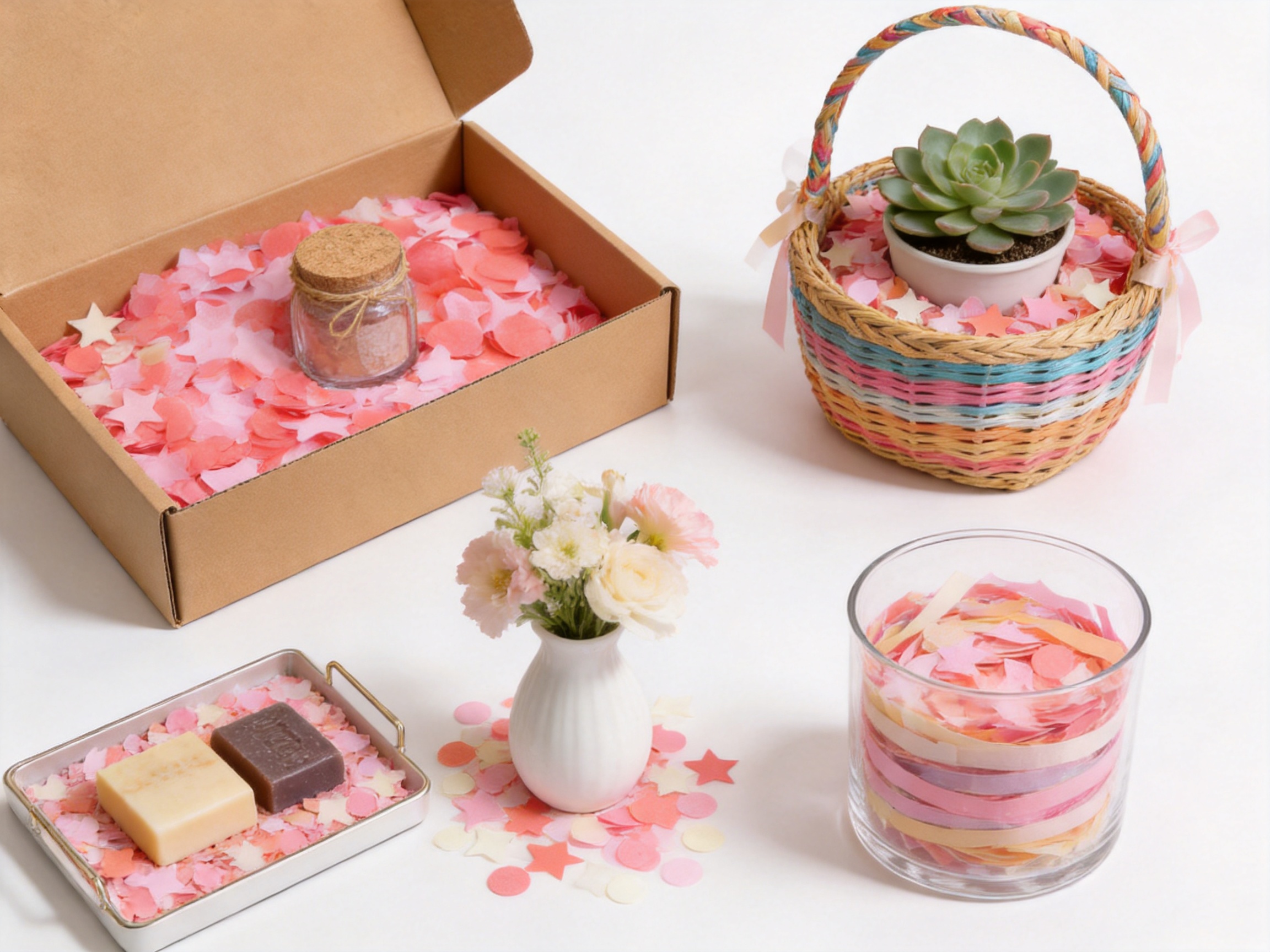
Retail stores can use decorative paper confetti in display baskets, product trays, seasonal windows, and promotional gift sets. The material helps create visual fullness and can draw attention to selected products without overshadowing them.
When used with branded colors, it supports a more consistent presentation across shelves and display tables. Retailers may also use the same material in customer gift wrapping, creating a connection between in-store presentation and final packaging.
Floristry and Gift Baskets
Florists and gift-basket companies can place paper confetti around small products such as candles, cards, chocolates, accessories, and personal-care items. The filler can help maintain the position of these products while complementing flowers, ribbons, and wrapping paper.
Color selection is important in this application. Natural or muted shades can complement dried flowers, while brighter colors can create contrast with fresh arrangements and celebration baskets.
Craft and DIY Projects
DIY users can incorporate paper confetti into scrapbooking, card making, collage work, decorative jars, handmade gift wrapping, and seasonal crafts. Its thin construction allows it to be glued, layered, folded, or combined with other paper materials.
The product is also useful for educational and creative activities. Teachers, workshop organizers, and community groups can use colored pieces for collage exercises, party projects, and handmade decorations.
Manufacturing Process and Quality Control
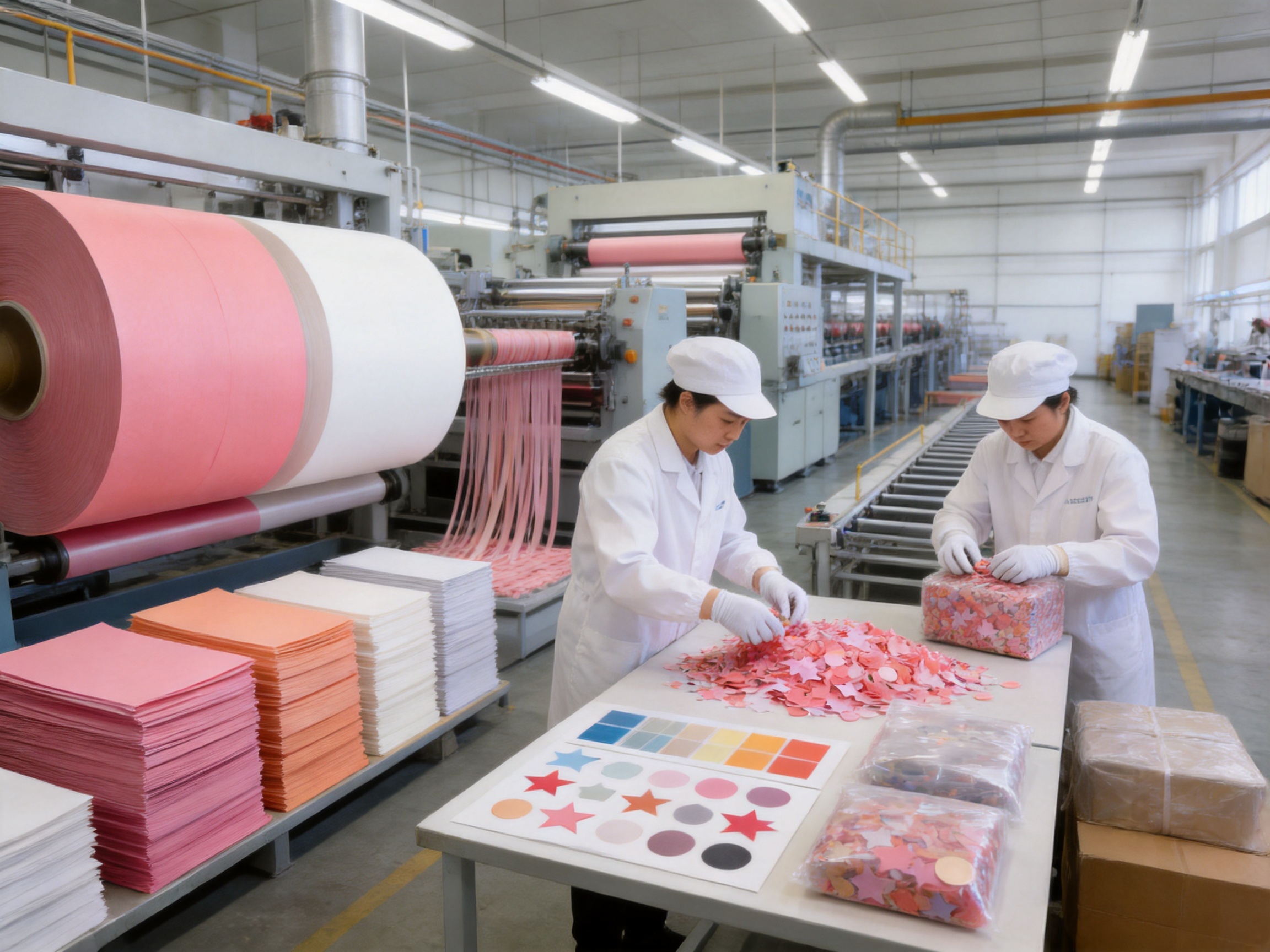
The quality of decorative paper confetti depends on more than the paper selected at the beginning of production. Slitting, cutting, color management, material handling, packing, and inspection all influence the finished result. An experienced manufacturer therefore needs a controlled process that can be repeated across different production batches.
Zhejiang Raffia Paper Products Co., Ltd. has developed from a craft materials business unit established in 2010 and was formally founded in 2014. The company evolved from a trading enterprise into an integrated manufacturer specializing in crinkle raffia paper shreds and fancy paper yarns. This manufacturing background is relevant to decorative confetti because both product categories require accurate paper processing, consistent handling, and efficient packaging operations.
Raw Material Processing
Production begins with the selection and preparation of paper-based raw materials. The material must be suitable for cutting and handling while delivering the required color, thinness, and appearance. The manufacturer’s integrated structure allows raw material processing to be connected with later production and quality testing stages.
Proper preparation helps reduce variation in texture and supports a more consistent final product. It also makes it easier to organize different color series and product specifications for bulk orders.
Slitting and Cutting
Slitting and cutting are central to the appearance of paper confetti. The cutting system must create neat pieces without excessive fraying, tearing, or irregular edges. Consistent dimensions help the filler distribute more evenly inside a box and make the finished presentation look more professional.
The company’s experience with paper shredding and fancy paper yarn production provides a technical foundation for handling narrow paper materials. Equipment and standardized procedures for slitting, twisting, winding, and related paper conversion processes can support reliable control over shape and size.
For buyers, consistent cutting is important because uneven pieces may create excessive dust, reduce visual quality, or make the product difficult to portion. A controlled cutting process improves both appearance and operational efficiency.
Color Management
Color is one of the most visible characteristics of decorative confetti. Buyers may require solid colors, mixed colors, seasonal palettes, or colors that correspond to a particular packaging design. A professional production system should therefore maintain organized color controls and batch records.
Consistent color management helps reduce noticeable differences between repeat orders. This is especially important for retailers and brands that use the material in a long-running packaging program. A reliable supplier can also help customers develop coordinated color combinations for different campaigns.
Inspection and Quality Testing
Quality testing should examine more than color. Useful inspection points include material cleanliness, cut consistency, texture, odor, packaging condition, and conformity with the agreed specification. Inspection procedures should be standardized so that products can be evaluated consistently across batches.
Zhejiang Raffia Paper Products Co., Ltd. emphasizes a strict and replicable quality control system. Its integrated chain includes raw material processing, mass production, quality testing, finished-goods packaging, and shipment. Connecting these stages can improve traceability and reduce communication gaps between separate suppliers.
Compression Packaging and Shipment Preparation
Lightweight paper products occupy significant volume relative to their mass. Compression packaging can help improve storage and shipment efficiency when applied appropriately. The packaging must protect the product from moisture, contamination, deformation, and excessive handling during transportation.
Finished-goods packaging is also important for warehouse management. Clearly organized product units can help customers count inventory, distribute material to packing stations, and maintain consistent usage across different locations.
Factory Capacity and Integrated Supply Strength
A supplier’s ability to meet demand depends on production capacity, equipment, workforce, process management, and logistics coordination. Zhejiang Raffia Paper Products Co., Ltd. operates a modern production base of approximately 20,000 square meters in Dongyang, Zhejiang Province, with more than 200 professional employees.
The company reports an annual production capacity exceeding 200 million pieces. This scale can be valuable for customers that need stable supply across seasonal peaks, retail programs, promotional campaigns, or long-term purchasing agreements.
Large-scale production is not automatically a guarantee of quality, but it can provide important operational advantages when supported by standardized procedures. A larger facility may offer better separation of processing stages, more organized storage, greater equipment availability, and improved scheduling flexibility.
The company’s integrated manufacturing chain also reduces reliance on multiple external parties. When a supplier controls raw material processing, conversion, testing, packing, and shipment coordination, it can respond more directly to technical questions and production changes.
For international buyers, integrated manufacturing may simplify communication. Instead of coordinating raw material vendors, cutting factories, packing companies, and exporters separately, the buyer can work with one production partner responsible for the complete order flow.
Customization and OEM and ODM Capabilities
Decorative packaging materials often need to match a customer’s identity rather than remain a generic stock item. Customization may involve color, dimensions, packing weight, package format, product naming, label design, or combinations of paper materials.
Zhejiang Raffia Paper Products Co., Ltd. provides OEM and ODM services, including exclusive brand customization, custom size development, and long-term bulk-order supply. These services can support customers that want a distinctive packaging accessory or need a product adapted to a particular box size.
Color Customization
Color customization can range from selecting existing solid colors to developing mixed combinations. Customers may request colors based on a brand palette, a seasonal theme, or a specific event. The final feasibility depends on the paper type, color requirements, order quantity, and production schedule.
For businesses with multiple product lines, different color sets can be developed for separate collections. A luxury line may require restrained tones, while a children’s range may use vivid combinations. A manufacturer with experience in both standard and customized production can help manage these variations.
Size and Cut Customization
Different packages may require different confetti sizes. A small jewelry box may need shorter pieces, while a larger gift basket may benefit from longer or more voluminous filler. Custom dimensions can improve the visual proportion of the packaging and help the material perform more effectively.
Cut specifications should be discussed clearly before production. Important details may include piece length, width, thickness, allowable variation, mixed-size ratios, and the desired level of volume after opening the package.
Packaging Customization
Wholesale buyers may require individual bags, compressed packs, cartons, display-ready packages, or bulk shipping units. Packaging customization can support warehouse requirements and make the product easier to sell through retail channels.
Labels may include product names, material information, color references, batch details, usage instructions, or customer branding. A clear packaging structure helps prevent confusion when several colors or specifications are purchased together.
Long-Term Supply Programs
Long-term buyers usually need more than a single successful shipment. They require repeatable color, consistent cut, reliable lead times, and dependable communication. A manufacturer with standardized processes can establish reference samples and production records to support future orders.
Long-term supply programs may be appropriate for gift companies, packaging distributors, chain retailers, and e-commerce brands. They can also help customers plan inventory and reduce the risk of sudden product changes.
How the Product Compares with Plastic Fillers and Loose Natural Fibers
Plastic fillers may offer strong volume and water resistance, but they can create challenges related to disposal, recycling, and environmental perception. Paper confetti provides a paper-based alternative with a more natural appearance and generally simpler integration into paper packaging systems.
Loose natural fibers may offer an organic look, but they can vary in texture, contain more visible particles, or be less consistent in color and cut. Raffia decorative paper confetti provides a more standardized appearance, which is valuable for commercial packaging and repeat retail presentation.
Some shredded paper products are produced from recycled material with inconsistent color or uneven processing. While recycled content can be valuable, buyers still need to consider cleanliness, odor, dust, and visual consistency. Carefully processed paper confetti can provide a neater appearance for customer-facing packaging.
Compared with heavier cushioning materials, paper confetti is easier to store and move. However, it is not designed to replace structural packaging for fragile products. Its greatest advantage lies in combining decoration, light space filling, and basic product positioning.
| Material Type | Strengths | Considerations |
|---|---|---|
| Raffia decorative paper confetti | Lightweight, colorful, foldable, paper-based, suitable for decoration and box filling | Requires additional protection for fragile or heavy products |
| Plastic filler | Often resilient and moisture-resistant | May be difficult to recycle and may conflict with plastic-reduction goals |
| Loose natural fiber | Organic appearance and strong decorative character | May show greater variation in texture, color, and cleanliness |
| Foam-based filler | Can provide cushioning and impact protection | May create disposal challenges and has a less natural appearance |
| Structured paper insert | Provides stronger positioning and product separation | Less flexible for decorative use and may require custom tooling |
Storage, Handling, and Application Recommendations
Paper confetti should be stored in a dry, clean environment away from direct moisture. Paper naturally absorbs humidity, so sealed packaging and suitable warehouse conditions are important. Excessive moisture may affect texture, color, volume, and cutting quality.
Boxes and bags should be kept off the floor and protected from dust, water, and crushing pressure. Inventory should be organized by color, size, batch, and intended customer order. This is particularly important when a business handles several similar-looking product specifications.
During use, packing staff should take an appropriate amount rather than filling a box excessively. Too little material may leave the product unsecured or make the package look incomplete. Too much material may increase consumption and make the product difficult for the customer to remove.
For a clean presentation, place a base layer beneath the product, add material around the sides if necessary, and finish with a controlled top layer. The exact method depends on the product shape and the size of the box.
When using mixed colors, staff should decide whether the desired appearance is evenly blended or intentionally layered. A consistent method helps ensure that packages from the same business look similar, even when packed by different employees.
Safety and Responsible Product Communication
The product is described as odorless, non-toxic, and clean, which supports use in gift packaging and decorative applications. Nevertheless, businesses should follow normal material-handling practices and review the final specification supplied for each order.
Paper confetti should not be placed in direct contact with food unless the product has been specifically tested and approved for that purpose. It should also be kept away from open flames, high heat, and electrical equipment. Paper is combustible, so event planners and retailers should follow local safety requirements.
Environmental claims should be made accurately. Terms such as recyclable and biodegradable can depend on the paper composition, printing or dyeing process, coatings, local recycling facilities, and disposal conditions. Buyers should request relevant product details and communicate sustainability information in a clear and qualified manner.
Responsible use also includes selecting the correct amount of material, avoiding unnecessary overpacking, and encouraging customers to reuse or recycle the paper where local systems permit. Sustainable packaging is most effective when material selection and waste-reduction practices work together.
Why Manufacturer Experience Matters
Paper-based decorative products may appear simple, but commercial consistency requires technical control. A supplier must understand how paper behaves during slitting, cutting, winding, compression, storage, and shipment. Small variations in moisture, tension, color, or cutting pressure can affect the final appearance.
Zhejiang Raffia Paper Products Co., Ltd. has more than ten years of industry experience when its development from the 2010 craft-materials business unit is considered. Its background in crinkle raffia paper shreds and fancy paper yarns gives it experience with narrow paper structures and specialized conversion processes.
The company continues to upgrade core technologies and production equipment for slitting, twisting, winding, and compression packaging. Although decorative paper confetti has a different final form from paper yarn, these capabilities demonstrate familiarity with controlled paper processing and large-volume production.
Its customer base and export activity also indicate experience with varied packaging expectations. The company serves customers throughout China and exports to Europe, North America, South America, Asia, and other regions. It reports that its products and services are used by brands including Costco, IKEA, LOKLIK, Disney, Lancôme, Chanel, Dior, and Primark.
International experience can help a manufacturer understand differences in product specifications, packaging preferences, documentation, and delivery requirements. It does not eliminate the need for buyer inspection, but it can support smoother cooperation for overseas orders.
Environmental Value in Modern Gift Packaging
Paper confetti can contribute to packaging programs that aim to reduce the use of unnecessary plastic. Its natural fiber base, lightweight structure, and recyclable positioning make it attractive to brands seeking a more responsible presentation.
The product also supports a more circular visual language. Paper boxes, paper cards, paper tape, and paper confetti can be designed as a coordinated packaging system. This can make it easier for customers to understand how different components may be reused or disposed of.
However, environmental value depends on the full lifecycle. Buyers should consider raw material sourcing, dyes, additives, packaging materials, shipping distance, order efficiency, and end-of-life options. A paper-based product is not automatically impact-free, but it can be a practical improvement when it replaces a less suitable synthetic filler.
Manufacturing efficiency also contributes to responsible production. Standardized processes can reduce material waste, improve yield, and limit rejected goods. Integrated quality control helps ensure that more products reach customers in usable condition rather than being discarded because of inconsistent appearance.
Selection Guide for Wholesale Buyers
Before placing an order, buyers should define the product’s purpose. Is the confetti intended mainly for decoration, light space filling, gift baskets, retail display, or event use? The answer will influence the preferred size, color, volume, and packaging format.
Buyers should also confirm the paper composition and whether colored cardstock is included. The desired texture should be described clearly, including whether the material must be especially thin, moderately structured, highly crinkled, or easy to fold.
Color requirements should be recorded using samples or an agreed reference. Verbal descriptions such as “bright red” or “soft blue” may be interpreted differently. A physical sample or documented color standard can reduce confusion during mass production.
Packaging details should include unit weight, bag or carton size, compressed dimensions if applicable, labeling requirements, and carton markings. These details influence warehouse space and shipping calculations.
Quality expectations should cover cut consistency, cleanliness, odor, color variation, allowable defects, and the condition of the final packaging. A pre-production sample and a retained reference sample can help both parties evaluate future batches.
Finally, buyers should discuss production capacity, lead time, minimum order quantity, payment terms, shipping arrangements, and after-sales communication. Clear specifications at the beginning generally reduce delays and misunderstandings later.
Business Value for Brands and Distributors
For brands, decorative paper confetti can be a relatively simple way to improve perceived value. The material does not require a complete redesign of the primary package. Instead, it adds color, volume, and texture to an existing box or shipping format.
For distributors, the product can be offered in multiple color families, package sizes, and application categories. Its broad use in gift packaging, party decoration, retail presentation, and crafts creates opportunities to serve different customer groups.
For manufacturers and packaging companies, custom OEM and ODM programs can create more distinctive product lines. Exclusive color combinations, branded packaging, and custom sizes may help customers differentiate themselves from suppliers selling generic filler.
For e-commerce businesses, the product can support social-media-friendly unboxing experiences. Bright colors and neatly arranged paper create visual interest when customers photograph or record the opening of an order. This can be especially useful for subscription brands, handmade businesses, and limited-edition product releases.
Q&A: Frequently Asked Questions
What is raffia decorative paper confetti made from?
It is made from natural wood pulp paper and colored cardstock. The combination provides a lightweight paper-based structure with bright color and a neat decorative appearance.
Is the product suitable for gift boxes?
Yes. It is designed for box filling and decorative presentation. It can be placed beneath, around, or above products to add volume and improve the appearance of a gift package.
Can paper confetti protect products during shipping?
It can help fill empty space and limit minor movement, but it should not be considered a complete protective system for fragile or heavy goods. Sensitive products may need structural inserts or additional cushioning.
What color options are available?
The product can be supplied in rich solid colors and mixed-color combinations. Specific color availability and custom color development should be confirmed with the manufacturer before ordering.
Can the confetti be customized?
Customization may include color combinations, piece size, packaging format, labeling, and brand presentation. Zhejiang Raffia Paper Products Co., Ltd. provides OEM and ODM services, including exclusive brand customization and custom size development.
Is the paper confetti recyclable?
The product is described as recyclable and eco-friendly. Actual recyclability depends on the final material composition, dyes or coatings, local recycling rules, and contamination levels. Users should follow local disposal guidance.
Is it biodegradable?
Paper-based materials can biodegrade under suitable environmental conditions. The exact rate depends on the paper, colorants, additives, moisture, temperature, and disposal environment.
Does the product have a strong odor?
The product is described as odorless. Buyers handling large commercial orders should still review samples and the agreed quality specification before mass production.
Is it safe for direct food contact?
It should not be assumed to be suitable for direct food contact unless the specific product has been tested and approved for that application. It is primarily intended for packaging decoration, box filling, parties, and craft uses.
How should paper confetti be stored?
Store it in a clean, dry place away from moisture, direct water, heat, flames, and crushing pressure. Keeping cartons off the floor and organizing inventory by color and specification can help preserve quality.
What makes an integrated manufacturer advantageous?
An integrated manufacturer can coordinate raw material processing, production, quality testing, finished-goods packaging, and shipment within one supply chain. This may improve communication, batch consistency, production scheduling, and order management.
What company produces this product?
Raffia Decorative Paper Confetti is produced by Zhejiang Raffia Paper Products Co., Ltd., a Zhejiang-based manufacturer specializing in paper raffia yarn, raffia paper, fancy yarns, gift packaging materials, and related customized products.
Where is the manufacturer located?
The company’s factory is located in Dongyang City, Zhejiang Province, China. Its stated address is No. 151 Guanshan North Road, Dongyang City, Zhejiang Province, China.
Can international customers place bulk orders?
Yes. The company serves customers in China and exports to Europe, North America, South America, Asia, and other regions. Bulk-order requirements, specifications, and delivery arrangements should be discussed directly with the manufacturer.
Conclusion
Raffia decorative paper confetti is a versatile packaging accessory that combines color, lightness, flexibility, and a paper-based material profile. Its thin, neat texture makes it easy to fold and arrange, while its solid and mixed-color options support a wide range of packaging themes.
The product can improve gift boxes, e-commerce orders, subscription packages, retail displays, party decorations, gift baskets, and DIY projects. It offers a practical alternative to many plastic fillers by providing a recyclable and biodegradable paper-oriented solution, subject to local disposal conditions and the exact final specification.
Its value depends heavily on production consistency. Accurate slitting, clean cutting, controlled color, suitable packaging, and reliable quality inspection are essential for commercial use. A manufacturer with experience in paper conversion, integrated production, OEM and ODM development, and international supply can provide stronger support than a supplier with limited control over its production chain.
With a 20,000-square-meter production base, more than 200 employees, reported annual capacity exceeding 200 million pieces, and a quality system covering processing through shipment, Zhejiang Raffia Paper Products Co., Ltd. is positioned to support both standard and customized packaging-material programs. Its experience in raffia paper shreds, paper yarns, and related decorative materials further supports its ability to serve customers seeking dependable paper-based packaging products.
For companies looking to make gift presentation more attractive while reducing reliance on synthetic fillers, raffia decorative paper confetti offers a simple and adaptable solution. When matched with appropriate packaging design, responsible material communication, and disciplined manufacturing, it can turn ordinary packaging into a cleaner, more colorful, and more memorable customer experience.
References
1. Product information supplied for Raffia Decorative Paper Confetti, including material, color, texture, features, application, and safety characteristics.
2. Company information supplied for Zhejiang Raffia Paper Products Co., Ltd., including manufacturing history, production base, workforce, capacity, export markets, and OEM and ODM capabilities.
3. Packaging design principles concerning the use of lightweight paper fillers for presentation, space filling, and product positioning.
4. General paper recycling and biodegradability guidance concerning the influence of material composition, coatings, dyes, contamination, and local waste-management systems.
5. General quality-control principles for paper conversion processes, including slitting, cutting, color consistency, inspection, compression packaging, and batch management.
Product: Raffia Decorative Paper Confetti

 +86 15355323399
 kevin@raffia-paper.com
 No. 151 Guanshan North Road, Dongyang City, Zhejiang Province, China

Copyright © Zhejiang Raffia Paper Products Co., Ltd. All Rights Reserved.

Paper Raffia Yarn & Gift Packaging Factory