
 +86 15355323399
 En
En  中文简体
中文简体 日本語
日本語 Français
 Español
 Deutsch
 Türk
Türk عربى
عربى italiano
 русский
Raffia Decorative Cards: A Complete Guide to Premium Gift Message Inserts and Custom Packaging Accessories
Raffia decorative cards are small packaging accessories designed to add a personal, attractive, and practical finishing touch to gifts, hampers, retail packages, handmade products, and seasonal presentations. Although a card may appear simple, its material quality, printing clarity, surface feel, structural strength, and compatibility with different packaging styles can significantly influence the recipient’s experience. A well-designed decorative card turns ordinary wrapping into a more thoughtful presentation while giving brands, retailers, event planners, and craft businesses an effective space for messages, greetings, care instructions, or identity-building details.
Made from thick card paper and coated art paper, raffia decorative cards combine a stiff structure with a smooth, writing-friendly surface. They are available in white, beige, and custom printed colors, allowing them to match natural raffia paper, paper yarn, gift boxes, wrapping paper, ribbons, decorative cords, and other packaging elements. Their clear printing, portable format, and moisture-resistant characteristics make them suitable for both personal gifting and commercial packaging programs.
This article examines the product in detail, including its material composition, visual and functional benefits, manufacturing process, customization potential, quality control, application opportunities, and purchasing considerations. It also explains why a specialized manufacturer with integrated production capabilities can offer important advantages over general paper-product suppliers and small-scale printing workshops.
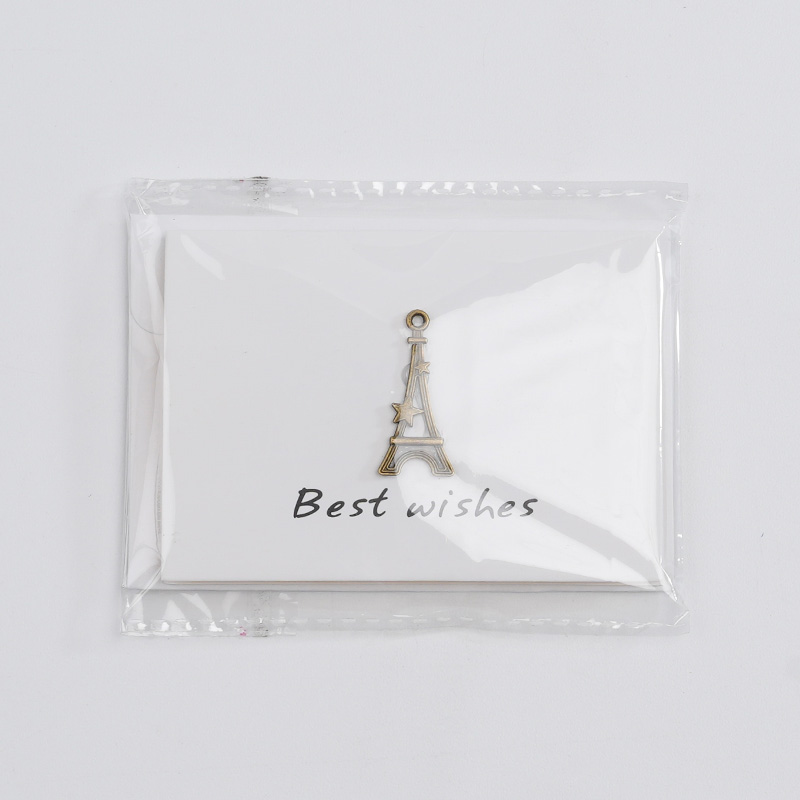
Raffia Decorative Cards
What Are Raffia Decorative Cards?
Raffia decorative cards are paper-based accessories used to complement gift packaging and decorative arrangements. They are commonly attached to gift boxes, wrapped parcels, shopping bags, bouquets, baskets, craft products, and holiday packages. Depending on the design, a card may carry a short greeting, a thank-you message, a product name, a seasonal illustration, a care note, or a customized brand communication.
The term “raffia” refers to the product category and its common use alongside raffia paper, paper raffia yarn, raffia tape, shredded paper filler, and related gift-packaging materials. The card itself is manufactured from thick card paper and coated art paper rather than from natural raffia fiber. This combination gives the product a stable shape, clean appearance, and smooth printable surface while allowing it to coordinate visually with raffia-based packaging accessories.
Unlike very thin tags or ordinary office paper, a decorative card is designed to retain its form during handling. Its stiffness helps prevent curling, bending, and unwanted creasing when it is placed inside a gift box or tied to a package. The smooth surface supports handwriting and printed graphics, making it useful for both mass-produced packaging and individual gift messages.
These cards are available in simple neutral colors such as white and beige, as well as custom printed colors. Neutral tones are particularly suitable for natural, minimalist, handmade, luxury, wedding, and sustainable packaging themes. Custom colors can be coordinated with a company’s packaging system, a festival palette, a retail campaign, or a specific product collection.
Material Structure and Product Characteristics
Thick Card Paper for Stability
The core material is thick card paper, selected to provide a firm and dependable structure. Compared with ordinary lightweight paper, thick card stock is more resistant to folding and deformation. This is important when cards are inserted into filled gift boxes, placed under ribbon, attached to handles, or shipped with other packaging materials.
Structural stability also improves the perceived value of the finished package. A thin, easily damaged insert can make a product feel less refined, while a firm card gives the recipient a more substantial and deliberate experience. For companies selling handmade goods, cosmetics, clothing accessories, food gifts, home décor items, or festive collections, this detail can support a stronger presentation without requiring complex packaging construction.
Coated Art Paper for a Smooth Finish
Coated art paper provides a smooth surface that supports sharp, clean, and readable printing. The coating helps ink sit evenly on the paper rather than spreading irregularly into the fibers. This is valuable for text, line art, logos, borders, illustrations, and seasonal designs that require visual clarity.
The smooth finish also improves writing performance. Customers can use a pen, marker, or other common writing instrument to add a personal note. A writing-friendly surface is especially useful for retailers and gift businesses that prepare packages after receiving an order. It allows a standardized printed design to be combined with a handwritten message, creating an experience that feels both professional and personal.
Moisture-Resistant Performance
The product information identifies the cards as moisture-proof. This characteristic helps the cards maintain a cleaner and more stable appearance in ordinary packaging and storage environments. Moisture resistance does not mean that the cards are waterproof or intended for direct outdoor exposure, but it does provide an additional level of protection against humidity, light contact with damp materials, and normal fluctuations during transportation.
For packaging suppliers and retailers, moisture-resistant paper accessories are easier to store and handle than highly absorbent paper products. They are less likely to lose their shape or develop an untidy surface when kept in cartons, warehouses, workshops, or display areas with changing humidity.
Portable and Easy to Use
Decorative cards are lightweight and compact. Their portable format allows them to be shipped economically, stored in limited spaces, and added to packages without significantly increasing the overall weight. They can be used individually or purchased in bulk for regular packaging operations.
Their simple form also reduces labor requirements. A card can be placed inside a box, attached with raffia cord, inserted into a gift bag, or matched with wrapping paper without specialized equipment. This convenience is particularly valuable for small businesses, online sellers, event organizers, and fulfillment teams that need attractive presentation materials but must maintain efficient packing workflows.

Advantages Over Basic Paper Tags and General Decorative Inserts
Many decorative paper products are available in the market, but not all offer the same balance of structure, print quality, writing performance, appearance, and packaging compatibility. Raffia decorative cards are designed to provide a more complete solution than very thin paper tags or uncoated inserts.
Improved Stiffness Compared with Lightweight Paper
Lightweight paper tags may be inexpensive, but they can bend easily, wrinkle during packing, or lose their shape inside a gift box. Thick card paper provides a more stable alternative. The card remains visibly present instead of collapsing against the contents of the package.
This advantage is especially clear when a card is displayed on the front of a gift box or tied to a basket. A firm card can maintain a neat silhouette, support a hole or attachment point more effectively, and create a stronger impression of quality. The added stiffness also improves sorting and handling during packing, since cards are less likely to stick together or become damaged by routine movement.
Clearer Graphics Than Poorly Coated Stock
Some low-quality paper inserts have uneven surfaces that cause blurred lines, weak color density, or inconsistent text. Coated art paper is better suited to clear printing. It supports more precise reproduction of small characters, decorative patterns, and branded visual elements.
Clear printing matters in both personal and commercial applications. A short greeting must be easy to read, while an instruction or care message must remain legible after the package has been transported. Retail brands also benefit from clean printed details because the card becomes part of the customer’s perception of product quality.
A Better Writing Surface Than Highly Glossy Materials
Some coated materials are excessively glossy and may be inconvenient for handwriting. A suitable decorative card must balance visual smoothness with practical writing performance. These cards are described as stiff, smooth, and writing-friendly, allowing printed content and handwritten content to work together.
This balance gives buyers greater flexibility. A company can use the same basic card design for standard packaging, then add a personal message for premium orders, holidays, customer appreciation programs, or special events. The card does not have to be limited to preprinted communication.
More Coordinated with Raffia-Based Packaging Systems
General-purpose greeting cards may not visually match raffia paper shreds, paper raffia yarn, raffia tape, wrapping paper, or natural gift materials. Raffia decorative cards are developed for use within this broader packaging category. Their neutral colors, customizable printing, and compact form allow them to be combined with both rustic and modern packaging styles.
A coordinated set can include a gift box, wrapping paper, shredded paper filler, paper yarn, decorative cord, and message card. When these components share compatible colors and textures, the result appears more intentional than a package assembled from unrelated accessories.
Suitable for Both Handmade and Industrial Packaging
Small craft businesses may use individual cards for handmade products, while larger companies may require thousands or millions of pieces for retail campaigns. A product that is simple enough for manual use yet consistent enough for bulk supply offers broader value than a highly specialized insert.
The cards can support seasonal gift collections, subscription boxes, promotional orders, wedding favors, event packages, and standard retail packaging. Their adaptability helps buyers reduce the need to source separate products for every application.
Product Specifications and Functional Benefits
| Feature | Description | Practical Benefit |
|---|---|---|
| Primary material | Thick card paper and coated art paper | Provides firmness, smoothness, and a refined surface |
| Available colors | White, beige, and custom printed colors | Supports neutral, natural, festive, and brand-specific packaging |
| Surface quality | Stiff, smooth, and writing-friendly | Allows clear printing and handwritten messages |
| Printing performance | Clear and legible printing | Improves greetings, illustrations, instructions, and identity details |
| Protection | Moisture-resistant characteristics | Helps maintain appearance during normal storage and handling |
| Portability | Lightweight and compact format | Supports efficient storage, shipping, and manual packing |
| Safety profile | No fluorescent agent and eco-friendly paper selection | Suitable for clean, responsible, and presentation-focused packaging |
| Primary application | Gift message cards and festival gift coordination | Creates a personal and coordinated package presentation |
The combination of these features makes the product useful beyond simple decoration. A card contributes to the package’s communication, structure, visual harmony, and customer experience. For procurement teams, this multifunctional role can simplify product selection because one accessory can serve several packaging purposes.
Applications Across Gift Packaging and Retail
Gift Message Cards
The most direct application is as a message card for birthdays, anniversaries, weddings, graduations, family celebrations, and seasonal holidays. A preprinted card can communicate a standard greeting, while the smooth surface leaves room for a personal note.
Retailers can offer cards as part of a gift-wrapping service. Customers may select a design, add a message, and have the card included with a box or bag. This service creates added value without requiring a major change to the core product or fulfillment process.
Festival Gift Collections
Festivals and holidays often require large quantities of coordinated packaging accessories. Cards can be printed with seasonal colors, patterns, greetings, or illustrations. They may be matched with wrapping paper, raffia filler, decorative yarn, and gift boxes to create a complete presentation.
Because the cards are available in custom printed colors, buyers can prepare different designs for different festivals or customer groups. A single base material can therefore support multiple campaigns throughout the year.
Gift Boxes and Subscription Packages
Gift boxes benefit from a flat, structured insert that occupies little space. A card can be placed on top of shredded paper filler or tucked beneath a lid. It can introduce the contents, thank the customer, explain product use, or communicate a limited-edition theme.
Subscription businesses can use cards to create a recurring brand experience. Each delivery may include a message related to the monthly theme, product selection, or customer appreciation. The low weight and compact format are helpful when shipping costs and package dimensions must be controlled.
Handmade Products
Artisans and craft sellers often need packaging that feels personal without appearing unfinished. A decorative card attached with paper yarn or raffia cord can communicate the maker’s identity and reinforce the handmade character of the product.
Applications include candles, soaps, knitted goods, jewelry, ceramics, stationery, small artworks, home accessories, and specialty food products. The card can include a thank-you message, production note, care advice, or space for the seller’s signature.
Wedding and Event Favors
Decorative cards are suitable for weddings, corporate events, exhibitions, seasonal parties, and other gatherings. They can carry names, dates, short blessings, table information, or appreciation messages. Their firm structure and customizable printing make them appropriate for coordinated event themes.
For event planners, the product offers a practical way to achieve consistent decoration across many individual packages. Cards can be produced in matching colors and printed with the same visual language as invitations, menus, favor boxes, and display materials.
Retail and Brand Packaging
Brands can use custom printed cards to communicate product values and improve unboxing presentation. A card may display a logo, a product story, instructions, a social message, or a thank-you note. When the design is well coordinated with the outer packaging, it can strengthen recognition and encourage a more memorable customer experience.
Unlike a permanent printed box, a card can be changed more easily for a seasonal campaign, special promotion, or new product line. This flexibility can reduce the need to redesign an entire packaging system when only the communication element needs to change.
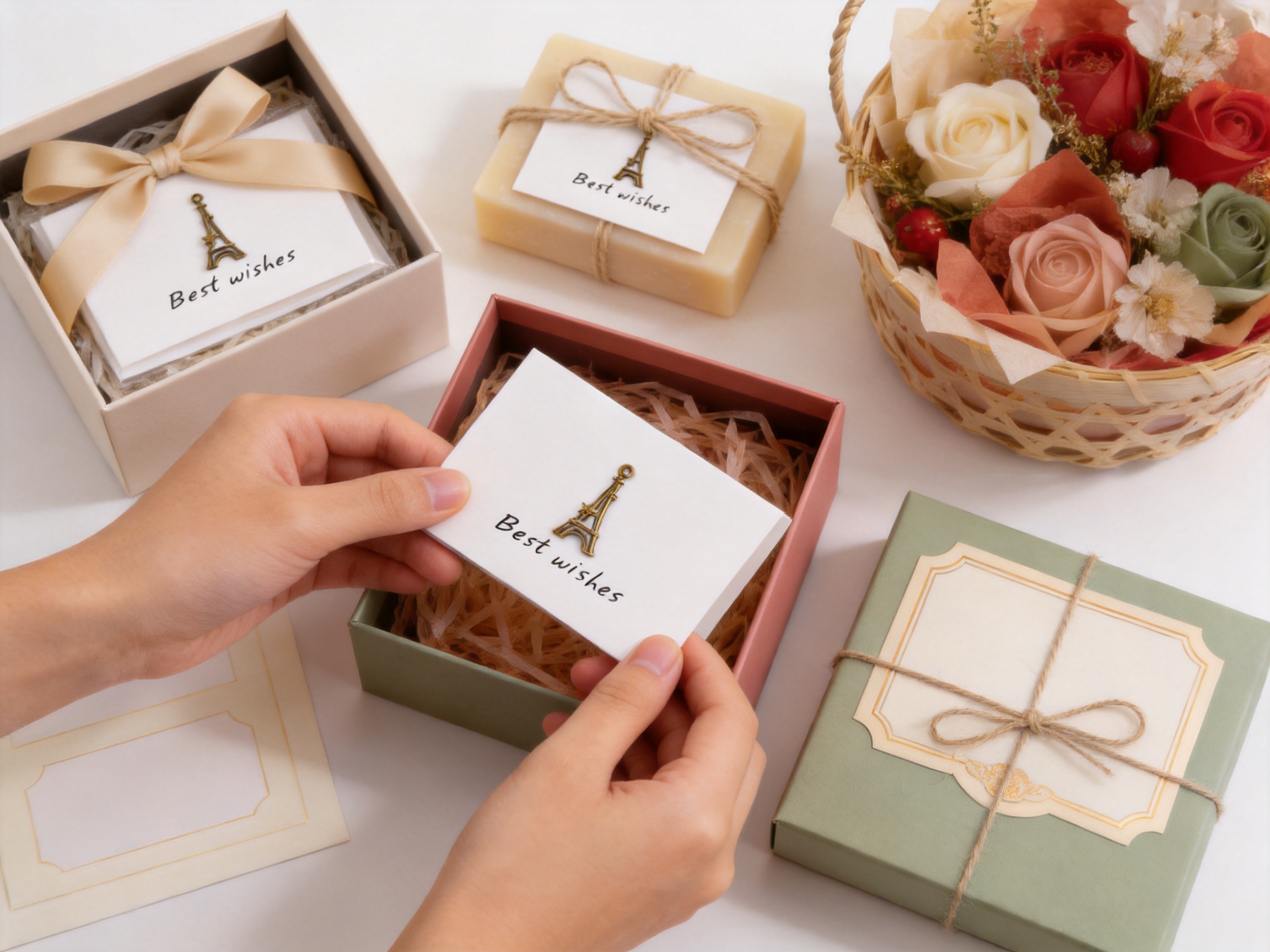
Manufacturing Strengths Behind the Product
The quality of a decorative card depends not only on the paper selected but also on the manufacturing system used to process, print, inspect, package, and ship it. Zhejiang Raffia Paper Products Co., Ltd. has developed from a craft-materials business unit established in 2010 into an integrated manufacturer founded as a company in 2014. Its experience covers paper raffia yarn, crinkle raffia paper shreds, fancy paper yarns, gift packaging materials, and related decorative products.
This background is important because decorative cards are usually purchased as part of a wider packaging program. A manufacturer familiar with raffia paper, paper yarn, filler, wrapping paper, and decorative accessories can better understand how the individual components need to coordinate in color, texture, packing format, and delivery schedule.
Integrated Production Capabilities
The company operates a modern production base in Dongyang, Zhejiang Province, covering approximately 20,000 square meters and employing more than 200 professional workers. Its manufacturing chain includes raw material processing, mass production, quality testing, finished-goods packaging, and shipment.
An integrated chain gives buyers a more direct relationship between specifications and production. Instead of depending entirely on multiple outside workshops, the manufacturer can coordinate key stages internally. This can improve consistency, simplify communication, and make it easier to manage repeat orders.
For customers purchasing decorative cards alongside other raffia packaging products, integrated production may also support more efficient consolidation. Compatible goods can be planned, checked, and packed according to the buyer’s shipment requirements, reducing unnecessary coordination between unrelated suppliers.
Experience with Slitting, Twisting, Winding, and Compression Packaging
The company has upgraded production equipment and core technologies for slitting, twisting, winding, and compression packaging. Although these operations are particularly relevant to paper raffia yarn and fancy paper yarn, they demonstrate broader expertise in converting paper materials into consistent decorative products.
Slitting requires controlled cutting and dimensional accuracy. Twisting and winding require stable tension and reliable equipment control. Compression packaging requires attention to volume, protection, and recovery after opening. Experience with these processes reflects a manufacturing culture focused on repeatability rather than purely manual production.
That discipline can benefit card production as well. Paper products need controlled cutting, accurate sizing, clean edges, stable stacking, and protective packing. A factory that routinely manages precision converting and high-volume decorative materials is better positioned to handle systematic quality requirements.
Standardized Procedures and Replicable Quality Control
The company emphasizes standardized production procedures and a strict, replicable quality control system. For buyers, replicability is one of the most important factors in long-term supply. A sample may look attractive, but repeat orders must maintain comparable color, dimensions, printing clarity, surface condition, and packaging quality.
Quality control for decorative cards may include inspection of paper thickness, surface smoothness, color accuracy, printing clarity, edge condition, moisture-related defects, stacking quality, and carton protection. Inspection procedures can also verify that the correct design and quantity are packed for each order.
A replicable system reduces dependence on individual worker judgment. It creates documented expectations that can be applied to different production batches. This is particularly important for international buyers who need confidence that future shipments will remain consistent with approved samples.
Large Production Capacity
The factory reports an annual production capacity of more than 200 million pieces across its product range. This capacity supports both regular bulk orders and larger seasonal requirements. It also indicates that the company has experience coordinating materials, labor, equipment, quality checks, and shipment planning on a substantial scale.
Capacity alone does not guarantee quality, but it becomes a meaningful advantage when combined with standardized procedures and integrated inspection. Buyers can seek a supplier that is capable of handling growth without immediately requiring a complete change of manufacturing partner.
OEM and ODM Customization Options
Customization is a central requirement in the gift-packaging market. A card may need to match a specific box size, campaign color, message, logo, or seasonal theme. Zhejiang Raffia Paper Products Co., Ltd. provides OEM and ODM services that can support exclusive brand customization, custom size development, and long-term bulk order supply.
Custom Printing
Custom printing can transform a general decorative card into a brand-specific packaging element. Buyers may request a logo, greeting, illustration, pattern, color system, product information, or campaign message. The coated surface supports clear reproduction, while the card structure gives the printed design a firm presentation.
Before production, buyers should prepare accurate artwork files, specify color expectations, confirm the printable area, and approve a physical or production sample when appropriate. Clear approval procedures help prevent misunderstandings concerning color, layout, text, and finishing.
Custom Sizes and Shapes
Standard cards are convenient, but custom dimensions may be needed for a particular box, bag, basket, or product. A card can be developed to fit a narrow package, sit neatly beneath a lid, or provide a larger writing area. Custom sizing should consider the final application, attachment method, storage requirements, and shipping format.
Shape customization may also be possible depending on the production plan and tooling requirements. Rounded corners, special silhouettes, and attachment holes can change the visual character of a card, but they should be evaluated alongside production efficiency and budget.
Long-Term Bulk Supply
For retailers, packaging distributors, and established brands, long-term supply is often more important than a single low-cost order. A reliable supplier should be able to maintain specifications, plan raw materials, support repeat production, and coordinate delivery schedules.
Long-term bulk supply can also improve packaging consistency across different markets. When the same card design is used for multiple product lines or regional sales channels, centralized production helps reduce unnecessary variation.
Quality, Safety, and Environmental Considerations
Decorative cards are part of a product’s presentation, so cleanliness and material safety are important. The product is described as free from fluorescent agents and aligned with eco-friendly and clean packaging requirements. This supports buyers who want to reduce unnecessary chemical visual effects and select paper accessories with a more responsible profile.
The absence of fluorescent agents is relevant for brands that prefer a natural, restrained, or environmentally conscious appearance. White paper can be bright and clean without relying on a visibly artificial effect. Beige and other muted tones can also support kraft-style, botanical, handmade, and minimalist packaging themes.
Paper products should still be stored in dry, clean conditions and protected from excessive moisture, dust, direct contamination, and prolonged compression. Responsible packaging performance depends on both manufacturing quality and proper logistics. Buyers should communicate any special storage, retail, or shipping requirements before mass production.
Environmental performance should be considered across the full product lifecycle. Important questions include the type of paper used, the amount of material required, printing coverage, packaging efficiency, transport volume, and end-of-life handling. A lightweight paper card can be a practical option when it replaces more material-intensive decorative components, but responsible use also requires avoiding unnecessary overproduction.
How to Select the Right Decorative Cards
Define the Purpose
First, determine whether the card will be used for a handwritten greeting, a printed brand message, a care instruction, a seasonal decoration, or a combination of these purposes. A writing-focused card may need more open space, while a brand-focused card may require a larger printable area.
Match the Card to the Package
Consider the dimensions, weight, color, and structure of the package. A card that is too large may interfere with the product or lid, while one that is too small may be difficult to read. The card should visually complement the gift box, wrapping paper, raffia filler, and decorative cord rather than compete with them.
Choose an Appropriate Color
White provides a clean and versatile base for printing. Beige creates a softer, natural, or craft-oriented appearance. Custom printed colors can support a specific brand or event theme. When selecting a color, buyers should consider the surface of the surrounding packaging and how the design will appear under retail lighting.
Confirm Printing Requirements
Artwork should be checked for text accuracy, image resolution, color expectations, margins, and finishing details. Small text should be tested to ensure readability. If the card will be handwritten, enough unprinted space should remain available for the intended message.
Review Packing and Shipping Needs
Ask how cards will be stacked, counted, wrapped, and packed into cartons. Efficient packing protects the edges and surfaces while making receiving and inventory control easier. Buyers with international supply chains should also confirm carton marks, pallet requirements, shipment timing, and documentation needs.
Evaluate Supplier Capability
A supplier should be evaluated not only on price but also on experience, equipment, quality procedures, customization capability, production capacity, communication, and delivery reliability. A low unit price may not be economical if it leads to inconsistent printing, damaged edges, late shipments, or repeated quality disputes.
Recommended Quality Inspection Points
Before approving a bulk order, buyers can establish a practical inspection checklist. The first point is material condition. Cards should be free from excessive warping, deep creases, visible stains, severe scratches, and damaged edges.
The second point is dimensional consistency. The length, width, thickness, corner shape, and hole position, if applicable, should remain within the agreed tolerance. Consistent sizing helps cards fit packaging components and improves the appearance of large production runs.
The third point is print quality. Text should be legible, images should be clear, and color should be reasonably consistent with the approved sample. Buyers should check for smearing, missing areas, uneven density, registration errors, and unwanted marks.
The fourth point is writing performance. A sample card can be tested with the intended writing instruments to confirm that ink performs acceptably on the surface. This is particularly important when the product is sold specifically as a message card.
The fifth point is packaging condition. Finished cards should be protected from bending, moisture, dust, and impact during shipment. Cartons should be strong enough for stacking and transportation, while the inner packing should prevent excessive movement.
Why an Integrated Manufacturer Can Offer Better Value
Purchasing from an integrated manufacturer can provide several advantages over coordinating separate suppliers for cards, raffia yarn, filler, wrapping paper, and other accessories. The first is communication efficiency. Product specifications, color references, packaging requirements, and shipping schedules can be discussed with a supplier familiar with the entire category.
The second is consistency. When related products are produced within an experienced packaging-materials system, it may be easier to coordinate colors, textures, formats, and quality expectations. This is valuable for brands seeking a unified presentation across multiple product components.
The third is scalability. A manufacturer with a substantial production base and reported annual capacity exceeding 200 million pieces can be better prepared for repeat orders, seasonal peaks, and expansion into additional markets.
The fourth is process control. Integrated production allows greater visibility from raw material handling through final packaging and shipment. This does not eliminate the need for customer inspection, but it creates a stronger foundation for stable production and corrective action.
The fifth is customization support. A company experienced in OEM and ODM work can help buyers move from a general concept to a practical product specification. This may include custom size development, exclusive printing, coordinated packaging, and long-term supply planning.
Ordering and Project Development Process
A successful decorative-card project usually begins with a clear product brief. The brief should identify the intended application, approximate quantity, card dimensions, material preference, color, artwork, writing requirements, packaging method, destination market, and target delivery schedule.
The next step is technical review. The manufacturer can evaluate whether the requested size, printing, surface, attachment method, and quantity are suitable for production. If the buyer requires a custom format, an initial sample or digital proof can help confirm expectations.
After design approval, the order moves into material preparation and production scheduling. For repeat programs, the buyer and manufacturer should maintain an approved reference sample and written specifications. This makes future production easier to compare and reduces the possibility of accidental changes.
Quality inspection takes place during and after production. Depending on the order, buyers may request photographs, sample checks, inspection reports, or third-party inspection arrangements. Final packing should be confirmed before shipment so that the goods arrive in a condition suitable for direct storage or distribution.
Market Positioning and Commercial Potential
Raffia decorative cards occupy an attractive position between simple paper tags and more elaborate packaging systems. They are affordable enough for broad use but substantial enough to improve the perceived value of a package. This balance makes them suitable for mass retail, boutique gifting, online commerce, hospitality, event services, and handmade product businesses.
The product also benefits from the continuing demand for personalized packaging. Customers increasingly value messages, presentation details, and thoughtful unboxing experiences. A decorative card gives sellers a relatively simple method of adding emotional and informational value to an order.
For packaging distributors, the product can be included in a broader catalog of raffia paper yarn, filler, wrapping paper, decorative cords, and gift accessories. For brands, it can become a standardized insert used across different packaging formats. For event companies, it can be customized for short-term campaigns or one-time celebrations.
Because the card is lightweight, flat, and easy to store, it can be offered in multiple designs without creating the logistical complexity associated with larger decorative items. A buyer may maintain several seasonal designs, neutral options, and custom brand versions while using the same general packing workflow.
Careful Use and Storage Recommendations
Decorative cards should be stored flat in clean, dry conditions. Avoid placing heavy or uneven loads on top of cartons for extended periods, as excessive compression may affect edges or corners. Keep the product away from direct water exposure and protect it from dust during long-term storage.
When packing, handle cards with clean hands or suitable gloves if the surface is highly visible and the product is intended for premium presentation. Avoid folding the card unless the design specifically requires a crease. If cards include punched holes, use appropriate cords or ribbons that do not tear the paper during attachment.
For handwritten messages, test the selected pen on a sample before preparing a large batch. Allow ink to dry when necessary before placing the card against another printed surface. These simple practices help preserve the clean appearance of the finished package.
Frequently Asked Questions
What materials are used for raffia decorative cards?
The cards are made from thick card paper and coated art paper. This combination provides a stiff structure, a smooth surface, clear printing, and a writing-friendly finish.
Are the cards suitable for handwritten messages?
Yes. Their smooth surface is designed to support writing, making them suitable for personal greetings, thank-you notes, festival messages, and customer communication.
What colors are available?
Standard options include white and beige. Custom printed colors can also be developed to coordinate with a brand identity, seasonal campaign, gift box, wrapping paper, or event theme.
Are the cards waterproof?
The cards are described as moisture-proof, which helps them withstand ordinary humidity and handling conditions. They should not be treated as fully waterproof or exposed directly to water for prolonged periods.
Can the cards be customized with a logo or message?
Yes. OEM and ODM services can support custom printing, exclusive brand designs, custom sizes, and other project requirements subject to production evaluation and approval.
Can these cards be used with other raffia packaging materials?
Yes. They are suitable for matching with paper raffia yarn, raffia filler, raffia tape, wrapping paper, decorative cords, gift boxes, and other packaging accessories. Their neutral and customizable appearance allows them to fit both natural and modern designs.
Are the products suitable for bulk orders?
Yes. The manufacturer operates a large production base and reports an annual capacity of more than 200 million pieces across its product range. This supports regular wholesale supply and larger seasonal requirements.
What quality points should buyers inspect?
Buyers should inspect material condition, dimensions, edge quality, print clarity, color consistency, writing performance, moisture-related damage, stacking quality, and carton protection.
What makes a specialized manufacturer different from a general paper supplier?
A specialized manufacturer understands the requirements of raffia paper, gift packaging, decorative accessories, and related paper-converting processes. It may provide stronger category knowledge, integrated production, OEM and ODM support, more suitable packing methods, and better coordination of related products.
Where is the manufacturer located?
Zhejiang Raffia Paper Products Co., Ltd. is located at No. 151 Guanshan North Road, Dongyang City, Zhejiang Province, China. The company serves customers in China and international markets including Europe, North America, South America, Asia, and other regions.
Conclusion
Raffia decorative cards are a practical and versatile way to improve gift presentation, communicate a message, and coordinate multiple packaging elements. Their thick card-paper structure provides stability, while coated art paper creates a smooth surface for clear printing and handwriting. White, beige, and custom printed colors allow the cards to support a wide range of packaging styles, from natural handmade designs to polished retail presentations.
Compared with thin paper tags and basic inserts, these cards offer stronger physical performance, clearer visual communication, better writing convenience, and more effective compatibility with raffia-based packaging materials. Their moisture-resistant characteristics, portable format, clean material profile, and absence of fluorescent agents further support practical and responsible use.
The manufacturing strength behind the product is equally important. Zhejiang Raffia Paper Products Co., Ltd. brings more than a decade of industry development, an integrated 20,000-square-meter production base, more than 200 professional employees, experience in paper-converting and packaging processes, standardized procedures, strict quality control, and reported annual capacity exceeding 200 million pieces. Its OEM and ODM capabilities allow buyers to request custom printing, sizes, colors, and long-term supply arrangements.
For retailers, brands, gift companies, event planners, packaging distributors, and handmade businesses, the product offers a cost-effective way to create a more thoughtful and coordinated customer experience. When supported by careful design, reliable quality control, and efficient manufacturing, a small decorative card can become an important part of a complete packaging strategy.
References
1. Product specification information for Raffia Decorative Cards, including materials, colors, surface characteristics, applications, and safety features.
2. Company profile information for Zhejiang Raffia Paper Products Co., Ltd., including company history, production base, workforce, manufacturing capabilities, product categories, and international service markets.
3. General paper-converting and packaging-material principles concerning card stock stiffness, coated paper printing performance, storage, handling, and quality inspection.
4. General gift-packaging and retail-presentation practices concerning message cards, seasonal packaging, personalized customer communication, and coordinated decorative accessories.
5. General procurement principles for OEM and ODM packaging projects, including artwork approval, sample confirmation, production consistency, inspection, packaging, and long-term supply planning.
Product: Raffia Decorative Cards

 +86 15355323399
 kevin@raffia-paper.com
 No. 151 Guanshan North Road, Dongyang City, Zhejiang Province, China

Copyright © Zhejiang Raffia Paper Products Co., Ltd. All Rights Reserved.

Paper Raffia Yarn & Gift Packaging Factory