
 +86 15355323399
 En
 中文简体
 日本語
 Français
 Español
 Deutsch
 Türk
 عربى
 italiano
 русский
Raffia Decorative Foam Balls: Lightweight Protection and Creative Versatility for Gift Packaging
Raffia Decorative Foam Balls
Decorative filler materials play an important role in modern gift presentation, seasonal merchandising, craft production, and retail packaging. Although they may appear simple, the right filler must satisfy several requirements at the same time. It should be attractive, lightweight, clean, resilient, easy to handle, and suitable for different packaging environments. Raffia Decorative Foam Balls are designed to meet these needs by combining a smooth rounded appearance with the practical benefits of high-quality EPS polystyrene foam.
These decorative foam balls are suitable for gift boxes, product presentation, holiday decoration, craft DIY projects, and other creative applications. Their low weight helps reduce the burden of filled packaging, while their pressure-resistant structure helps them retain their shape during handling and storage. Compared with many traditional fillers, they offer a cleaner and more consistent appearance, making them suitable for both small handmade projects and larger commercial packaging programs.
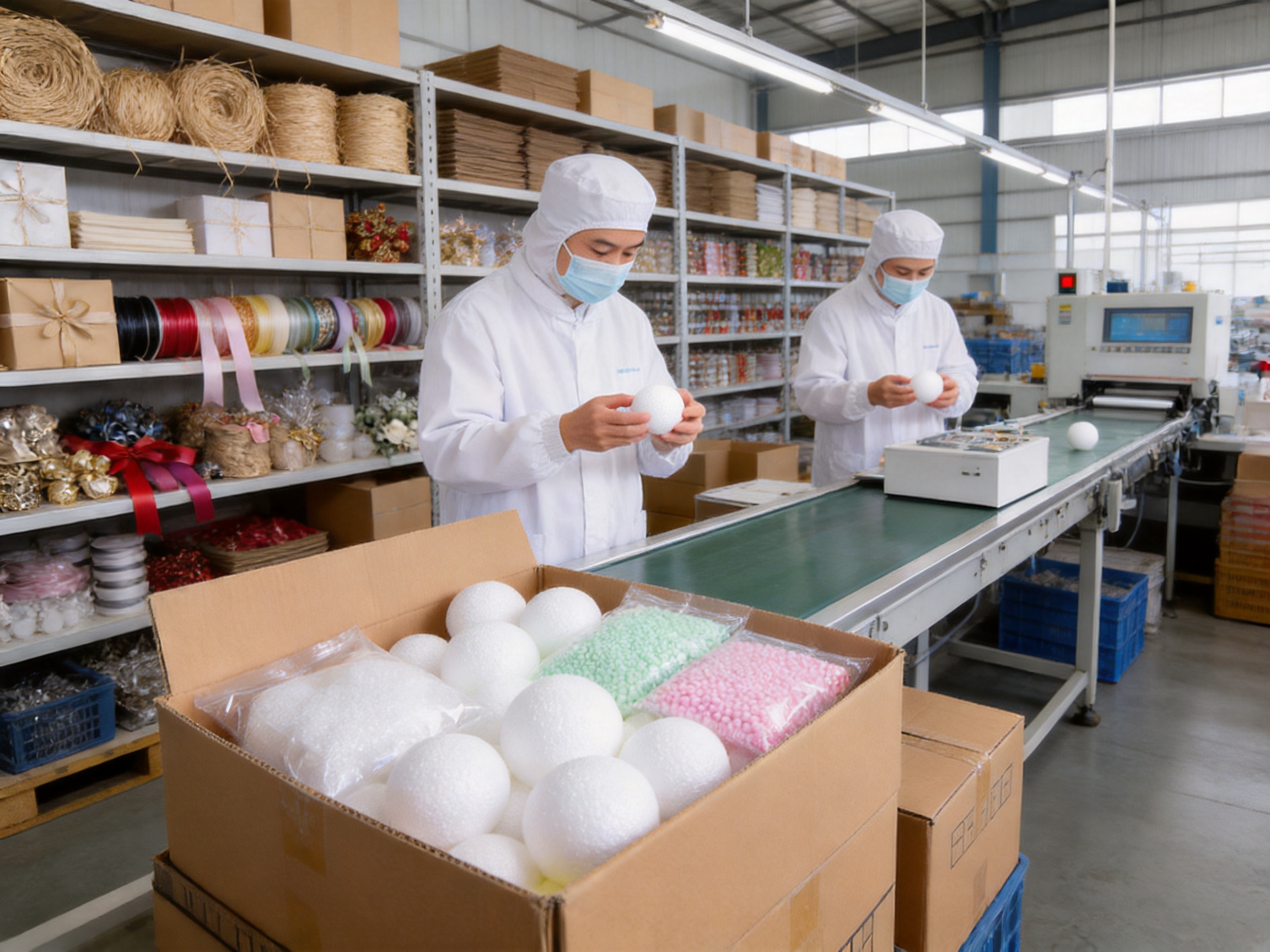
Manufactured by Zhejiang Raffia Paper Products Co., Ltd., the product forms part of a broader portfolio that includes paper raffia yarn, raffia filler, raffia decorative accessories, wrapping paper, DIY cords, fancy yarns, and gift packaging materials. The company combines material processing, production, quality inspection, and finished-goods packaging within an integrated manufacturing system. This structure supports stable quality, customized development, and reliable bulk supply for customers in China and international markets.
What Are Raffia Decorative Foam Balls?
Raffia Decorative Foam Balls are lightweight decorative spheres made from EPS polystyrene foam. EPS, or expanded polystyrene, is a cellular foam material valued for its low density, cushioning properties, and ability to be formed into consistent shapes. In this product, the material is processed into smooth, rounded balls intended for use as box filler, decorative components, and craft materials.
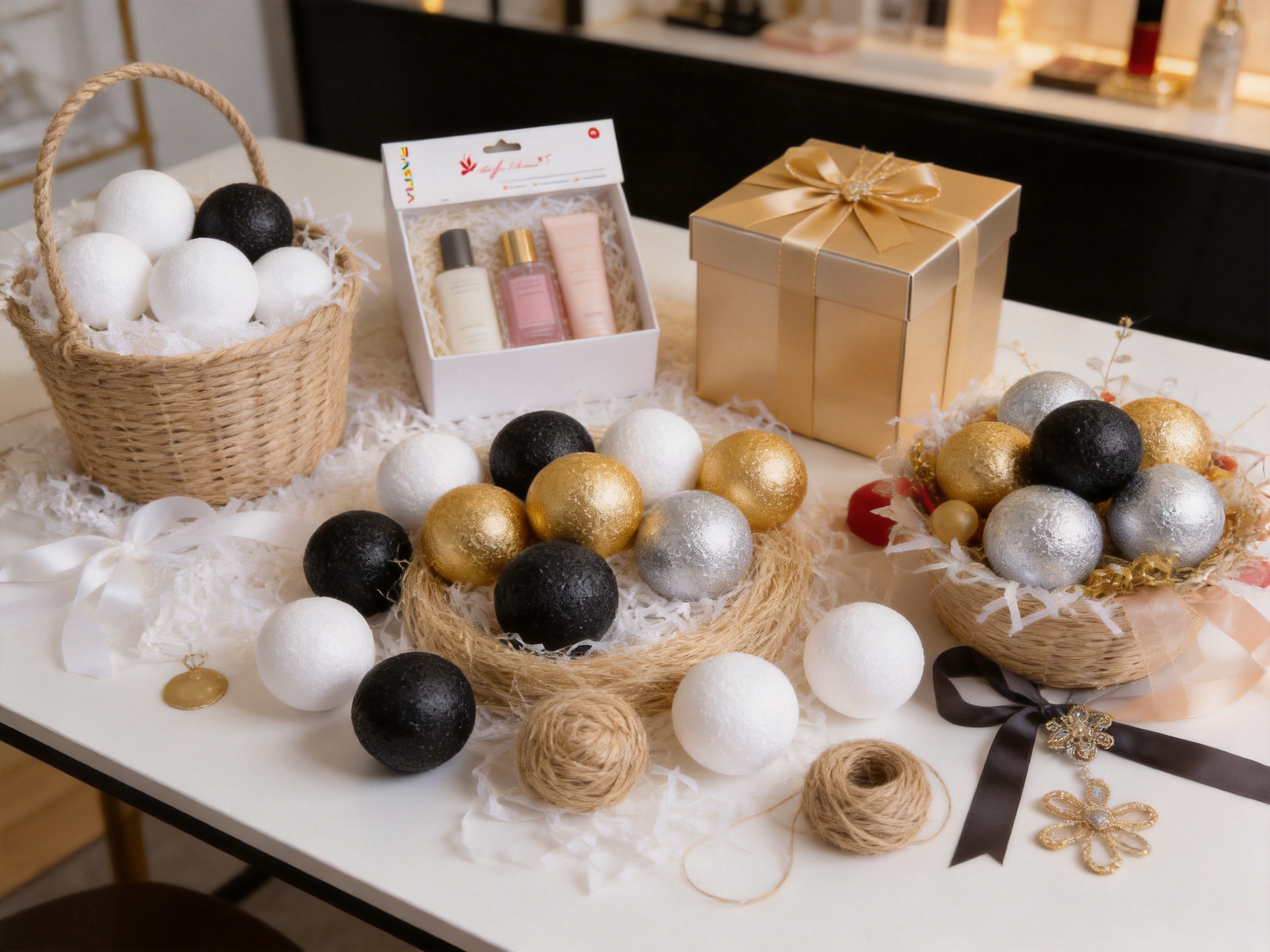
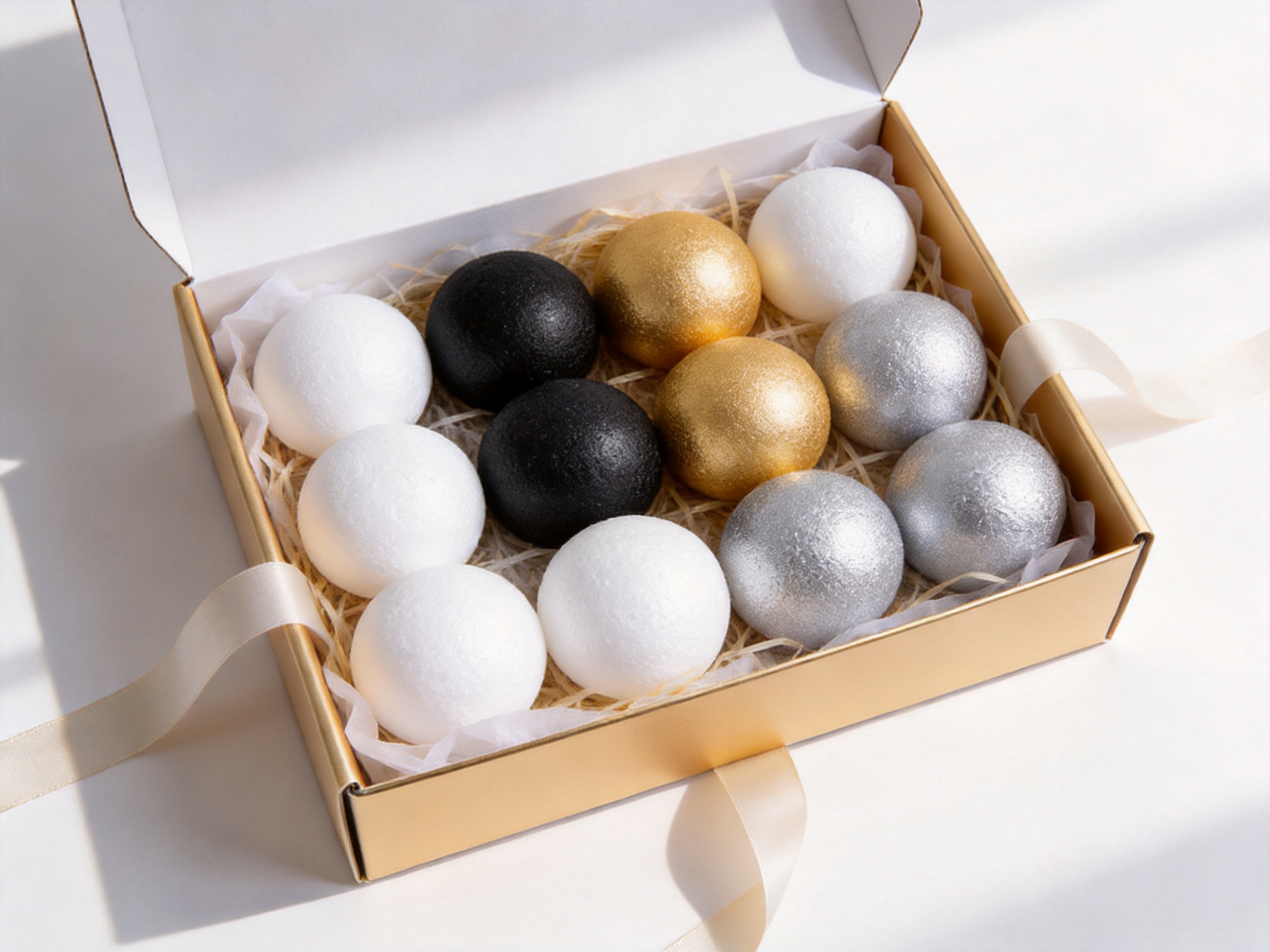
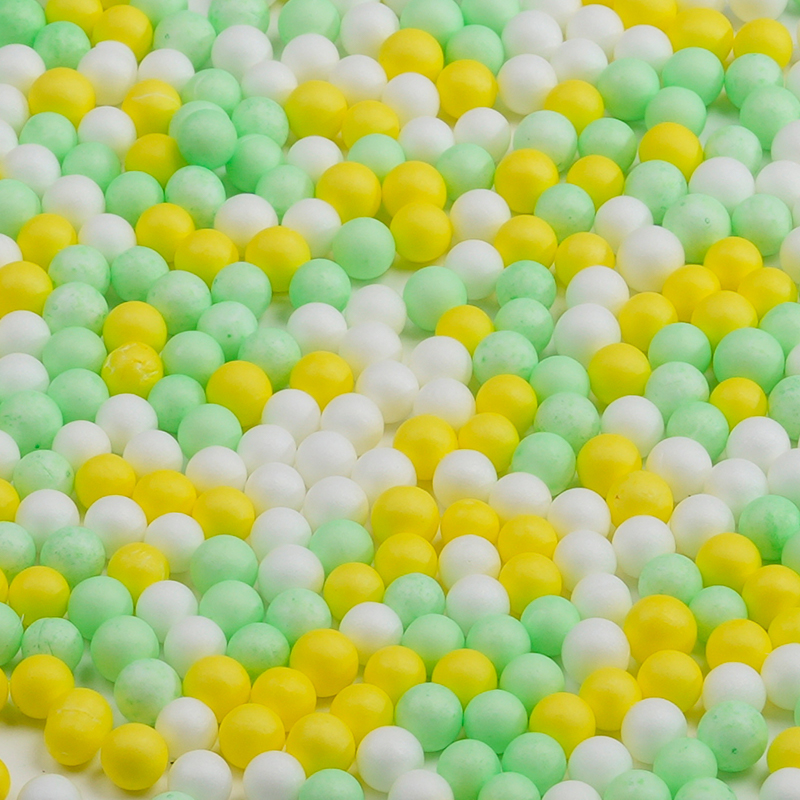
The balls are available in white, black, gold, silver, and custom colors. This range allows buyers to coordinate the filler with a brand identity, seasonal theme, gift color scheme, or event concept. White and natural-looking shades can create a clean and soft presentation, while metallic gold and silver can contribute to premium, festive, or celebratory packaging. Black can provide contrast and a more modern visual effect.
The surface is designed to be light, smooth, and round. This appearance makes the balls more visually uniform than irregular paper scraps or loosely cut filler. When placed inside a gift box, basket, display container, or product package, the balls can create a tidy decorative layer while also helping fill empty space around the enclosed product.
The product is also described as odorless, stable, and harmless under normal intended use. These characteristics are important for packaging suppliers, craft retailers, gift companies, event planners, and consumers who want a convenient decorative material that does not introduce an unpleasant smell or excessive loose debris into the packaging environment.
Core Product Advantages
Lightweight Structure
One of the most important advantages of EPS foam is its low weight. Decorative packaging can become unnecessarily heavy when dense materials are used to fill empty space. Heavy fillers increase transportation costs, complicate handling, and may make a gift package less convenient for the recipient.
Raffia Decorative Foam Balls provide visual volume without adding significant weight. A relatively small quantity can occupy a noticeable amount of space inside a box or display container. This makes them practical for gift companies and retailers that need to maintain an attractive presentation while keeping the overall package efficient.
For international shipments, lightweight packaging components can be particularly valuable. Shipping expenses are influenced by both actual weight and dimensional considerations, and reducing unnecessary material weight can help businesses manage logistics more effectively. While the final transportation result depends on the complete package design, a lightweight filler is generally easier to incorporate into efficient packaging systems than a dense alternative.
Smooth and Consistent Appearance
Visual consistency has a direct influence on the perceived quality of a gift or retail package. Uneven, crushed, dusty, or irregular filler can make a package appear unfinished. By contrast, rounded foam balls create a more coordinated appearance and can complement the shape and color of the main product.
The smooth surface helps the balls move easily during filling and arranging. Their rounded form also creates a soft, playful, and decorative effect. Depending on the color and quantity used, the same product can support a minimalist presentation, a festive holiday design, a children’s craft concept, or a luxury gift arrangement.
Consistent shape is also useful for commercial packaging operations. When decorative filler varies significantly in size or form, workers may need more time to arrange it. Uniform foam balls can simplify visual planning and help packaging teams achieve repeatable results from one box to the next.
Pressure Resistance
Decorative filler must withstand ordinary handling between production and final use. Boxes may be stacked, moved, opened, closed, and transported several times. A material that collapses easily or produces excessive debris can reduce the quality of the final presentation.
Raffia Decorative Foam Balls are designed to be pressure-resistant and not easy to break. Their resilient structure helps them retain their rounded appearance during normal packing and handling. This is especially useful when the balls are placed around products that need a stable decorative surround or when the package may be moved through several stages of distribution.
Pressure resistance does not mean the product is indestructible. As with all foam materials, it should be protected from sharp objects, extreme force, heat, and unsuitable storage conditions. Within its intended applications, however, its stable structure offers a practical advantage over fragile decorative elements that easily crush, crack, or lose their shape.
Reduced Loose Debris
Some fillers shed fibers, paper dust, fragments, or small particles during handling. This can be inconvenient for packaging personnel and may affect the appearance of products placed inside the box. It can also create additional cleanup work for retailers or gift recipients.
The product is designed not to shed debris easily. Its smooth EPS surface helps maintain a cleaner packaging environment than many rough or highly fragmented materials. This feature is beneficial when the filler is used around cosmetics, accessories, home goods, handmade products, promotional items, or other merchandise where presentation quality matters.
Reduced debris is also valuable for craft workshops and retail displays. A material that remains relatively clean and stable can be stored, portioned, and reused more conveniently. Proper handling and storage are still recommended, but the structure is intended to minimize unnecessary fragmentation during ordinary use.
Color Flexibility
Color is a major part of gift packaging design. A filler may need to match a corporate identity, coordinate with a holiday palette, or create a contrast that makes the main product more visible. Raffia Decorative Foam Balls are offered in white, black, gold, silver, and custom colors to support different design directions.
White can be used for wedding packaging, clean product photography, winter themes, minimalist gift boxes, and general-purpose presentation. Black may suit premium packaging, modern retail concepts, and strong color contrasts. Gold and silver are appropriate for Christmas, anniversaries, weddings, celebrations, luxury products, and promotional events.
Custom color development gives businesses additional flexibility. A company may request a color that corresponds to a brand guideline, special campaign, regional celebration, or product collection. Customization requirements should be confirmed in advance, including color reference, minimum order quantity, sample approval, and production lead time.
Applications in Gift Packaging
Gift Box Filling
The most direct application is filling empty space in gift boxes. After a product is placed inside a box, remaining space can make the package look incomplete or allow the product to move during handling. Foam balls help occupy the visible area around the product, creating a fuller and more decorative appearance.
They can be used with paper raffia shreds, crinkle paper, tissue paper, wrapping paper, ribbons, paper yarn, and other packaging accessories. Combining materials allows designers to create different textures and levels of visual depth. For example, paper-based filler can provide a natural foundation while foam balls add rounded highlights and a light decorative accent.
For smaller boxes, a controlled quantity may be placed around the product or along the top layer. For larger gift hampers, the balls can be used as part of a layered arrangement with shredded paper and decorative accessories. The amount required depends on the box dimensions, product size, desired coverage, and presentation style.
Cosmetic and Beauty Gift Sets
Beauty gift sets often require a neat and polished presentation. Products such as skincare bottles, fragrance packages, makeup accessories, and personal care items can be arranged inside a gift box with decorative foam balls surrounding the individual units.
Gold, silver, black, and white can complement premium cosmetic packaging. The balls may help create a visual frame around the products without competing strongly with printed labels or package graphics. Their lightweight structure also prevents the gift box from becoming unnecessarily heavy.
When used with cosmetics, the foam balls should remain outside the product containers and should not be placed inside any formula, vessel, or sealed product component. Packaging teams should also ensure that the finished arrangement is clean and that the material is suitable for the intended retail environment.
Corporate and Promotional Gifts
Corporate gift programs often require packaging that is consistent across a large number of units. A decorative filler must therefore be easy to portion, visually repeatable, and compatible with different product combinations. Foam balls can be used in employee gifts, client appreciation boxes, event merchandise, promotional kits, and seasonal business packages.
Custom colors may help align the package with a corporate identity. A company can combine its preferred foam-ball color with branded wrapping paper, printed cards, paper raffia yarn, and custom labels. This creates a coherent visual system while allowing the main product to remain the central focus.
Because the balls are lightweight and relatively easy to handle, they can support both manual packing and organized small-batch operations. For larger orders, packaging teams can define a standard quantity or weight per box to improve consistency and simplify quality checks.
Gift Hampers and Baskets
Gift hampers often include products with different shapes and sizes. Without filler, these items may shift, become hidden, or appear loosely arranged. Decorative foam balls can help fill gaps and create a more generous visual effect around food packages, household products, accessories, stationery, and seasonal merchandise.
The round shape provides a soft contrast to rectangular boxes and cylindrical containers. When several colors are combined carefully, the filler can reinforce a holiday theme or event concept. A neutral color can be used as a base, with a small quantity of gold, silver, or another accent color added for emphasis.
For food-related hampers, the foam balls should be used only as external decorative packaging material. They should not come into direct contact with unpackaged food. Any business using them in a food gift basket should keep the filler separated from edible products through sealed containers, inner bags, trays, or suitable packaging barriers.
Craft DIY and Creative Uses
In addition to packaging, Raffia Decorative Foam Balls can be used in craft DIY projects. Their simple round shape gives makers a flexible base for decorative arrangements, seasonal ornaments, handmade displays, classroom activities, and event decorations.
Holiday Decoration
White foam balls can contribute to winter scenes, snow-themed arrangements, Christmas displays, and festive table decorations. Gold and silver versions can be combined with ribbons, paper yarn, artificial foliage, and ornaments for celebratory designs. Black and metallic colors may suit Halloween, modern party styling, or dramatic retail displays.
The balls can be placed in transparent containers, decorative trays, gift baskets, table centerpieces, or display boxes. Their low weight makes them easier to arrange on shelves and tables where heavy decorative materials may be inconvenient.
Handmade Ornaments
Craft makers can use the balls as lightweight cores or decorative components in handmade ornaments. They may be combined with paper, fabric, yarn, ribbons, beads, sequins, or other suitable craft materials. Their smooth surface provides a simple starting point for creative covering and embellishment.
Any adhesive, paint, coating, or additional material should be tested on a small sample first. Certain solvents, high temperatures, or unsuitable chemicals may affect EPS foam. A low-temperature or foam-compatible adhesive is generally more appropriate than a product that generates substantial heat or contains aggressive solvents.
Event and Retail Displays
Retailers, event planners, and visual merchandisers can use decorative foam balls to add volume to display arrangements. They can be placed around product launches, seasonal counters, wedding tables, exhibition booths, photo zones, and promotional installations.
Since the balls are easy to move and rearrange, they can be adapted for short-term displays or changing retail themes. Their availability in several colors also allows a display to be refreshed without completely changing its structure.
Comparison with Common Decorative Fillers
Every filler material has a different balance of appearance, weight, resilience, sustainability characteristics, cost, and handling performance. Raffia Decorative Foam Balls are not intended to replace every other type of filler. Instead, they offer a distinct solution for applications that require round shape, low weight, color flexibility, and resistance to ordinary handling.
| Filler Type | Typical Strength | Common Limitation | Advantage of Foam Balls |
|---|---|---|---|
| EPS decorative foam balls | Lightweight, rounded, clean-looking, pressure-resistant | Requires responsible handling and suitable disposal | Consistent shape, low weight, low debris, and color flexibility |
| Shredded paper | Paper-based appearance and strong compatibility with gift boxes | May crease, shed fibers, or settle during transport | Adds rounded volume and a smooth decorative accent |
| Tissue paper | Soft, elegant, and easy to fold | Can wrinkle or compress quickly | Provides more stable three-dimensional filler volume |
| Wood wool | Natural texture and rustic visual appeal | Can be rough, dusty, or heavier in some formats | Offers a smoother and more uniform appearance |
| Plastic air pillows | Useful for cushioning and void filling | Less decorative and may not suit premium presentation | Provides a more decorative, craft-oriented appearance |
| Fabric or yarn scraps | Textural and reusable in certain projects | Variable color, size, cleanliness, and density | More consistent in shape and easier to standardize |
The comparison shows why foam balls can be valuable in a mixed-material packaging program. Paper filler may be preferred when a natural fiber appearance is the priority, while foam balls may be selected when the design calls for clean rounded forms and low weight. In many cases, the strongest presentation is achieved by combining complementary materials rather than relying on a single filler.
Manufacturing Quality and Process Control
Product performance depends not only on the material itself but also on the consistency of manufacturing. Foam balls intended for commercial packaging should have stable dimensions, a relatively uniform surface, dependable color, and controlled cleanliness. These factors become especially important when a buyer is supplying multiple retail locations or producing large quantities of gift boxes.
Zhejiang Raffia Paper Products Co., Ltd. operates an integrated manufacturing system supported by standardized production procedures and a structured quality control process. The company was founded in 2014 and originated from a craft materials business unit established in 2010. Over more than a decade of industry development, it has expanded from a trading enterprise into a large-scale manufacturer of raffia-related and gift packaging materials.
Integrated Production Capabilities
The company’s manufacturing chain covers raw material processing, mass production, quality testing, finished-goods packaging, and shipment. An integrated structure can improve coordination between different production stages and help reduce reliance on disconnected external processes.
For customers, this type of organization can make communication more direct. Product requirements, packaging specifications, customization requests, and quality expectations can be discussed with a supplier that understands both the material and the broader packaging application. This is useful when buyers need foam balls to coordinate with paper raffia yarn, crinkle raffia paper shreds, wrapping materials, or other decorative accessories.
Integrated manufacturing also supports production planning. When a buyer needs a long-term supply program, the supplier can coordinate material preparation, production scheduling, inspection, and shipment more systematically. The precise lead time depends on product specification, order quantity, color, packaging method, and current production capacity, but a structured system provides a stronger foundation for reliable delivery.
Modern Production Base
The company operates a modern production base in Dongyang, Zhejiang Province, covering approximately 20,000 square meters and employing more than 200 professional employees. This scale supports multiple product categories and provides the physical space required for raw material management, production operations, testing, packaging, and warehousing.
A larger production base can offer advantages over small, highly fragmented workshops. It may provide clearer separation between production areas, more organized material storage, improved production scheduling, and greater capacity for standardized inspection. These strengths are particularly relevant to international buyers that require repeat orders with consistent appearance and packaging.
The company reports an annual production capacity of more than 200 million pieces across its product operations. Capacity should always be evaluated according to the specific product, customization level, order size, and delivery schedule. Nevertheless, this stated scale indicates that the manufacturer is positioned to support both standard products and recurring bulk supply programs.
Quality Control and Repeatability
Quality control for decorative foam balls can include checks on material condition, surface appearance, shape, color consistency, cleanliness, packaging quantity, and resistance to ordinary handling. A replicable inspection system helps identify variation before products are packed and shipped.
Repeatability is particularly important for wholesale buyers. A sample may look attractive, but the real test is whether the delivered production batch remains consistent with the approved specification. Standardized procedures and batch-level inspection can help reduce differences between initial orders and replenishment orders.
Buyers may also establish their own acceptance criteria. These can include acceptable color tolerance, ball diameter, packaging unit, permitted surface variation, carton labeling, and sampling method. Clear documentation before production can help both parties understand the expected result and reduce the chance of avoidable disputes.
OEM and ODM Customization
Different customers use decorative foam balls in different ways. A gift packaging company may need bulk bags for internal packing operations, while a craft retailer may require smaller retail-ready units. A promotional agency may need custom colors, and a brand owner may require coordinated packaging across several decorative materials.
Zhejiang Raffia Paper Products Co., Ltd. provides flexible OEM and ODM services, including exclusive brand customization, custom size development, and long-term bulk order supply. These capabilities allow buyers to discuss more than a standard catalog item.
Custom Colors
Custom colors can be developed to match brand guidelines, seasonal campaigns, wedding palettes, retail collections, or special events. The process should normally include a color reference, sample confirmation, production approval, and an agreed tolerance range.
Because visual perception can vary between screens, printed references, lighting conditions, and physical materials, a physical sample is recommended for important projects. Buyers should evaluate the sample under the lighting used in their packaging or retail environment.
Custom Sizes
Different packaging designs may benefit from different foam-ball sizes. Smaller balls can fit narrow spaces and detailed craft arrangements, while larger balls can provide more visible decorative volume. Custom size development may be useful when a buyer has a fixed box dimension or a special display concept.
Size customization can influence packaging density, transport efficiency, visual balance, and production cost. Buyers should provide the intended application, target size, acceptable variation, and estimated order quantity during the development stage.
Private Packaging and Brand Presentation
For retailers and distributors, packaging is part of the product experience. The manufacturer can discuss exclusive brand customization and suitable packaging formats according to the buyer’s requirements. Possible considerations include product labels, inner bags, outer cartons, quantity per unit, barcode information, color identification, and shipping marks.
A coordinated private-label program can help a distributor position the foam balls as part of a wider gift packaging collection. The product may be offered alongside paper raffia yarn, raffia filler, wrapping paper, decorative accessories, and DIY cords under one consistent visual identity.
Advantages for Wholesale and International Buyers
Consistent Bulk Supply
Wholesale customers need more than an attractive product. They also need predictable availability, stable quality, appropriate packing, and communication throughout the order process. A manufacturer with an established production base and integrated supply chain is better positioned to support repeat procurement than a purely transactional reseller.
Long-term supply planning can be organized around forecast quantities, seasonal peaks, standard colors, custom colors, and replenishment schedules. Buyers should share forecasts as early as possible, especially before Christmas, wedding seasons, major shopping festivals, or other periods when demand for gift packaging materials may increase.
Multi-Category Sourcing
Many packaging buyers prefer to reduce the number of suppliers involved in a project. Sourcing related products from one experienced manufacturer can simplify communication, product coordination, inspection arrangements, and shipment planning.
The company’s broader product range includes crinkle raffia paper shreds, fancy paper yarns, DIY cords, gift packaging materials, raffia tape, and decorative accessories. This creates opportunities to build complete packaging combinations rather than purchasing each component separately from unrelated sources.
Export Experience
The company serves customers throughout China and exports to Europe, North America, South America, Asia, and other regions. International experience can help a supplier understand the importance of export packaging, product documentation, communication across time zones, and shipment coordination.
International buyers should still confirm all order-specific details, including carton dimensions, gross and net weight, labeling, customs requirements, delivery terms, documentation, and applicable product-use restrictions. Export experience is valuable, but a successful shipment also depends on clear communication and accurate specifications from the buyer.
Recognized Market Relationships
The company states that its products and services have been used by brands including Costco, IKEA, LOKLIK, Disney, Lancôme, Chanel, Dior, and Primark. Such relationships indicate experience with demanding commercial environments and diverse packaging requirements. However, each buyer should evaluate the specific product, specification, and quality requirements relevant to its own order.
Material Safety and Responsible Use
Raffia Decorative Foam Balls are described as odorless, stable, and harmless for their intended applications. They are suitable for decorative packaging, holiday decoration, and craft DIY use. As with any packaging material, safe use depends on following appropriate handling and storage practices.
The balls should not be used as toys for young children or pets because small parts can present a choking hazard. They should not be placed near open flames, high heat, ovens, heaters, or other ignition sources. They should also be kept away from incompatible solvents and chemicals that may affect EPS foam.
For packaging involving food, cosmetics, or other sensitive products, the foam balls should remain outside the primary product container. They are decorative and packaging components, not ingredients or direct-contact materials for consumable products. Businesses should define suitable barriers and handling procedures according to the nature of the goods being packed.
Storage should take place in a clean, dry area protected from direct sunlight, moisture, excessive heat, and compression by heavy loads. The original packaging should remain closed until the product is needed whenever practical. Organized storage can help preserve appearance and simplify inventory control.
Sustainability Considerations
Packaging buyers increasingly evaluate the environmental implications of every material they use. EPS foam is lightweight, which can reduce material mass and transportation weight, but it also requires responsible management after use. The appropriate environmental approach depends on local collection systems, recycling availability, product contamination, and regional regulations.
The low weight of foam balls can contribute to efficient logistics by reducing the mass of decorative filler. This does not eliminate the need for responsible disposal. Businesses should assess whether local recycling or recovery programs accept EPS and should communicate appropriate handling instructions where necessary.
For customers prioritizing paper-based materials, foam balls can be used selectively as an accent rather than as the only filler. Combining a moderate amount of foam balls with paper raffia shreds or crinkle paper may create the desired visual effect while allowing the buyer to balance appearance, material preferences, and packaging performance.
The manufacturer emphasizes eco-friendly concepts and sustainable green supply chains as part of its broader company commitment. Buyers seeking a sustainability-focused program should request specific information about material sourcing, packaging reduction, production waste handling, recycling options, and available alternatives before finalizing a project.
How to Select the Right Product Specification
Selecting the appropriate foam balls begins with the intended application. A decorative box filler, a craft retail pack, and a large event installation may require different colors, quantities, sizes, and packaging formats.
Define the Visual Objective
Decide whether the balls should create a soft neutral background, a strong contrast, a festive accent, or a premium appearance. White is versatile and understated, black is bold and modern, while gold and silver offer a more celebratory effect. Custom colors can support a precise brand or event concept.
Measure the Packaging Space
Measure the internal length, width, and depth of the box or display container. Consider the space occupied by the main product, inner trays, cards, ribbons, and other components. The remaining void determines the approximate quantity of filler required.
For repeatable production, test the selected quantity in a physical sample box. Visual density can vary depending on how the balls settle around the product. A trial also reveals whether the product is easy to remove, whether the box closes properly, and whether the finished package maintains its appearance after ordinary movement.
Choose the Packaging Unit
Packaging units should correspond to the buyer’s operation. A factory packing thousands of gift boxes may prefer larger bulk bags, while a craft retailer may need smaller consumer-ready units. Wholesale packaging should protect the balls from compression, contamination, and moisture during storage and transportation.
Confirm the Quality Standard
Before mass production, buyers should confirm the expected color, size, surface appearance, packing quantity, labeling, and acceptable variation. A retained approved sample can be useful for comparison during future replenishment orders. This process supports a clearer understanding between the buyer and manufacturer.
Recommended Packaging Workflow
A well-organized workflow helps packaging teams obtain a clean and consistent result. First, prepare a clean work surface and confirm that the product box is free from dust or loose fragments. Next, place any required inner tray, paper base, or protective layer inside the box.
Position the main product before adding the final decorative filler. This allows the balls to settle around the actual product rather than being displaced later. Add the foam balls gradually, distributing them around empty spaces instead of pouring the entire quantity into one location.
Check the box from several angles. The filler should support the visual arrangement without covering important product information or making the lid difficult to close. If the box will be transported, gently move a sample to observe whether the product remains positioned correctly.
For premium presentation, combine the foam balls with coordinated raffia filler, paper yarn, a branded card, tissue paper, or wrapping paper. A limited number of accent-color balls can be mixed with a neutral base to achieve a more controlled appearance.
After packing, close and label the box according to the shipping or retail requirement. Finished packages should be stored in a dry, temperature-controlled environment away from direct heat and heavy compression.
Four Reasons Buyers Choose This Product
1. It Delivers Decorative Volume Without Excessive Weight
Foam balls can occupy visible space while keeping the package relatively light. This is useful for gift companies, retailers, event planners, and international shippers that want a full presentation without adding dense material.
2. It Offers a Cleaner, More Uniform Appearance
The smooth rounded form provides a consistent look that is difficult to achieve with irregular scraps or mixed fragments. This supports professional packaging and repeatable retail presentation.
3. It Combines Standard Options with Custom Development
White, black, gold, and silver cover many common design requirements, while custom colors and size development extend the product’s usefulness for branded or specialized projects.
4. It Is Supported by an Experienced Integrated Manufacturer
The product is supplied by a company with more than ten years of industry experience, a 20,000-square-meter production base, more than 200 employees, integrated manufacturing operations, and experience serving domestic and international customers. These strengths support quality control, bulk supply, OEM and ODM services, and coordinated sourcing of related packaging products.
Frequently Asked Questions
What material are the decorative foam balls made from?
They are made from EPS polystyrene foam. The material is lightweight, smooth, pressure-resistant, and suitable for decorative packaging, holiday decoration, and craft DIY applications.
What colors are available?
Standard color options include white, black, gold, and silver. Custom colors can also be discussed for brand programs, seasonal collections, special events, and other projects requiring a specific appearance.
Can the foam balls be used as gift box filler?
Yes. They are designed for gift box filling and can be used around products to occupy empty space and improve visual presentation. They may also be combined with paper raffia shreds, tissue paper, wrapping paper, and other decorative materials.
Are the balls easy to break?
They are designed to be pressure-resistant and not easy to break or shed debris during normal intended handling. They should still be protected from sharp objects, excessive force, high temperatures, and unsuitable chemicals.
Do the balls have a strong odor?
The product is described as odorless under normal intended use. Buyers with highly sensitive applications may request a sample for evaluation before placing a large order.
Can they be used with food gift baskets?
They may be used as external decorative packaging material in food gift baskets, but they should not contact unpackaged food. Edible products should remain sealed or separated from the foam balls by suitable packaging barriers.
Are the foam balls suitable for children’s crafts?
They can be used for supervised craft activities, but they are small parts and should not be given to young children or pets without appropriate supervision. They should not be treated as toys, and they must not be placed in the mouth.
Can the product be customized?
OEM and ODM services may include custom colors, custom sizes, exclusive brand packaging, and long-term bulk order programs. Specific options depend on order quantity, technical requirements, packaging design, and production scheduling.
Does the manufacturer supply related products?
Yes. The company’s product portfolio includes paper raffia yarn, crinkle raffia paper shreds, raffia filler, raffia decorative accessories, wrapping paper, DIY cords, fancy yarns, raffia tape, and other gift packaging materials.
How should the foam balls be stored?
Store them in a clean, dry location away from direct sunlight, excessive heat, moisture, open flames, and heavy compression. Keeping the product in its original packaging until use can help maintain cleanliness and organization.
What information should be included in an inquiry?
A useful inquiry should state the desired color, approximate size, quantity, packaging unit, intended application, target delivery location, customization needs, and any labeling or inspection requirements. Providing a reference image or physical sample can help clarify the expected result.
Conclusion
Raffia Decorative Foam Balls provide a practical combination of lightweight structure, smooth appearance, rounded form, pressure resistance, low debris, and color flexibility. These characteristics make them suitable for gift box filling, holiday decoration, craft DIY work, retail displays, corporate gifts, hampers, and event styling.
Compared with irregular paper scraps, fragile decorative fragments, or dense fillers, the product offers a consistent and visually controlled solution. It can create volume without adding substantial weight and can be combined with paper raffia yarn, crinkle paper, wrapping paper, ribbons, and other accessories to create complete packaging concepts.
The manufacturing strength behind the product is equally important. Zhejiang Raffia Paper Products Co., Ltd. operates an integrated production system supported by a modern Dongyang facility, more than 200 professional employees, standardized manufacturing procedures, quality control, bulk production capability, and OEM and ODM services. Its broader experience in raffia materials and gift packaging enables customers to coordinate multiple product categories through one experienced supplier.
For buyers planning a new gift packaging line, a seasonal collection, a craft retail product, or a long-term wholesale program, the recommended approach is to confirm samples, define specifications clearly, evaluate packaging performance, and establish a repeatable quality standard before mass production. With the right color, size, quantity, and packaging format, decorative foam balls can help turn an ordinary package into a cleaner, fuller, and more memorable presentation.
References
1. Product specification information for Raffia Decorative Foam Balls, including material, color options, texture, features, applications, and safety notes.
2. Company information supplied by Zhejiang Raffia Paper Products Co., Ltd., including company history, manufacturing base, workforce, production capacity, product categories, export markets, and customization services.
3. General material reference information concerning expanded polystyrene foam properties, including low density, cushioning behavior, formability, and handling considerations.
4. General packaging design principles concerning void filling, presentation quality, product stability, color coordination, and packaging workflow.
5. General occupational and consumer safety guidance for the handling, storage, and use of small decorative craft materials.
Product: Raffia Decorative Foam Balls

 +86 15355323399
 kevin@raffia-paper.com
 No. 151 Guanshan North Road, Dongyang City, Zhejiang Province, China

Copyright © Zhejiang Raffia Paper Products Co., Ltd. All Rights Reserved.

Paper Raffia Yarn & Gift Packaging Factory