
 +86 15355323399
 En
 中文简体
 日本語
 Français
 Español
 Deutsch
 Türk
 عربى
 italiano
 русский
Wood Excelsior: Natural Raffia Shreds for Sustainable and Premium Packaging
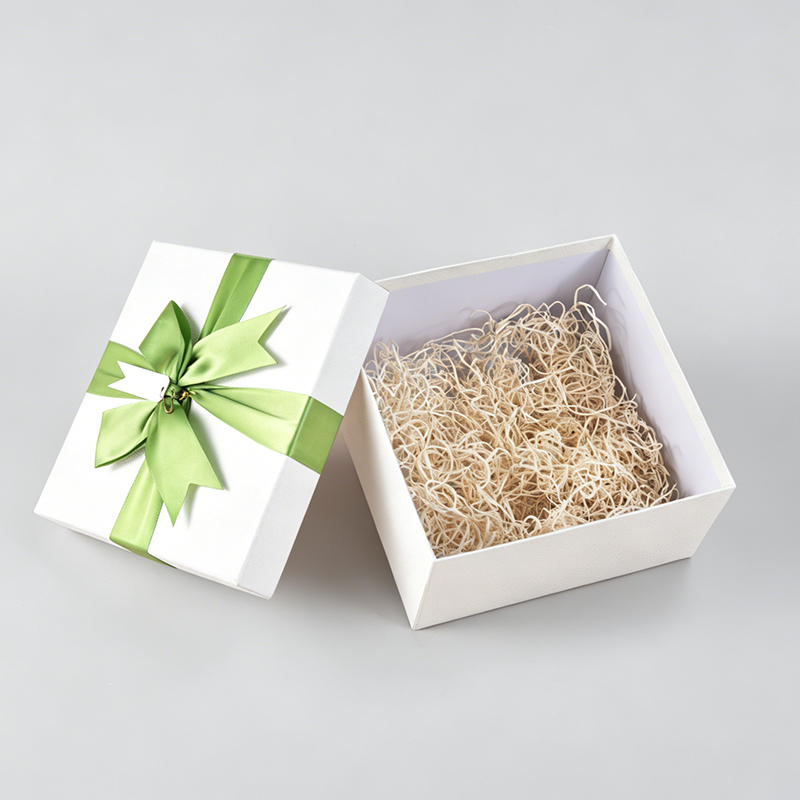
Wood Excelsior, also known as natural raffia filling shreds, is a decorative and functional packaging material made from natural raffia plant fiber. It is designed to protect products, improve presentation and support the growing demand for environmentally responsible packaging. With its authentic botanical texture, soft yet resilient structure and flexible appearance, Wood Excelsior provides a distinctive alternative to conventional paper shreds, synthetic fillers and plastic packaging inserts.
Modern packaging has developed far beyond the basic function of protecting products during transportation. For many brands, the packaging experience is now an important part of product value. The texture, color, structure and material selection inside a gift box can influence how customers perceive quality, craftsmanship and sustainability. Natural raffia shreds respond to these demands by combining decorative appeal with practical cushioning in a single packaging solution.
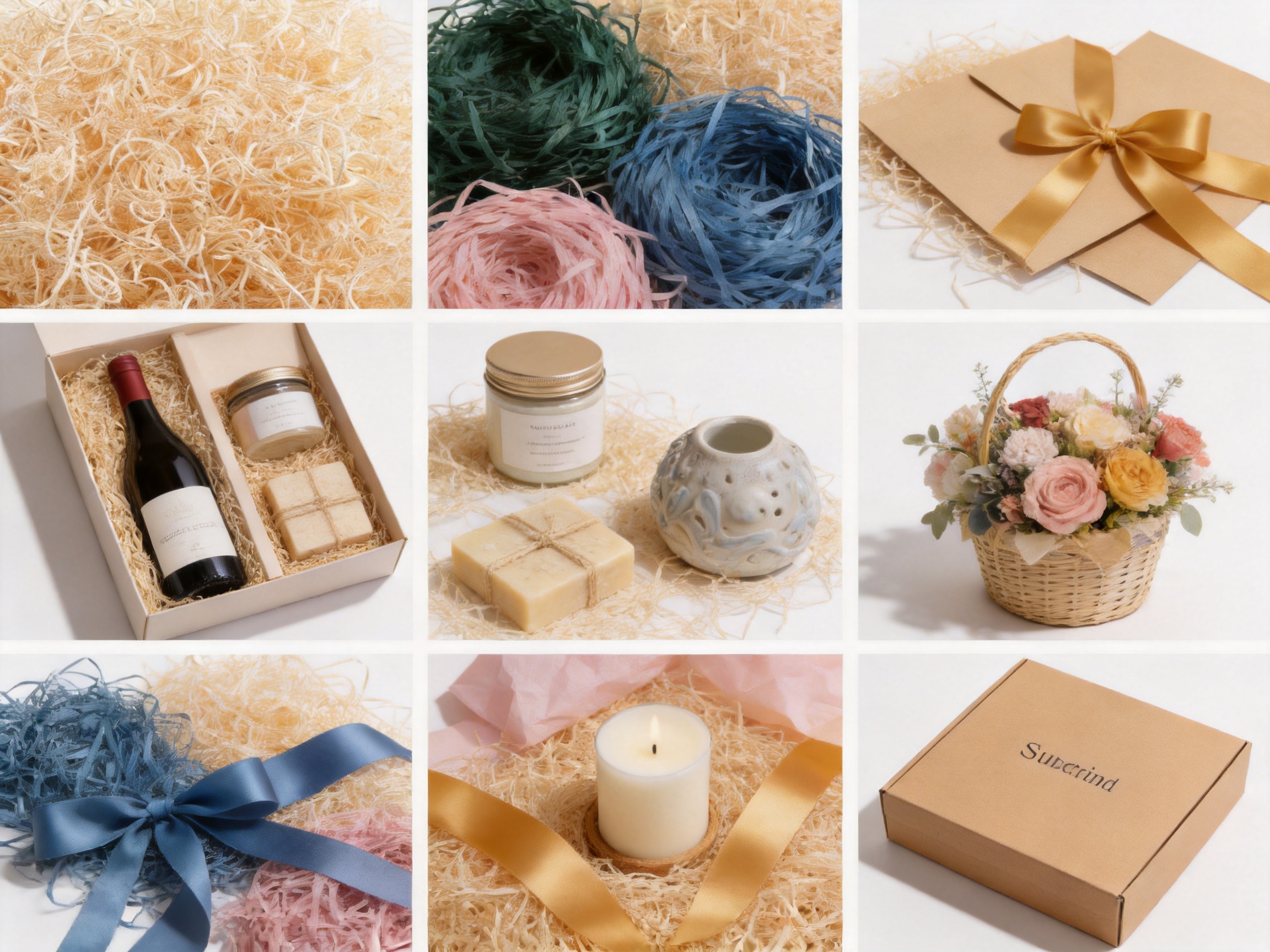
Wood Excelsior is suitable for gift boxes, wine packaging, cosmetics, handmade products, floral arrangements, boutique retail packaging and many other applications. It can be supplied in its natural light-brown color or produced in customized dyed colors. It can also be mixed with paper shreds, metallic shreds and other decorative fillers to create distinctive packaging effects for different industries and brand styles.
Unlike many decorative fillers that are produced entirely from paper or plastic, natural raffia provides a more organic visual experience. Its irregular but controlled fibers create depth, movement and volume inside a box. The result is packaging that looks warm, handcrafted and visually connected to natural materials such as wood, glass, ceramics, leather and paper.
Wood Excelsior
What Is Wood Excelsior?
Wood Excelsior is a natural raffia filling material processed from carefully selected raffia plant fibers. The term is used to describe long, narrow and flexible natural fibers that are opened, combed and cut into decorative shreds for packaging and presentation purposes. Although the product is commonly used in a similar way to traditional excelsior fillers, its material source and appearance are based on natural raffia fiber rather than conventional wood wool.
The production process is based on physical processing. Raffia fibers are opened, combed and cut to achieve a consistent decorative structure. The standard width is approximately 2–3 millimeters, although customized fiber dimensions and cutting lengths can be developed for specific applications. This controlled processing helps create a stable product that is easy to place, arrange and combine with other filling materials.
Natural raffia is supplied without chemical bleaching. This allows the original color, texture and visual character of the plant fiber to remain visible. The standard material generally presents a natural light-brown appearance that works well with rustic, minimalist, handmade and eco-conscious packaging styles.
For brands that require stronger visual identity, dyed Wood Excelsior is also available. Eco-friendly dyes and formaldehyde-free color-fixing technology can be used to produce customized colors, seasonal collections and brand-specific shades. Pantone color matching is available for customers who need coordinated packaging across multiple product lines.
The structure of Wood Excelsior provides both decorative volume and a certain degree of cushioning. The fibers naturally surround products and fill empty spaces inside boxes. This reduces the visual impression of unused space while helping products remain more stable during handling and transportation. It is not intended to replace specialized heavy-duty protective inserts in every application, but it is an effective decorative cushioning material for a wide range of retail and gift packaging formats.
Why Natural Raffia Is Valuable in Modern Packaging
Packaging manufacturers and product brands are increasingly expected to balance appearance, performance, cost and environmental responsibility. Consumers are more aware of the materials used in product packaging, while retailers and distributors are seeking solutions that support sustainable packaging objectives. These changes have increased demand for plant-based decorative fillers.
Natural raffia offers several visual and functional qualities that are difficult to achieve with standard synthetic fillers. Its fibers have a naturally varied surface and organic texture. Even when processed to a controlled width and length, the material retains a handcrafted appearance. This gives a gift box or retail package greater depth than flat paper inserts or smooth plastic fillers.
The material also communicates a clear connection with nature. A package containing natural raffia can support a brand message focused on environmental responsibility, craftsmanship, authenticity or traditional handwork. This is particularly valuable for businesses selling handmade products, natural cosmetics, organic goods, artisan foods, ceramics, wooden products and other items with a strong material identity.
Another advantage is design flexibility. Natural raffia can be used by itself for a simple and understated presentation. It can also be blended with colored paper shreds, metallic shreds or multiple raffia colors to create a more luxurious or festive result. This allows packaging designers to use one core material across different seasons, product categories and sales campaigns.
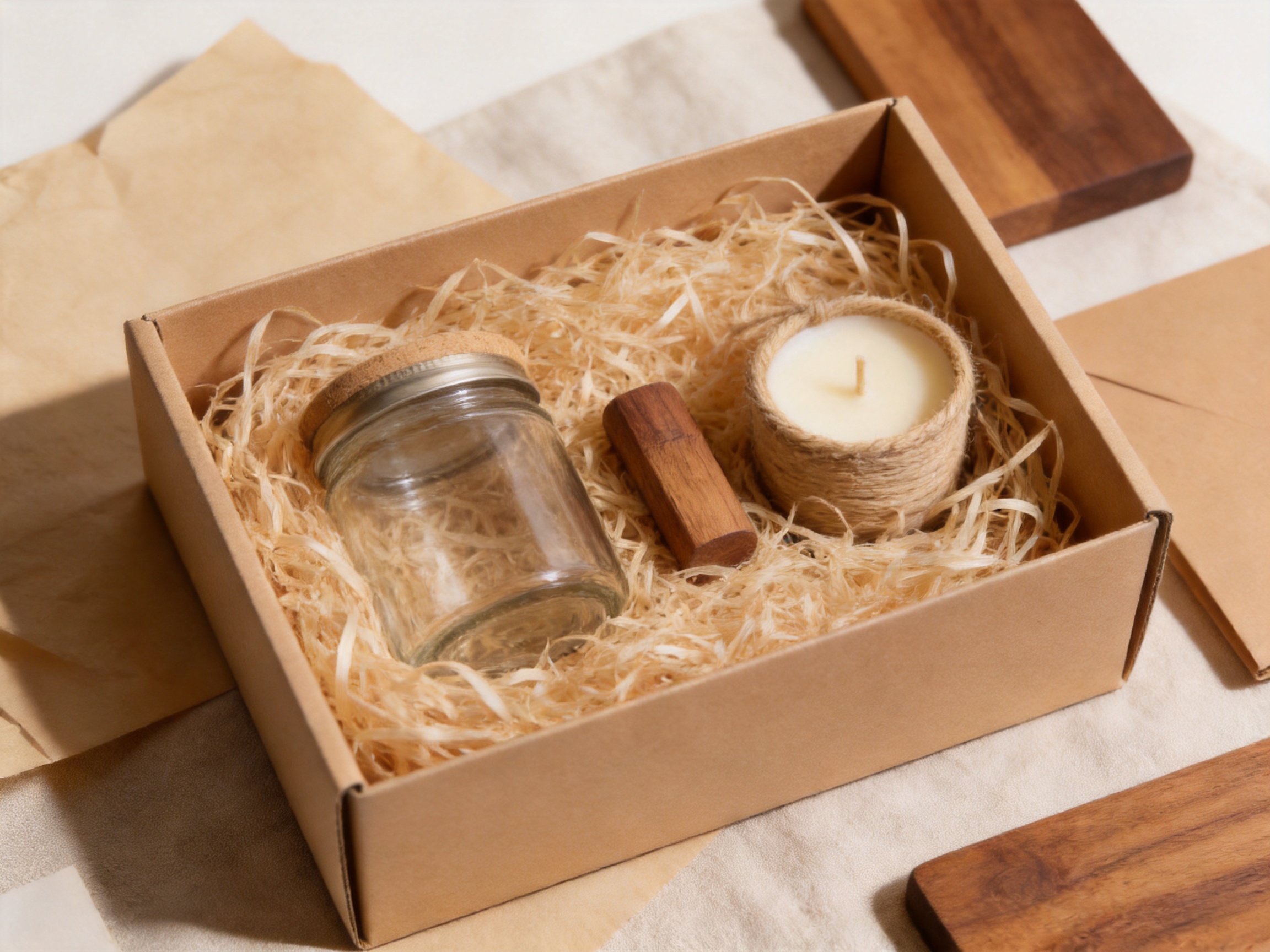
Because the fibers are soft and flexible, Wood Excelsior can be shaped around bottles, boxes, jars, candles and other products. The material can be placed loosely for a relaxed handmade appearance or arranged more densely for a fuller, more protective presentation. This flexibility is useful for both manual packing operations and commercial gift-box assembly.
Advantages Over Conventional Packaging Fillers
More Authentic Than Plastic Fillers
Plastic fillers can provide volume and color, but they often create a synthetic visual effect. Their smooth surfaces and artificial appearance may conflict with products positioned as natural, premium or handmade. Natural raffia offers a plant-based appearance that is more consistent with sustainable brand communication.
Wood Excelsior also avoids the visual limitations of many plastic materials. The fibers have natural movement and irregularity, allowing them to create a richer composition inside a package. When customers open a gift box, the raffia contributes to a tactile experience rather than simply acting as an empty-space filler.
More Textured Than Standard Paper Shreds
Paper shreds are widely used because they are economical, easy to produce and available in many colors. However, conventional paper strips can sometimes appear flat, uniform or overly commercial. Raffia fibers provide more organic texture and a stronger handcrafted impression.
Natural raffia and paper shreds can also be used together. Paper shreds can add color and volume, while raffia introduces botanical texture and visual depth. This combination allows packaging manufacturers to balance cost, appearance and performance according to the needs of each project.
More Sustainable in Appearance and Material Positioning
Natural raffia is a biodegradable plant-based material. Its use can help brands reduce dependence on plastic decorative fillers and support a more environmentally responsible packaging concept. While packaging sustainability depends on the complete product system, the choice of a biodegradable natural fiber is an important step for businesses developing greener packaging collections.
The material is especially suitable for companies that want the packaging itself to communicate sustainable values. Natural color, unbleached processing and botanical texture make the product visibly different from petroleum-based fillers. This visible difference can be important at the point of sale and during the unboxing experience.
More Flexible for Premium Presentation
Wood Excelsior is suitable for both minimalist and highly decorative packaging. A small quantity can provide a subtle natural accent, while a larger quantity can create a full nest-like presentation around a product. The fibers can be combined with ribbons, paper cards, tissue paper, labels and other decorative elements.
This flexibility makes the product useful for packaging manufacturers that serve multiple industries. One material can support rustic gift boxes, luxury cosmetic sets, festive beverage packaging, artisan product collections and boutique retail displays.
Natural Texture and Visual Performance
The most distinctive feature of Wood Excelsior is its natural plant-fiber appearance. Each strand contributes to a layered visual effect. Unlike a flat sheet or molded insert, the shreds create a three-dimensional surface with varying directions, highlights and shadows.
This visual depth is particularly valuable when products are displayed in open gift boxes, windowed cartons or presentation trays. The filler frames the product and helps it appear more complete. It can also hide minor gaps between products, making a package look fuller and more carefully designed.
The natural light-brown shade works well with neutral, earthy and premium color palettes. It can be paired with kraft paper, recycled board, natural cotton, wooden elements, jute, linen and uncoated paper. These combinations support packaging concepts based on simplicity, authenticity and environmental awareness.
Dyed raffia expands the design possibilities. Green, blue, red, pink, gold-inspired, pastel and other colors can be developed according to customer requirements. Brand-exclusive colors are useful for companies that want their gift packaging to be recognizable across multiple product categories. Seasonal shades can support Christmas, spring, wedding, harvest, promotional and holiday collections.
Color consistency is especially important for large packaging programs. A professional manufacturing system should control the dyeing, fixing, drying and blending processes so that different production batches remain visually consistent. Customized color development should also include sample approval before mass production.
Applications Across Commercial Packaging Industries
Gift Box Packaging
Gift boxes are one of the most common applications for Wood Excelsior. The material can be used for luxury gifts, corporate gift sets, promotional collections, holiday packaging and personalized gift boxes. It helps products remain visually centered while creating a soft, natural background.
For corporate gifts, the material can reinforce messages of quality and responsibility. For holiday packaging, dyed raffia can introduce seasonal colors. For luxury gifts, natural raffia can be combined with rigid boxes, ribbons, embossed paper and custom inserts to create a refined but organic presentation.
Wine and Beverage Packaging
Wine bottles, champagne, spirits, tea collections and gourmet beverage products often benefit from decorative cushioning. Raffia shreds can surround bottles and help fill the space inside bottle boxes or gift baskets. Their natural texture is compatible with glass, cork, wood and kraft packaging.
For beverage brands with a regional, artisanal or environmentally conscious identity, natural raffia can help strengthen the connection between the product and its origin. It also provides a warmer visual effect than plain molded plastic or loose synthetic materials.
Packaging designers should select the appropriate quantity and box structure according to product weight and shipping conditions. Wood Excelsior provides decorative support, but fragile or heavy bottles may still require dedicated partitions, molded inserts or additional protective materials.
Cosmetics and Beauty Products
Skincare sets, perfumes, essential oils, soaps, candles and cosmetic collections are often purchased as gifts. Their packaging must communicate quality before the product is used. Natural raffia helps create an attractive presentation inside rigid boxes, drawer boxes, baskets and promotional kits.
For natural skincare and botanical beauty brands, raffia is particularly suitable because its appearance supports plant-based product positioning. It can be combined with botanical graphics, recycled paper, glass containers and neutral colors to create a coherent package design.
For more colorful beauty collections, dyed raffia and mixed decorative fillings can be used to match the product palette. Custom cutting length and fiber width can also be considered when the package requires a finer or fuller appearance.
Handmade and Artisan Products
Handmade soaps, ceramics, wooden crafts, candles, knitted goods and artisan accessories often require packaging that reflects their production story. Natural raffia adds a tactile element that supports the perception of handmade quality.
Its plant-based appearance works especially well with products that feature visible natural materials. Ceramic products can be framed with raffia to create contrast between smooth surfaces and irregular fibers. Wooden crafts can be packaged with natural raffia for a unified material story. Handmade soaps and candles can be presented in small boxes or baskets with raffia used as both decoration and light cushioning.
Floristry and Boutique Retail
Flower gift boxes, boutique displays and seasonal retail packaging often require a warm and natural decorative material. Raffia can be used around flower containers, potted plants, floral accessories and small gift products. Its fibers add volume without overwhelming the visual identity of the product.
Boutique retailers can use natural or dyed raffia in window displays, gift baskets and in-store presentation. The material is easy to reposition and can be used in combination with tissue paper, ribbons, tags and branded cards.
Subscription Boxes and Promotional Kits
Subscription companies and promotional agencies frequently pack several small items together. Wood Excelsior can help separate products visually and prevent them from moving freely inside the box. It also improves the opening experience for customers receiving monthly products, launch kits or event packages.
Because the material can be supplied in bulk, retail bags or compressed export packaging, it can support both small promotional runs and larger recurring programs. Custom colors and private labels can be developed for long-term packaging projects.
Product Options and Customization
Different packaging programs require different materials, colors and fiber structures. A reliable supplier should therefore provide more than one standard specification. The available Wood Excelsior options can be adapted to packaging appearance, product size, box dimensions, shipping requirements and brand identity.
Natural Wood Excelsior
Natural Wood Excelsior is processed without bleaching or dyeing. It preserves the original light-brown color and natural raffia texture. This option is recommended for eco-friendly, rustic, minimalist and organic packaging designs.
Natural raffia is also a practical choice for customers that want to avoid complex color matching. Its neutral tone can be used across many product categories and can be paired with a wide range of box colors and printed materials.
Dyed Wood Excelsior
Dyed Wood Excelsior is available in customized colors. Eco-friendly dyeing and formaldehyde-free color-fixing technology are used to support color stability and product safety requirements. Customers can request Pantone-based development, seasonal palettes or exclusive brand colors.
Color selection should consider the box material, printing method, product category and lighting conditions in the final retail environment. Sample approval is recommended before full production, since natural fiber can absorb color differently from synthetic materials.
Customized Fiber Width and Cutting Length
The standard fiber width is approximately 2–3 millimeters. Customized widths may be considered when a packaging project requires a finer decorative effect, a fuller appearance or a particular visual texture. Cutting length can also be adjusted according to the size of the box and the type of product being packed.
Shorter fibers can be useful for small boxes and compact gift sets. Longer fibers may create a more dramatic, layered appearance in larger boxes, baskets and display packaging. Fluffiness can also be adjusted through processing and packing methods.
Mixed Decorative Filling Solutions
Natural raffia can be combined with other materials to achieve different visual and cost objectives. Common combinations include natural raffia with paper shreds, natural raffia with metallic shreds and blends of several raffia colors.
Customized material ratios allow packaging manufacturers to control the balance between natural texture, color, volume and price. For example, a package may use a higher proportion of raffia for a premium product or a higher proportion of paper shreds for a cost-sensitive promotional project.
Mixed filling solutions can also create layered effects. Natural raffia can form the base, colored paper can introduce brand identity, and metallic shreds can add a festive highlight. These materials can be supplied as separate components or developed as a coordinated packaging solution.
Manufacturing Process and Quality Control
The performance and appearance of natural raffia shreds depend heavily on raw material selection and processing control. Inconsistent fibers, uneven cutting or unstable color can reduce the quality of the final package. For this reason, Wood Excelsior should be produced through a standardized manufacturing system that covers raw material processing, fiber preparation, cutting, inspection, packaging and shipment.
Raw Material Selection
The process begins with the selection of suitable natural raffia plant fibers. Raw materials are evaluated for texture, flexibility, color and general cleanliness. Careful selection helps ensure that the finished shreds have a consistent appearance and sufficient resilience for packaging use.
Raw material control is especially important for customers purchasing large quantities. If the starting fibers vary significantly, the final product may show differences in color, thickness and fluffiness. A stable sourcing and inspection system helps reduce these variations.
Physical Opening
Raffia fibers are opened through mechanical processing to separate and prepare the material for further treatment. Physical opening helps release compressed fibers and improves the ability of the material to form a soft, flexible filling structure.
This stage does not rely on chemical bleaching. Preserving the natural fiber structure supports the product’s authentic appearance and helps maintain the visual qualities expected from a plant-based packaging filler.
Combing and Fiber Alignment
After opening, the fibers are combed to remove excessive tangling and improve consistency. Combing helps create a more uniform flow of material before cutting. It also supports the soft, layered appearance that makes raffia suitable for decorative packaging.
Controlled combing is important because fibers that are too tangled can be difficult to distribute in a box, while fibers that are over-processed may lose some of their natural character. The manufacturing objective is to achieve a practical balance between consistency and organic appearance.
Precision Cutting
Precision cutting transforms prepared raffia into shreds of controlled width and length. Stable cutting quality helps customers pack products more efficiently and achieve a consistent appearance from box to box.
Production equipment can be adjusted according to the required specification. Standard products are produced at approximately 2–3 millimeters in width, while custom specifications may be developed for particular applications. Cutting control also helps minimize excessive dust, uneven fragments and unsuitable fiber lengths.
Coloring and Fixing
When dyed raffia is required, the material is processed using suitable eco-friendly dyes. Color fixing is controlled to support stable color performance and reduce the risk of excessive color transfer during normal handling.
Formaldehyde-free color-fixing technology is available for dyed products. Color development generally includes sample production, visual evaluation and customer approval before mass production. Batch records and process monitoring help improve consistency across repeat orders.
Inspection and Batch Control
Finished Wood Excelsior should be inspected for width, cutting length, color, cleanliness, texture and packaging condition. Quality control can be performed at multiple stages rather than only after final packing. This allows potential problems to be identified earlier in the process.
Batch control is particularly important for wholesalers, packaging factories and brands that use the same filler across repeated product launches. Consistent batch quality reduces the need for repacking and helps preserve a uniform retail appearance.
Integrated Packaging and Shipment
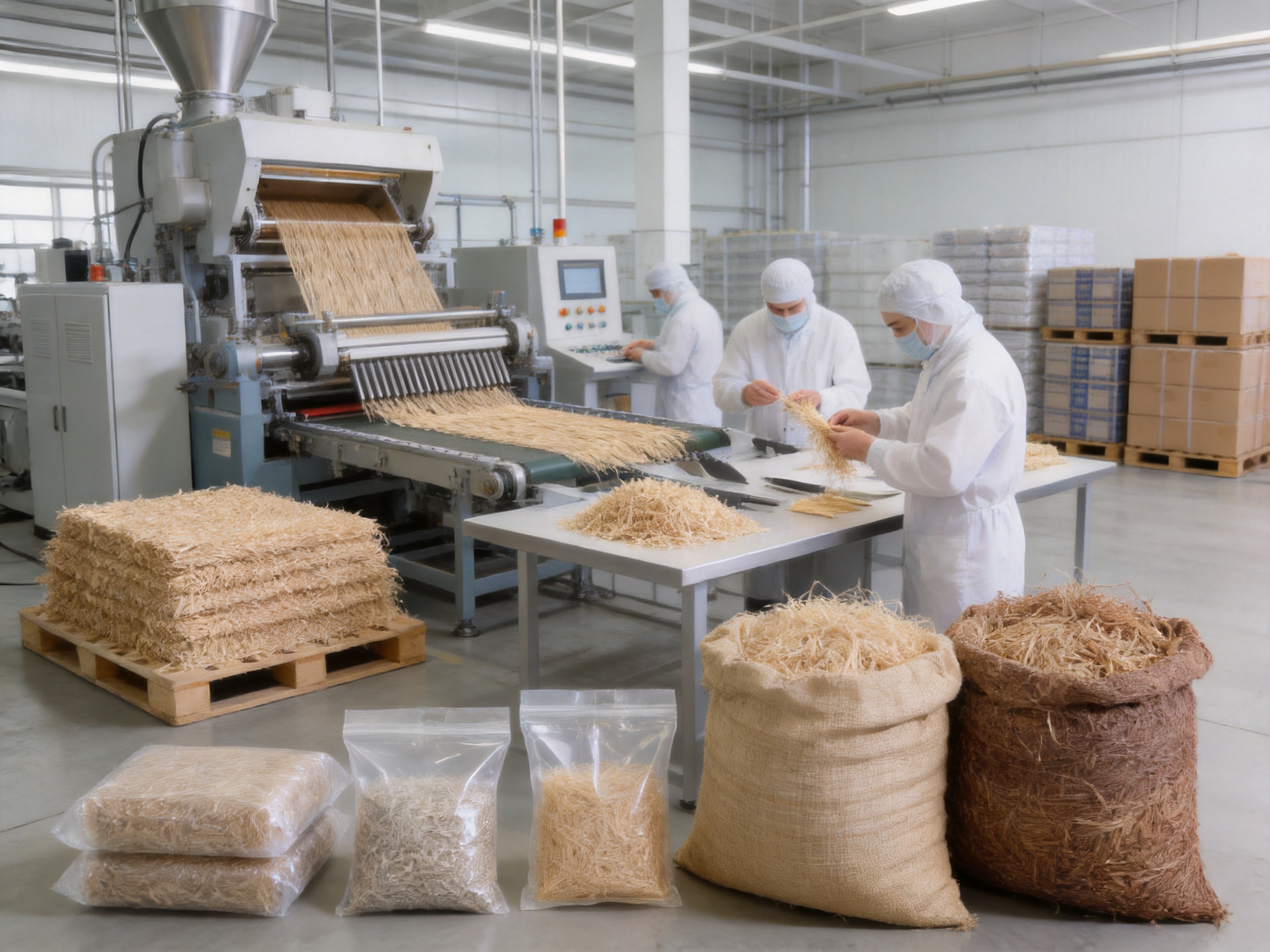
After inspection, the material is packed according to the customer’s distribution requirements. Vacuum compression is suitable for export and bulk shipment because it reduces shipping volume. Retail OPP bags can be used for e-commerce, sample distribution and consumer sales. Heavy-duty woven bags are suitable for factories, wholesalers and high-volume packaging operations.
Palletized shipment can be arranged for efficient loading and unloading. Packaging specifications, weights, labels and private branding can be customized according to the order program.
Factory Capabilities and Supply Strength
Zhejiang Raffia Paper Products Co., Ltd. was founded in 2014 and developed from a craft materials business unit established in 2010. The company has evolved from a trading enterprise into an integrated manufacturer specializing in crinkle raffia paper shreds, fancy paper yarns and related decorative packaging materials.
The company operates a modern production base of approximately 20,000 square meters in Dongyang, Zhejiang Province, China. More than 200 professional employees support production, quality control, product development, packaging and shipment. This scale allows the company to handle both standard product orders and customized OEM and ODM projects.
Its manufacturing system covers raw material processing, mass production, quality testing, finished-goods packaging and shipment. This integrated structure can simplify communication and reduce the risks associated with coordinating multiple independent suppliers.
The company has developed production equipment and technical capabilities for slitting, twisting, winding and compression packaging. These capabilities are relevant not only to raffia filling shreds but also to paper yarns, raffia tapes, decorative accessories and other packaging-related products.
With an annual production capacity of more than 200 million pieces, the factory is positioned to support large-scale orders and long-term supply programs. Its standardized production procedures and replicable quality control system are designed to maintain consistent batch performance as order volumes increase.
Integrated production can also improve lead-time management. When raw material processing, manufacturing, inspection and packaging are controlled within one system, production schedules can be coordinated more efficiently. This is valuable for seasonal packaging, promotional campaigns and customers that require repeat delivery.
OEM and ODM Services
OEM and ODM support allows customers to develop packaging fillers that match their specific products and brand requirements. Instead of selecting only from fixed specifications, customers can discuss color, width, cutting length, fluffiness, material combinations and packaging formats.
Color Development
Color customization includes natural raffia color, Pantone matching, brand-exclusive colors and seasonal collections. Customers can submit a reference color or packaging sample for evaluation. The supplier can then develop a corresponding raffia sample for approval.
For large programs, color standards should be recorded and retained for future production. This helps improve repeat-order consistency and reduces uncertainty when packaging is reordered for different seasons or product launches.
Product Specification Development
Fiber width, cutting length and fluffiness can be adjusted according to product size and packaging design. A small cosmetics box may require shorter, finer shreds, while a large wine gift box may benefit from longer and fuller fibers.
Specification development should consider not only appearance but also packing efficiency. The material should be easy to distribute, should fill the intended space and should not create unnecessary waste during assembly.
Material Mixing
Customers can request raffia and paper combinations, raffia and metallic combinations, multi-color raffia blends or customized material ratios. These solutions allow brands to create packaging that is visually distinctive without developing an entirely new material from the beginning.
Mixed filling solutions are also useful for controlling costs. A carefully designed ratio can retain the natural raffia appearance while using other fillers to increase volume or add color.
Packaging and Private Labeling
Available packaging formats include vacuum-compressed bags, transparent OPP bags and bulk woven bags. Customized weights, private labels, printed cartons and other packaging requirements can be discussed for wholesale programs.
Retail packaging is appropriate for smaller quantities, sample distribution and e-commerce sales. Bulk packaging is more efficient for packaging factories and wholesalers that transfer the material into their own production or retail packaging.
Packaging, Storage and Handling Recommendations
Wood Excelsior should be stored in a clean, dry environment protected from excessive moisture, dust and contamination. Natural plant fibers can be affected by unsuitable storage conditions, so warehouse ventilation and packaging integrity should be maintained.
Vacuum compression is useful for transport because it reduces volume. Once the compressed package is opened, the fibers can be loosened and fluffed before use. The amount of expansion depends on the compression level, fiber structure and handling method.
During packing, operators can distribute the material evenly around the product. For fragile items, the filler should be used together with an appropriate box structure and any necessary partitions or protective wraps. Wood Excelsior is a decorative cushioning material, but packaging performance should always be evaluated according to product weight, fragility, shipping distance and handling conditions.
For retail presentation, transparent OPP bags allow the natural color or dyed shade to remain visible. Labels can identify the material, color, weight and usage instructions. For wholesale packaging, woven bags provide a practical solution for transporting larger quantities to factories and distribution centers.
Comparison of Packaging Filler Options
| Filler Type | Visual Character | Environmental Positioning | Customization | Typical Applications |
| Natural Raffia Shreds | Organic, textured and handcrafted | Plant-based and biodegradable | Natural color, dyed color, custom width and length | Gift boxes, artisan products, cosmetics and boutique packaging |
| Paper Shreds | Uniform, lightweight and colorful | Paper-based and recyclable depending on composition | Many colors, widths and cutting lengths | General gift packaging, subscription boxes and promotional kits |
| Plastic Fillers | Smooth, artificial and highly uniform | Generally less favorable for sustainability-focused packaging | Color and shape options | Decorative packaging where synthetic appearance is acceptable |
| Metallic Shreds | Bright, reflective and festive | Depends on material structure and recycling system | Metallic colors and mixed effects | Holiday packaging, celebrations and promotional displays |
The comparison shows that no single filler is ideal for every packaging project. Natural raffia is particularly valuable when the design requires authentic texture, plant-based positioning and a premium handmade appearance. Paper shreds can be used when strong color effects and economical volume are priorities. Metallic shreds can provide highlights, while plastic fillers may be selected for specific decorative requirements.
Combining materials often creates the most flexible solution. A packaging project can use natural raffia as the primary visual element, paper shreds for color and volume, and metallic fibers for a limited accent. This approach provides greater design freedom than relying on one filler type alone.
Benefits for Packaging Manufacturers and Wholesalers
Packaging manufacturers require stable supply, consistent specifications and efficient communication. A supplier with integrated production can provide advantages throughout the procurement process.
First, a broad product and customization capability allows packaging manufacturers to source related materials from one manufacturing system. This can reduce the number of suppliers involved in a project and simplify quality coordination.
Second, standardized processing supports consistent results. Stable fiber width, cutting length and color are important when a factory packs hundreds or thousands of identical gift boxes. Inconsistent filler can slow down assembly and create visible differences between finished packages.
Third, bulk packaging and vacuum compression can improve transportation efficiency. Lower shipping volume may help reduce logistics costs, especially for international orders. Packaging formats can be selected according to whether the customer needs raw material for factory use or finished retail products for resale.
Fourth, OEM and ODM services allow packaging manufacturers to offer exclusive solutions to their own customers. A factory can develop a special color, fiber structure or mixed filling ratio without building its own raffia processing line.
Finally, long-term supply cooperation can support seasonal planning. Brands and packaging factories can confirm color standards, specifications, packaging formats and estimated quantities in advance. This helps reduce the risk of shortages during major holiday or promotional periods.
Benefits for Global Brands
Global brands often need packaging materials that can maintain consistent quality across regions. Natural raffia is suitable for international packaging programs because it can support a wide variety of product categories and design languages.
A single natural material can be adapted to different markets through color, packaging format and product presentation. For example, a brand may use natural raffia for its core eco-conscious collection, dyed raffia for holiday products and mixed raffia-paper filling for promotional kits.
Brands can also use packaging materials to reinforce a broader sustainability narrative. Natural raffia does not by itself determine the environmental performance of a complete package, but its plant-based and biodegradable character can complement recycled paperboard, reduced-plastic designs and responsible supply-chain programs.
Consistent manufacturing and quality control are especially important for multinational customers. Products must be produced according to approved samples and documented specifications. A professional supplier can support this process through sample development, batch inspection, customized packaging and repeat-order management.
Design Guidance for Using Wood Excelsior
Selecting the Correct Quantity
The amount of raffia required depends on box dimensions, product shape and desired visual effect. A small quantity can create a light decorative layer, while a larger quantity can form a fuller cushion around the product.
Overfilling may make the package difficult to close or may hide the product. Underfilling may leave the product unstable or make the box appear incomplete. Trial packing is recommended before confirming the final order quantity.
Matching the Material to the Product
Natural raffia works well with products made from wood, glass, paper, leather, ceramics, cotton and other natural materials. The texture creates visual harmony with these surfaces.
For highly polished or technologically focused products, dyed raffia or a mixed filler may provide a more suitable contrast. The final selection should consider the product’s positioning, target customer and retail environment.
Using Color Strategically
Natural raffia provides a neutral foundation. Dyed colors can highlight brand identity, identify product variations or support seasonal campaigns. When several colors are mixed, the ratio should be controlled so that the package remains balanced rather than visually crowded.
Color should also be evaluated under the lighting used in stores, showrooms and online photography. Natural fibers may have subtle tonal variations that influence the final appearance, making physical samples important for approval.
Combining Materials Carefully
Mixed fillers can create attractive effects, but excessive combinations may reduce the clarity of the design. A practical approach is to select one primary filler and one or two supporting materials. Natural raffia can serve as the base, paper shreds can introduce a brand color and metallic shreds can provide a small decorative highlight.
Quality, Safety and Responsible Sourcing Considerations
Purchasers should confirm the material composition, processing method, dyeing requirements and packaging details before placing a large order. They should also request samples to evaluate fiber appearance, cutting consistency, color performance and suitability for the final product.
For dyed products, customers should communicate any specific color, odor, transfer or documentation requirements in advance. The use of formaldehyde-free color-fixing technology supports customers seeking a more responsible dyed-fiber solution, although final compliance requirements should be reviewed according to the destination market and product application.
Natural raffia should be described accurately as a plant-based biodegradable material. Packaging sustainability claims should reflect the actual product composition, coatings, labels, bags and disposal conditions. Transparent communication helps brands make responsible environmental statements.
Responsible sourcing also includes stable production, efficient packaging and reduced transportation volume. Vacuum compression can lower shipping volume, while integrated manufacturing can reduce unnecessary transfers between suppliers. These factors can contribute to a more efficient packaging supply chain.
Why Work with Zhejiang Raffia Paper Products Co., Ltd.?
Zhejiang Raffia Paper Products Co., Ltd. combines product development, manufacturing, quality control, packaging and shipment within an integrated production system. This structure supports customers that need more than a standard decorative filler.
The company has more than ten years of industry experience through its development from a craft materials business unit into a large-scale manufacturer. Its production base, professional workforce and annual capacity provide a foundation for supporting both standard orders and customized programs.
Its manufacturing experience includes raffia paper shreds, fancy paper yarns and related decorative materials. This broader technical background is useful when customers need mixed packaging solutions or want to develop several coordinated products from the same supplier.
The company serves customers in China and exports to Europe, North America, South America, Asia and other regions. Its products have been used in gift packaging, textile knitting, home decoration and global retail supply chains. The company also provides OEM and ODM services for exclusive brands, custom sizes, private packaging and long-term bulk supply.
For customers purchasing Wood Excelsior, the main advantages include customized product development, controlled processing, multiple packaging options, bulk production capability and support from sampling to mass production. These capabilities can help packaging manufacturers, wholesalers, importers and brands build stable supply programs.
Frequently Asked Questions
1. Is Wood Excelsior made from real wood?
In this product range, Wood Excelsior refers to decorative natural raffia shreds made from raffia plant fiber. The material is processed through physical opening, combing and precision cutting. It provides a natural excelsior-like filling effect while retaining the appearance and flexibility of raffia.
2. Is natural raffia bleached?
No. The standard natural raffia product is processed without chemical bleaching. This preserves the original light-brown color and authentic botanical texture. Dyed raffia is available when customers require customized colors.
3. Is Wood Excelsior biodegradable?
Natural raffia is a biodegradable plant-based material. Actual end-of-life performance depends on the complete packaging composition and local disposal conditions. Customers should evaluate the entire package when making environmental claims.
4. What is the standard fiber width?
The standard width is approximately 2–3 millimeters. Custom fiber widths and cutting lengths may be developed according to product size, box structure and visual requirements.
5. Can the raffia be dyed in a custom color?
Yes. Eco-friendly dyed raffia is available in customized colors. Pantone matching, brand-exclusive colors and seasonal color collections can be developed subject to sample approval and production requirements.
6. Can Wood Excelsior be mixed with paper shreds?
Yes. Natural raffia can be mixed with paper shreds, metallic shreds, multiple raffia colors and other decorative fillers. Customized material ratios can be developed to balance appearance, volume and cost.
7. Can Wood Excelsior protect fragile products?
It provides decorative cushioning and helps fill empty spaces around products. However, fragile or heavy products may require additional partitions, molded inserts, wrapping or other protective packaging. Performance should be tested according to the product and shipping conditions.
8. What products are commonly packed with natural raffia?
Common applications include gift boxes, wine and beverage packaging, cosmetics, skincare sets, perfumes, essential oils, handmade soaps, candles, ceramics, wooden crafts, floral products, boutique retail items and promotional kits.
9. What packaging formats are available?
Available formats include vacuum-compressed bags for export and bulk shipment, transparent OPP bags for retail and sample distribution, and heavy-duty woven bags for factories, wholesalers and large-volume orders. Customized weights, labels and private branding can also be discussed.
10. Does the supplier support OEM and ODM projects?
Yes. OEM and ODM services include color development, fiber width, cutting length, fluffiness adjustment, mixed filling ratios, customized weights, private labels, retail packaging and printed cartons.
11. What is the minimum order quantity?
The minimum order quantity should be confirmed according to the selected color, specification, packaging format and customization requirements. Standard natural products and customized dyed products may have different order conditions.
12. How long is the lead time?
Lead time depends on order quantity, product specification, color development, packaging requirements and production scheduling. A confirmed schedule can be provided after technical details and quantities are finalized.
13. How should the material be stored?
Store the product in a clean, dry and well-ventilated environment. Protect it from excessive moisture, dust and contamination. Vacuum-compressed material should be opened and fluffed before use when necessary.
14. Can the product be used for retail sale?
Yes. Transparent OPP bags, customized weights, product labels and private branding are available for retail sales, e-commerce distribution and sample programs.
15. Can a sample be requested before mass production?
Sample development is recommended for custom colors, mixed fillers and special fiber specifications. Samples allow customers to evaluate texture, appearance, color and compatibility with the intended packaging design before approving mass production.
Conclusion
Wood Excelsior is a versatile natural raffia filling material that combines decorative presentation, flexible cushioning and plant-based visual appeal. Its unbleached natural color and authentic texture provide a strong alternative to plastic fillers and a richer decorative effect than many standard paper shreds.
The product is suitable for gift boxes, beverages, cosmetics, handmade goods, floral packaging, boutique retail and promotional collections. Natural, dyed and mixed filling options allow packaging designers to create solutions for different product categories, seasons and brand identities.
Its value extends beyond appearance. Physical opening, combing and precision cutting help create consistent fibers, while controlled dyeing, inspection and packaging support stable commercial supply. Vacuum compression, retail OPP bags and bulk woven bags allow customers to select a distribution format that matches their logistics and sales requirements.
With integrated manufacturing, a modern production base, professional employees, large annual capacity and OEM and ODM capabilities, Zhejiang Raffia Paper Products Co., Ltd. is positioned to support both standard orders and customized packaging projects. For brands and packaging manufacturers seeking a natural, premium and flexible decorative filler, Wood Excelsior offers a practical solution that aligns product protection with memorable presentation and sustainable packaging development.
References
1. Product specification information for Natural Raffia Filling Shreds, including material, width, processing, color and packaging options.
2. Internal product description and application guidance for Wood Excelsior and decorative raffia filling materials.
3. Manufacturing information from Zhejiang Raffia Paper Products Co., Ltd., including production capacity, factory structure, OEM and ODM services, and quality-control procedures.
4. General packaging design principles concerning decorative cushioning, product presentation, material compatibility and shipment preparation.
5. General sustainability principles concerning plant-based materials, biodegradable fibers, responsible packaging design and complete-package evaluation.
Product: Wood Excelsior

 +86 15355323399
 kevin@raffia-paper.com
 No. 151 Guanshan North Road, Dongyang City, Zhejiang Province, China

Copyright © Zhejiang Raffia Paper Products Co., Ltd. All Rights Reserved.

Paper Raffia Yarn & Gift Packaging Factory