
 +86 15355323399
 En
 中文简体
 日本語
 Français
 Español
 Deutsch
 Türk
 عربى
 italiano
 русский
Raffia Nonwoven Fabric Accessories for Premium Gift Packaging and Floral Decoration
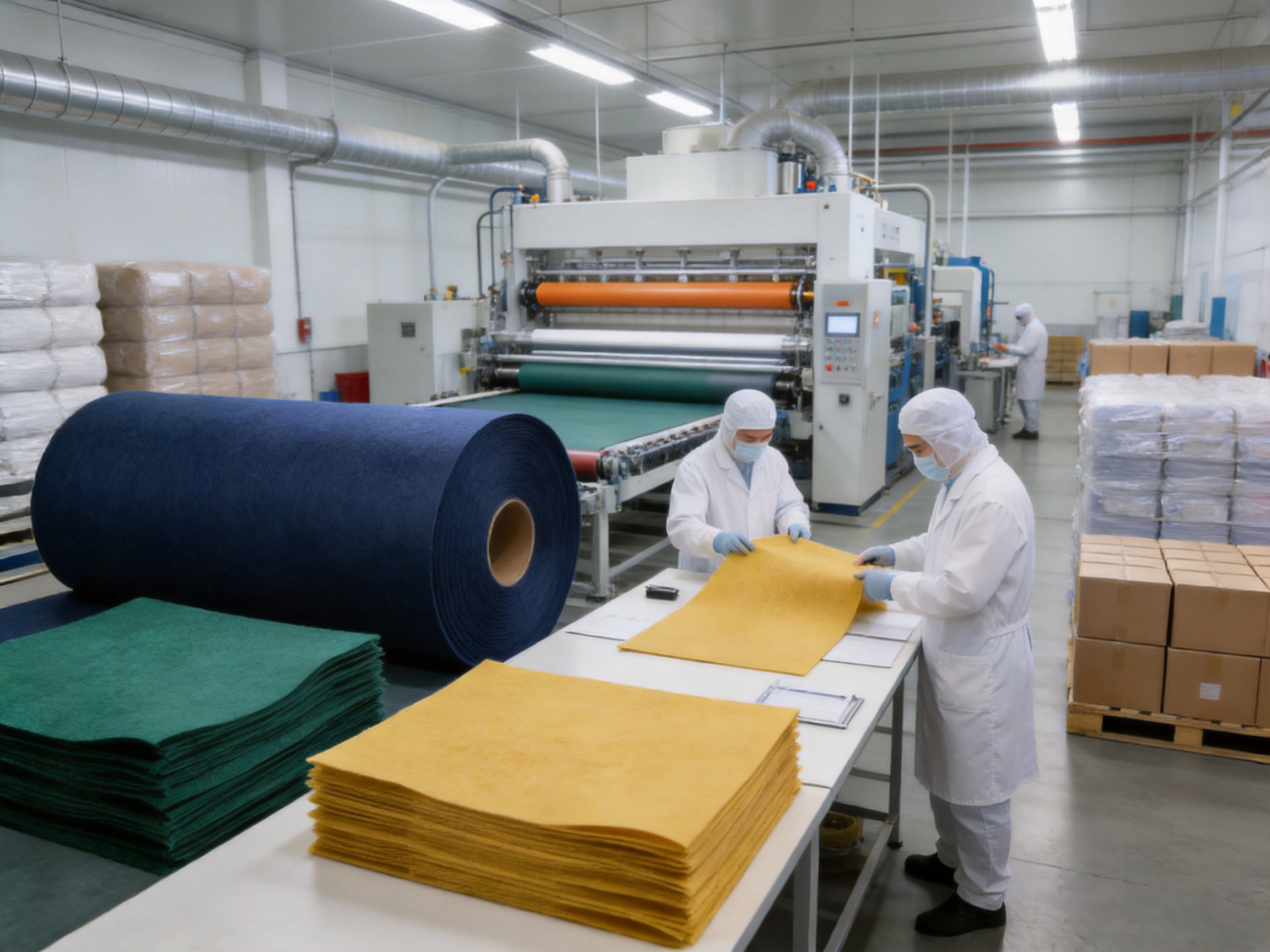
Raffia nonwoven fabric accessories are practical, attractive, and versatile materials for modern gift presentation, floral design, packaging separation, and decorative craft applications. Made from eco-friendly PP polypropylene nonwoven fabric, this product combines a soft hand feel with useful protective performance. It is lightweight, breathable, flexible, tear-resistant, dust-proof, moisture-resistant, non-toxic, and odorless, making it suitable for both commercial packaging operations and creative handmade projects.
Unlike ordinary paper fillers, rigid plastic sheets, or loosely woven textile materials, nonwoven raffia accessories offer a balanced combination of softness, durability, clean appearance, and easy handling. The material can be placed inside gift boxes, used between packaged products, arranged around flowers, or matched with other raffia paper products and decorative accessories. Its multiple solid colors and custom color capabilities also allow buyers to create coordinated packaging collections for seasonal campaigns, retail brands, weddings, corporate gifts, and special events.
The product is manufactured through a hot-melt bonding process. This production method bonds polypropylene fibers into a consistent sheet-like material without conventional weaving. The result is a stable, flexible structure with a smooth and comfortable texture. The manufacturing process also supports efficient large-volume production, repeatable quality, and flexible customization for customers requiring specific colors, dimensions, packaging formats, or long-term supply programs.
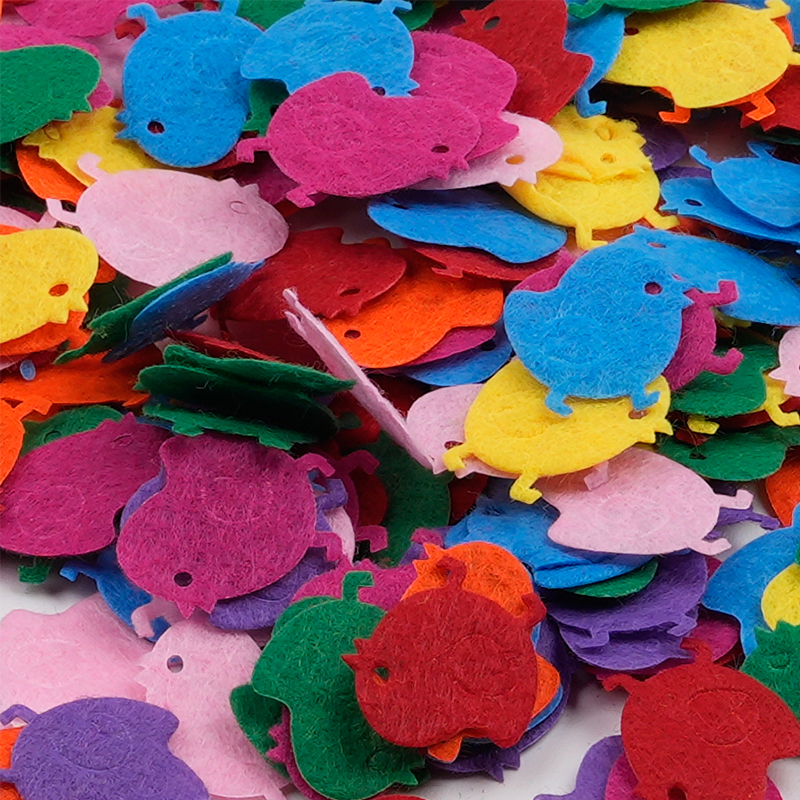
Raffia NonWoven Fabric Accessories
What Are Raffia Nonwoven Fabric Accessories?
Raffia nonwoven fabric accessories are decorative and functional packaging materials produced from PP polypropylene nonwoven fabric. The material is formed by arranging synthetic fibers into a web and bonding them through heat and pressure. Because the fibers are bonded rather than woven into a traditional textile structure, the finished material has a soft, lightweight, and flexible character while maintaining useful resistance to tearing and everyday handling.
The product is designed for applications where presentation and protection are equally important. In a gift box, it can line the interior surface, create separation between items, or provide a refined background for products. In floral decoration, it can be folded, layered, wrapped, cut, or arranged around bouquets and containers. In packaging matching, it can coordinate with ribbons, paper raffia yarn, crinkle paper, gift boxes, labels, and other decorative components.
Nonwoven raffia fabric accessories are available in multiple solid colors. Customers can select colors that match a brand identity, holiday theme, wedding palette, retail display, or product collection. Custom colors may also be developed for buyers with precise visual requirements. This makes the material especially valuable for packaging companies, gift manufacturers, florists, craft retailers, event planners, and wholesalers that need a reliable decorative component across multiple product lines.
Material Composition
The primary material is PP polypropylene fabric. Polypropylene is widely used in packaging and consumer products because it is lightweight, flexible, and resistant to moisture in ordinary storage and handling environments. In this product, polypropylene is processed into a nonwoven structure that provides softness and flexibility rather than the rigid feel associated with many conventional plastic packaging materials.
The material is intended for decorative and packaging-related applications. It is non-toxic and odorless under normal use, which is important when it is placed inside gift boxes, near flowers, or alongside consumer products. Its dust-proof characteristics help maintain a cleaner presentation, while moisture resistance helps the material remain useful in environments where minor humidity or incidental contact with moisture may occur.
Hot-Melt Bonding Structure
The hot-melt bonding process is central to the product’s performance. Rather than relying on individual threads crossing each other, the process creates a bonded fiber network. This structure helps the material remain intact when folded, positioned, cut, or removed during packaging operations.
Controlled bonding supports a more consistent thickness, texture, and appearance across production batches. It also reduces the risk of loose fibers and irregular surfaces that may be encountered with lower-quality decorative textiles. For buyers handling large orders, consistency is essential because packaging components must look uniform across thousands or millions of finished products.
Key Advantages Compared with Conventional Decorative Materials
Packaging and floral decoration suppliers can choose from many materials, including tissue paper, shredded paper, woven fabric, plastic film, foam, and natural fibers. Each option has a useful role, but raffia nonwoven fabric accessories provide a distinct balance of visual appeal, handling performance, and production flexibility.
Softness Without Excessive Fragility
Traditional thin paper can create an attractive appearance, but it may tear easily when folded or adjusted. Some rigid plastic materials offer strength but lack a soft, premium hand feel. Nonwoven raffia fabric occupies a practical middle position. It feels soft and lightweight while retaining better resistance to tearing and repeated handling than many delicate paper fillers.
This combination is useful for gift boxes containing products with uneven shapes, sharp corners, or multiple components. The material can be positioned around an item without immediately losing its form. It can also be layered or folded to produce additional volume and visual richness.
Improved Flexibility for Creative Arrangements
Because the fabric is flexible, it can be used in many presentation styles. It may be laid flat as a lining, folded into compartments, gathered as a decorative filler, wrapped around a floral container, or combined with yarn and ribbons. This flexibility gives designers more freedom than rigid sheets and makes the product suitable for both standardized packaging lines and handmade work.
For florists and event designers, flexible material is especially helpful when the final shape must be adjusted at the point of installation. A sheet or piece can be folded around a bouquet, tucked beneath stems, layered around a basket, or arranged to create a fuller visual effect.
Clean and Consistent Appearance
Multiple solid color options help create a neat and coordinated presentation. Solid colors are easy to combine with printed boxes, metallic ribbons, brand labels, and seasonal decorations. They can also be used as a controlled background for products that need to remain visually prominent.
Compared with mixed or uneven natural fibers, a consistent nonwoven surface can provide a more predictable appearance. This matters for retail packaging, where buyers expect every unit on a shelf or in a shipment to present the same visual identity.
Resistance to Tearing and Everyday Handling
Gift packaging materials are often moved several times before reaching the end customer. They may be cut during assembly, folded around products, compressed inside cartons, and adjusted before display. The tear-resistant structure of nonwoven raffia accessories helps reduce damage during these routine operations.
While the material should still be handled according to its intended use, its flexibility and bonded fiber structure provide a practical advantage over extremely thin paper and other fragile decorative materials. This can help reduce waste caused by damaged liners or fillers during packaging assembly.
Dust-Proof and Moisture-Resistant Performance
Dust-proof performance supports a cleaner visual presentation during storage and use. Moisture resistance is also helpful when products are transported through changing climates or stored in areas with moderate humidity. These properties do not mean that the material is intended for waterproof protection or outdoor exposure, but they do make it more dependable for ordinary packaging environments.
For floral decoration, moisture resistance can be advantageous when the material is used near containers, stems, or arrangements that may produce small amounts of moisture. Appropriate separation and safe handling should still be maintained, especially when the material is used with water-containing floral products.
Odorless and Non-Toxic Characteristics
An odorless material is more comfortable for workers and consumers, particularly when used inside closed gift boxes. The non-toxic characteristic is also important for decorative packaging that may be handled frequently by customers. These qualities support a more pleasant unboxing experience and help packaging manufacturers meet expectations for safer, cleaner materials.
Lightweight Transportation and Storage
Because nonwoven raffia fabric is lightweight, it can be packed and transported efficiently. Lower material weight can simplify handling in warehouses, retail operations, and packaging workshops. It may also help buyers optimize carton space when ordering large quantities, depending on the selected folding and compression format.
| Performance Area | Raffia Nonwoven Fabric Accessories | Practical Benefit |
|---|---|---|
| Material | PP polypropylene nonwoven fabric | Lightweight, flexible, and suitable for decorative packaging |
| Manufacturing structure | Hot-melt bonded fiber web | Consistent texture and improved structural stability |
| Surface feel | Soft and breathable | Comfortable for gift boxes and floral arrangements |
| Durability | Tear-resistant and flexible | Supports folding, cutting, positioning, and repeated handling |
| Protection | Dust-proof and moisture-resistant | Helps maintain a cleaner appearance during storage and use |
| Safety profile | Non-toxic and odorless | Suitable for consumer-facing decorative applications |
| Color selection | Multiple solid colors and custom colors | Supports brand matching and themed packaging |
| Main uses | Gift lining, floral decoration, and packaging matching | One material can serve several product categories |
Applications in Gift Box Lining
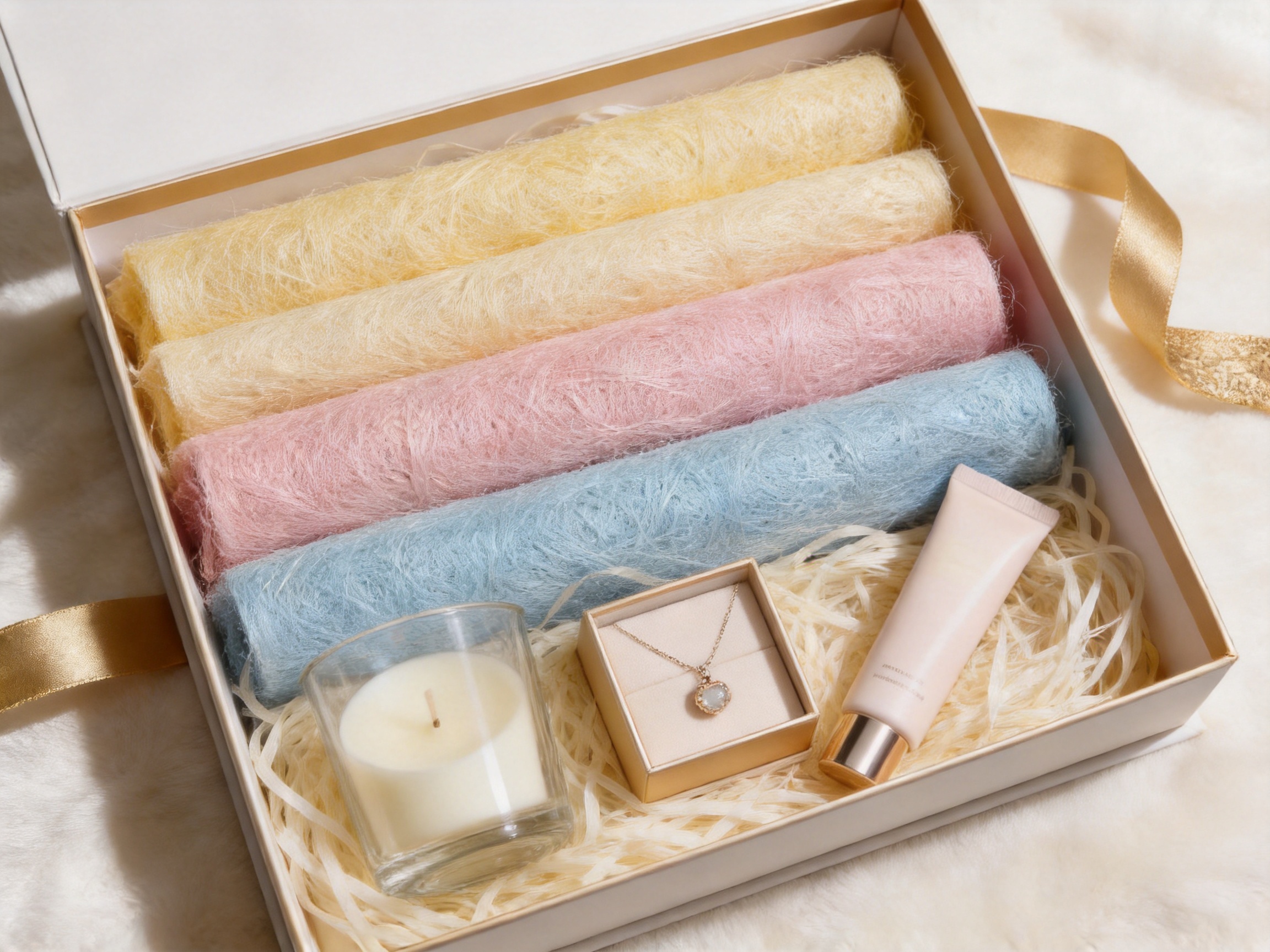
Gift box lining is one of the most important applications for nonwoven raffia fabric accessories. The material can be placed at the base of a box, around the sides, or between separate products. It creates a soft visual layer that makes the package feel more complete and carefully designed.
For jewelry, cosmetics, small household goods, craft kits, candles, accessories, and promotional gifts, the lining can help prevent direct contact between products and the box interior. It can also reduce the empty appearance that sometimes occurs when a product is placed in a large box. By adding color and texture, the material improves the perceived value of the complete package.
Packaging designers can use one layer for a clean minimalist look or several folded pieces for a fuller presentation. The fabric may be cut to match the box dimensions, tucked into corners, or shaped around a product. Its softness makes it appropriate for items where a harder separator could create unwanted marks or scratches.
Luxury and Premium Presentation
Premium packaging depends on coordinated details. A box, label, ribbon, and interior filler must work together. Nonwoven raffia accessories can add a textile-like quality without the cost and weight of heavier fabric. A carefully selected color can complement a dark rigid box, a natural kraft package, a bright seasonal design, or a white minimalist presentation.
For premium gift sets, the lining can be combined with paper raffia yarn, decorative cords, crinkle paper shreds, and printed inserts. This layered construction creates depth while maintaining a consistent visual theme. Since the material is available in solid colors, it is easier to control the final appearance across multiple package sizes.
Packaging Separation
When several items share one gift box, separation is essential. Nonwoven raffia fabric can be folded or cut into dividers, wrapped between products, or used as a protective layer. Its flexibility helps it fit around different shapes, while its tear resistance supports assembly and removal.
Packaging separation is useful for sets containing bottles, containers, accessories, handmade goods, or irregularly shaped products. The material can help limit direct contact and reduce movement inside the package. It should not be treated as a substitute for engineered impact protection when products are fragile or shipped under demanding conditions, but it can provide useful organization and presentation support.
Applications in Floral Decoration
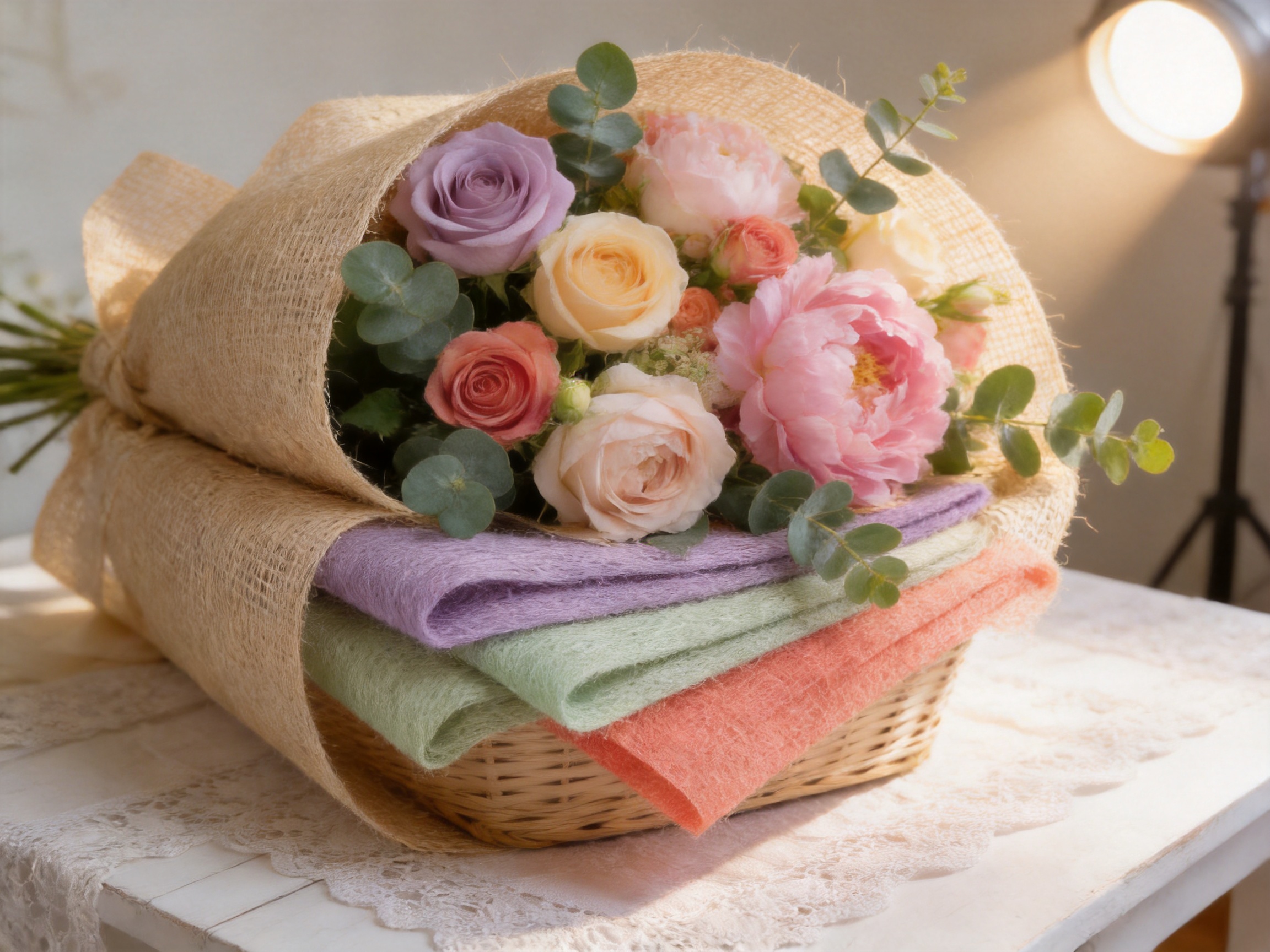
Florists, event planners, gift shops, and handmade creators can use nonwoven raffia fabric accessories in bouquets, baskets, arrangements, table displays, and seasonal decorations. The material’s flexibility allows it to be shaped according to the arrangement, while its color range helps coordinate with flowers, wrapping paper, ribbons, and display themes.
It may be placed beneath a bouquet to create a clean base, wrapped around a container to hide structural components, or layered around a floral gift package. Its soft texture provides a gentle contrast to stems, leaves, paper, and rigid containers. Because it is lightweight, it generally does not add unnecessary weight to a finished arrangement.
Wedding and Event Styling
Event decoration often requires precise color coordination. Custom colors can be developed to match wedding palettes, company events, hospitality displays, or seasonal retail campaigns. Neutral shades can support elegant arrangements, while stronger colors can create a more energetic presentation.
The material may be used for table centerpieces, favor boxes, flower baskets, welcome gifts, and decorative wrapping. A consistent material across several elements can help create a unified event identity without requiring multiple unrelated packaging components.
Retail Floral Packaging
Retail florists need packaging that looks attractive while remaining efficient to assemble. Nonwoven raffia fabric accessories can be prepared in advance, cut into standard sizes, or stored for use with different flower varieties. The fabric can be combined with paper sleeves, tags, ribbons, and boxes to create repeatable packaging formats.
Its dust-proof and moisture-resistant characteristics are useful during ordinary shop storage and preparation. However, when used near wet flower stems or water containers, the material should be positioned carefully to avoid prolonged saturation or unnecessary contact with standing water.
Packaging Matching and Product Coordination
Nonwoven raffia accessories are not limited to use as a standalone product. They can serve as a matching component within a wider packaging system. Buyers may combine them with raffia paper yarn, paper raffia tape, wrapping paper, decorative cords, crinkle paper, labels, and gift boxes.
This coordinated approach is valuable for manufacturers that want to offer customers complete packaging solutions. Instead of sourcing every decorative component from a different supplier, a buyer can develop a consistent product family with matching colors, textures, and delivery schedules.
For brands, coordinated materials can strengthen visual recognition. A particular color combination may be repeated across boxes, retail displays, online order packaging, and seasonal gift sets. The nonwoven fabric component provides a soft decorative element that complements paper-based products without competing with printed brand graphics.
Color Development and Customization
Color is one of the most visible features of decorative packaging. Standard solid colors are useful for fast purchasing and regular production. Custom color development is more suitable for buyers with established brand guidelines or specific campaign requirements.
Color customization requires attention to sample approval, raw material consistency, production scheduling, and batch control. A professional supplier should confirm the target color before mass production and maintain records that help reproduce the approved shade for future orders. This is particularly important for long-term buyers who need consistent packaging across repeated purchasing cycles.
Advanced Manufacturing Capabilities
The manufacturing strength behind this product is supported by an integrated production organization with experience in paper raffia, fancy yarns, gift packaging materials, and decorative accessories. The company originated from a craft materials business unit established in 2010 and was formally founded in 2014. Over more than a decade, it has developed from a trading-oriented enterprise into a large-scale integrated manufacturer.
Its modern production base covers approximately 20,000 square meters in Dongyang, Zhejiang Province, China, and employs more than 200 professional workers. The factory operates an integrated chain that includes raw material processing, mass production, quality testing, finished-goods packaging, and shipment preparation. This structure allows production activities to be coordinated under one management system rather than being divided among unrelated external suppliers.
Integrated Production Management
Integrated manufacturing gives buyers several practical advantages. Raw material planning can be connected to production scheduling, while inspection and packaging can be controlled closer to the manufacturing source. This may improve communication, reduce avoidable transfer delays, and support more consistent order execution.
For customers purchasing multiple related products, integrated production can also simplify project coordination. Nonwoven fabric accessories may be ordered together with paper raffia yarn, fancy yarns, wrapping materials, or other decorative products. A coordinated supply program can reduce the administrative burden associated with managing several independent factories.
Specialized Equipment and Process Development
The company continues to upgrade core technologies and production equipment for slitting, twisting, winding, compression packaging, and related decorative material processes. These capabilities are particularly relevant to a business producing multiple categories of raffia products and paper-based accessories.
For nonwoven fabric accessories, hot-melt bonding requires stable control of material feeding, heat, pressure, bonding conditions, and finishing. Production personnel must monitor the resulting texture, thickness, flexibility, and appearance. Equipment upgrades and standardized procedures help support repeatable output as order volumes increase.
Standardized Procedures
Standardized production procedures are important because decorative materials are judged not only by basic functionality but also by appearance. A package may contain many individual pieces, and differences in color, surface feel, or dimensions can become obvious when products are displayed together.
Standard operating procedures can cover raw material preparation, machine setup, color confirmation, bonding, cutting or finishing, inspection, packing, and shipment. When procedures are documented and repeatable, production teams can reduce variation and respond more efficiently to repeat orders.
Quality Control and Batch Consistency
A strict and replicable quality control system supports stable product performance. Inspection may focus on material appearance, color uniformity, surface cleanliness, bonding condition, flexibility, tearing behavior, packaging integrity, and order quantity. The exact inspection plan can be adapted to the buyer’s requirements and the intended application.
Batch consistency is especially important for brand packaging. If one shipment is noticeably different from a previous shipment, the difference may affect the appearance of a retail collection. Maintaining production records and quality checkpoints helps the manufacturer identify issues earlier and improve repeatability.
Compression Packaging and Shipment Preparation
Decorative materials must be protected during storage and transportation. Compression packaging can help organize products and make better use of carton space, provided that the packing method is appropriate for the material. Finished-goods packaging should prevent unnecessary contamination, moisture exposure, deformation, and handling damage.
The company’s experience with compression packaging and finished-goods shipment supports efficient order preparation for domestic and international customers. Proper packaging also helps buyers receive products in a condition suitable for immediate warehouse storage or production use.
Production Capacity and Supply Reliability
The factory has an annual production capacity of more than 200 million pieces across its product range. This scale allows the company to serve both regular wholesale requirements and larger programs involving retail supply chains, promotional packaging, and repeated seasonal orders.
Capacity alone does not guarantee good service, but it provides a foundation for planning. Buyers can discuss expected annual volumes, monthly delivery needs, product combinations, and seasonal peaks with a supplier that has experience organizing large production schedules.
Reliable supply also depends on material planning, workforce organization, quality procedures, and communication. A manufacturer with an integrated production base can coordinate these factors more directly. This is valuable for customers that cannot afford frequent shortages or last-minute substitutions in their packaging programs.
Domestic and International Service
The products are supplied throughout China and exported to Europe, North America, South America, Asia, and other regions. Experience across different markets gives the manufacturer an understanding of varied packaging preferences, color expectations, order formats, and shipment requirements.
International buyers often need more than a product quotation. They may require samples, packaging confirmation, production updates, carton information, documentation, and delivery coordination. A supplier accustomed to global retail and wholesale channels is better positioned to support these activities through an organized process.
Retail Supply Chain Experience
The company’s products and services are used by recognized brands and retail organizations, including Costco, IKEA, LOKLIK, Disney, Lancôme, Chanel, Dior, and Primark. Such market exposure indicates experience with demanding standards for presentation, consistency, supply coordination, and commercial packaging.
Brand references should not replace product testing or buyer evaluation, but they demonstrate that the manufacturer has served customers operating in professional and highly visible markets. This background is relevant for buyers seeking a supplier capable of supporting repeat orders and structured procurement procedures.
OEM and ODM Services
OEM and ODM flexibility is an important advantage for packaging buyers that need more than a standard catalog item. The company provides exclusive brand customization, custom size development, and long-term bulk order supply. These services allow the nonwoven fabric accessory to be adapted to different packaging systems and commercial requirements.
Exclusive Brand Customization
Brand customization may include color selection, product dimensions, packaging labels, carton marks, folding methods, and coordinated accessory sets. Buyers can develop an exclusive presentation that reflects their visual identity while using a professionally manufactured base material.
Custom branding should be planned early because artwork approval, packaging production, and production scheduling may affect the lead time. Clear specifications reduce the risk of misunderstandings and help the supplier prepare accurate samples before mass production.
Custom Size Development
Different gift boxes, floral containers, and packaging systems require different dimensions. A standard sheet may be appropriate for some operations, while another buyer may need pre-cut pieces, narrow strips, larger rolls, or specific folding formats.
Custom size development can reduce cutting labor at the buyer’s facility and make assembly more efficient. It can also help minimize material waste when the product is designed around a particular box or arrangement. The most suitable format depends on order volume, application, equipment, and packaging workflow.
Long-Term Bulk Supply
Long-term supply programs benefit from documented specifications and repeatable production. Once the color, size, material, packaging, and inspection requirements are approved, future orders can be managed against an established reference. This helps create continuity across campaigns and product seasons.
Long-term cooperation also allows the supplier and buyer to review consumption forecasts, improve packing methods, coordinate delivery schedules, and identify opportunities for product development. Such cooperation is particularly useful for companies with multiple retail channels or recurring gift packaging programs.
Environmental and Safety Considerations
The material is described as eco-friendly, non-toxic, and odorless, making it suitable for buyers that are paying greater attention to material safety and responsible packaging choices. Its lightweight structure may also support efficient storage and transportation compared with heavier decorative materials.
Environmental evaluation should consider the complete product life cycle, including material selection, production energy, packaging, transportation, intended use, and disposal. Buyers may wish to confirm the specific environmental standards, testing requirements, and disposal guidance applicable to their markets before placing a large order.
For companies seeking to improve the sustainability profile of gift packaging, nonwoven accessories can be evaluated alongside paper fillers, reusable textile components, and other materials. The right choice depends on the application and the buyer’s sustainability objectives. Responsible use includes selecting an appropriate quantity, avoiding unnecessary overpackaging, and communicating disposal instructions where required.
Safe Handling in Packaging Operations
The material is flexible and easy to handle, but normal production safety practices should still be followed. Cutting equipment should be operated by trained personnel, and workers should keep the material away from excessive heat or open flames unless the product has been specifically tested for that environment.
For floral applications, the material should be arranged so that it does not interfere with water containers, electrical equipment, or other potentially hazardous components. Packaging teams should also store the product in a clean, dry area and protect it from prolonged exposure to direct sunlight, high heat, or excessive moisture.
How to Select the Right Product Format
Buyers should begin by identifying the exact application. A gift box liner may require a smooth, clean sheet in a particular size, while floral decoration may benefit from larger flexible pieces that can be folded and shaped. Packaging separation may require pre-cut sections or a material format that can be processed efficiently on site.
Important purchasing considerations include color, dimensions, thickness, softness, flexibility, packaging method, order quantity, and delivery schedule. It is also useful to provide the supplier with photographs or technical drawings of the intended application. Clear information helps the manufacturer recommend a suitable format and prepare more accurate samples.
| Buyer Requirement | Questions to Confirm | Recommended Preparation |
|---|---|---|
| Gift box lining | What are the internal box dimensions and product weight? | Provide box measurements and preferred folding or cutting method |
| Packaging separation | How many products must be separated and what shapes are involved? | Share product drawings or samples where possible |
| Floral decoration | Will the material be placed near stems, containers, or moisture? | Explain the arrangement method and expected handling conditions |
| Brand matching | Is a standard color acceptable or is a custom shade required? | Provide a color reference and approve a physical sample |
| Large-volume purchasing | What are the annual quantity and peak-season requirements? | Prepare a forecast and discuss staged deliveries |
| OEM packaging | Are labels, carton marks, or special packing formats needed? | Submit artwork, packing instructions, and inspection criteria |
Quality Checks Recommended for Buyers
Before approving a large order, buyers should inspect samples under realistic conditions. The material can be folded, cut, layered, placed inside the intended box, and tested with the planned decorative components. This practical review may reveal whether the texture, color, size, and flexibility match the intended design.
Visual inspection should check for uneven color, visible contamination, excessive loose fibers, bonding irregularities, holes, unwanted creases, and edge damage. Buyers should also confirm that the received material matches the approved sample in appearance and dimensions.
Handling checks may include folding, light pulling, cutting, and repeated repositioning. These checks are not a substitute for formal laboratory testing, but they can help confirm whether the product is suitable for the actual packaging workflow.
For larger or regulated applications, buyers may request relevant material documentation or third-party testing according to the requirements of the destination market. Specifications should be agreed in writing before production so that both parties share the same understanding of acceptable quality.
Efficient Use in Packaging Workflows
Nonwoven raffia fabric accessories can be used more efficiently when packaging teams establish a consistent assembly method. For example, operators may prepare standard folded pieces for a particular box size, pre-cut separators for a gift set, or pre-arranged layers for a floral package.
Standardization reduces assembly time and helps maintain a uniform final appearance. It also makes it easier to calculate material consumption and reorder before inventory becomes critically low. For companies with several package sizes, color-coded work instructions can help prevent mix-ups during busy production periods.
Reducing Material Waste
Waste can be reduced through accurate box measurements, efficient cutting layouts, and appropriate piece sizes. When custom dimensions are developed with the manufacturer, buyers may be able to reduce unnecessary trimming at their own facility.
Remaining clean offcuts may be suitable for small decorative details, sample packages, craft kits, or internal testing, depending on the buyer’s quality requirements. Material that is dirty, damaged, or unsuitable for presentation should be separated and managed according to local waste procedures.
Combining Textures and Layers
A sophisticated package often uses several textures rather than relying on one material. Nonwoven fabric can be layered with crinkle paper, paper raffia yarn, wrapping paper, ribbons, and printed cards. The fabric provides softness and body, while other materials add contrast, structure, or branding space.
Designers should avoid excessive layering that makes the package difficult to open or creates unnecessary material use. The strongest result usually comes from selecting a small number of coordinated components and giving each one a clear visual or functional role.
Why Manufacturer Experience Matters
Decorative packaging materials may appear simple, but consistent commercial production requires process control. A supplier must manage raw materials, machine settings, color development, operator training, inspection, packing, and shipment coordination. Manufacturing experience helps transform a decorative concept into a repeatable product.
The company’s history in craft materials, paper raffia products, fancy yarns, and gift packaging gives it a broad understanding of how decorative materials are used together. This product knowledge can help buyers develop matching packaging programs instead of treating the nonwoven accessory as an isolated item.
More than ten years of industry experience also supports practical problem-solving. Buyers may need assistance with material selection, size adjustment, packaging design, production timing, or combining several items in one order. A manufacturer familiar with these requirements can often identify potential issues earlier in the development process.
Frequently Asked Questions
What material are the accessories made from?
They are made from PP polypropylene nonwoven fabric. The material is produced as a bonded fiber structure rather than a conventional woven textile.
What does the hot-melt bonding process do?
Hot-melt bonding uses controlled heat and pressure to join fibers into a stable nonwoven web. It helps provide consistent texture, flexibility, and resistance to tearing during ordinary packaging and decorative handling.
Are the accessories suitable for gift box interiors?
Yes. They are designed for gift box lining, packaging separation, and decorative presentation. Their soft, lightweight, dust-proof, and tear-resistant characteristics make them suitable for many gift packaging applications.
Can the product be used for flowers?
Yes. The accessories can be used for floral decoration, bouquet presentation, baskets, containers, and event displays. When used near water or wet stems, they should be positioned carefully and protected from prolonged saturation.
Are custom colors available?
Multiple solid colors are available, and custom colors can be discussed for buyers with specific brand or project requirements. A color sample should be approved before mass production.
Can the material be cut or folded?
Yes. Its flexible structure allows it to be folded, layered, shaped, and cut according to the packaging or decoration method. Buyers should select the appropriate format and size for their equipment and workflow.
Is the material odorless?
The product is described as odorless and non-toxic under normal intended use, which supports its use in consumer-facing gift packaging and decorative applications.
Is it waterproof?
The material is moisture-resistant, but it should not automatically be considered waterproof. It is suitable for ordinary packaging environments and limited contact with moisture, but prolonged exposure to water should be avoided unless a specific version has been tested for that purpose.
Can the product be ordered with custom dimensions?
Yes. Custom size development is available. Buyers should provide box dimensions, application details, preferred cutting or folding methods, and estimated order quantities for evaluation.
Can it be combined with other raffia products?
Yes. It can be coordinated with paper raffia yarn, raffia paper, DIY cords, fancy yarns, wrapping paper, crinkle fillers, ribbons, and other gift packaging materials.
What industries can use the product?
Typical users include gift packaging manufacturers, florists, event planners, craft retailers, wholesalers, e-commerce sellers, promotional product companies, and brands that produce seasonal or premium gift sets.
How should buyers approve a large order?
Buyers should review a physical sample, confirm color and dimensions, define packaging requirements, agree on quality standards, and communicate the expected order quantity and delivery schedule before mass production begins.
Conclusion
Raffia nonwoven fabric accessories provide a versatile solution for gift box lining, packaging separation, floral decoration, and coordinated packaging design. Their PP polypropylene nonwoven construction offers softness, breathability, flexibility, tear resistance, dust-proof performance, moisture resistance, and a clean odorless profile. These characteristics give the material advantages over fragile paper fillers, rigid plastic components, and less consistent decorative textiles in many applications.
The product is supported by hot-melt bonding technology, standardized manufacturing procedures, integrated quality control, and a production base equipped for large-scale supply. A factory covering approximately 20,000 square meters, employing more than 200 professionals, and producing more than 200 million pieces annually provides the capacity needed for wholesale, retail, OEM, and ODM programs.
Multiple solid colors, custom color development, custom sizing, exclusive brand customization, and long-term bulk supply allow buyers to adapt the material to different packaging systems. Combined with experience in paper raffia yarn, fancy yarns, wrapping materials, and decorative accessories, these capabilities make the product suitable for companies seeking a coordinated and dependable packaging supply partner.
For the best results, buyers should evaluate the material according to its intended use, approve samples carefully, define quality requirements in advance, and select a format that supports efficient assembly. Used thoughtfully, raffia nonwoven fabric accessories can improve the protection, appearance, and perceived value of gift packaging and floral presentation while supporting consistent commercial production.
References
1. Product specification supplied for PP polypropylene raffia nonwoven fabric accessories, including material, color, texture, features, applications, and safety information.
2. Manufacturing information supplied for Zhejiang Raffia Paper Products Co., Ltd., including production history, factory scale, workforce, capacity, equipment development, quality control, and international supply experience.
3. General principles of nonwoven fabric manufacturing, including fiber web formation, thermal bonding, handling performance, and packaging applications.
4. General packaging design practices for gift box lining, product separation, decorative fillers, and coordinated presentation materials.
5. General floral design practices concerning wrapping, layering, bouquet presentation, container decoration, and moisture-aware material placement.
6. General procurement principles for OEM and ODM packaging materials, including sample approval, color confirmation, custom sizing, batch consistency, and long-term supply planning.
Product: Raffia NonWoven Fabric Accessories

 +86 15355323399
 kevin@raffia-paper.com
 No. 151 Guanshan North Road, Dongyang City, Zhejiang Province, China

Copyright © Zhejiang Raffia Paper Products Co., Ltd. All Rights Reserved.

Paper Raffia Yarn & Gift Packaging Factory