
 +86 15355323399
 En
 中文简体
 日本語
 Français
 Español
 Deutsch
 Türk
 عربى
 italiano
 русский
Honeycomb Filling Packing Paper: A Sustainable Cushioning Solution for Modern B2B Packaging
Introduction
Packaging buyers are under increasing pressure to protect products, reduce plastic consumption, control logistics costs, and create a stronger unboxing experience at the same time. Traditional packaging materials can solve one of these problems while creating another. Bubble wrap offers cushioning but relies on plastic. Loose-fill foam provides void filling but is difficult to recycle and may create an untidy presentation. Conventional paper may be recyclable, but it often requires more material, more storage space, and more manual preparation to provide effective protection.
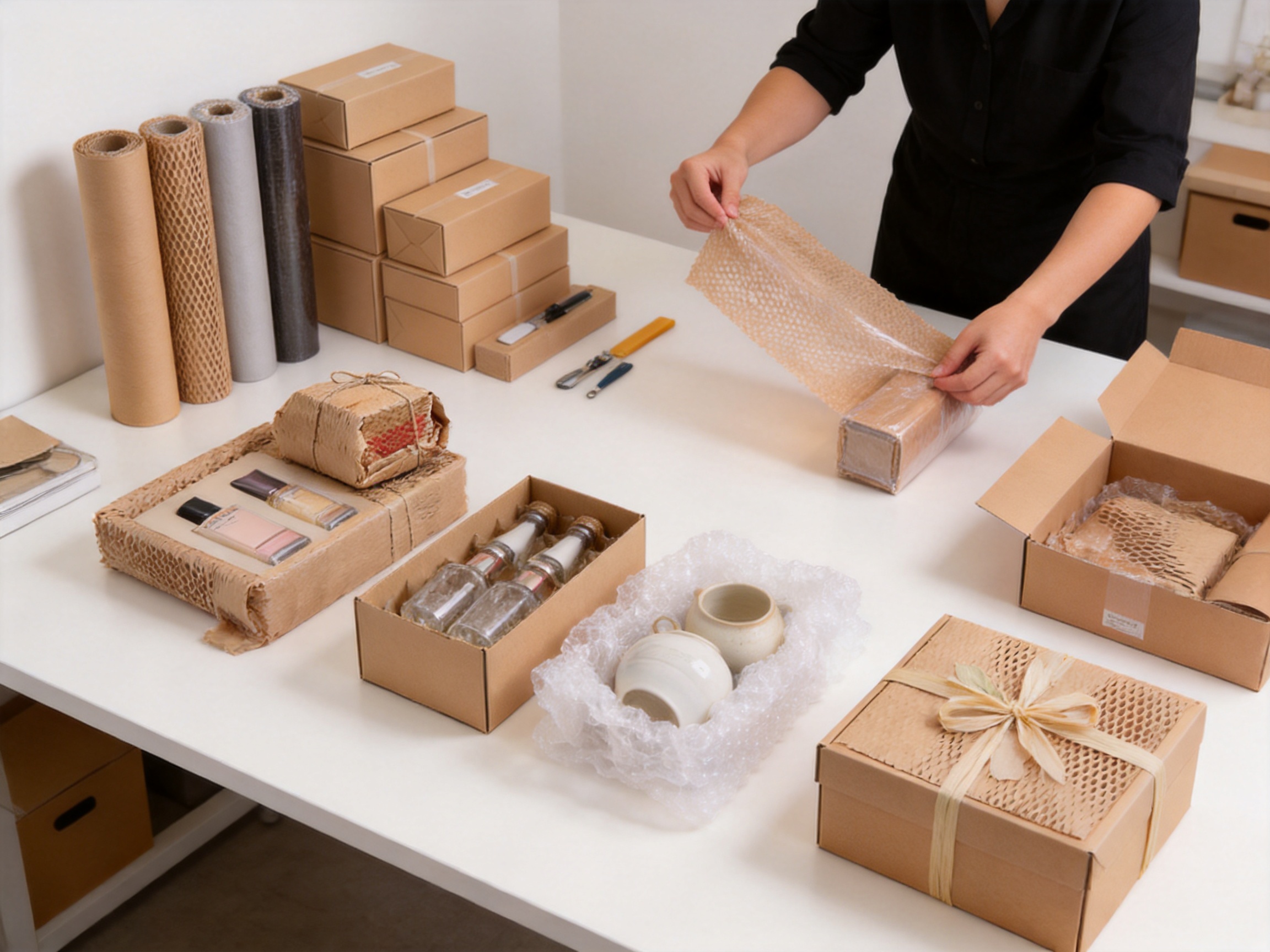
Honeycomb Filling Packing Paper offers a practical alternative. Made from kraft paper and processed into an expandable honeycomb structure, it transforms from a compact paper roll into a three-dimensional cushioning and wrapping layer when stretched. The expanded cells interlock around products, helping absorb impact, reduce movement, and provide an attractive natural appearance.
This material is suitable for e-commerce fulfillment, export shipping, gift presentation, cosmetics packaging, glassware protection, handmade products, warehousing, and other business-to-business packaging applications. It is also suitable for brands seeking to replace plastic fillers with a recyclable and biodegradable paper-based solution.
Unlike ordinary flat packing paper, honeycomb packing paper combines flexibility, structural stability, cushioning performance, and visual appeal. It can be used as an outer wrapping layer, an internal filler, or a component of a complete paper-based packaging system. Its expandable design also helps reduce storage volume before use, making it valuable for companies that manage large packaging inventories.
This article explains the structure, performance, applications, purchasing value, manufacturing capabilities, customization options, quality considerations, and business advantages of Honeycomb Filling Packing Paper for professional buyers.
Honeycomb Filling Packing Paper
What Is Honeycomb Filling Packing Paper?
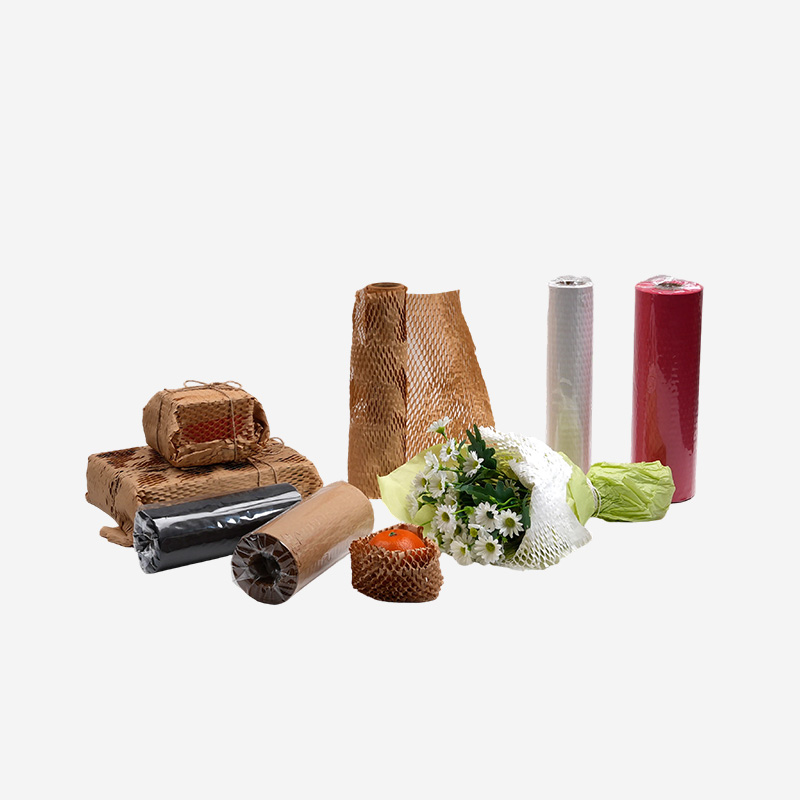
Honeycomb Filling Packing Paper is an expandable paper packaging material manufactured from kraft paper. During production, the paper is precision-cut into a repeating honeycomb pattern. When the roll or sheet is gently stretched, the cuts open into three-dimensional cells that form a lightweight cushioning layer.
The structure is similar in principle to a natural honeycomb. Multiple connected cells distribute pressure across the material rather than concentrating force at one point. This gives the paper greater protective capability than a standard flat sheet of the same general material weight.
The product may be supplied as a roll or in carton-packed formats. It can be used directly by hand for wrapping and filling, or integrated into semi-automated packaging operations. Depending on the required performance, buyers can select different paper GSM, widths, honeycomb densities, colors, tensile properties, and surface treatments.
Although the material is often called honeycomb paper, it should not be confused with rigid honeycomb board or structural paper panels. Honeycomb Filling Packing Paper is flexible, stretchable, and designed for wrapping, void filling, surface protection, and product stabilization.
The main material characteristics include:
- Kraft paper construction
- Expandable honeycomb geometry
- Compact roll storage before expansion
- Flexible wrapping performance
- Paper-based and recyclable composition
- Optional biodegradable or eco-friendly coatings
- Customizable GSM, width, color, and cell density
- Compatibility with other paper fillers and raffia-based decorative materials
How the Honeycomb Structure Works
The protective performance of the material comes from its geometry. In its compact state, the paper is relatively flat and occupies limited storage space. When stretched, the precision-cut pattern opens into connected cells. These cells create thickness, elasticity, and friction around the packaged item.
When an external force reaches the package, the honeycomb cells help distribute the force across a broader area. The structure can also create a small separation between the product and the outer carton, helping reduce direct contact with the carton wall. For fragile goods, this can reduce the likelihood of surface scratches, minor impact damage, and movement during handling.
The expanded structure also provides holding strength. Instead of allowing an item to move freely inside a box, the paper can be wrapped around the item or placed around it as a filler. This helps stabilize bottles, jars, ceramics, accessories, small electronics, and other products during transportation.
After expansion, the honeycomb pattern generally remains open and stable rather than immediately returning to its original compact shape. The actual expansion ratio depends on the cutting pattern, paper specification, honeycomb density, and the degree of stretching applied during use. A typical expansion range is approximately 1.5 to 2.5 times, subject to the selected structure.
Key Product Specifications
| Item | Typical Specification | Customization Possibilities |
|---|---|---|
| Product Name | Honeycomb Filling Packing Paper or Honeycomb Paper Roll | Private label product names and packaging formats |
| Base Material | Kraft paper | Custom GSM and paper grades |
| Structure | Expandable honeycomb pattern | Honeycomb density and tensile performance |
| Expansion Ratio | Approximately 1.5–2.5 times | Adjusted according to structure and application |
| Color | Natural kraft | Custom dyed colors |
| Surface Treatment | Uncoated | Optional eco coating |
| Environmental Profile | Recyclable, biodegradable, and plastic-free options | Material selection based on target-market requirements |
| Food Contact Option | Available upon specification | Food-grade paper selection for suitable applications |
| Packaging Format | Roll or carton packaging | Customized labels, cartons, and shipment configuration |
Final specifications should be confirmed according to the product being protected, the packaging line, shipping environment, desired appearance, and applicable market requirements. Buyers should evaluate samples before approving mass production, especially when the material will be used for high-value or highly fragile products.
Advantages Over Conventional Packaging Materials
1. A Paper-Based Alternative to Plastic Cushioning
The most visible advantage of Honeycomb Filling Packing Paper is that it can replace or reduce the use of plastic-based packaging materials. Bubble wrap, EPE foam, plastic air pillows, and plastic loose-fill materials may provide cushioning, but they can create disposal difficulties and may conflict with a brand’s plastic-reduction goals.
Honeycomb packing paper is made primarily from paper and can be incorporated into a paper recycling system where local facilities accept the selected paper grade. It offers brands a way to improve the material profile of their packaging without abandoning protective performance.
This advantage is especially important for retailers, exporters, and brand owners operating in markets where customers, retailers, or regulators increasingly expect recyclable packaging and lower dependence on single-use plastic.
2. More Attractive Than Ordinary Loose Fill
Traditional loose-fill materials are usually selected for function rather than presentation. They may shift inside the box, create dust or fragments, and make the unboxing process feel less organized. Honeycomb paper presents a cleaner and more intentional appearance.
The open cell pattern gives the package a natural texture that supports premium, handmade, sustainable, and lifestyle-oriented brand positioning. It can be used to wrap a product, line a gift box, or create a structured layer around several products. This makes it useful not only for protection but also for visual merchandising.
3. Better Space Efficiency Before Use
Because the honeycomb structure is stored in a compact form before expansion, warehouses can use storage space more efficiently than they might with bulky pre-expanded fillers. This can be valuable for fulfillment centers, packaging distributors, and brands that purchase materials in bulk.
Reduced pre-use volume can also simplify internal handling. Rolls are generally easier to stack, move, and organize than loose foam pieces or large quantities of pre-formed cushioning. The exact space savings depend on roll dimensions, expansion ratio, carton design, and warehouse conditions.
4. Fast Manual Application
Honeycomb paper can normally be prepared quickly by hand. An operator can pull the material from a roll, stretch it, wrap it around the product, and place it inside the carton. This reduces the need for measuring, cutting, folding, or assembling several separate protective components.
For smaller operations, this straightforward process can shorten packing time and improve consistency between workers. For larger operations, the material may be evaluated for use with dispensers or semi-automated packaging stations.
5. Flexible Use Across Product Categories
Rigid inserts are often designed for one particular product size. Honeycomb paper is more flexible and can accommodate a wider range of product shapes. It can follow curved bottles, irregular handmade products, gift sets, accessories, and mixed-product shipments.
This flexibility is particularly useful for companies that sell multiple product sizes or seasonal collections. Instead of maintaining a large inventory of different molded inserts, a business may use standardized honeycomb rolls together with cartons of different sizes.
6. Improved Product Stabilization
A package can be damaged not only by external impact but also by repeated movement inside the carton. Honeycomb paper helps fill empty spaces and creates friction around products, reducing unnecessary shifting during transportation.
When used correctly, it can separate products from one another and reduce direct contact between fragile surfaces. For mixed-product orders, the material can form protective layers between items or help hold smaller products in place.
Applications in B2B Packaging
E-Commerce and Cross-Border Logistics
E-commerce orders pass through multiple handling points, including warehouses, sorting centers, delivery vehicles, and customer delivery locations. The package may be exposed to vibration, compression, drops, and changes in orientation. Honeycomb paper helps provide a practical protective layer for products traveling through these conditions.
It is suitable for independent online stores, marketplace sellers, subscription-box businesses, and cross-border e-commerce operators. Typical applications include small electronics, accessories, cosmetics, skincare containers, candles, gift items, and household products.
For international sellers, paper-based protection may also support a more consistent sustainability message across different destination markets. Packaging buyers should nevertheless confirm recycling requirements and import regulations in each target country.
Cosmetics and Personal Care Packaging
Cosmetic bottles, fragrance containers, jars, and skincare products often require surface protection as well as impact cushioning. Honeycomb paper can be wrapped around individual products or used to create separation within a gift set.
The natural kraft appearance is suitable for clean-label, botanical, handmade, and environmentally positioned brands. Custom colors can also be considered when the packaging must match a brand identity or seasonal campaign.
For products that require food-contact or direct-contact compliance, the paper specification and any coatings must be confirmed in advance. Packaging material intended to touch a product should not be assumed to meet a particular standard without documentation and testing.
Glassware, Ceramics, and Fragile Products
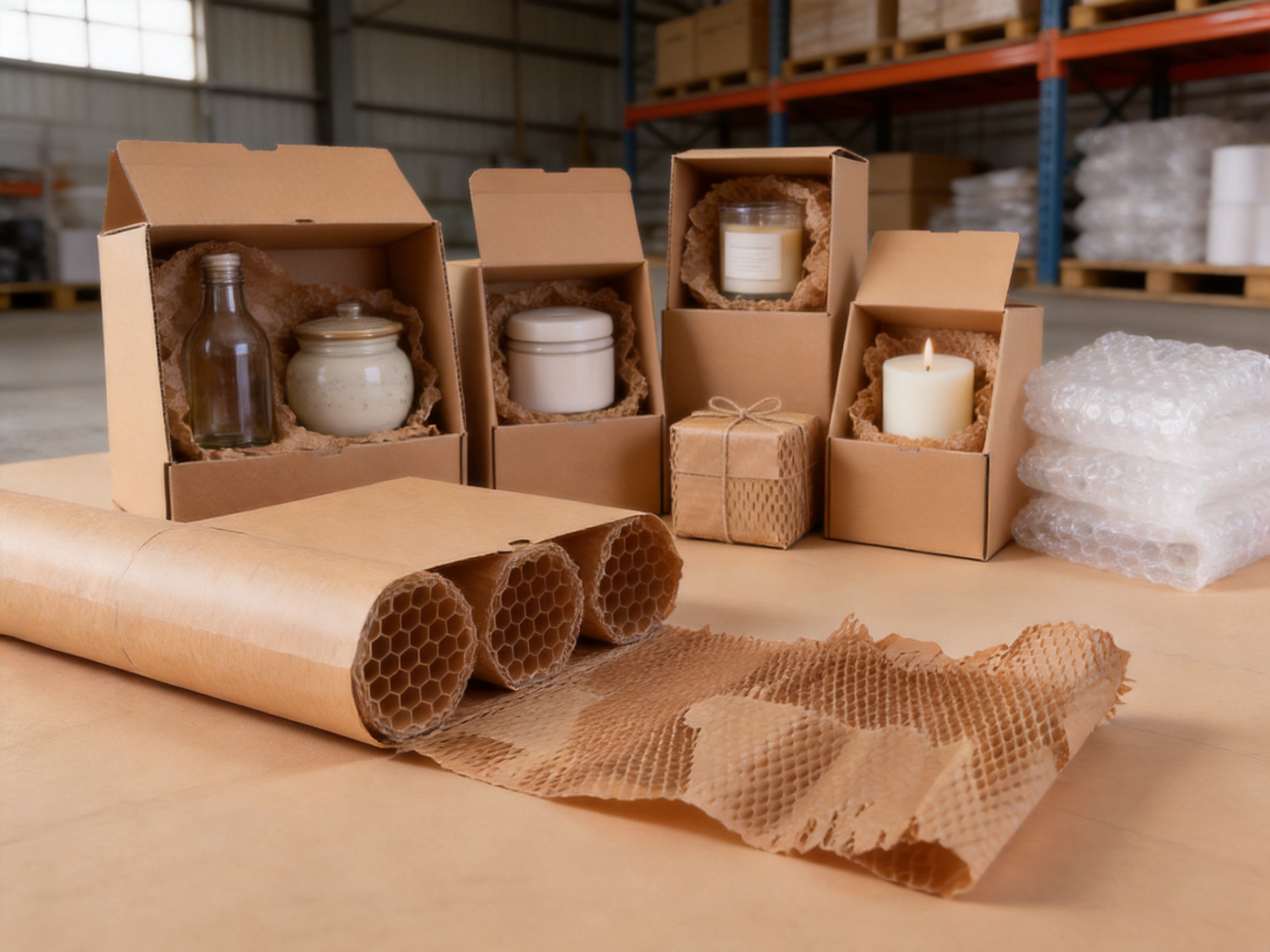
Glass bottles, ceramic items, fragrance products, handmade pottery, and decorative objects can benefit from flexible cushioning. Honeycomb paper can surround the item, protect exposed surfaces, and fill empty space within the shipping carton.
For particularly fragile or heavy products, honeycomb paper may be combined with rigid partitions, corrugated inserts, paperboard dividers, or additional cushioning. It is not intended to replace every structural packaging component in every application. Instead, it can function as a flexible protective layer within a broader packaging system.
Gift and Premium Packaging
Gift packaging must protect the product while also creating a pleasing presentation. Honeycomb paper can be arranged inside gift boxes, around individual products, or between multiple items in a set. Its distinctive structure creates a more deliberate appearance than random loose fill.
It can support seasonal packaging for Christmas, birthdays, weddings, corporate gifts, promotional campaigns, and limited-edition collections. Color customization allows buyers to develop coordinated packaging systems for different occasions or product lines.
Handmade and Lifestyle Brands
Small-batch brands often sell candles, fragrances, handmade ceramics, art pieces, stationery, accessories, and home décor. These products may have unusual shapes or delicate finishes that are difficult to protect with standard inserts.
Honeycomb paper is adaptable to irregular forms and can complement a handmade visual identity. It can also be combined with paper shreds, raffia fibers, paper yarn, and other decorative fillers to create layered gift packaging.
Warehousing and Distribution
Honeycomb paper is useful beyond outbound shipping. It can support internal warehousing operations by separating products, protecting surfaces during storage, and stabilizing mixed items in cartons or bins.
Distributors may also offer the material to packaging supply customers as part of a wider range of paper-based protective products. Its roll format and customizable specifications make it suitable for different warehouse scales and packaging workflows.
Manufacturing Process and Production Strength
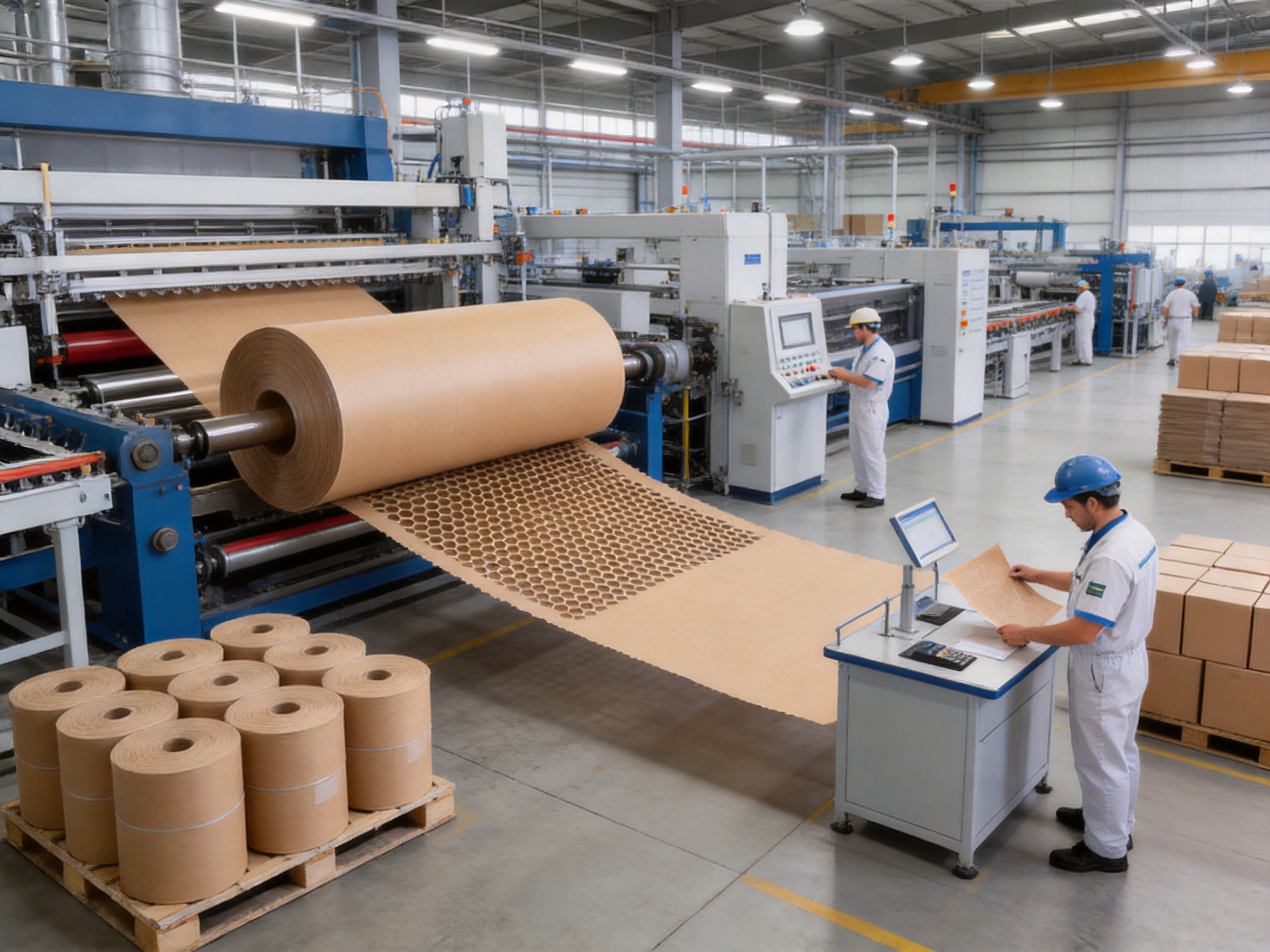
The quality of expandable honeycomb paper depends on more than the paper itself. The cutting pattern, tension control, roll winding, edge quality, material consistency, and packing method all influence the final user experience. A reliable manufacturer must therefore manage the product as a complete converting and supply-chain process.
Material Selection and Paper Preparation
Production begins with the selection of kraft paper suitable for the required GSM, color, strength, and application. Material selection influences expansion behavior, tensile performance, tear resistance, surface appearance, and compatibility with coatings or printing.
For general protective packaging, natural kraft paper is often selected for its recognizable recycled-paper appearance and practical strength. Custom dyed paper can be developed when the buyer needs a specific visual identity. Where appropriate, food-grade paper options may be evaluated for packaging applications that require a suitable paper specification.
Precision Pattern Cutting
The paper is processed into an expandable honeycomb pattern using precision cutting technology. Consistent cut spacing and pattern alignment are essential. If the cuts are uneven, the material may expand inconsistently, create weak areas, or lose visual uniformity.
Laser-cut or precision die-cut processing can be selected according to the required product structure and production volume. Pattern design may be adjusted to influence cell size, expansion ratio, tensile behavior, cushioning feel, and wrapping flexibility.
Width and Roll Conversion
After the pattern is formed, the material is converted into the required widths and roll formats. Slitting and winding must be carefully controlled so that rolls unwind smoothly during packaging operations.
Consistent roll edges help reduce handling problems and improve the appearance of the finished material. Proper winding tension also helps prevent loose layers, telescoping, uneven expansion, and difficulty feeding the material into dispensers or packaging stations.
Optional Color and Surface Treatment
Natural kraft is a common choice, but custom dyed colors can be developed for brand-specific packaging programs. Color matching should be reviewed through physical samples because paper fibers, GSM, coating, and production batches can influence the final appearance.
An optional eco coating may be considered when the application requires additional surface properties. Any coating should be evaluated for recyclability, biodegradability, odor, print compatibility, and the requirements of the destination market.
Quality Control and Batch Consistency
Quality control should cover incoming materials, pattern formation, dimensions, expansion behavior, roll winding, appearance, packaging, and shipment preparation. A standardized inspection process helps ensure that large orders remain consistent from batch to batch.
Important inspection points may include:
- Paper GSM and material consistency
- Roll width and length
- Pattern alignment and cell uniformity
- Expansion ratio
- Stretching and tensile behavior
- Edge condition and winding quality
- Color consistency for dyed materials
- Surface condition and coating performance
- Carton labeling and packing accuracy
- Sample performance for the buyer’s intended application
Integrated Manufacturing Capabilities
Zhejiang Raffia Paper Products Co., Ltd. brings more than ten years of industry experience to the paper-based packaging and decorative materials sector. The company originated from a craft materials business unit established in 2010 and was formally developed into a manufacturing enterprise founded in 2014.
Its production base is located in Dongyang, Zhejiang Province, China. The company operates a modern manufacturing site covering approximately 20,000 square meters and employs more than 200 professional workers. Its integrated production chain includes raw material processing, mass production, quality testing, finished-product packaging, and shipment preparation.
This integrated structure is important for B2B buyers because it reduces dependence on disconnected subcontractors. When material processing, conversion, inspection, and packing are coordinated within one manufacturing system, it becomes easier to manage specifications, production schedules, quality records, and delivery planning.
The company has developed production expertise in slitting, twisting, winding, and compression packaging. These capabilities are directly relevant to paper raffia yarns, raffia paper, decorative fillers, and related gift packaging products. They also support the controlled handling and packaging of paper-based materials supplied in rolls, bundles, cartons, and other bulk formats.
With an annual production capacity of more than 200 million pieces across its product range, the company is positioned to support both standard products and long-term bulk supply programs. Its customers include manufacturers, brand owners, packaging distributors, e-commerce sellers, and supply-chain companies.
The company exports to Europe, North America, South America, Asia, and other regions. Its product applications cover gift packaging, textile knitting, home decoration, handmade products, and global retail supply chains. This international experience helps the manufacturer understand the importance of packaging consistency, export preparation, communication, and delivery reliability.
OEM and ODM Customization
Professional buyers often require more than an off-the-shelf roll. Packaging systems may need to match a brand’s color, product dimensions, shipping process, retail requirements, or environmental strategy. Honeycomb Filling Packing Paper can be customized through both OEM and ODM services.
OEM Services
OEM production is suitable when the buyer has an established product specification and needs the manufacturer to produce it under a private label or customized packaging program. Available options may include:
- Custom product labels
- Private label packaging
- Brand-specific color systems
- Customized roll widths
- Carton printing and labeling
- Customized packing quantities
- Product identification and shipment marks
OEM projects are usually most efficient when the buyer provides clear technical requirements, target order quantities, packaging artwork, color references, preferred carton specifications, and destination-market expectations.
ODM Development
ODM development is suitable for buyers who need help creating a packaging solution for a particular industry or product category. The manufacturer can work with the buyer to evaluate paper GSM, honeycomb density, expansion behavior, tensile strength, color, roll format, and application method.
Possible development directions include:
- Higher-density structures for stronger stabilization
- More flexible structures for curved products
- Custom tensile performance for specific wrapping processes
- Application-specific formats for electronics
- Cosmetics and fragrance packaging solutions
- Wine and bottle packaging concepts
- Gift-box filling systems
- Combined paper and raffia decorative packaging
Development should be based on samples and real packaging trials rather than specifications alone. The best structure for a lightweight cosmetic bottle may not be the best structure for a heavy ceramic item. Product shape, carton size, shipping method, operator workflow, and acceptable packaging cost must all be considered.
How the Product Solves B2B Packaging Challenges
Reducing Shipping Damage
Shipping damage can lead to product replacement, refunds, negative reviews, additional labor, and lost customer trust. Honeycomb paper helps reduce movement and provides a cushioning layer around products. It is especially useful when combined with an appropriately sized carton and other structural packaging components where necessary.
Supporting Plastic Reduction
Companies seeking to reduce plastic use can replace some bubble wrap, foam, plastic air pillows, and plastic loose-fill with paper-based cushioning. The exact replacement ratio depends on the application, but even partial substitution can support a more sustainable packaging system.
Improving Packaging Efficiency
Packaging teams often lose time cutting flat paper, arranging loose fillers, or searching for different protective materials. Honeycomb paper is dispensed, stretched, wrapped, and placed into the carton with relatively few preparation steps.
This simplified workflow can help reduce labor variation and make training easier for new operators. It can also support faster order processing during seasonal peaks.
Stabilizing Procurement
Standardized rolls and customized carton quantities can make packaging procurement more predictable. Businesses can define preferred widths, paper grades, colors, and shipment formats and then establish repeat-order specifications.
Long-term supply arrangements may help buyers manage inventory planning, reduce emergency purchases, and maintain consistent packaging quality across different fulfillment locations.
Strengthening Brand Presentation
Packaging is part of the customer experience. The visual texture of honeycomb paper can communicate care, sustainability, and product value. When used consistently, it can become part of a recognizable packaging identity.
Brands can also combine honeycomb paper with printed cartons, custom labels, colored paper raffia, paper shreds, and decorative accessories. This creates a complete packaging presentation rather than a purely functional shipping solution.
Combining Honeycomb Paper with Other Materials
Honeycomb paper does not need to be used alone. A layered packaging system can combine different materials according to the protection and presentation requirements of the product.
Paper shreds can be used to fill small gaps and add decorative volume. Raffia fibers can create a softer visual effect in gift boxes. Paper raffia yarn may be used for tying, bundling, or decorative finishing. Corrugated dividers can create fixed separation between bottles or ceramics, while honeycomb paper provides flexible surface cushioning around each item.
For premium packaging, a brand may use natural honeycomb paper as the main protective layer, colored raffia as a visual accent, and printed paperboard as the outer presentation structure. This combination can provide protection, texture, color coordination, and a stronger unboxing experience.
The selection should remain practical. Too many materials can increase packing time, cost, and disposal complexity. Buyers should test the complete packaging system and determine which components contribute meaningful protection or presentation value.
Recommended Purchasing Process for B2B Buyers
Step 1: Define the Application
Begin by identifying the product category, product dimensions, weight, fragility, surface sensitivity, and typical shipping conditions. Include whether the material will be used for single-item orders, gift sets, mixed-product cartons, storage protection, or display packaging.
Step 2: Select the Required Format
Decide whether the packaging operation requires rolls, pre-cut sheets, carton-packed units, or a customized format. Rolls are generally suitable for flexible manual dispensing and high-volume operations. Pre-cut formats may be useful for standardized product sizes or controlled gift-box assembly.
Step 3: Confirm Technical Parameters
Discuss GSM, width, honeycomb density, expansion ratio, color, coating, roll length, packaging quantity, and labeling. If the product will be used in contact with food, cosmetics, or other regulated goods, confirm the relevant material requirements separately.
Step 4: Request Samples
Samples should be tested with the actual product and carton. Buyers should evaluate wrapping ease, stretch behavior, product movement, surface protection, package appearance, and operator acceptance.
Step 5: Conduct a Shipping Simulation
Where the product is fragile or high value, conduct practical transportation testing. A packaging design that looks effective on a worktable may perform differently during vibration, stacking, compression, or repeated handling.
Step 6: Approve a Controlled Specification
After testing, record the final product specification, artwork, carton information, inspection requirements, acceptable color tolerance, packing quantity, and delivery terms. This approved specification can then be used for repeat orders and long-term supply management.
Why Choose an Experienced Manufacturer?
Honeycomb paper may appear simple, but consistent large-scale production requires control over material, pattern, conversion, winding, packaging, and logistics. An experienced manufacturer can provide more than a basic paper roll.
Zhejiang Raffia Paper Products Co., Ltd. offers an integrated manufacturing background, established production procedures, and experience in paper-based craft and packaging materials. Its factory resources support product development, bulk production, quality testing, customized packaging, and international shipment preparation.
The company’s more than ten years of sector experience provides a foundation for understanding how paper materials behave during slitting, winding, compression, handling, and storage. Its broader product capabilities in raffia paper, paper raffia yarn, fancy yarns, DIY cords, gift packaging materials, and decorative fillers also support buyers seeking a coordinated packaging portfolio from one supplier.
Its customer base includes well-known retail and lifestyle brands, while its export activity covers multiple global regions. This experience reflects the need for stable batch quality, clear specifications, on-time delivery, and flexible cooperation for international buyers.
For brands developing a complete sustainable packaging system, the benefit of working with a manufacturer that understands both protective paper and decorative packaging materials can be significant. It allows buyers to explore coordinated solutions instead of purchasing every component from unrelated suppliers.
Environmental and Compliance Considerations
Honeycomb Filling Packing Paper is designed to support recyclable, biodegradable, and plastic-free packaging strategies. However, environmental claims should always be connected to the exact paper grade, coating, dye, adhesive, printing ink, and disposal system used in the final product.
Recyclability can vary between regions and recycling facilities. A paper product may be technically recyclable but unsuitable for a particular local collection system if it contains certain coatings or mixed materials. Buyers should therefore evaluate the complete product specification and confirm the requirements of their target market.
For companies serving European, North American, or other regulated markets, the manufacturer can adjust material selection according to commonly requested environmental packaging expectations. Buyers should identify the exact regulations, retailer policies, customer requirements, and documentation needed before mass production.
Food-contact applications require particular attention. A food-grade paper option may be available, but the suitability of the complete packaging system depends on the product, direct-contact conditions, coating, printing, and applicable regulations. Documentation should be reviewed before making a food-contact claim.
Cost and Operational Value
The purchase price of packaging material is only one part of the total cost. Buyers should also consider storage space, labor time, packing speed, damage rates, return handling, waste disposal, product presentation, and procurement complexity.
Honeycomb paper can contribute to cost optimization in several ways. Its compact pre-expansion format may reduce warehouse volume. Its simple stretch-and-wrap application may reduce manual preparation. Its flexible format may reduce the need for multiple types of rigid inserts. Its paper-based composition may help reduce the cost and complexity associated with plastic-reduction initiatives.
The best economic result depends on the application. A buyer should compare the full packaging process rather than comparing the unit price of one roll with the unit price of one roll of bubble wrap. A proper comparison should include material consumption per order, labor time, storage volume, damage performance, customer presentation, and disposal requirements.
Practical Limitations and Correct Use
Honeycomb paper is a versatile cushioning material, but it is not a universal replacement for every packaging component. Very heavy products, products requiring precise immobilization, or products exposed to extreme impact may require additional structural protection.
Material selection should match the product’s weight and fragility. The correct carton size is also important. An oversized carton may require more filler, while an undersized carton may compress the product and reduce the protective effect.
Operators should stretch the material sufficiently to open the honeycomb cells without tearing the paper. Excessive force, unsuitable storage humidity, or improper handling can affect performance. Buyers should provide basic packing instructions and train operators during implementation.
For high-value products, packaging trials and transportation testing are strongly recommended. The manufacturer can support sample development and specification adjustment, but the final packaging design should be validated under the buyer’s actual shipping conditions.
Frequently Asked Questions
What is the difference between honeycomb paper and bubble wrap?
Honeycomb paper is a paper-based expandable cushioning material, while bubble wrap is made from plastic film containing air bubbles. Honeycomb paper is designed to support recyclable and plastic-reduction packaging systems. Bubble wrap may provide strong cushioning in some applications, but it creates a plastic disposal issue and may not match a brand’s sustainability objectives.
Is Honeycomb Filling Packing Paper suitable for fragile products?
Yes. It can be used for glass, ceramics, cosmetics bottles, fragrance containers, candles, handmade products, and other fragile goods. The correct paper specification, wrapping method, carton size, and additional structural support should be selected according to the product’s weight and fragility.
Can the paper be used for e-commerce shipping?
Yes. It is suitable for e-commerce, cross-border logistics, independent online stores, marketplace sellers, and subscription-box operations. It can help protect products from movement, surface scratches, and ordinary handling impacts during shipment.
Can the color be customized?
Yes. Natural kraft is a common option, and custom dyed colors may be developed for brand identity, seasonal packaging, or gift presentation. Physical color samples should be approved because paper grade, coating, and production conditions can influence the final result.
Can GSM and honeycomb density be customized?
Yes. Paper GSM, honeycomb density, width, expansion behavior, and tensile performance can be adjusted according to the intended application. A lighter structure may be suitable for decorative filling, while a stronger or denser structure may be preferred for heavier products.
What packaging formats are available?
The material can be supplied in roll or carton packaging. The exact roll width, length, carton quantity, labeling, and outer packing can be customized for manual operations, distribution, or semi-automated packaging lines.
Can it be combined with raffia fibers or paper shreds?
Yes. Honeycomb paper can be combined with paper shreds, raffia fibers, paper raffia yarn, and other decorative materials. This can improve visual layering and create a more distinctive gift or premium packaging presentation.
Is food-grade material available?
Food-grade paper may be available for suitable applications. Buyers must confirm the complete specification, intended contact conditions, coating, printing, and required documentation before using the material for direct food contact.
Does the product meet export packaging requirements?
The material can be adjusted for commonly requested international environmental packaging requirements. However, requirements vary by country, retailer, industry, and application. Buyers should identify the exact compliance requirements and request the appropriate documentation before placing a production order.
Is this product suitable for retail consumers?
The product is primarily intended for B2B bulk procurement rather than small personal DIY orders. It is most suitable for manufacturers, brand owners, e-commerce companies, packaging distributors, fulfillment operations, and supply-chain businesses that require standardized packaging materials and repeat supply.
What is the minimum order quantity?
Minimum order quantity depends on the specification, color, customization level, packaging format, and production efficiency. Buyers should confirm the MOQ with the manufacturer during quotation and sample development.
How should buyers test the product?
Buyers should wrap the actual product, place it in the intended carton, evaluate movement and surface protection, and conduct practical handling or transport simulations where necessary. Testing should include the final packing method and not only a loose material sample.
Conclusion
Honeycomb Filling Packing Paper provides a practical combination of protection, presentation, efficiency, and environmental value. Its expandable paper structure helps cushion and stabilize products while offering a visually attractive alternative to plastic-based fillers and ordinary loose paper.
For e-commerce sellers, export companies, gift brands, cosmetics manufacturers, handmade product businesses, packaging distributors, and logistics operations, the material can support a more flexible and consistent packaging workflow. Its compact storage format, fast application, customizable specifications, and compatibility with other paper-based materials make it suitable for a wide range of B2B packaging systems.
The product’s performance depends on precise pattern cutting, reliable paper selection, controlled roll conversion, appropriate packaging specifications, and consistent quality inspection. An integrated manufacturer with experience in paper processing, slitting, winding, compression packaging, customization, and international supply can help buyers move from sample testing to stable mass production.
With a modern production base, experienced personnel, integrated manufacturing capabilities, international market experience, and OEM and ODM support, Zhejiang Raffia Paper Products Co., Ltd. is positioned to provide customized honeycomb paper solutions and related sustainable packaging materials for global business customers.
For buyers seeking to reduce plastic, improve shipping protection, enhance unboxing presentation, and streamline packaging operations, Honeycomb Filling Packing Paper is a strong candidate for product testing and long-term packaging development.
References
1. Internal product specifications for Honeycomb Filling Packing Paper and Honeycomb Paper Roll.
2. Manufacturer information regarding kraft paper materials, expandable honeycomb structures, roll packaging, and customization options.
3. Manufacturer production information concerning slitting, twisting, winding, compression packaging, quality testing, and integrated order fulfillment.
4. General packaging engineering principles concerning cushioning, void filling, product stabilization, and transportation protection.
5. General industry guidance on recyclable paper packaging, plastic reduction, sustainable packaging design, and export-market material requirements.
Product: Honeycomb Filling Packing Paper

 +86 15355323399
 kevin@raffia-paper.com
 No. 151 Guanshan North Road, Dongyang City, Zhejiang Province, China

Copyright © Zhejiang Raffia Paper Products Co., Ltd. All Rights Reserved.

Paper Raffia Yarn & Gift Packaging Factory