
 +86 15355323399
 En
 中文简体
 日本語
 Français
 Español
 Deutsch
 Türk
 عربى
 italiano
 русский
Gift Box Filler: Which Material for Which Box
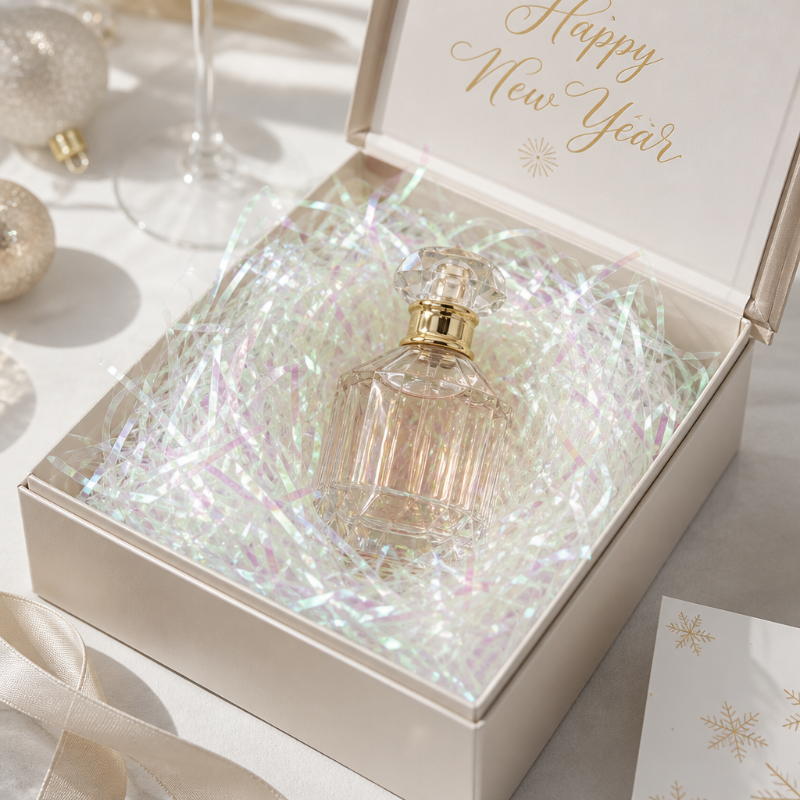
Gift box filler is the loose or wrapped material placed inside a box to stop the product moving, absorb impact in transit, and shape what the buyer sees when the lid comes off. Six materials are commonly used for this, and they are not interchangeable: each one does one job well and another job badly. This page compares them by job, by box type and by how they behave on a packing line — the third factor is the one most buyers discover after the first production run.
The four jobs a filler does
- Void fill — stop the product sliding inside the box.
- Cushioning — absorb drop and vibration between packing and opening.
- Presentation — set the first impression at unboxing.
- Line behaviour — how it dispenses, how much dust it makes, how much space it occupies in the warehouse.
Most filler decisions are made on job 3 and paid for on job 4.
Six materials, six different behaviours
| Material | Does well | Weak at | Typical fit |
| Crinkle cut paper shreds | Presentation, colour matching, printable | Limited cushioning on its own | Rigid gift boxes, retail sets |
| Fine paper / wood pulp shreds | Softness, high bulk at low weight | Compresses under load | Premium boxes with light products |
| Natural fibre shreds (raffia, sisal, jute) | Natural texture, tactile story | Shade varies by harvest; absorbs moisture | Gift, hamper, craft and floral |
| Honeycomb paper wrap | Wrapping and surface protection | Not a loose filler | Bottles, ceramics, boxed sets |
| Wood wool / excelsior | Strong cushioning, springy | Coarse, dusty, hard to print | Heavy or fragile items, industrial |
| Metallized PET film shreds | High shine, holographic effects | Not paper — no paper claim, no paper recycling stream | Decorative accent, not base fill |
Table 1: Six filler materials compared by job and fit
Two practical notes. First, most gift programmes use two materials in the same box — a paper base for volume and a fibre or film accent for look — which is also where colour mismatches start, because the two come from different suppliers with different colour references. Second, PET film shreds are sold next to paper filler and specified the same way, but they are plastic: if your brief says “paper-based filler”, that SKU cannot be part of it.
Matching material to box type
| Box type | Recommended | Why | Avoid |
| Rigid cosmetics / skincare box | Fine paper shreds + a printed base layer | Softness and a clean, deliberate opening | Coarse wood wool under a light product |
| E-commerce mailer, single item | Honeycomb wrap + a light paper fill | Surface protection first, presentation second | Loose film shreds (static, dust, plastic story) |
| Wine and spirits | Honeycomb wrap + wood wool or paper padding | Weight needs cushioning, not bulk | Thin paper alone |
| Hamper / gift basket | Natural fibre or crinkle paper as the visible layer | Volume plus texture at the rim | Heavy fill that crushes soft items |
| Apparel and soft goods | Tissue or honeycomb wrap, light paper fill | Fabric needs protection, not cushioning | Wood wool (snags) |
| Subscription box, monthly | One repeatable paper SKU, compressed packing | Consistency across every shipment matters more than novelty | Seasonal material switches |
| Retail display / window trim | Coloured or metallized shreds | Visual only, no protection duty | Using it as void fill |
Table 2: Material choice by box type
How much filler per box: the fill-height method
Filler is sold by weight and used by volume, so “one bag per box” is not a specification. Set it this way instead:
- Measure the inner dimensions of the box and the packed height of the product.
- Decide the look: product nestled into filler, or product floating on a filler bed.
- Set a target fill height relative to the box rim, and write it down.
- Fill ten boxes on your own line, weighing each one, until the fill looks right at that height. Record that gram weight — it becomes your line spec.
- Re-check after a transit test, because compressed filler recovers differently from loose filler.
That gram weight is what you send to suppliers with your RFQ. Without it, three quotes at the same price per kilo can hide a 30–40% difference in cost per filled box.
Three mistakes that cost money
- Specifying the filler last. The box is approved, then the filler has to fit whatever space is left. Fill height, not box size, drives the material choice.
- Judging a sample without the packing line. Dust, static and dispensing speed never show up in a sample bag; they show up on the line at the second carton.
- Mixing paper and film, then claiming paper recyclability. The claim fails at the audit or at the customer, not at the sample stage.
What you can and cannot claim
- Paper shreds can go into the paper recycling stream if they are not laminated or metallized. Local collection rules still decide the final answer, so word the claim to match the market.
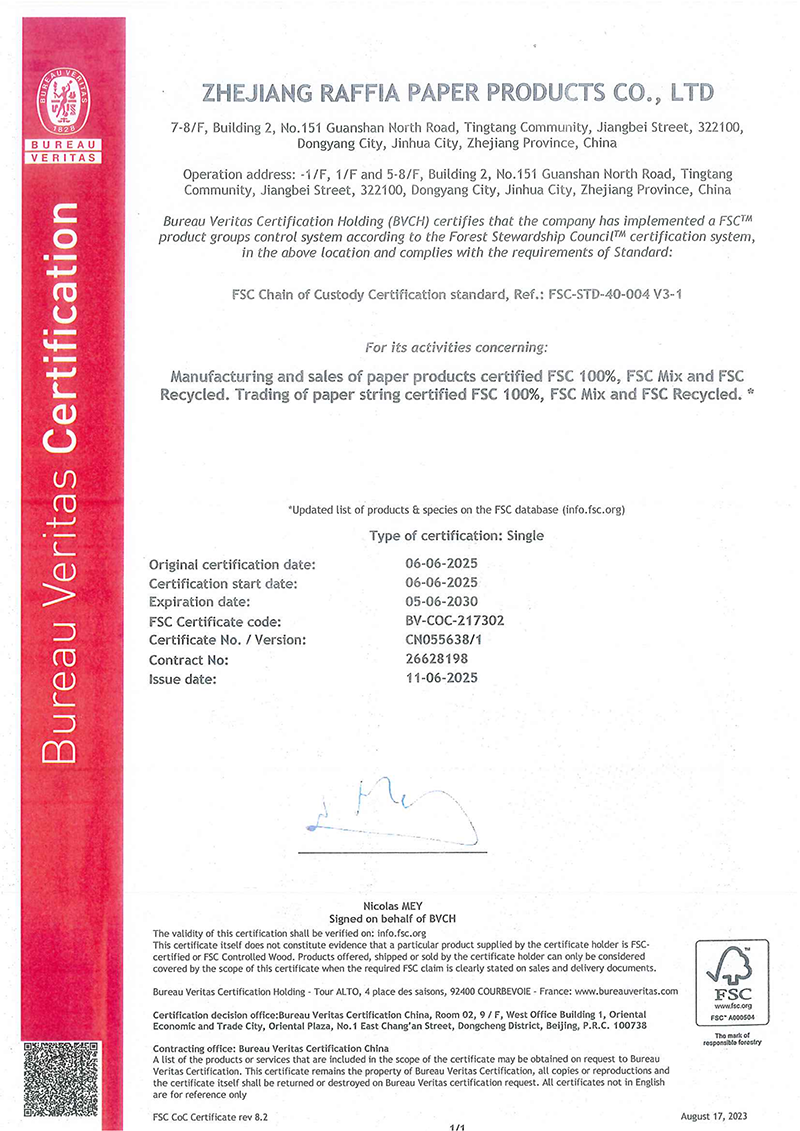
- FSC applies to the certified paper component, not to film or synthetic shreds. Ask for the scope in writing on the quotation.
- PET film shreds are plastic. Specifying them as decorative plastic is accurate; calling them paper-based is not.
- Blanket terms like “eco-friendly” or “100% sustainable” are increasingly challenged, particularly in the EU. Say what the material is and what happens to it after use instead.
Before you ask for quotes
Eight fields decide whether two quotes mean the same thing: cut width, paper grade and grammage, colour reference, bulk, pack form, carton and pallet data, MOQ and replenishment, documentation. We published the full checklist separately — read “Shredded Paper Filler: A B2B Buyer's Guide to Specs, Quotes and Consistency” before you compare prices.
How we supply it
We make all four families in-house at our 20,000 m² facility in Dongyang, Zhejiang — paper shreds, natural fibre shreds, metallized film shreds and honeycomb wrapping paper — with close to 200 people and a capacity of around 800 tonnes per month. Slitting, twisting, winding and compression packaging run on our own lines, which is what makes a fixed cut width and a retained colour reference enforceable rather than aspirational.
Standard items ship in 48–72 hours; custom colours and cut widths run in 3–7 days. FOB Ningbo, with Shenzhen available on request. FSC certified paper is available on request, our BSCI audit is completed, and ISO 9001 is in progress.
FAQ
What is the most common filler for gift boxes?
Paper shreds — either crinkle cut for presentation or fine paper for softness. They are the cheapest way to fill volume, printable, and recyclable in the paper stream when they are not laminated.
Is paper shred better than wood wool?
They do different jobs. Paper shred is for presentation and light void fill; wood wool is for cushioning heavier or fragile items. Wood wool is coarser, dustier and hard to print, so it rarely appears in a premium rigid box.
Can the same filler work for e-commerce parcels and retail boxes?
Rarely. Parcels need surface protection and low dust; retail boxes need presentation. A subscription programme usually settles on one paper SKU for both, and accepts a compromise on one of the two.
How much shredded paper do I need per box?
Set it by fill height, not by bag size: fill ten boxes to your target height, weigh them, and use that gram weight as your line spec. That number is also what makes supplier quotes comparable.
Is shredded paper filler recyclable or compostable?
Paper shreds are recyclable in the paper stream if unlaminated and unmetallized; local rules decide the rest. Metallized PET film shreds are plastic and are not recyclable in paper streams. Compostability depends on the fibre and any dye or coating — ask for documentation rather than assuming.
Call to action
See our raffia filler range | Send your box spec for a quote
 +86 15355323399
 kevin@raffia-paper.com
 No. 151 Guanshan North Road, Dongyang City, Zhejiang Province, China

Copyright © Zhejiang Raffia Paper Products Co., Ltd. All Rights Reserved.

Paper Raffia Yarn & Gift Packaging Factory