
 +86 15355323399
 En
 中文简体
 日本語
 Français
 Español
 Deutsch
 Türk
 عربى
 italiano
 русский
Colored Offset Paper Shreds: A Complete B2B Guide to Decorative Gift Packaging Fillers
Colored Offset Paper Shreds are practical, attractive, and highly adaptable decorative fillers for gift boxes, retail packaging, promotional kits, seasonal collections, and handmade product presentation. Manufactured from dyed offset paper, these narrow strips are precision-cut and processed with a crinkle finish to create volume, texture, and visual movement inside a package.
For businesses that need reliable decorative packaging materials at commercial scale, colored offset paper shreds offer an effective balance of appearance, material efficiency, customization, and cost control. They are available in solid colors, mixed combinations, gradients, metallic finishes, and custom brand shades. Strip widths, packaging formats, compression methods, and private-label presentation can also be adjusted according to the requirements of wholesalers, packaging companies, gift box factories, importers, and retail brands.
Unlike soft tissue paper shreds, which are often selected for delicate surface protection, offset paper shreds are primarily designed to improve visual presentation. Their crinkle structure helps them retain volume, fill empty spaces, and create a fuller unboxing experience without requiring complex packing procedures. This makes them especially useful when packaging appearance, production efficiency, and purchasing cost must be considered together.
This guide explains the material characteristics, manufacturing process, commercial advantages, customization options, applications, quality considerations, and purchasing value of colored offset paper shreds for B2B buyers.
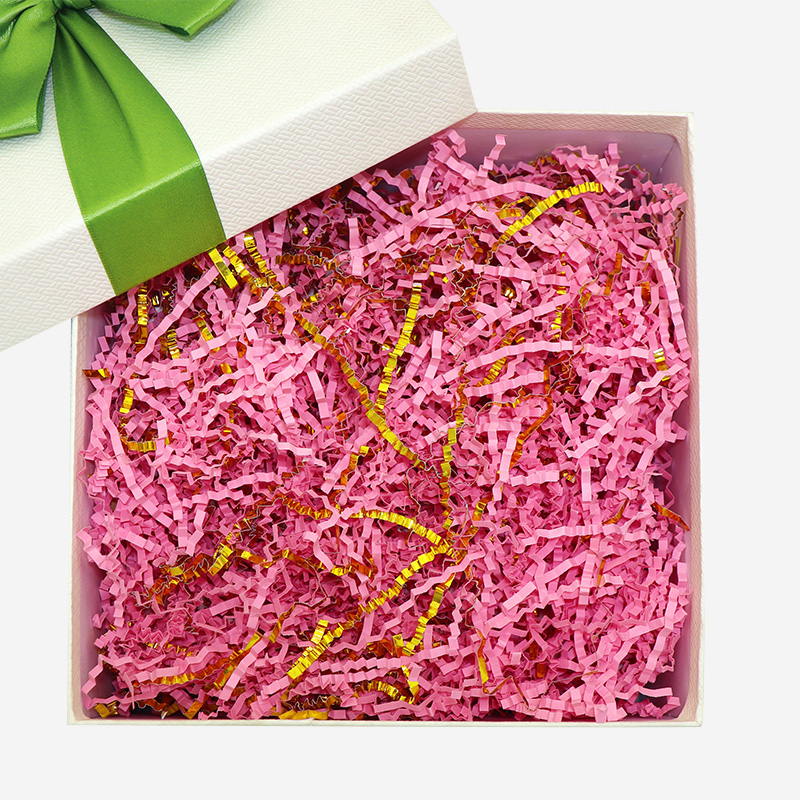
Colored Offset Paper Shred
What Are Colored Offset Paper Shreds?
Colored Offset Paper Shreds are decorative strips made from dyed offset paper. The paper is slit into narrow, controlled widths and then processed to create a crinkled or corrugated appearance. Once packed inside a gift box, basket, carton, or presentation package, the strips expand and form a fluffy, three-dimensional layer.
The material is selected for its ability to combine color consistency with economical production. Offset paper provides a stable base for dyeing and finishing, while precision slitting makes it possible to produce uniform strips suitable for different packaging sizes. Crinkle processing adds volume and helps the paper maintain its decorative shape during packing, transportation, and retail display.
Common strip widths include 1 mm, 3 mm, and 5 mm. A 1 mm strip creates a fine, delicate appearance suited to jewelry, cosmetics, small accessories, and premium presentation boxes. A 3 mm strip is a versatile standard option for many gift boxes and retail packages. A 5 mm strip creates a stronger visual texture and is useful for larger containers, gift baskets, and packages that require a more prominent filler effect.
Strip length can be customized according to the packaging format and the customer’s filling method. Packaging may be supplied in vacuum-compressed bags, OPP bags, bulk bags, or ready-to-fill gift box formats. These options allow buyers to select the most suitable balance between storage efficiency, unpacking convenience, and retail presentation.
Why Offset Paper Is Suitable for Decorative Packaging
Offset paper is widely used in commercial printing and packaging because it offers a consistent surface, reliable processing performance, and a practical cost structure. When dyed and converted into decorative shreds, it provides a clean and colorful material for businesses that need a repeatable appearance across large production runs.
The paper structure is strong enough to support crinkle processing while remaining lightweight. This helps the filler create volume without adding excessive shipping weight. For wholesale buyers, lower material weight can contribute to easier storage, more efficient carton utilization, and better control of freight-related costs.
The surface also supports several decorative treatments. Standard crinkle paper shreds provide a simple and colorful appearance, while foil stamping can add reflective highlights for premium, festive, or luxury packaging. Single-side foil and double-side foil options give buyers additional flexibility when designing the visual effect of a product presentation.
Because offset paper can be produced in a broad range of colors, it is suitable for brand-specific packaging programs. Buyers can select solid colors for a clean and uniform appearance, combine two or three colors for a coordinated presentation, or use gradient and seasonal color combinations to support marketing campaigns.
Key Advantages Over Other Decorative Fillers
Strong Decorative Volume
The crinkle structure gives colored offset paper shreds a fluffy appearance and helps them occupy empty space inside packaging. A relatively small quantity can create a fuller visual effect than flat, unprocessed paper strips. This is valuable for gift box manufacturers that need attractive results while maintaining control over material consumption.
Bright and Consistent Color Options
Color is one of the most important elements in gift packaging. Colored offset paper shreds are available in vivid shades, soft neutrals, seasonal tones, fluorescent colors, metallic combinations, and custom brand colors. Consistent color matching helps buyers maintain a recognizable packaging identity across different product lines and order batches.
Efficient Commercial Pricing
Compared with premium specialty fillers, colored offset paper shreds offer a cost-effective decorative solution. Their material structure, high-speed conversion process, and flexible packaging formats support large-volume production. This makes them appropriate for promotional campaigns, subscription boxes, retail gift collections, and other programs where packaging quantities can be substantial.
Ready-to-Use Format
Pre-cut and crinkled strips are ready to place directly into a package. Packing staff do not need to cut, fold, or manually shape flat paper before use. This can reduce preparation time and simplify the workflow in gift box assembly operations, fulfillment centers, e-commerce warehouses, and seasonal production facilities.
Flexible Visual Positioning
The product can support both mass-market and premium packaging. Standard solid-color shreds are suitable for economical retail programs, while foil-stamped versions and carefully coordinated color blends can create a more elevated appearance. The same basic product category can therefore be adapted to different price levels and brand styles.
Broad Packaging Compatibility
Colored offset paper shreds can be used in rigid gift boxes, folding cartons, baskets, mailer boxes, cosmetic sets, promotional kits, and decorative containers. Their flexible shape enables them to fit around products of different sizes and forms, helping create an organized and visually complete presentation.
More Decorative Than Heavy-Duty Cushioning Materials
The product is designed primarily for appearance and light space filling rather than heavy impact protection. This distinction is important for buyers. When a package contains fragile products, the paper shreds can be combined with inserts, molded pulp, foam, tissue, or other protective materials. The shreds then provide the finishing layer that improves presentation while the inner structure handles product protection.
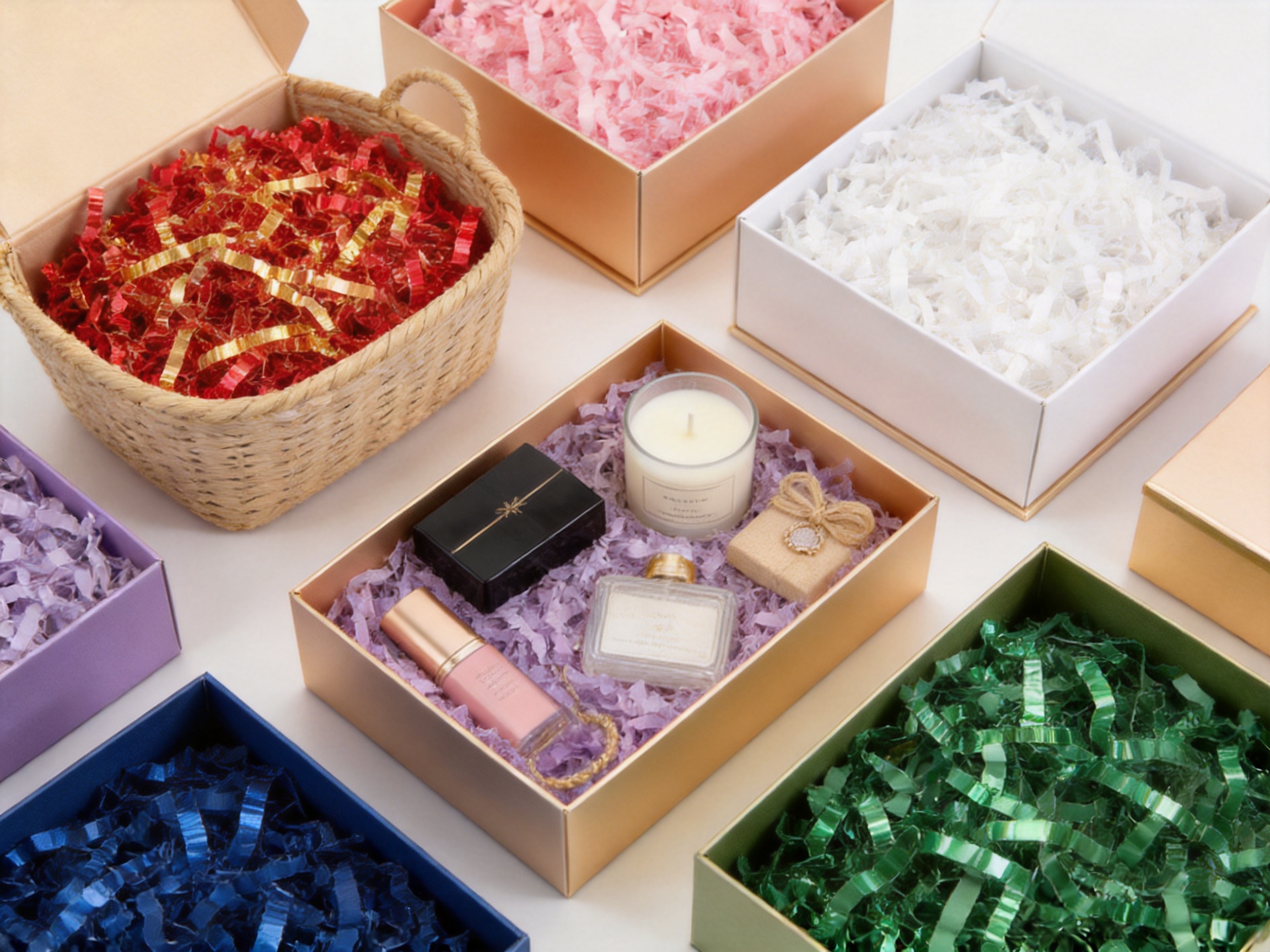
Applications Across Commercial Packaging
Wedding and Event Packaging
Weddings and special events often require coordinated packaging colors and attractive presentation. Colored offset paper shreds can be used in wedding favor boxes, candy boxes, bridal gifts, engagement gifts, souvenir packages, and event welcome kits.
Popular combinations include red and gold, champagne and ivory, blush pink and white, rose pink and silver, and pastel blends. Custom colors can be developed to match invitation designs, event themes, floral arrangements, or corporate-sponsored celebrations.
For event suppliers, consistent supply is particularly important because many packages may need to be assembled within a short period. Pre-cut paper shreds simplify packing and allow staff to produce a uniform appearance across hundreds or thousands of gift boxes.
Holiday Gift Boxes
Seasonal packaging depends heavily on color and visual recognition. Christmas collections may use red, green, white, gold, or silver. Valentine’s Day packaging can use red, pink, white, and rose shades. Easter collections may benefit from yellow, lavender, light blue, and pastel green. Mother’s Day packaging often uses pink, purple, cream, or floral-inspired combinations.
New Year promotions, limited-edition collections, and seasonal retail campaigns can also use mixed-color shreds to reinforce a specific theme. Because the product can be supplied in standard or customized colors, packaging buyers can create multiple seasonal programs without changing the basic filler format.
Corporate and Promotional Gifts
Corporate gift boxes, employee appreciation packages, customer thank-you kits, and trade show giveaways often need to reflect a company’s visual identity. Custom Pantone matching and brand color development allow businesses to use packaging fillers that coordinate with logos, printed cartons, ribbons, greeting cards, and other promotional materials.
For promotional product suppliers, the filler is a small but noticeable part of the unboxing experience. A well-matched color combination can make a gift set appear more intentional and professional. It can also help connect the physical package with a brand’s marketing campaign.
Cosmetics and Personal Care Packaging
Colored offset paper shreds are suitable for cosmetic gift sets, perfume collections, skincare products, bath products, candles, and lifestyle packages. Bright or pastel shreds can enhance the visual appeal of a product assortment while filling unused space around bottles, jars, tubes, and accessories.
For boutique and premium brands, foil-stamped shreds can add reflective detail without requiring an entirely metallic package. For natural or minimalist brands, neutral shades such as ivory, light brown, white, and muted green can create a softer presentation.
As a decorative filler, the material should be selected together with suitable product protection. Glass bottles, delicate containers, and breakable accessories may require inserts or additional cushioning beneath the decorative layer.
Gift Baskets and Handmade Products
Gift baskets are often assembled from products with different shapes and sizes. Paper shreds help level the base, raise smaller products, and create a cohesive visual layer. They can be used for food gift baskets, home fragrance collections, handmade soaps, craft products, accessories, and lifestyle items.
Small businesses and craft brands also benefit from the material because it creates a professional presentation without requiring complicated packaging equipment. The buyer can choose a color that complements the product label or seasonal collection and place the pre-cut shreds directly into the shipping or presentation box.
E-Commerce and Subscription Packaging
E-commerce brands increasingly use the unboxing process as part of their customer experience. Colored paper shreds can make a shipment appear fuller and more carefully prepared. They can be combined with thank-you cards, stickers, ribbons, tissue paper, and branded cartons.
Subscription box businesses may use different color combinations for monthly themes, limited releases, customer segments, or seasonal campaigns. Because the paper is available in compressed packaging formats, buyers can improve warehouse storage efficiency before the filler is expanded for use.
Retail and Boutique Packaging
Boutiques, gift shops, stationery retailers, and specialty stores can use paper shreds to prepare customer purchases, gift boxes, and product bundles. The filler can support the store’s visual merchandising by matching bags, tissue paper, labels, and seasonal displays.
Retail-ready packaging is also available for businesses that resell the product under their own brand. Custom bags, labels, barcode information, and specified pack weights can help distributors build a complete product line for professional retail presentation.
Color Development and Customization
Color customization is a major reason B2B buyers select colored offset paper shreds instead of generic packaging filler. A color program can be developed around a brand palette, a product category, a holiday, an event, or a particular retail collection.
Solid colors are suitable for simple and recognizable packaging. Two-color blends create contrast while remaining easy to coordinate with printed packaging. Three-color blends offer a more dynamic appearance and can reflect complex brand palettes. Gradient combinations provide a softer transition between shades and can be useful for beauty, wedding, lifestyle, and seasonal collections.
Custom Pantone matching can be used when close color coordination is required. Buyers should provide accurate color references and, where possible, physical samples or approved color standards. Final color appearance may be influenced by paper surface, lighting, foil treatment, printing, and viewing conditions, so a pre-production sample is recommended for important projects.
Common colors include white, milky white, light yellow, orange, light blue, lake blue, light green, fluorescent green, parrot green, light brown, pink, fluorescent pink, bright red, light purple, violet, light gray, black, dark brown, orange-red, pale yellow, rose red, royal blue, and dark green. These standard choices can be used individually or combined into custom themes.
Color customization may also include different interior and exterior visual effects. Reversible or double-sided foil treatments can create a more complex appearance, while single-side foil stamping offers a controlled metallic highlight. Buyers can select the finish according to their desired price level and packaging design.
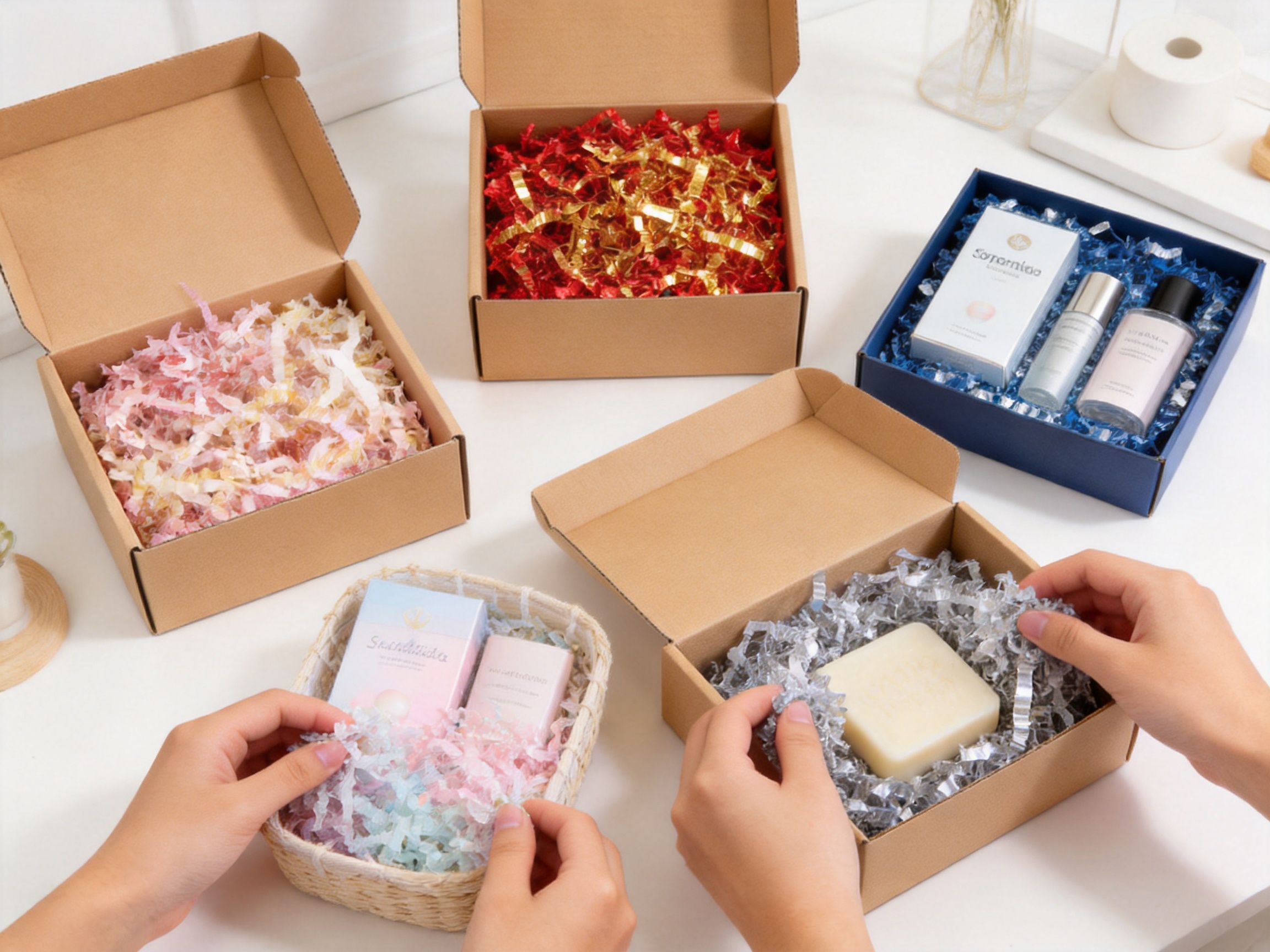
Surface Finishes and Visual Effects
Standard Crinkle Finish
The standard crinkle finish is the most widely applicable option. It creates texture, volume, and a soft visual movement without adding metallic effects. This finish is suitable for everyday gift packaging, craft products, retail boxes, and large-volume commercial programs.
Single-Side Foil Finish
Single-side foil stamping adds reflective detail to one side of the paper strip. When crinkled, the foil surface catches light and creates highlights throughout the filler. This option is useful for holiday packaging, premium gift boxes, promotional products, and brand collections that require a more distinctive appearance.
Double-Side Foil Finish
Double-side foil stamping provides a more complete metallic visual effect. It may be selected when the filler will be highly visible from different angles or when the packaging design emphasizes luxury and shine. It is especially suitable for festive gift sets, celebration packaging, and high-impact retail displays.
Finish selection should consider the package structure, product position, lighting, handling conditions, and target price. Buyers can request samples of different finishes before finalizing a large order.
Manufacturing Process and Production Strengths
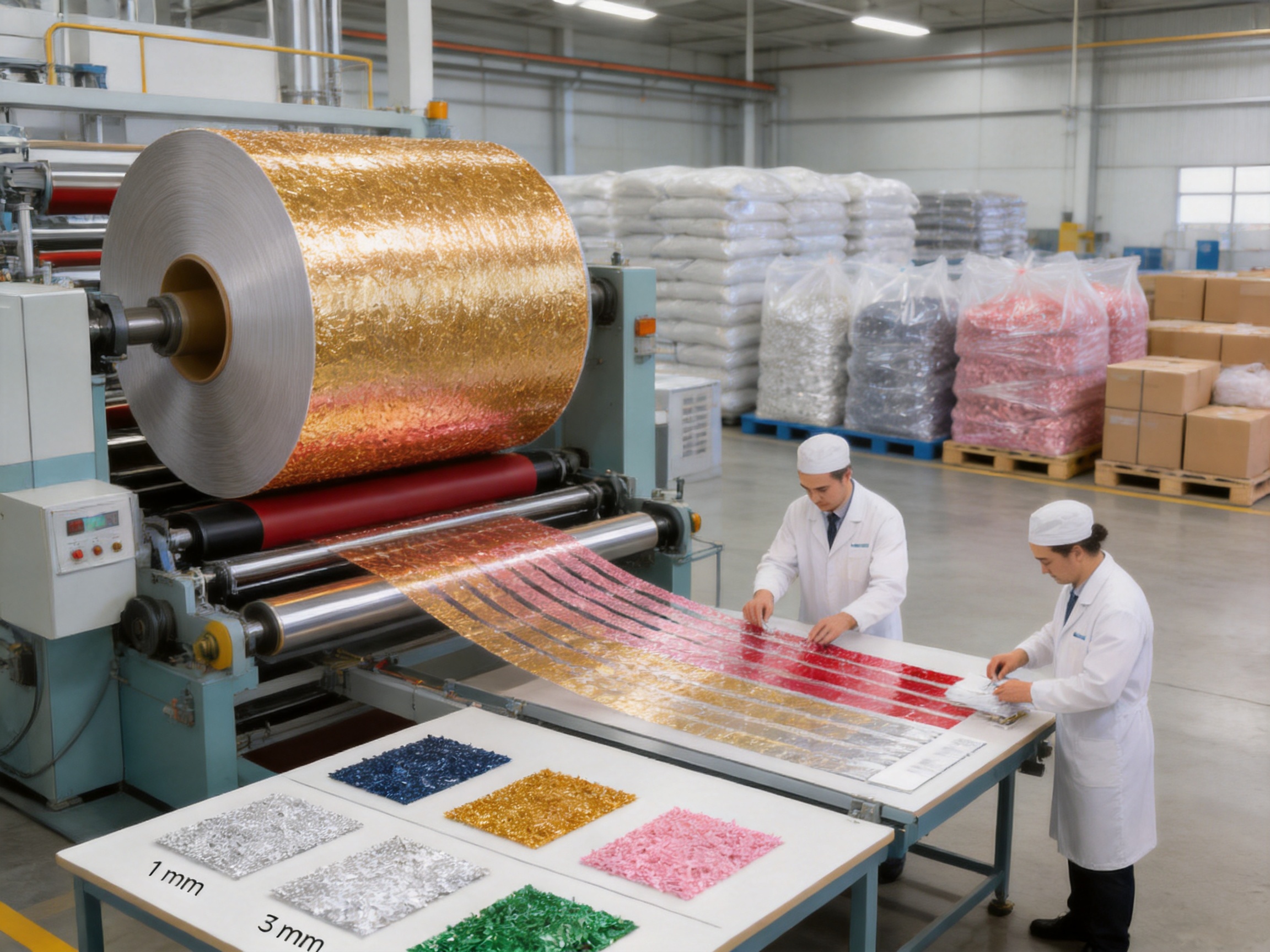
A reliable decorative filler depends on more than paper color. Consistent width, stable crinkle formation, clean cutting, accurate weight, and dependable packaging are all important for commercial buyers. An integrated manufacturing process helps control these variables from material preparation through shipment.
Raw Material Preparation
Production begins with the selection and preparation of offset paper suitable for dyeing, slitting, crinkling, and packaging. Material inspection helps confirm that the paper is appropriate for the requested color, width, finish, and application. Consistent raw material preparation supports more stable production results between batches.
Dyeing and Color Control
The paper is dyed according to standard colors or approved custom references. Color control is especially important for repeat orders, private-label projects, and brand programs that require visual consistency. Production procedures can be standardized to reduce unwanted variation between batches.
Precision Slitting
Large paper rolls are converted into narrow strips through slitting equipment. Precision slitting helps control the specified width, whether the buyer requires a fine 1 mm strip, a standard 3 mm strip, a wider 5 mm strip, or another customized dimension.
Accurate slitting contributes to a uniform appearance inside the package. It also helps buyers estimate consumption because strip dimensions are more predictable. For high-volume packaging lines, stable strip width supports consistent filling behavior and reduces the need for manual sorting.
Crinkle Processing
After slitting, the paper strips are processed to create the desired crinkle structure. The crinkle effect increases volume and gives the product its characteristic decorative texture. Proper control is needed to achieve a balance between expansion, visual fullness, and handling performance.
If the crinkle is too weak, the filler may appear flat and consume more material. If it is too aggressive, the strips may become difficult to handle or produce an appearance that does not match the buyer’s design. Standardized procedures help maintain a repeatable result.
Foil Treatment
For selected products, foil is applied to one or both sides of the paper. The treatment is controlled according to the required visual effect, color, and packaging specification. Buyers can request standard crinkle, single-side foil, or double-side foil formats.
Inspection and Quality Control
Quality control may cover color, strip width, strip length, crinkle appearance, surface finish, cleanliness, package weight, compression condition, and label information. A repeatable inspection system is important for customers who need to assemble large quantities of uniform gift boxes.
Quality procedures are also valuable for private-label and OEM projects because the buyer’s brand reputation depends on consistent product presentation. Production records, approved samples, and standard packaging specifications can help create a reliable basis for repeat orders.
Compression and Packaging
Finished shreds can be compressed to reduce storage volume and improve transportation efficiency. Available formats include vacuum bags, OPP bags, bulk bags, and gift box packing. The most suitable option depends on the customer’s warehouse conditions, sales channel, filling process, and target market.
Compressed packaging must be opened and expanded according to practical handling requirements. Packaging information can include product name, color, weight, batch details, barcode, customer branding, and other required markings.
Integrated Manufacturing Capability
An integrated production chain covering raw material processing, mass production, quality testing, packaging, and shipment gives buyers a more coordinated sourcing experience. The manufacturer described in the supplied company information operates a production base of approximately 20,000 square meters with more than 200 employees and annual production capacity exceeding 200 million pieces.
This scale supports large-volume programs while maintaining specialized production capabilities for paper shreds, paper raffia yarns, fancy paper yarns, and related packaging materials. Equipment and procedures for slitting, twisting, winding, and compression packaging can also support broader customer requirements.
Why B2B Buyers Choose This Product
Better Presentation Without Excessive Packaging Complexity
Colored offset paper shreds create an immediate visual improvement with a simple packing step. They do not require custom molded inserts for every product shape when the main requirement is decorative filling. This can help buyers develop attractive packages more quickly.
Improved Labor Efficiency
Pre-cut and pre-crinkled material is ready for use. Packing workers can place the required quantity into the box rather than cutting and shaping paper manually. This is particularly helpful during seasonal demand peaks, when businesses must process large numbers of packages within a limited timeframe.
Support for Brand Consistency
Custom colors, mixed combinations, private-label packaging, barcode labels, and retail-ready formats help businesses standardize their packaging programs. A consistent filler color can become a recognizable part of a customer’s unboxing experience.
Flexible Order Planning
Standard colors can support regular production and faster replenishment, while custom shades and packaging formats can be developed for special programs. This combination gives buyers both speed and customization, depending on the project.
Reduced Supplier Complexity
In addition to colored paper shreds, the supplier can provide ribbons, bows, greeting cards, confetti, foam balls, feathers, artificial flowers, plush decorations, and other packaging accessories. Sourcing several complementary items from one supplier can simplify communication, quality coordination, purchase planning, and shipment management.
Support for OEM and ODM Programs
OEM services allow buyers to order products according to their own specifications and branding. ODM services can support customers that need help developing colors, dimensions, packaging formats, or coordinated accessory programs. This is useful for packaging wholesalers, importers, distributors, and brands building a long-term product line.
Packaging Formats for Different Sales Channels
Vacuum-compressed bags are suitable when storage space and shipping efficiency are important. Compression reduces the volume of the product before use, allowing buyers to stock larger quantities in a limited warehouse area.
Individual OPP bags are appropriate for retail sales, organized warehouse distribution, and products that need a visible package. They can be combined with labels, printed information, barcodes, and specified weights.
Bulk bags are suitable for commercial users that consume large quantities during box assembly. This format can reduce secondary packaging and support high-speed packing operations.
Gift box packing is useful for customers that want a ready-to-fill presentation. The filler can be prepared in a format that helps packing staff use a consistent amount in each box.
Packaging selection should take into account the buyer’s sales channel, storage environment, product turnover, retail requirements, and shipping method. A supplier can recommend the most practical format after reviewing the order quantity and intended use.
How to Select the Correct Specification
Start with the size and style of the package. Small jewelry boxes and cosmetic cartons often benefit from 1 mm strips because the finer texture looks proportionate. General gift boxes commonly use 3 mm strips. Larger boxes, baskets, and packages that require stronger visual texture may use 5 mm strips.
Next, consider the product’s visual identity. Solid colors create a clean appearance, while mixed colors provide contrast. Gradient blends can produce a softer or more premium result. Metallic foil may be selected for festive or luxury presentation.
Then determine the functional role of the filler. If the material is mainly decorative, standard crinkle paper may be sufficient. If additional impact protection is required, combine the shreds with a suitable protective insert or cushioning system.
Finally, evaluate the packing process. Buyers should consider how much material is used per box, whether the filler will be stored compressed, how workers will open the bags, and whether the product requires retail labels or private-label packaging.
OEM, ODM, and Private-Label Services
OEM and ODM support allows commercial buyers to develop a packaging filler program rather than purchasing a generic product. Customization can include Pantone color matching, brand color development, mixed-color combinations, strip widths, strip lengths, packaging weights, labels, barcodes, and retail-ready bags.
Private-label customers may request their own packaging artwork, product naming, logo placement, carton markings, and sales information. This enables wholesalers and distributors to build a branded range of decorative fillers for their own markets.
Seasonal packaging collections can also be developed. A buyer may request coordinated colors for Christmas, Valentine’s Day, Easter, weddings, corporate events, or a specific retail campaign. The supplier can help combine paper shreds with matching ribbons, bows, cards, flowers, confetti, and other accessories.
For long-term projects, it is helpful to establish approved samples, color references, packaging specifications, inspection standards, and forecast quantities. These documents create a clearer basis for repeat orders and help reduce communication problems across production cycles.
Quality and Purchasing Considerations
Before placing a large order, buyers should confirm the material, width, length, finish, color, packaging method, net weight, compression format, and minimum order quantity. The listed minimum order quantity for this product is 500 units, although the final requirement may depend on the specific customization and packaging format.
Samples should be reviewed for color accuracy, crinkle appearance, strip consistency, foil coverage, cleanliness, and expansion behavior. Buyers should also test the filler in the actual box size to determine how much material is required for the desired presentation.
For repeat orders, retain an approved sample and record the relevant specifications. This is especially important when the product is used with printed packaging or when several suppliers contribute to the same gift set.
Shipping and storage conditions should also be considered. Paper products should be protected from excessive moisture, contamination, and rough handling. Compressed packaging can improve transport efficiency, but warehouse staff should follow appropriate opening and storage procedures.
Businesses should make clear that decorative paper shreds are not a replacement for certified food-contact packaging or specialized protective materials unless the product has been specifically tested and approved for that purpose. For food, cosmetics, fragile goods, or regulated applications, buyers should confirm all applicable requirements before production.
Sustainability and Responsible Material Planning
Paper-based decorative fillers can support packaging programs that aim to reduce reliance on plastic-based decorative materials. Offset paper is lightweight, printable, and suitable for efficient conversion into narrow strips. The environmental benefits of any packaging program depend on the paper source, dyes, foil treatments, packaging materials, shipping method, and end-of-life practices.
Buyers seeking a more responsible packaging program should discuss material composition, recycled content availability, packaging reduction, and disposal guidance with the supplier. They should also consider whether foil treatments or mixed-material packaging affect local recycling systems.
Efficient design is another part of responsible material planning. Using the correct strip width and the appropriate quantity can reduce unnecessary consumption while maintaining an attractive appearance. Compression packaging can help reduce transport volume and warehouse requirements.
Common Buyer Challenges and Practical Solutions
Limited Packaging Design Options
Buyers may find that generic fillers do not match their brand identity or seasonal requirements. A broad standard color range, custom color matching, mixed-color development, and gradient combinations provide more design flexibility.
Rising Packaging Costs
Premium packaging materials can increase the total cost of a gift set. Colored offset paper shreds provide decorative volume at a competitive cost and can be used in large-volume commercial programs.
Short Seasonal Production Cycles
Seasonal packaging often needs to be developed and assembled quickly. Standard colors can support faster planning, while custom combinations can be prepared in advance based on forecasts and approved samples.
Inconsistent Appearance Between Batches
Color variation, inconsistent strip width, and unstable crinkle formation can create problems in branded packaging. Standardized manufacturing procedures, quality checks, approved samples, and production records help improve batch-to-batch consistency.
Managing Multiple Suppliers
Purchasing fillers, ribbons, cards, bows, and other accessories from separate suppliers can increase coordination work. A supplier that provides multiple packaging components can simplify sourcing and help improve visual coordination across the finished package.
Developing a Private-Label Product Line
Private-label projects require more than a logo. Buyers need reliable color, packaging, labeling, weight, and quality specifications. OEM and ODM services can help transform a standard paper shred into a branded product suitable for wholesale or retail distribution.
Frequently Asked Questions
What is the difference between colored offset paper shreds and tissue paper shreds?
Colored offset paper shreds are made from dyed offset paper and are mainly designed for decorative appearance, color variety, volume, and cost efficiency. Tissue paper shreds are generally softer and may be better suited to products that require additional surface protection. The appropriate option depends on whether the priority is presentation, softness, cushioning, or a combination of these functions.
Can the paper shred color be matched to a brand?
Yes. Custom Pantone matching, brand-specific colors, seasonal shades, and mixed-color combinations are available. Buyers should provide an accurate color reference and approve a pre-production sample for important brand programs.
Are mixed-color paper shreds available?
Yes. Two-color blends, three-color blends, gradient combinations, and custom themed mixtures can be produced for different packaging styles and marketing campaigns.
What strip widths are available?
Common widths are 1 mm, 3 mm, and 5 mm. Custom widths can also be discussed. Fine strips are suitable for small and delicate-looking packages, while wider strips create a stronger visual texture in larger boxes and baskets.
Can the strip length be customized?
Yes. Strip length can be adjusted according to the package dimensions, filling method, and desired appearance.
Which surface finishes are available?
Available finishes include standard crinkle, single-side foil, and double-side foil. The best choice depends on the desired visual effect, target price, product category, and packaging design.
What packaging formats can be supplied?
Available formats include vacuum-compressed bags, individual OPP bags, bulk bags, and gift box packing. Custom weights, labels, barcodes, and retail-ready packaging can also be arranged for suitable projects.
Can decorative accessories be supplied together with the paper shreds?
Yes. Coordinated accessories may include ribbons, bows, greeting cards, feathers, foam balls, artificial flowers, confetti, plush decorations, and other packaging components.
Are OEM and private-label projects supported?
Yes. OEM and ODM services can include custom colors, mixed combinations, strip specifications, packaging weights, branded bags, private labels, barcode labels, seasonal collections, and complete packaging accessory programs.
Are the shreds intended for cushioning fragile products?
The primary purpose is decorative filling and presentation. The shreds can help occupy empty space, but they should not be treated as a substitute for specialized protective packaging when products are fragile or vulnerable to impact.
What types of companies purchase this product?
Typical buyers include gift box manufacturers, packaging wholesalers, promotional product suppliers, wedding packaging companies, cosmetic packaging businesses, retail packaging brands, craft manufacturers, importers, distributors, and e-commerce packaging suppliers.
What is the minimum order quantity?
The listed minimum order quantity is 500 units. The final order requirement may vary according to color customization, packaging format, label design, and production specifications.
Conclusion
Colored Offset Paper Shreds provide a flexible and economical way to improve gift packaging, retail presentation, and the customer unboxing experience. Their dyed offset paper construction, precision-cut strips, crinkle texture, broad color range, and optional foil finishes make them suitable for a wide variety of commercial applications.
For B2B buyers, the main advantages are not limited to appearance. The product also supports efficient packing, brand color coordination, seasonal product launches, private-label development, and large-volume purchasing. Standard colors can support fast-moving programs, while custom shades, mixed blends, widths, packaging weights, and labels enable more specialized projects.
The manufacturer’s integrated production capabilities, including paper processing, slitting, crinkling, foil treatment, quality inspection, compression packaging, and shipment preparation, provide a foundation for consistent commercial supply. With a production base of approximately 20,000 square meters, more than 200 employees, and reported annual capacity exceeding 200 million pieces, the company is positioned to support both recurring wholesale orders and customized OEM or ODM programs.
When selecting a supplier, buyers should evaluate material quality, color consistency, strip dimensions, finish options, packaging efficiency, customization capability, quality control, and delivery reliability. With the right specification and coordinated packaging design, colored offset paper shreds can become an effective component of gift boxes, promotional kits, seasonal collections, cosmetic packages, craft products, and retail-ready presentation systems.
References
1. Product specification information for Colored Offset Paper Shreds, including material, finishes, widths, colors, packaging formats, OEM availability, ODM availability, and minimum order quantity.
2. Manufacturer-provided company information concerning production history, manufacturing facilities, employee resources, annual capacity, quality control, OEM services, ODM services, and international supply.
3. General packaging design principles concerning decorative fillers, product presentation, retail packaging, gift box assembly, and unboxing experiences.
4. General paper-converting principles concerning dyeing, precision slitting, crinkle processing, foil treatment, compression packaging, inspection, and shipment preparation.
5. General B2B purchasing practices for custom packaging materials, including sample approval, color matching, private labeling, packaging specifications, repeat-order control, and supplier coordination.
Product: Colored Offset Paper Shred

 +86 15355323399
 kevin@raffia-paper.com
 No. 151 Guanshan North Road, Dongyang City, Zhejiang Province, China

Copyright © Zhejiang Raffia Paper Products Co., Ltd. All Rights Reserved.

Paper Raffia Yarn & Gift Packaging Factory